Mazatlan is known as “the seafood capital of Mexico” according to our guide.
This was a day stop during our Mexican Riviera cruise in December, 2021. We first thought of doing a walking tour of old town, then, I found a more comprehensive tour of Mazatlan (population: 462,000) through Tripadvisor.com. We paid $30/pp for a supposedly a 4 hour (ended up being 3 hours) small group van tour provided by Vista Tours, a local company.
We were picked up by the tour company representative at the cruise terminal after a little bit of mix-up: we thought they will be waiting with a sign showing our name, but the person was just sitting on a bench without a sign of any kind. A very kind gentleman from another tour company called our tour company so that we could find our guy. There were plenty of local van tour companies offering the same tour ($30pp) at the terminal.
Mazatlan cruise terminal seen from our cruise ship
From the cruise terminal in the yellow area on the map above, we were brought to a huge gift shop in the Gold Zone, the tourist resort area, to regroup and be put on the right van. There were only 4 others in our group. Our guide and the driver both spoke good English & they never rushed us.
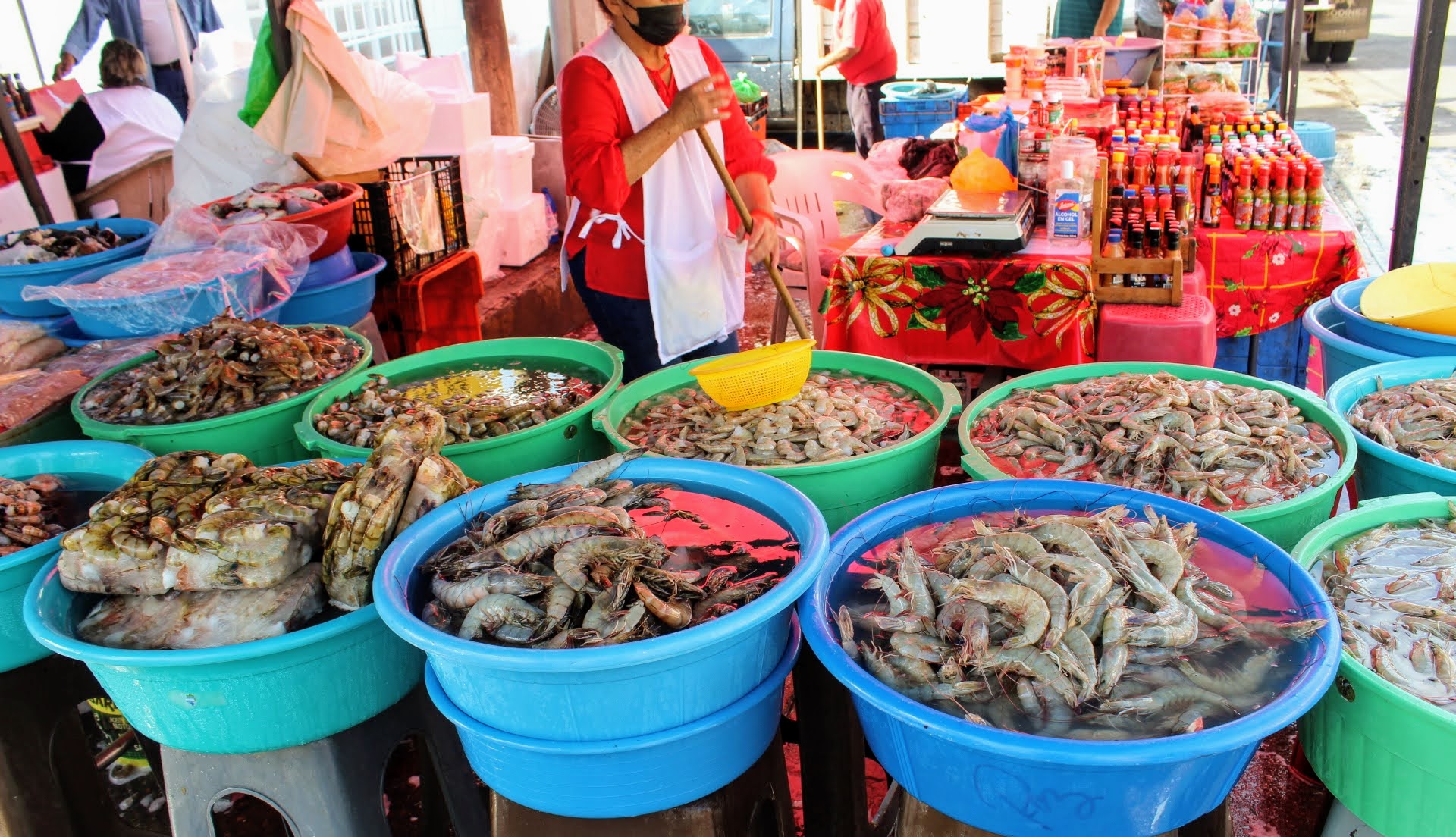
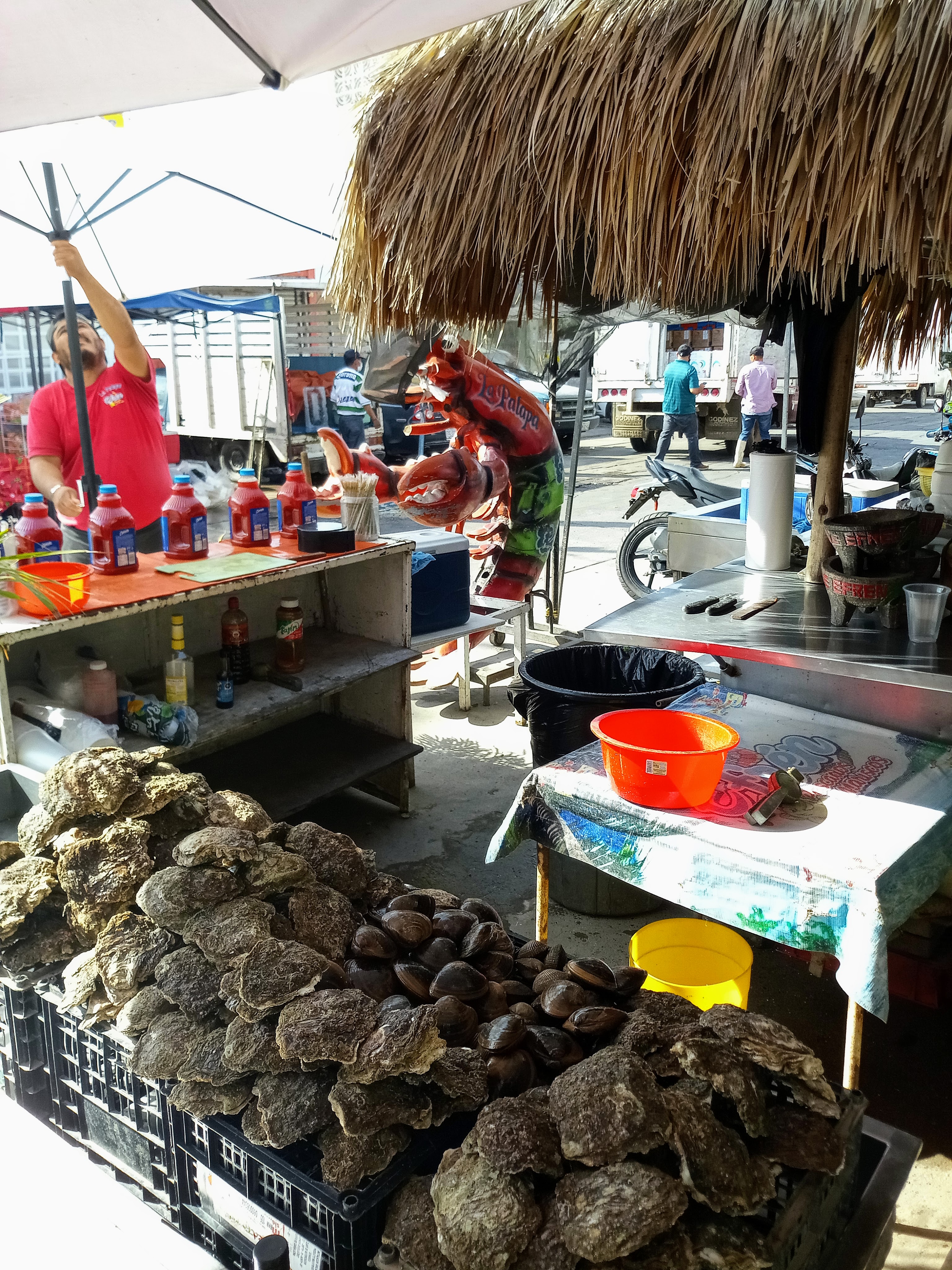
We drove slowly along the Malecon, the longest oceanfront walkway (13 miles) in Americas, we were told. Then we drove into the Historic Center (Centro Historico) and stopped at the market area. Here the fish market spreads out more casually in an outdoor setting, and the best shrimps in Mexico are from here, we learned.
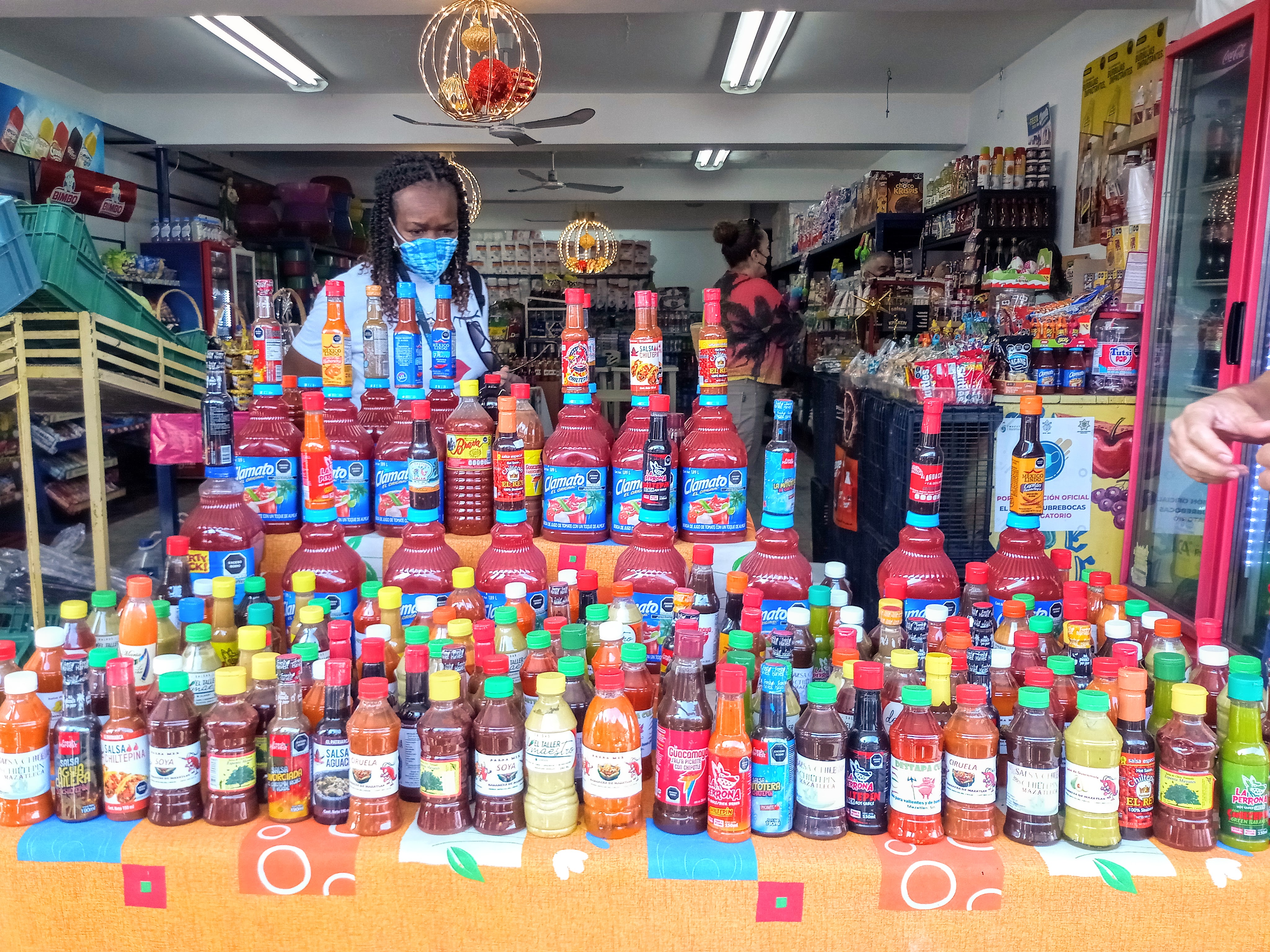
everything you need to make salsa is at this storeof course you need some serious hot sauce
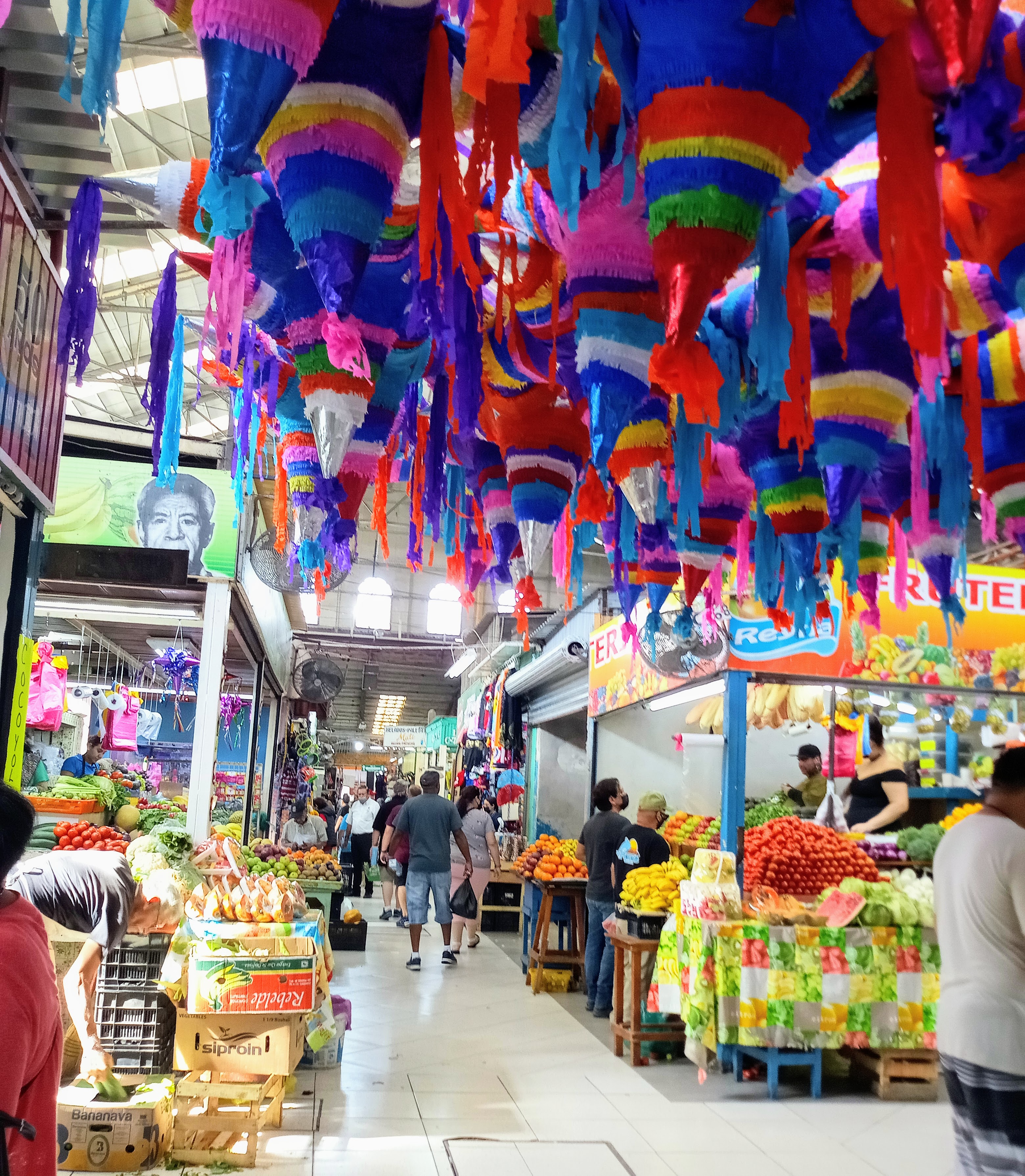
Next we walked into the central market. We had free time to browse in this market that seemed to have everything one might need for daily lives: fruit & vegetables, food stalls, clothing, souvenirs, and more. It was a manageable size,and the layout was pretty straight forward.
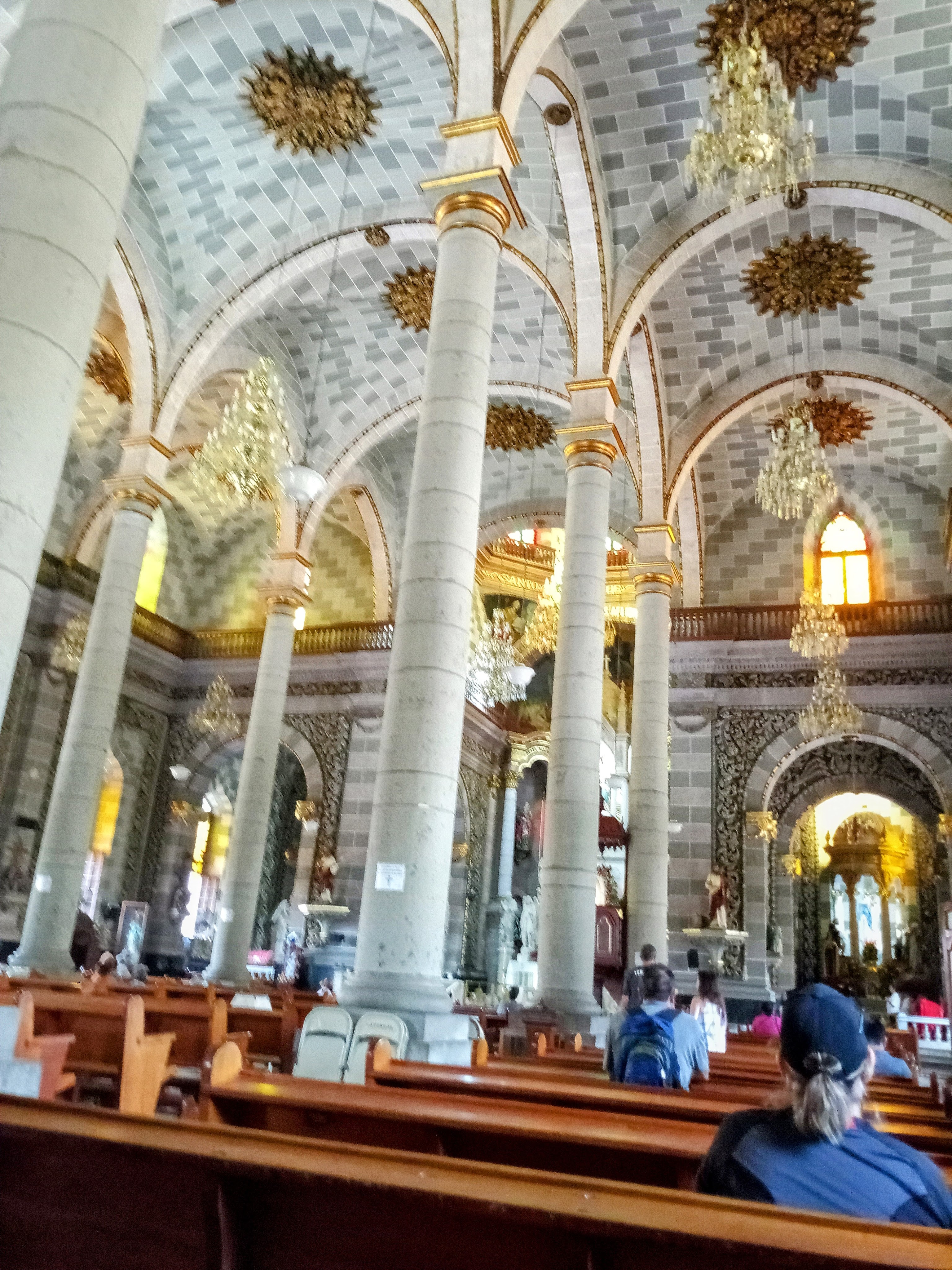
The Cathedral was just a few blocks away from the market. We were free to walk in and out of there.
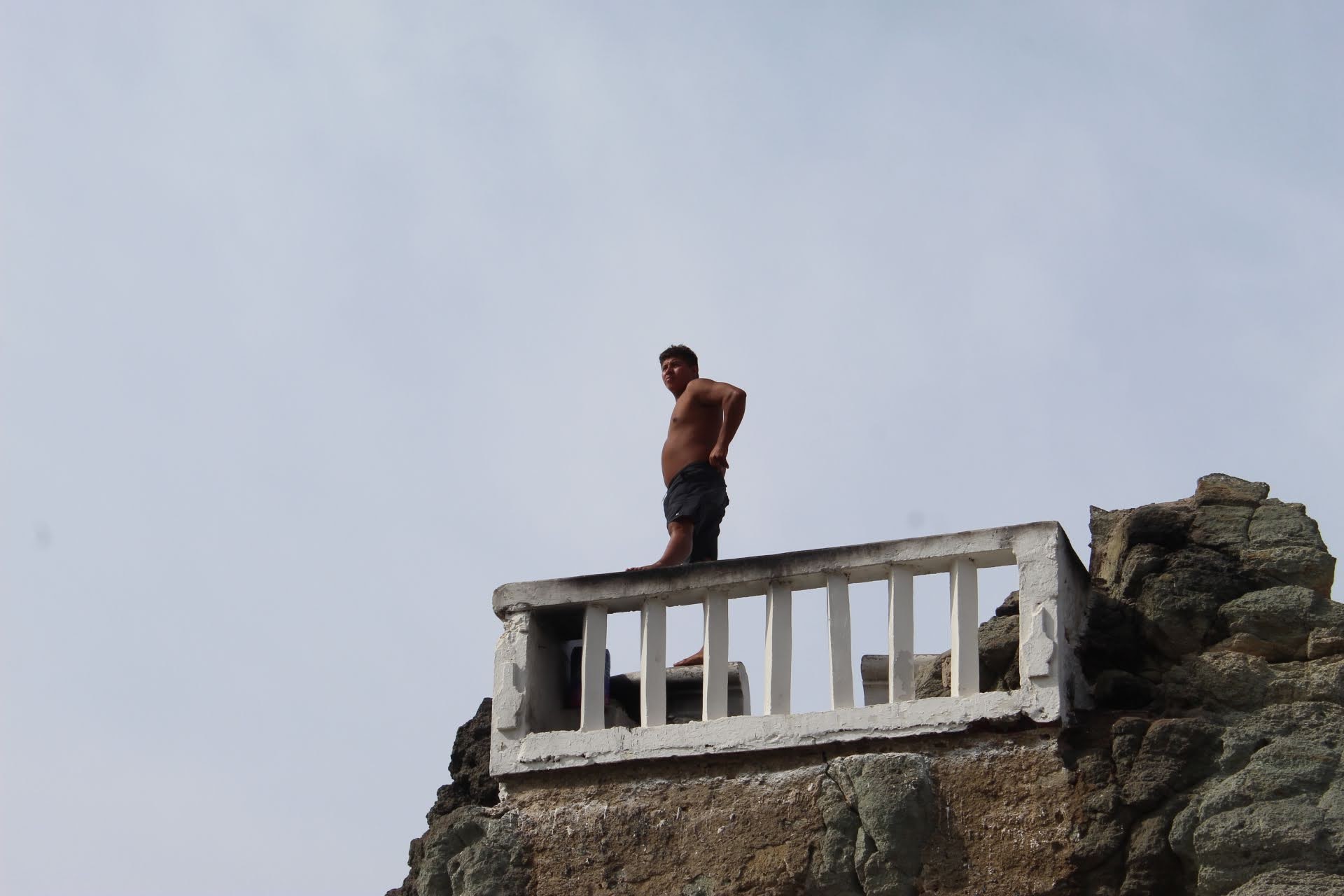
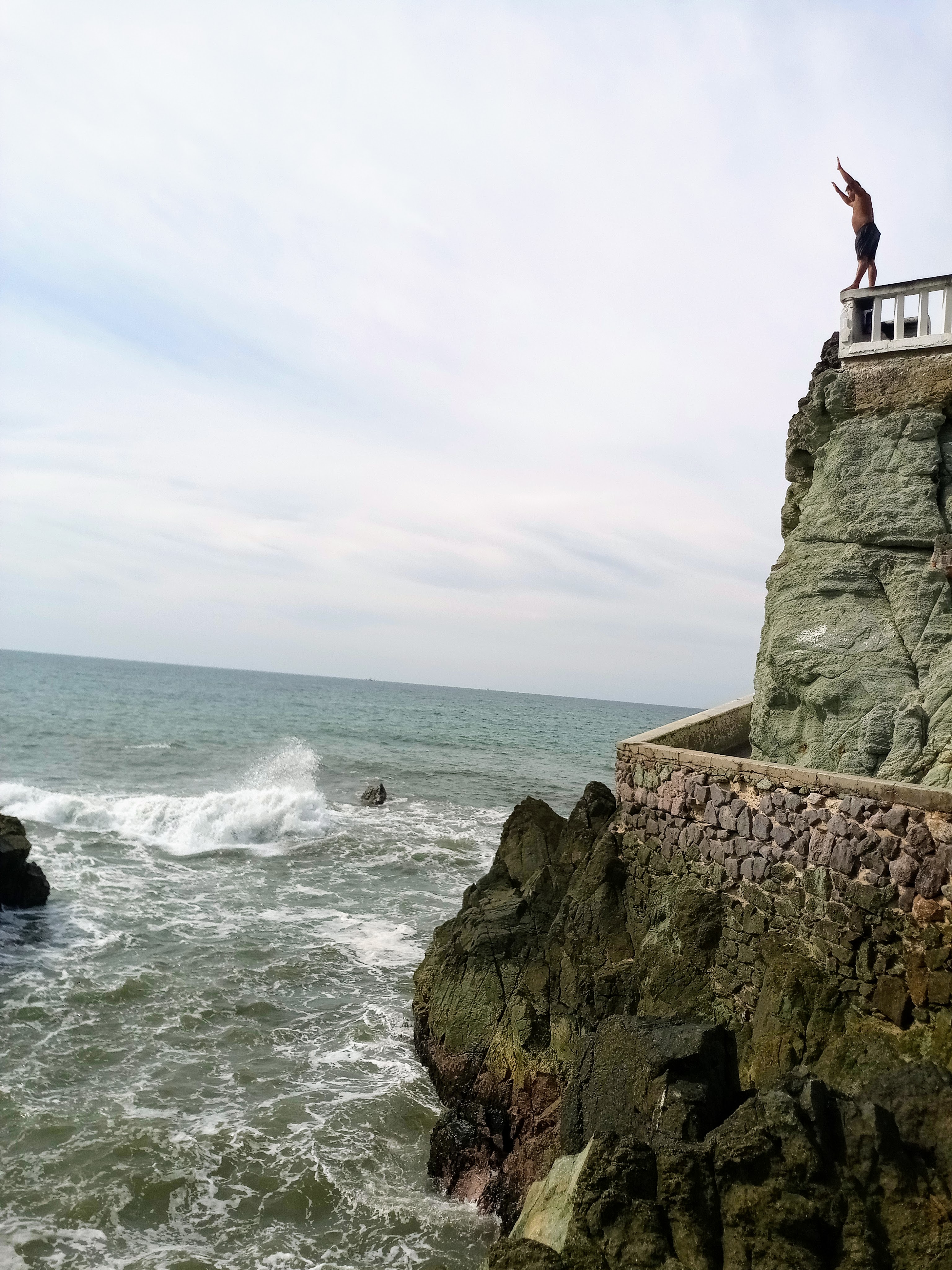
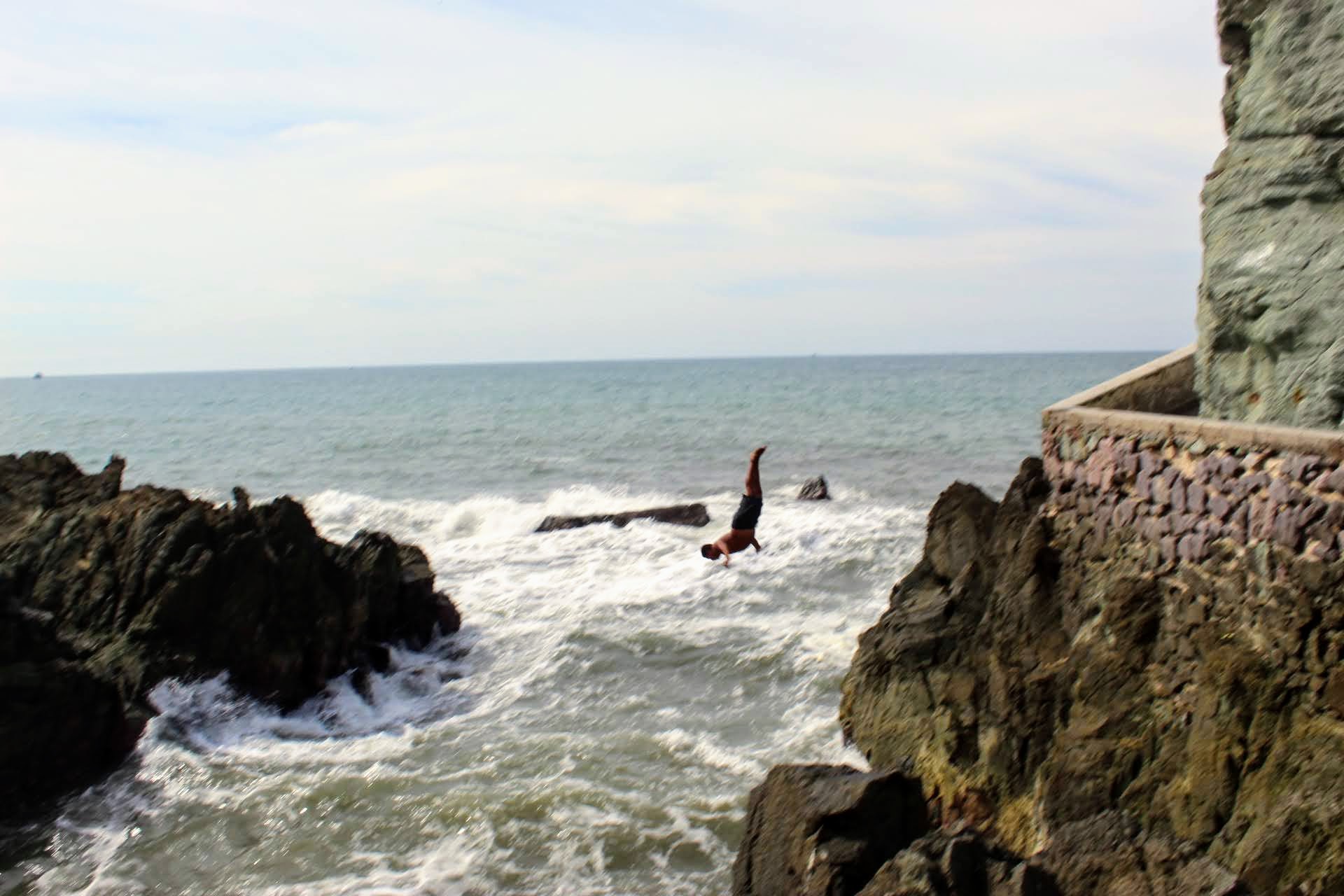
We drove back out to the coastal road to witness the cliff divers. When we were there, two brothers did the job: one working the crowd and the other on the platform to do the dive. An unusual way of making a living, I must say. People seemed to be fairly generous with tipping.
Then we drove around the hillside community where there were fancy houses with killer ocean views. Speaking of fancy, we stopped at a jewelry store where artsy high end silver and other jewelry items were sold so that we could “shop without worrying about buying fakes,” our guide explained. Free drinks were available here, and I took a small bottle of water feeling a bit guilty because I was not a great customer in a place like this.
Pumonias, the iconic open air taxis of Mazatlan were every where in the city.
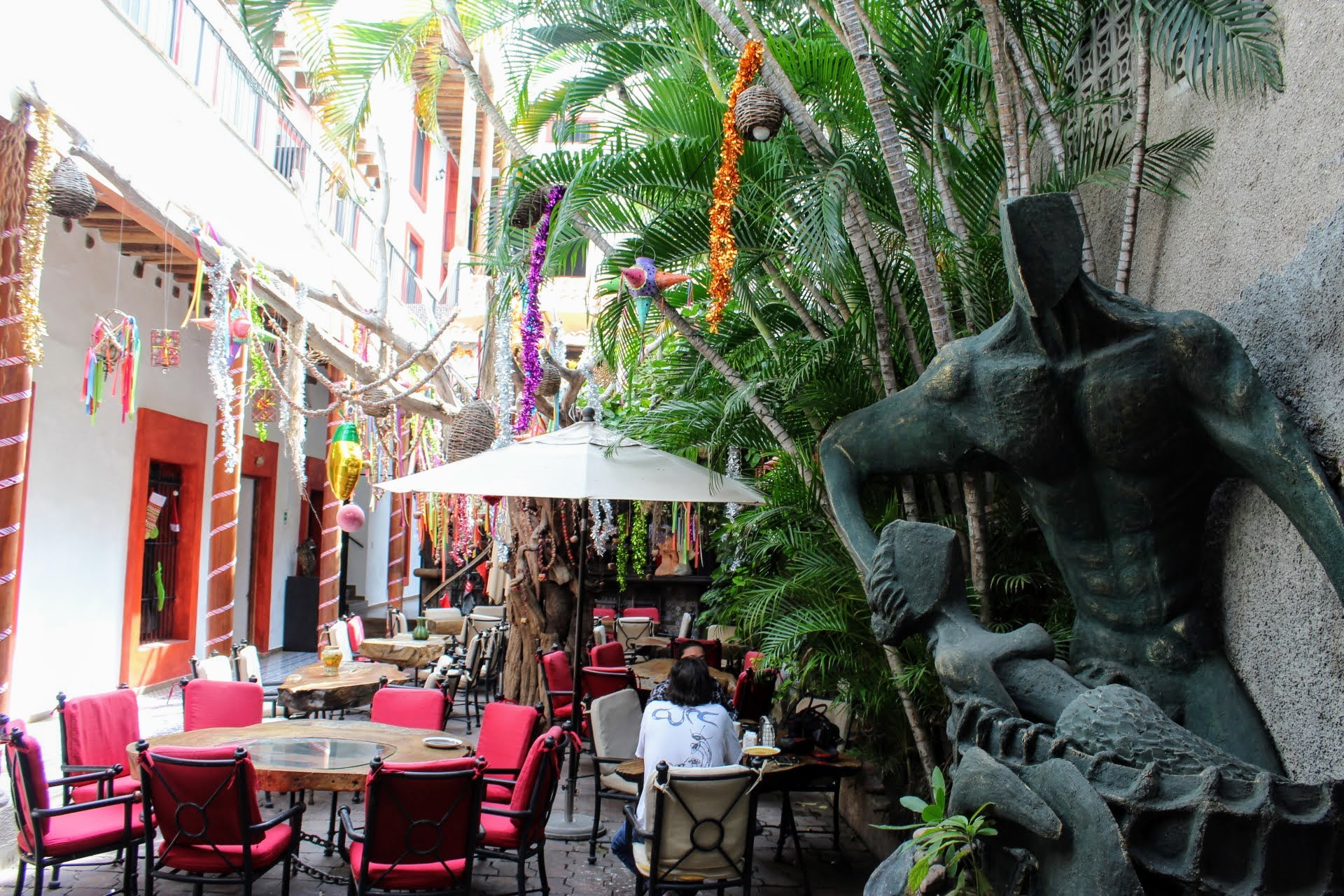
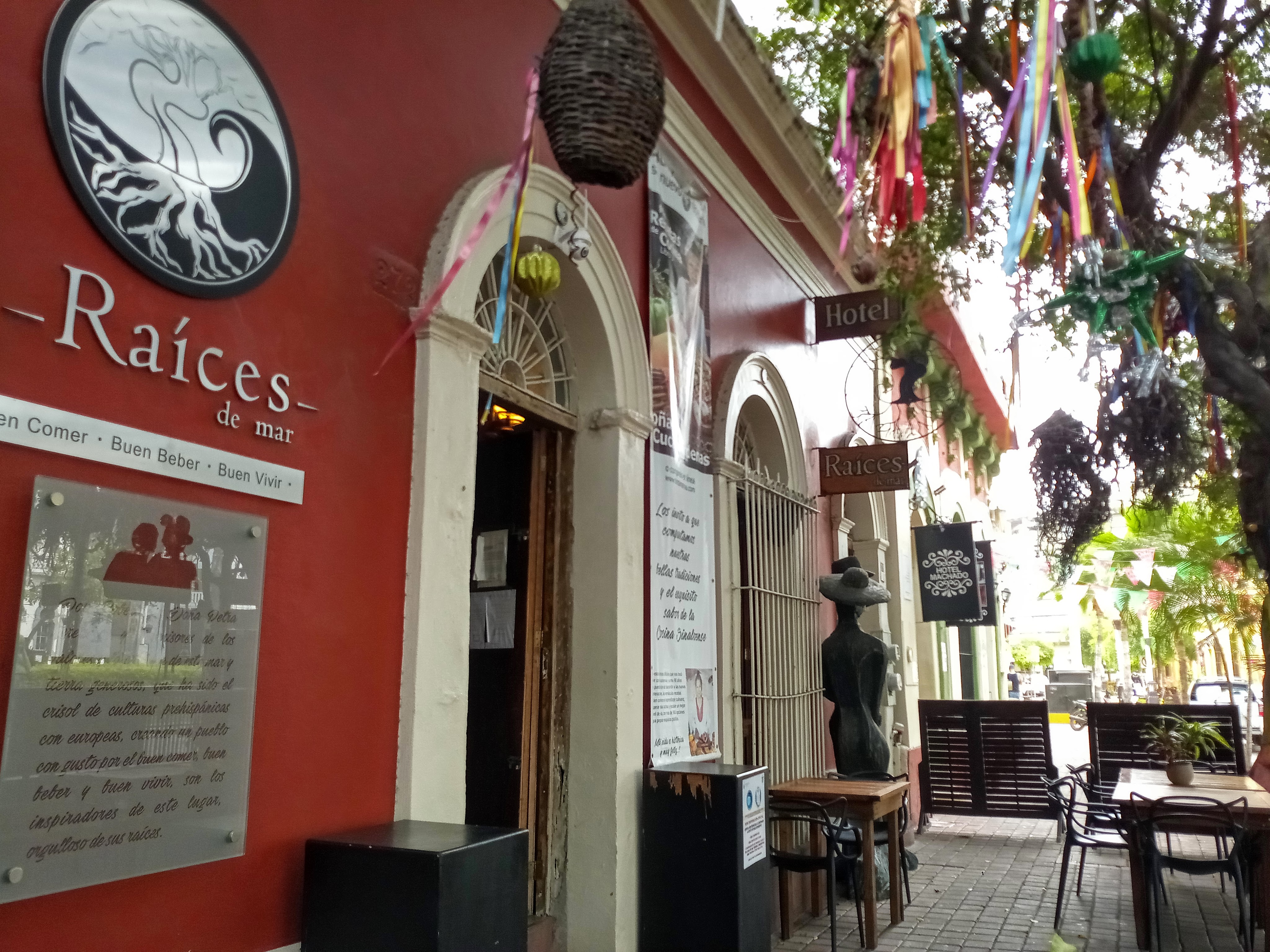
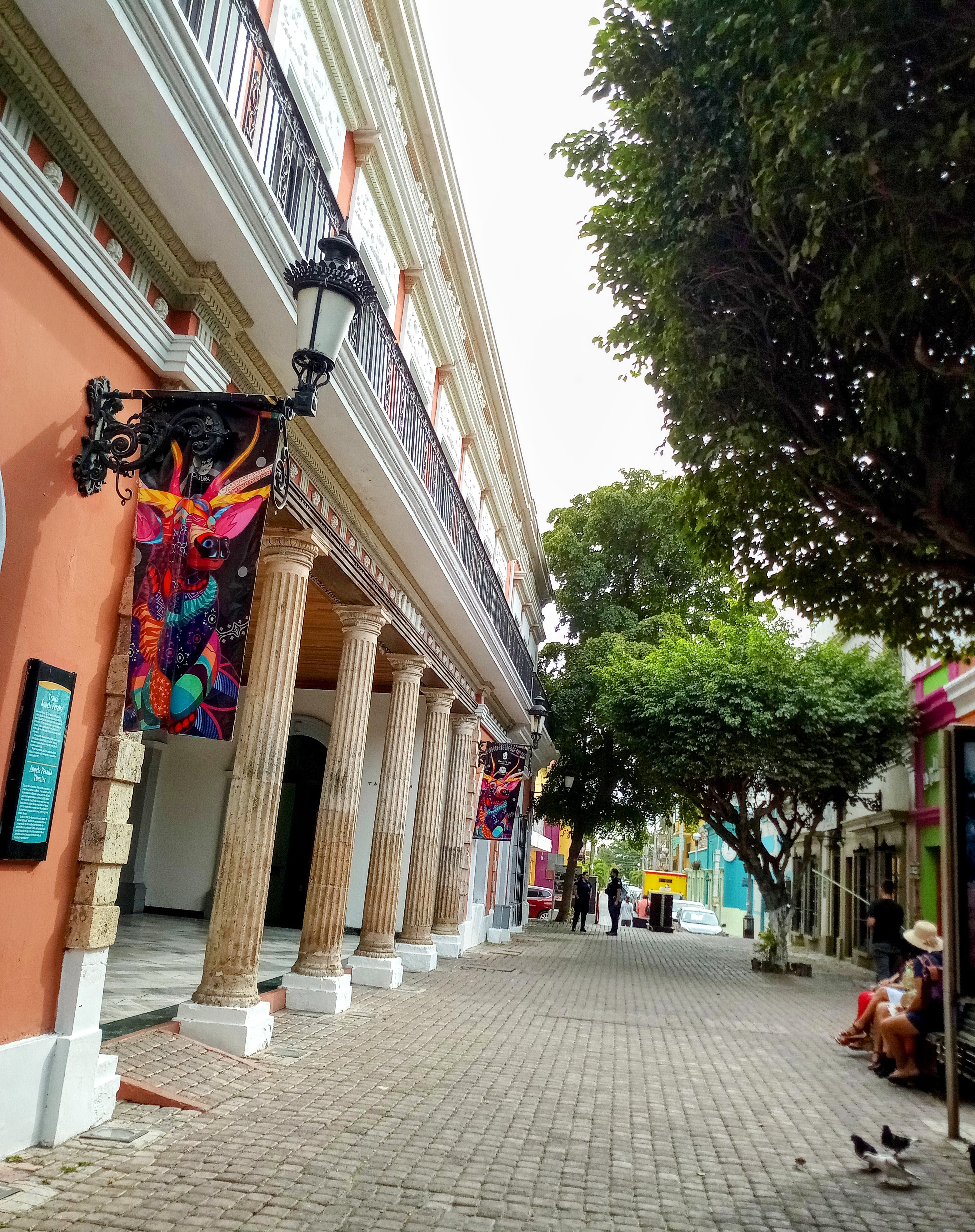
We went back to the old town area to walk around. Plaza Machado was a very nice low key leafy city center with no crowd when we were there, and that was our favorite part of the tour. There seemed to be lots of restaurants and shops around the area to peek in or eat at.
Plaza MachadoPlaza MachadoOpera House
We would have liked to hang around and have a sea food lunch since we were at the “sea food capital” of Mexico. But our guide got us on the van and took us back to the cruise terminal. If we had known that’s where we were headed next, we would have not gotten on the van. The historic center wasn’t far from the terminal, and we could have walked back. But the weather was hot and we felt lazy.
Now that we’ve done the whirlwind tour to cover all the attractions (except the brewery where 20+ different beers are produced and the lighthouse, which, we were not that interested in), we will just go to the historic center and hang out next time we go to Mazatlan.
There’s no shortage of cute little towns in Spain like this one: Albarracin
Around the time we got our second shots of the Covid-19 vaccine earlier this year, I received an intriguing proposal through Homeexchange.com: “can we swap houses for a month or two – my family has houses in Swiss Alps and Salobrena in Andalusia, Spain?” At that moment Switzerland was still going through a rough time in the pandemic, but Spain was getting ready to receive visitors in a few months. As long as they let us in, hanging out at a house overlooking the Mediterranean might be more fun than sitting at home, we thought. We agreed to do the exchange from end of May to beginning of July & we bought the plane tickets, round trip LAX-Barcelona (on KLM for about $650).
Then our exchange partner’s plans changed a month or two later. By then the pandemic seemed to have become a bit more manageable, and I decided to drive around to see more of Spain finding home swapping partners in various parts of the country. Under this new scheme, we were to go to places where we could find home exchange partners.
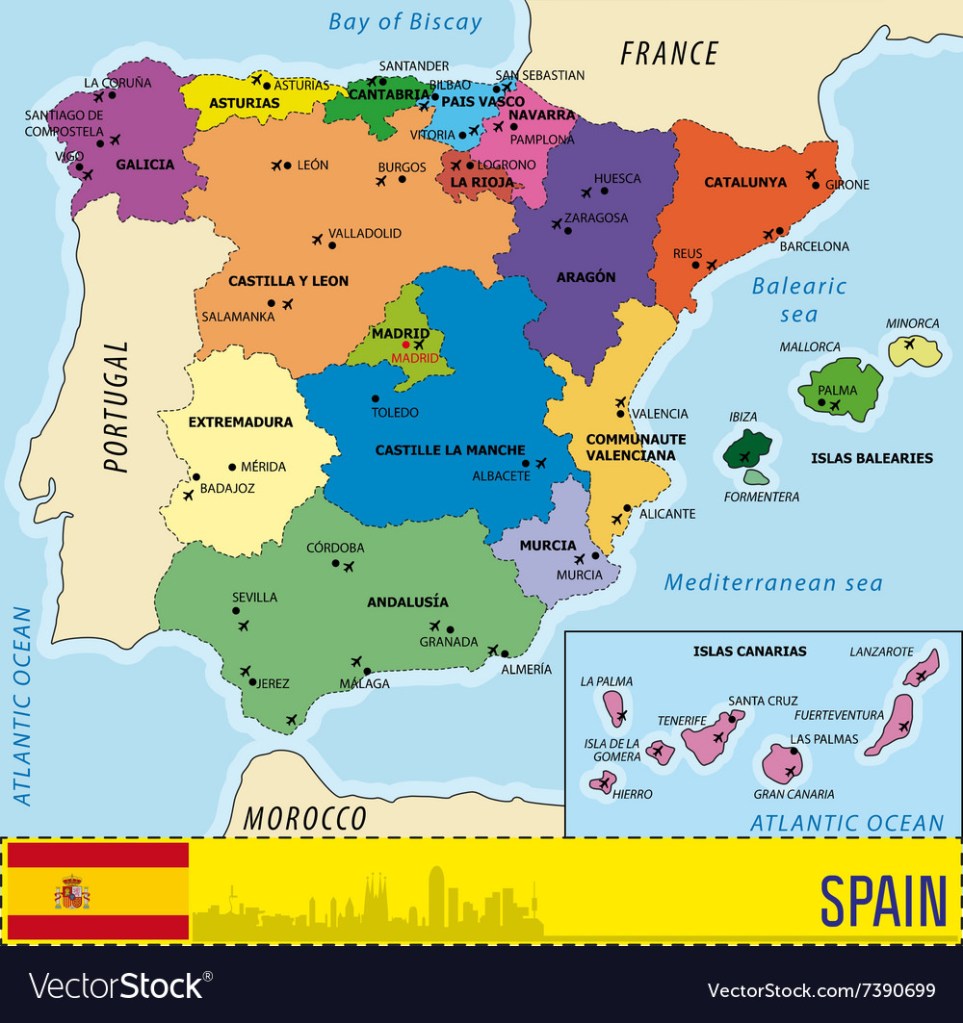
Pais Vasco, the sky blue area on top of the map is “Basque Country” in English
Our original exchange partner had told us about a rental car agency in Malaga (population: 569,000) that provided good price and service, and that turned out to be an excellent tip. We had to start our trip from Andalusia area anyway because some of our friends had bought tickets for LAX-Malaga-LAX thinking they will be visiting us in Salobrena (population: 12,400). We paid about $650 for renting a mid size car for 30 days including a decent insurance coverage and a second driver. We ended up driving around 1,400 miles covering 9 out of 17 regions on the map above & spent about $330 on gas. We shared the rental car+gas costs with our friends who were visiting us, thus, the final tab for us was reduced.
One thing we learned about driving in Spain: Google Map can be your best friend, but, it can also be the worst enemy because it kept sending us to impossibly narrow alley ways or kept recalculating the route to throw us off. I don’t know what alternative is there, though.
free tapas
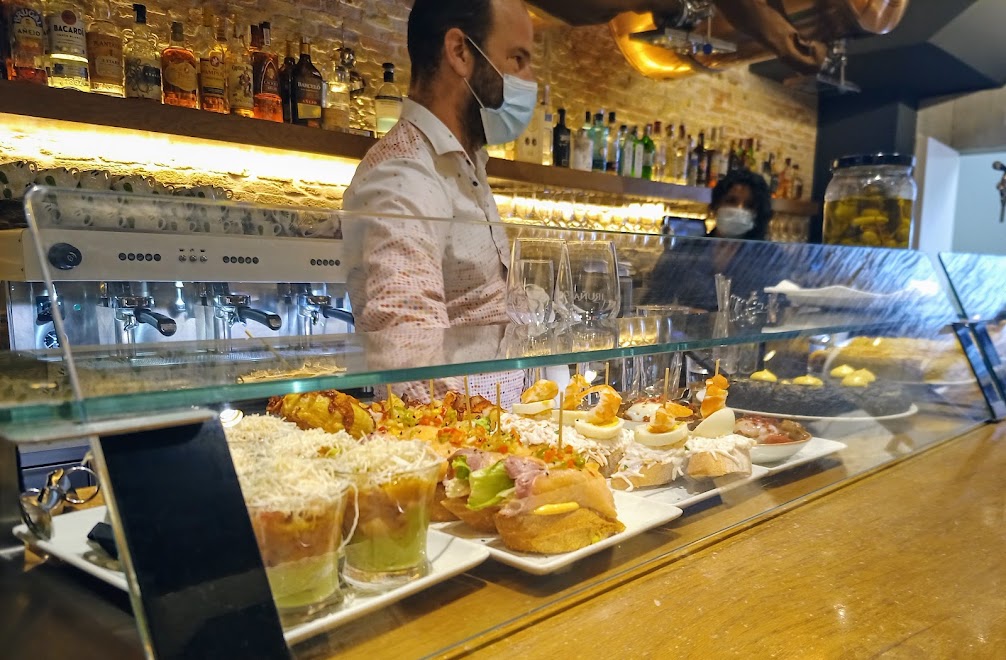
The other major cost was, of course, food. At many of the eateries in Andalusia, if you order a drink, they will bring you a free small plate of food called tapas. A drink can be beer, wine, soda, water etc. They cost about 1.5-2 Euros on the average. You can also order tapas from the menu for 1-4 euros. Similar idea is called pintxos in Basque Country, and they cost 1-4 euros each. This means you can get a nice meal for 10 Euros or less for two people. Most regular restaurant meals cost us 10-15 euros per person including drinks. We felt we ate really well while we were in Spain, and we spent way under $1,000 for the whole trip on food.
Housing was free for us for the most part, but the Airbnb’s we used for shorter stays of 1-2 nights cost us under $60 per night on the average. There seemed to be lots of good choices in Airbnb rooms in smaller towns other than Barcelona, Granada, and Malaga.
6 Days in Andalusia:
Day 1: arrived in BCN, transferred to Malaga ($59 round trip on Vueling Airlines), picked up the car, and drove to our Homeexchange townhouse in Marina de Casares, a beach side housing development area near the town of Casares. We were supposed to spend 8 nights here, but, because of mishaps caused by the pandemic, we were able to spend only 2 nights here. Bummer.
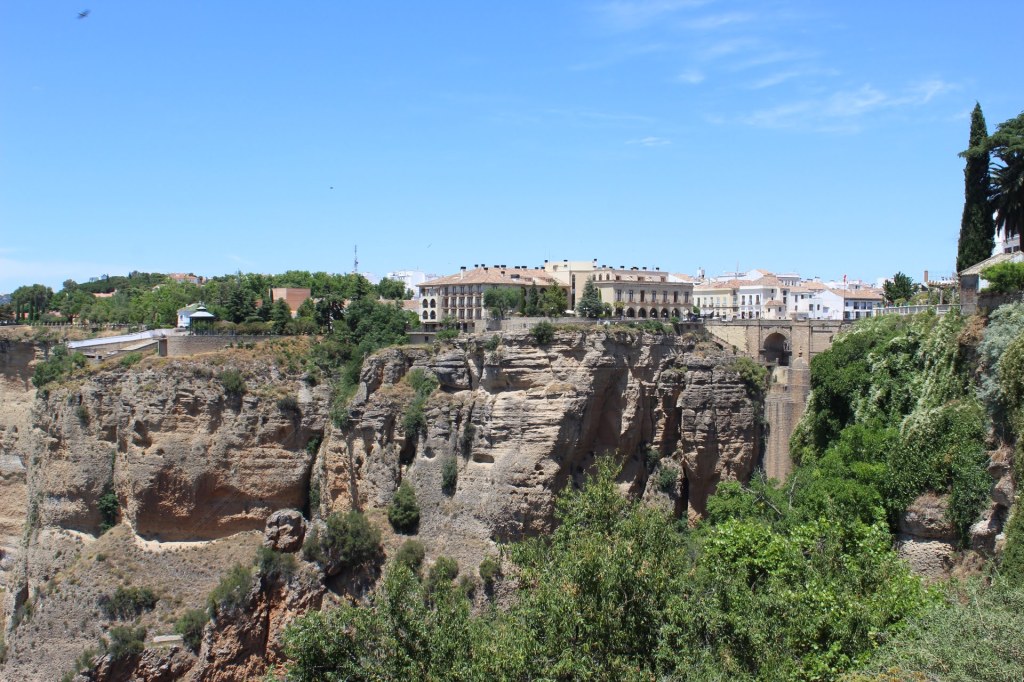
Ronda
Day 2: drove up the hill road an hour to participate in a walking tour of Ronda (population: 33,900), had lunch. Back home, walked around the beach by the house & had dinner at a beach side fish grill restaurant.
Alhambra Castle dominates the skyline in Granada
Day 3: Drove a couple of hours to Alhambra Castle for a walking tour. We took full advantage of the pandemic era crowd-less Alhambra. Had lunch and rested a bit at a cafe restaurant in a hotel before going on an early evening walk in the Albaicin neighborhood with the same tour guide. Tapas dinner. Drove an hour in the dark to get to our Airbnb apartment in the mountain village of Lanjaron. It sounded like a wonderful idea in theory, but, in practice, it was too far from Granada where we wanted to spend more time. So we cut our stay here from two nights to one.
Day 4: Breakfast in a village cafe. Drove back to Granada (population: 232,000), checked into a hotel ($50/night), then walked around town. Dinner at a cafe gazing up directly at Alhambra. Flamenco show(24 euros) in a gypsy cave
Day 5: Churros and hot chocolate for breakfast, drove an hour due south to our original home base of Salobrena for lunch, drove 1.5 hours to our magical Airbnb place in the middle of nowhere near a tiny town of Turon (population: 255), ordered a wonderful dinner at the house lovingly prepared by our hosts.
a little piece of heaven with the views from sea to mountains
Day 6: we were happy just to be there! Did go out to have lunch, though.
4 Days in Valencia:
Day 7: Drove 3 hours through beautiful mountains and ocean, then drove into a historic naval town of Cartagena (population: 213,900) by following the signs & had lunch. Too bad that we didn’t have enough time to walk around and see a bit of this town. We had been there as a cruise stop & it is a beautiful historic town. Continued on for another 3 hours to arrive at a Home exchange condo on the beach northeast of Valencia (population: 791,400).
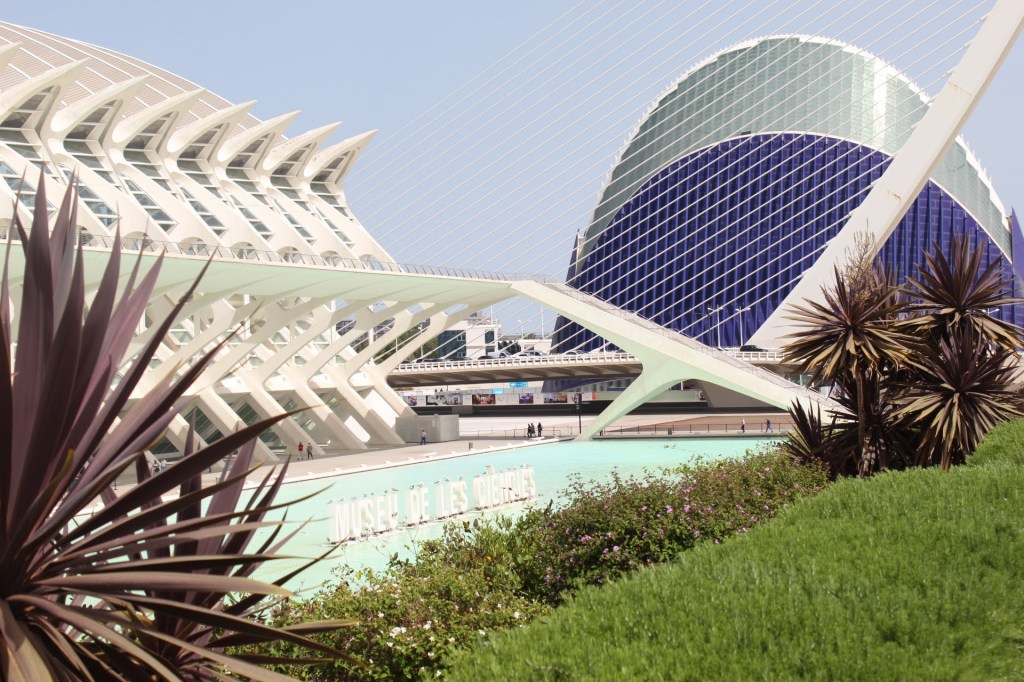
Day 8: Walking tour of historic Valencia downtown followed by a street art tour. Paella was invented in Valencia – our lunch had to be that. Next stop was the City of Arts & Sciences, pictured above, the modern face of Valencia.
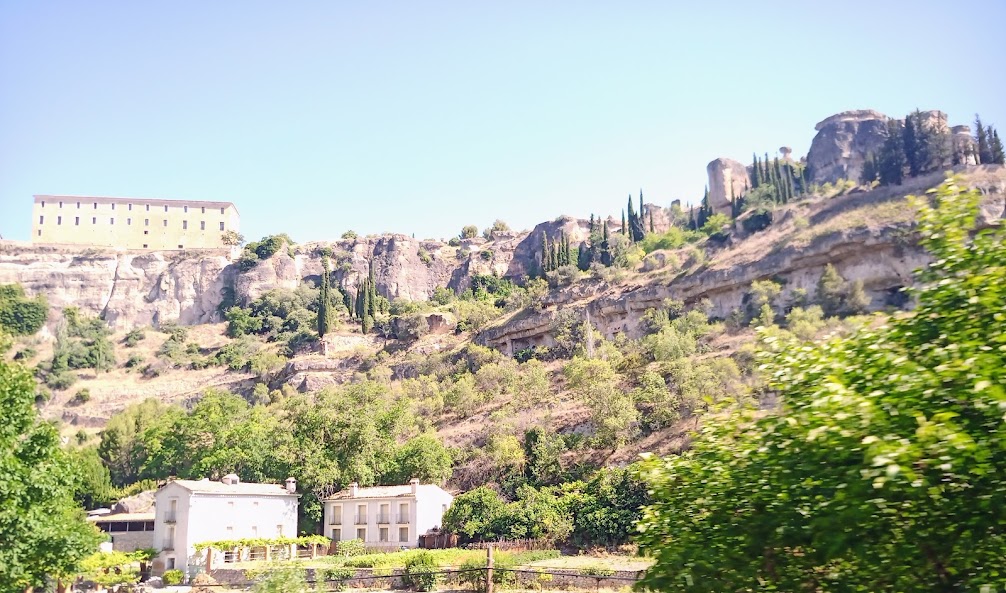
Day 9: Drove 2 hours to Albarracin (population: 1,016) which is often cited as one of the most beautiful towns in Spain. Charming, certainly. (But there are so many beautiful little towns all over Spain…) Parked in one of the public lots off of the main road leading into town & walked up the hill to get into the town. Many of the restaurants were closed due to the pandemic. Our lunch restaurant was fine and eclectic although prices were not necessarily cheap.
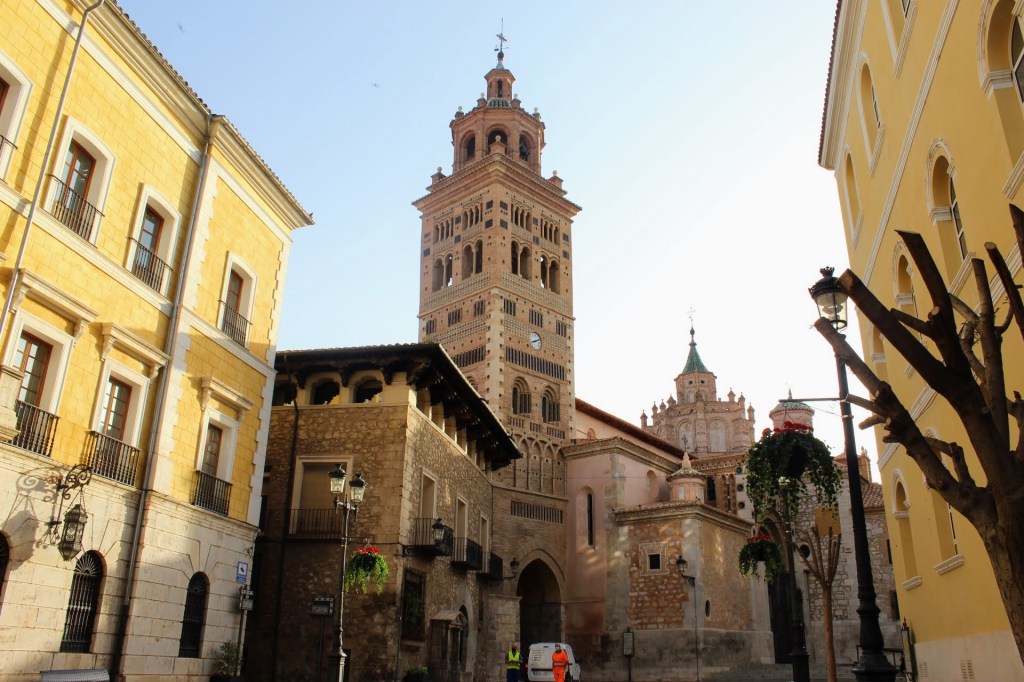
Teruel old town
Drove 30 minutes down the mountain and arrived in Teruel (population: 35,600) to check into the Airbnb apartment ($120 for 6 people), which turned out to be one of the best Aibnb’s we’ve ever stayed at: artsy decorations, spacious rooms (3), well equipped kitchen, comfortable sitting area – all this right next to a major square. It was meant to be a convenient overnight spot close to Albarracin (where rooms were rather expensive), but, it actually was a nice place to visit with a UNESCO World Heritage entity in town.
Day 10: Drove back to our beach condo stopping at a famous horchata place. How could we not swim in the Mediterranean while we were staying right next to it, right? So we did before having dinner at a local restaurant.
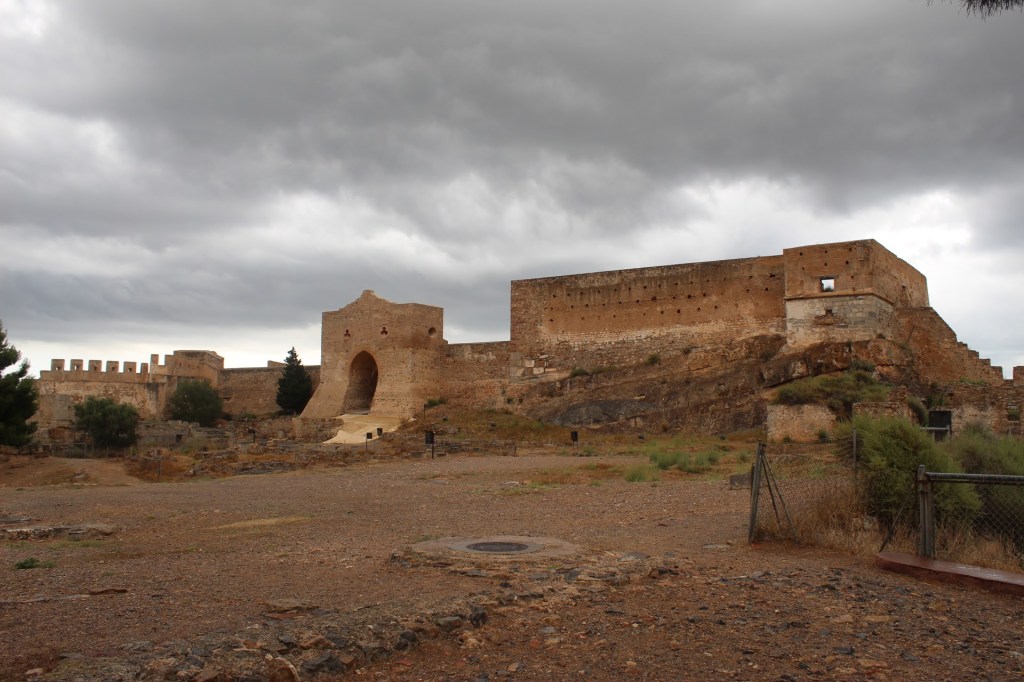
Sagunto Castle
9 Days in Catalonia:
Day 11: Practically next door to where we were staying was Sagunto Castle, a 2,000 year old fortress & we checked it out before heading for our lunch at a hill top restaurant in Peniscola (population: 8,094), 1.5 hours up the coast. Not open. Drove to the port area and ducked into a restaurant for a great sea food lunch in pouring rain. Drove 130 miles to Barcelona, checked into a Homeexchange apartment. Had dinner in the neighborhood.
Day 12: Our friends joined the Gothic Tour of Barcelona, and we drove out 1.5 hours northeast to a small town called Peralada (polulation: 1,860) for an 8 night stay at a Homeexchange place.
Peralada rooftops
Day 13: Drove back into BCN, had lunch with our friends at one of our favorite restaurants near Sagrada Familia where their Gaudi tour ended. We rested at the apartment while our friends continued exploring BCN. Met at our favorite tapas joint for dinner.
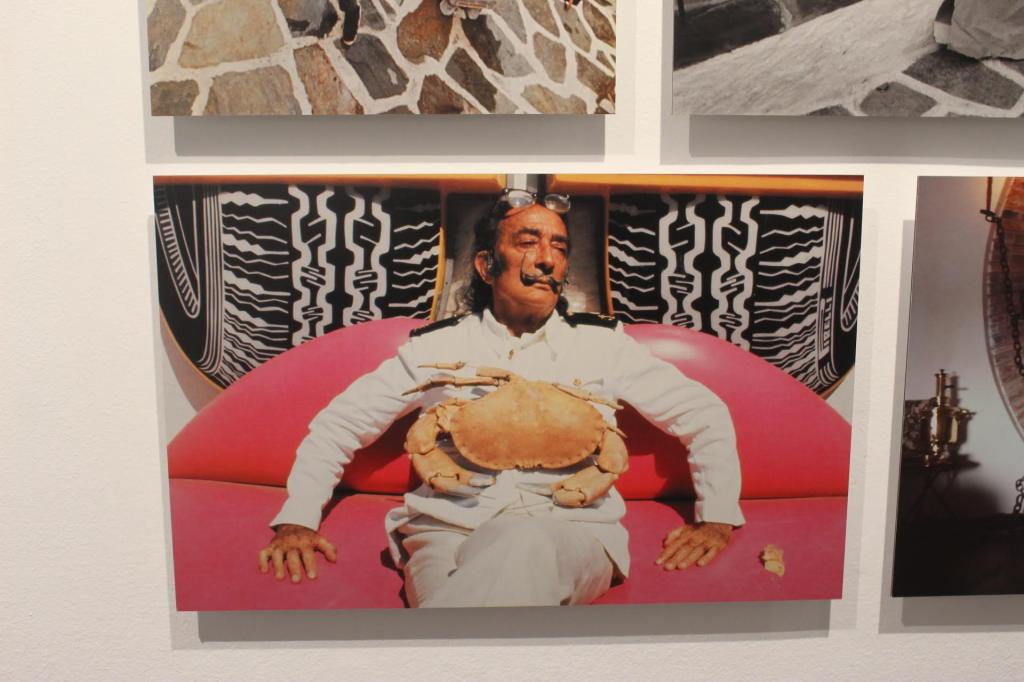
Day 14: Two friends flew back to the U.S., and two came with us back to Peralada. Stopped in Figueres (population: 46,300) to check out the Dali Museum, a fun place whether one likes Dali’s work or not, and had lunch. Settled into our Peralada cottage. Dinner in town at an excellent restaurant just up the road from our place.
Dali himself
Day 15: Our host recommended Peratallada (population: 155) and Pals (population: 2,460) as worthy stops, and she was right as we stopped at those two towns on our way to a walking tour of Girona. The city of Girona was almost empty of tourists and many restaurants were not open, but that gave us lots of room to roam around.
Besalu
Day 16: Our host had alerted us to the basalt cliff of Castellfollit de la Roca, and we stopped by there before an excellent walking tour of Besalu (population: 2,460), yet another historic town with pretty bridges and a pleasant town center. Nice lunch (Sad to note that Cal Tronc restaurant is permanently closed now). Dinner was at an Italian restaurant in a neighboring village of Peralada.
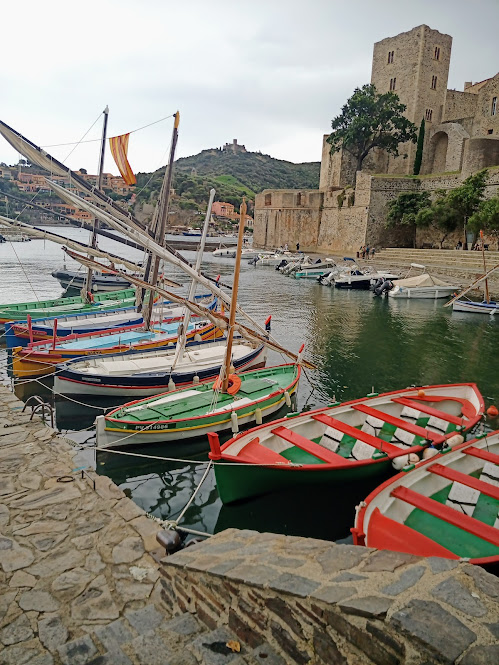
Collioure: no, I still don’t know how to say that name
Day 17: We wanted to check out at least one town in France since we were so close. We picked Collioure (population: 2,830), supposedly an artsy little coastal town. We took the winding mountain & coastal route (1 hour 20 min.) rather than the freeway (58 minutes), and that turned out to be a wise decision. Once we got over the sticker shock (we were clearly spoiled by Spain prices), we did enjoy walking around town even though rain was in the way.
Day 18: Our last day in Catalonia was a beach day in Cadaques (population: 2,750), a resort town 40 minutes drive from our cottage. Lovely all around with clear Mediterranean water plus skinny dipping young ladies.
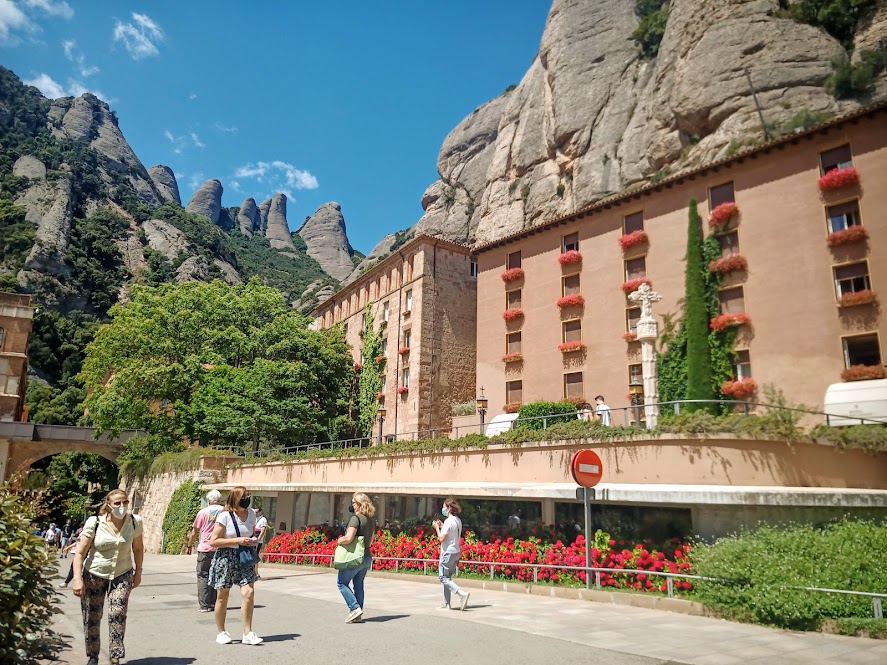
Montserrat Abbey Hotel
Day 19: We dropped the two friends off at Barcelona Airport & continued on to the Montserrat Monastery. Thanks to the pandemic, we were able to find a parking spot not too far from the entrance. Beautiful scenery and church structure. But we could not help feeling the whole complex was a tad bit too commercialized with an on-site tourist hotel and gift shops etc. Then we drove 1.5 hour to Lleida (population: 137,800) to break the driving. Lleida has its own share of history and attractions, but, we did not feel like walking around too much. So we did not explore much and went to bed early.
Zaragoza Cathedral
5 Days in Navarre & Basque Country:
Day 20: A UNESCO World Heritage site of Zaragoza (population: 666,880) was under 2 hours away, thus, we chose to go there and have breakfast. The city was just waking up as we arrived around 9 AM. Impressive old town area and Cathedral. We could have spent a day or two to really see this capitol of Aragon region, but we had to arrive at the next home exchange apartment in Artica, a suburb of Pamplona, at a certain time to meet our host. A 2 hour drive got us there.
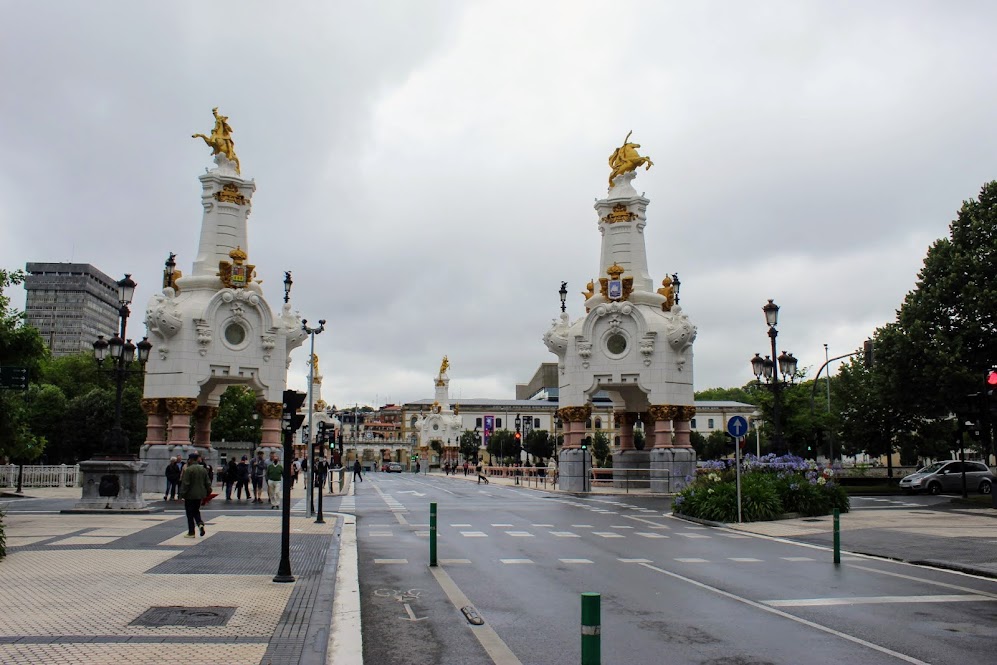
Day 21: We decided to go to Basque Country first before exploring Pamplona and Navarre region. San Sebastian (population: 188,600) was just an hour away over the mountains. Our Airbnb room was located in the city center, which was perfect, but it rained like cats and dogs as we tried to find our guide for the walking tour of the old town. We thought he might want to cancel the tour. Nope. He said it rained all the time in San Sebastian (also known as Donostia-San Sebastián) that it was not a big deal. We were glad we did the tour, but we were freezing to death. We discovered what pintxos were all about, and we fell in love with those little plates of deliciousness that typically cost 1 to 4 euros each.
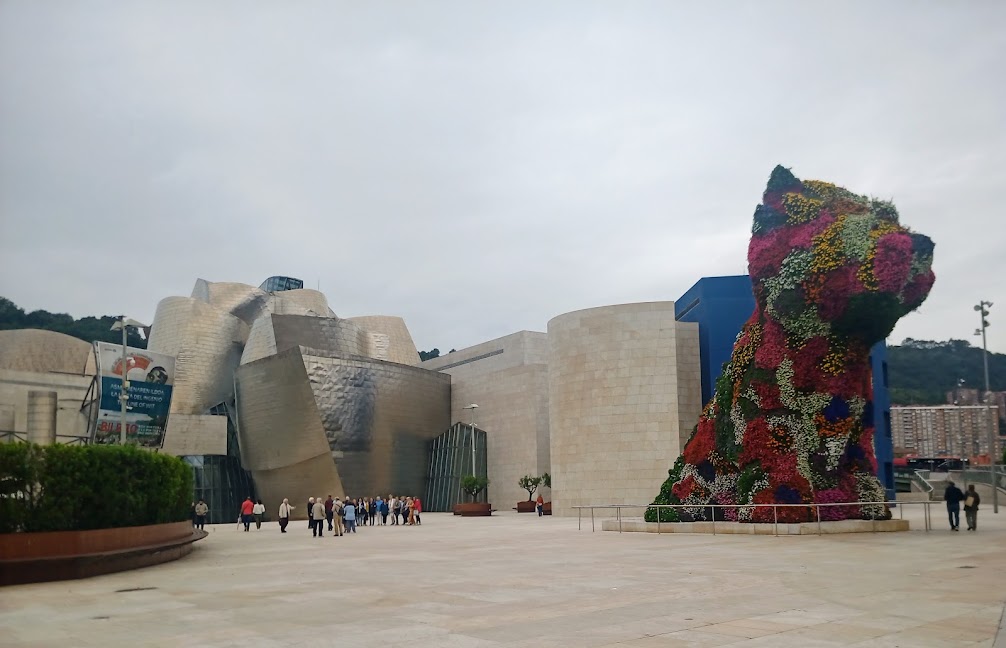
the most famous building in Basque Country
Day 22: Left the charming resort town of San Sebastian to visit Frank Gehry’s Guggenheim Museum in Bilbao, 70 minutes west. The architecture of the museum was the star of this city, but the content of the museum was not as impressive in my mind. Pintxos in Bilbao (population: 345,800) were not as impressive, and the city itself wasn’t quite as attractive as San Sebastian. After all, it’s an industrial port city. We wanted to see the flysche in the town of Zumaia on the way back but had to give up because we could not figure out how to feed the parking meter!
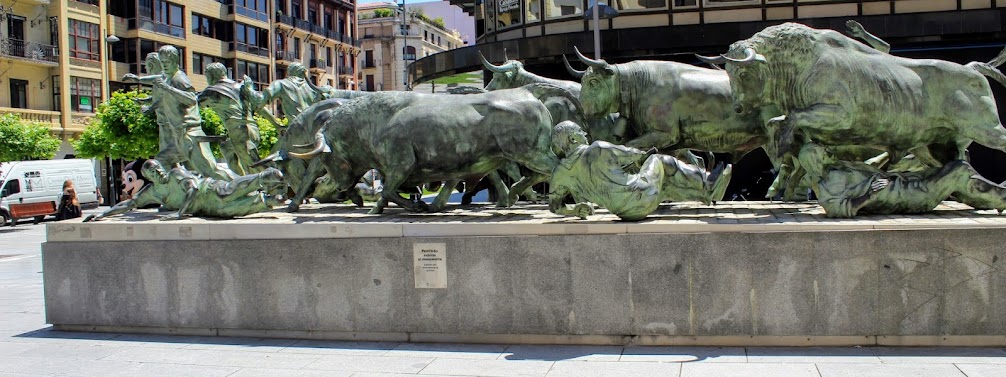
Day 23: We drove into the center of old town Pamplona (population: 199,000), found a street parking spot 15 minutes away from the main square, Plaza de Castillo, walked in & walked around. Had some great pintxos.
Pintxos display in Pamplona
Day 24: Visited two natural wonders of Navarre region, Foz de Arbayun and Foz de Lumbier. Just a 40 minute drive southeast of Pamplona, these two spots were only 15 minutes from each other. Stopped in Pamplona for lunch and more sightseeing. This time we parked in the huge lot right under the main square.
3 Days in Castilla-La Mancha:
Day 25: Our 6 hour journey to Cuenca (population: 54,800) was broken down into several smaller segments. The first stop was 20 minute away on top of Alto del Perdon hills where metal sculptures (pictured above) of Camino de Santiago pilgrims stood. Just 15 minutes down the hill was Puente La Reina (population: 2,840), a pilgrimage town filled with cobblestone alleys and welcoming signs for the pilgrims. After an hour or so of driving, we got into a mountainous area where cars could speed up to never more than 30 miles an hour, and this was where the local police waited to give us a speeding ticket. Huh? Speeding? Our Spanish was not good enough to argue, though. Lunch stop was in Medinaceli (population: 720), another charming little town with a big town square. Arrived at the home exchange apartment mid-afternoon.
mountains surrounding Cuenca
Day 26: A UNESCO World Heritage site of Cuenca’s old town was on a hillside and easily walkable. There was a free parking area on top of the hill following the main drag. Many of the major attractions and the museums were not open due to the pandemic, but we got the flavor of the town. Drove out to the Enchanted City rock park. Dinner at an excellent local restaurant not too far from where we were staying.
Valdepanas old town center
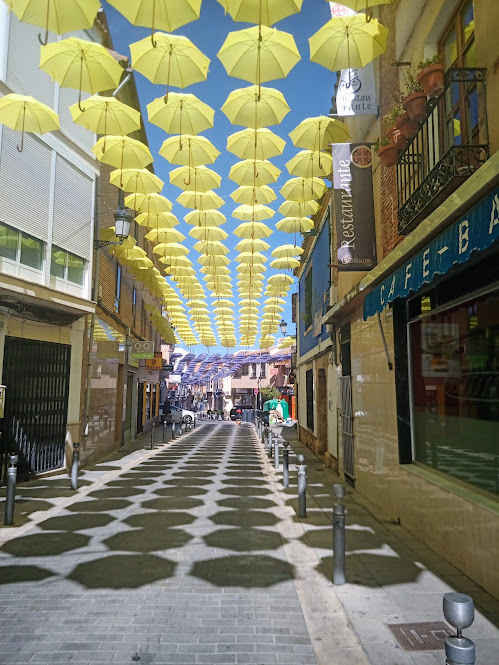
Day 27: We originally planned to spend 4 nights in Cuenca, but, there didn’t seem to be a whole lot to do there. So we decided to drive slowly toward our final destination, Malaga, stopping in small towns. Drove about 2 hours southwest and had breakfast in another town with a long name: Villanueva de Los Infantes (population: 5,030). Within 15 minutes, we visited another cute town with a great church building, San Carlos del Valle (population: 1,120). Then came the popular center of the wine growing region, Valdepenas (population: 3,0200), which, when we visited, was not very active because it was a weekend during the pandemic. We headed over to our Airbnb room in a small town of Membrilla (population: 6,000) & checked in, then drove 6 miles up the road to a bigger town of Mazanares (population: 18,000) for lunch. It seemed like a nice enough town, but we were too tired to explore much. Dinner was at a restaurant in Membrilla.
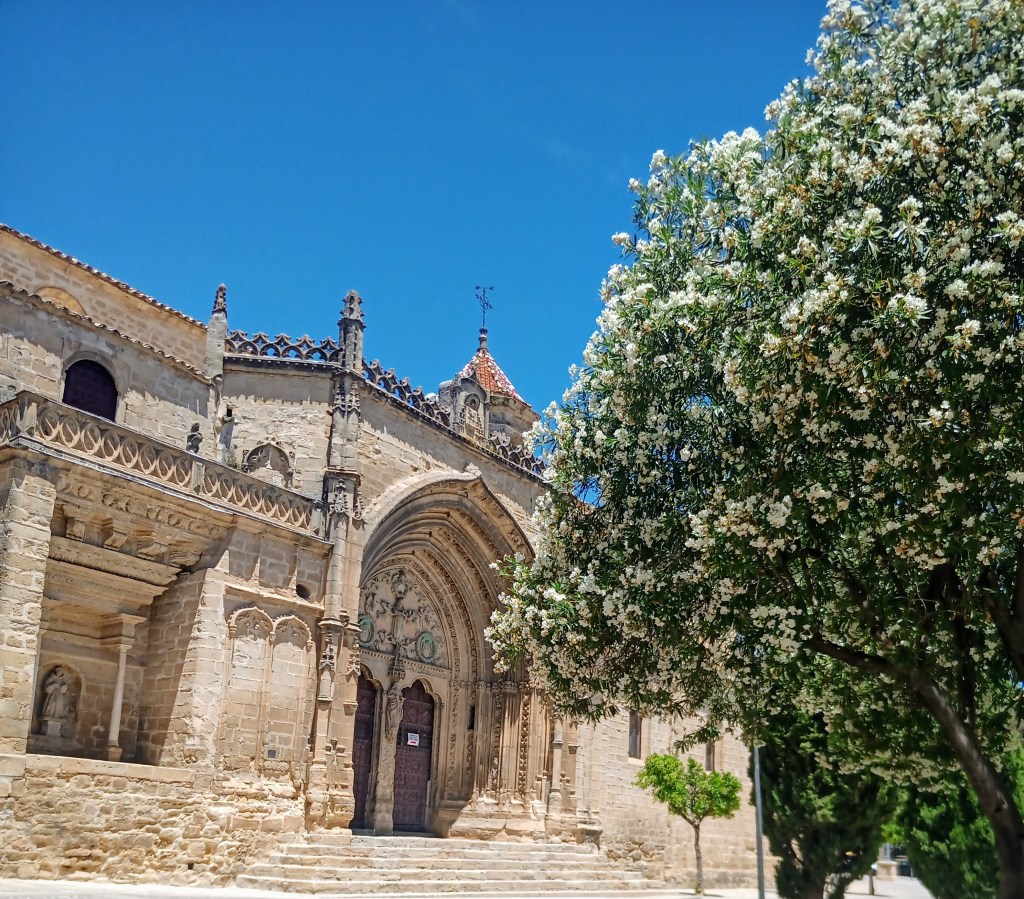
a church in Ubeda
3 Days back in Andalusia:
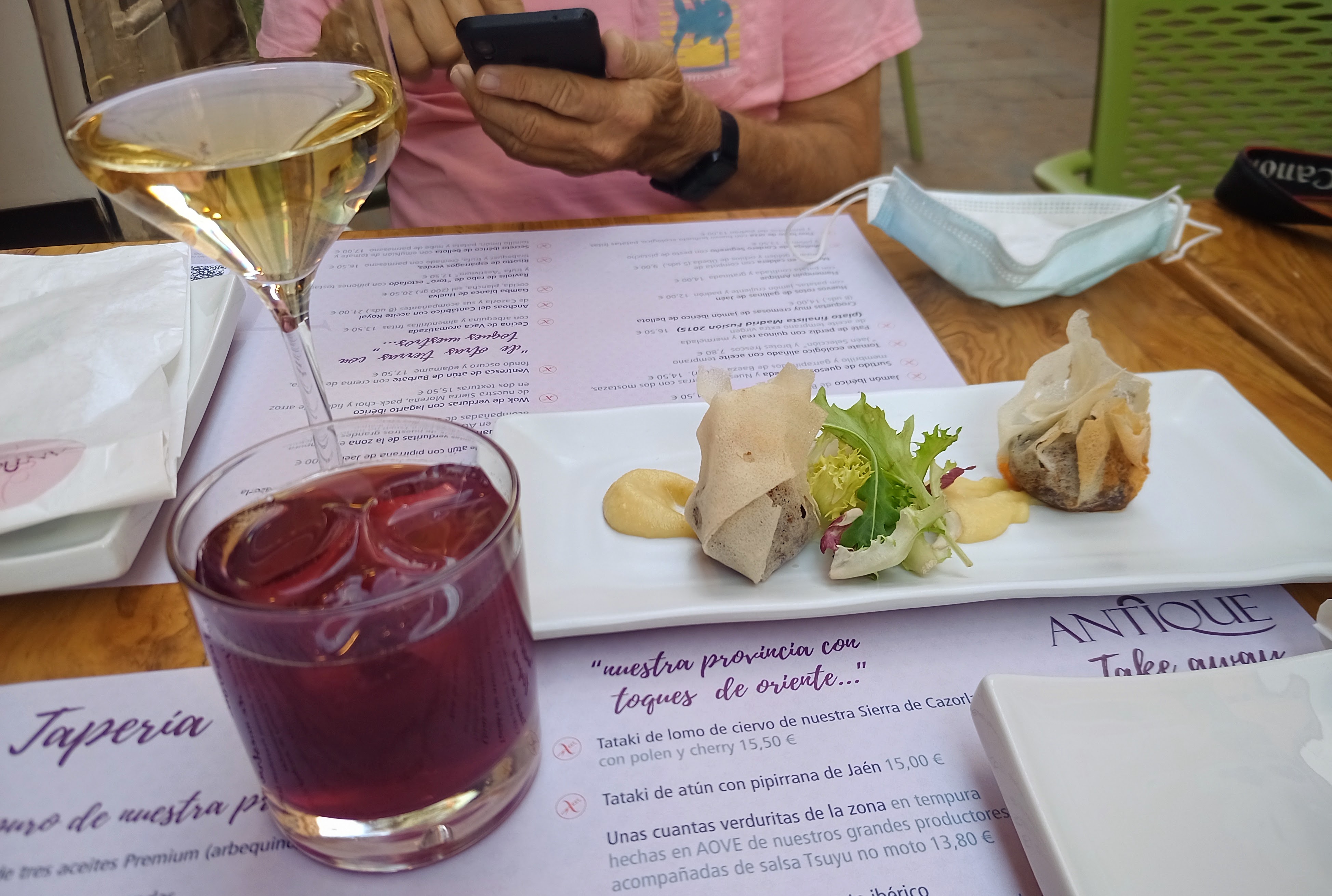
Day 28: From Membrilla to Ubeda (population: 34,600) was an hour and a half of pleasant scenery filled with vineyards and olive trees. Another of UNESCO World Heritage site, Ubeda was a very attractive, friendly city. Lots of restaurant choices. We had a great simple meal at Antique tapas restaurant, and our Airbnb apartment was perfect in every way.
a valley of vineyards & olive trees
Day 29: Drove to Baeza (population: 15,900), practically the next town over. We wanted to have breakfast there, but we could not find any place open at that hour. From here to Malaga (population: 569,000) was a bit over two hours. This was on July 5th, and the temperature was in the 90’s. We gave up on the Airbnb studio we had reserved because of the parking difficulty & checked into a hotel near the airport with free parking and air conditioning. Too hot to walk around.
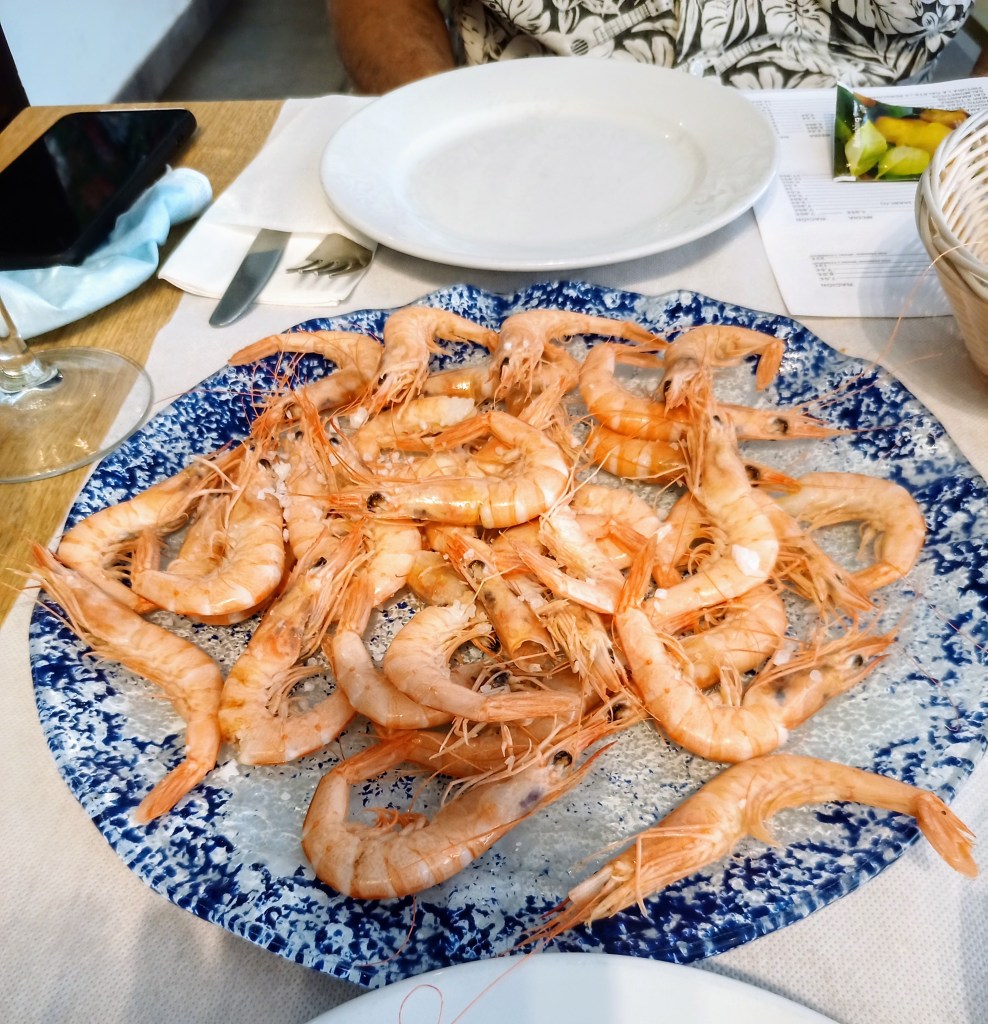
Our last sea food meal in Spain – till next time!
Day 30: We did not have enough energy to go into town. We had been there as a cruise stop some years ago, thus, we decided to stay local, ate at a beach side grill, checked out a shopping mall and chilled out.
Day 31: Flew out of Malaga to Barcelona, then to the U.S.
In hindsight, we might have been a bit too ambitious to cover a lot of ground. Spending a little more time in each stop or driving not as much as we did could have been a more enjoyable experience without depleting our energy. But, over all, we felt we got to know Spain better. Every where we stayed, our hosts were so wonderful. They usually went out of their way to welcome us and help us as much as possible. Sites may bring us in, but people will bring us back. We will be back in Spain for sure!
Cadiz
Original Andalusia Plan
Before the pandemic derailed our plan, we had a rather busy itinerary for Andalusia. Just in case anyone is curious:
When we got fully vaccinated in late February of this year, we thought we had to go somewhere to celebrate. How about Catalina Island? I looked into it, and the winter discount season was coming to an end before we could go. Then Travelzoo sent us an offer we thought we could not refuse: $120/night for 2 at an all inclusive resort in Los Cabos. Flights were around $250 per person, and the rental car could be had for $120 for 6 days. When everything was said and done, our departure date was set at the end of April. Darn, almost two more months of waiting to fly somewhere?
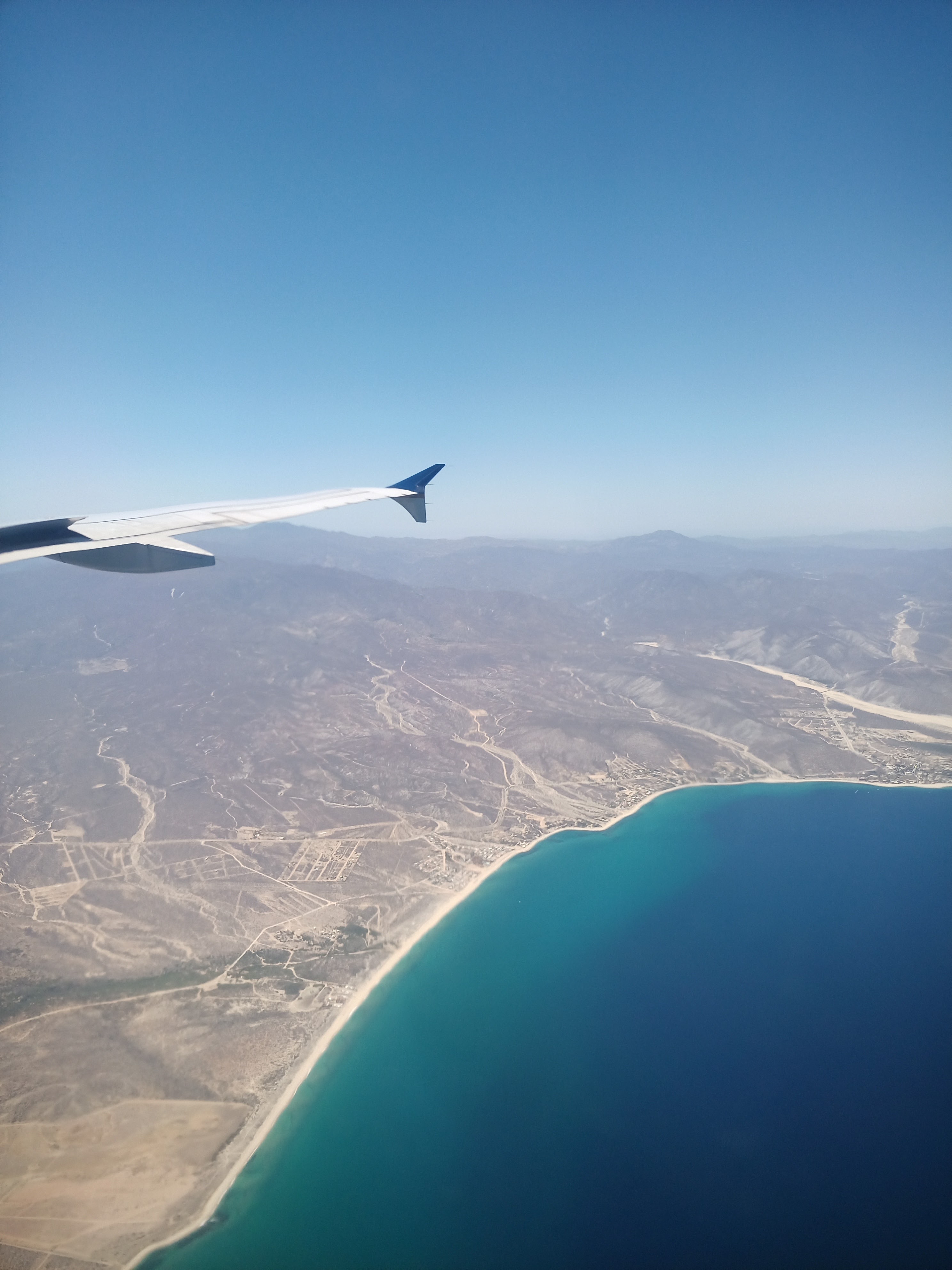
I would not include a photo of a flight in most cases, but, this was our first in a long long time – or that’s how it felt.
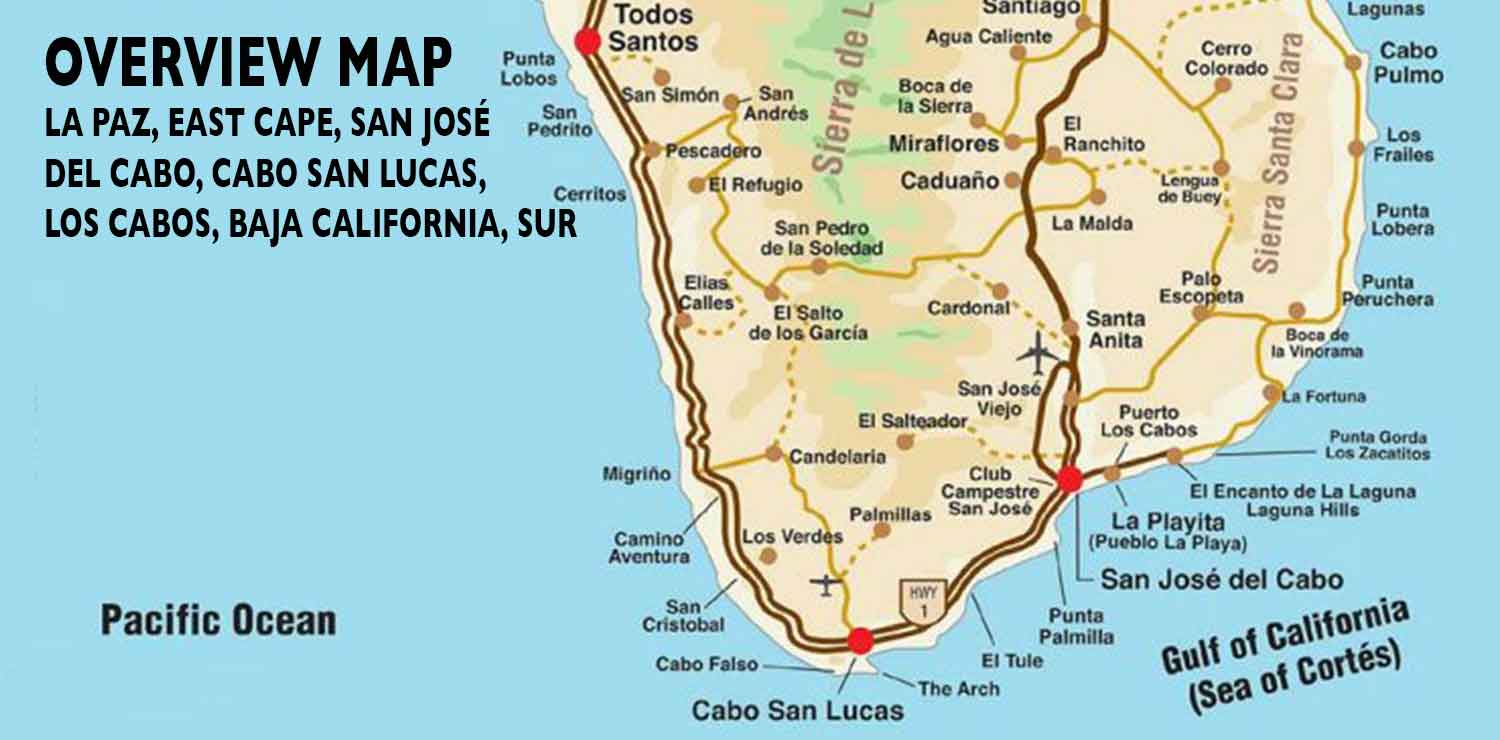
Los Cabos is comprised of two cities: Cabo San Lucas (population: 202,000) and San Jose del Cabo (population: 136,000), 20 miles apart. I didn’t know this till this trip, and it took me a while to sort out the names with multi words. There is a freeway connecting these two cities, and Los Cabos Airport (SJD) – the sixth busiest airport in Mexico – is north of San Jose del Cabo. Unlike most other cities in Mexico, Cabs are not necessarily cheap (for instance, the airport to Cabo San Lucas often costs $40-100) in Los Cabos. So renting a car made sense for us at the price we paid, we thought. Well, it turned out, we had to sit through a time share presentation in order to get the quoted price from the local agency we made a reservation with. Good thing we had time. If you are curious about public transportation and taxi options, here’s a good information page.
Many resorts are located along the ocean side of this freeway, and, ours, Krystal Grand, was one of them. We did not expect a super luxury place with what we were paying, and there was no surprise. Food was decent, service was o.k., and the facilities were adequate including a free parking service.
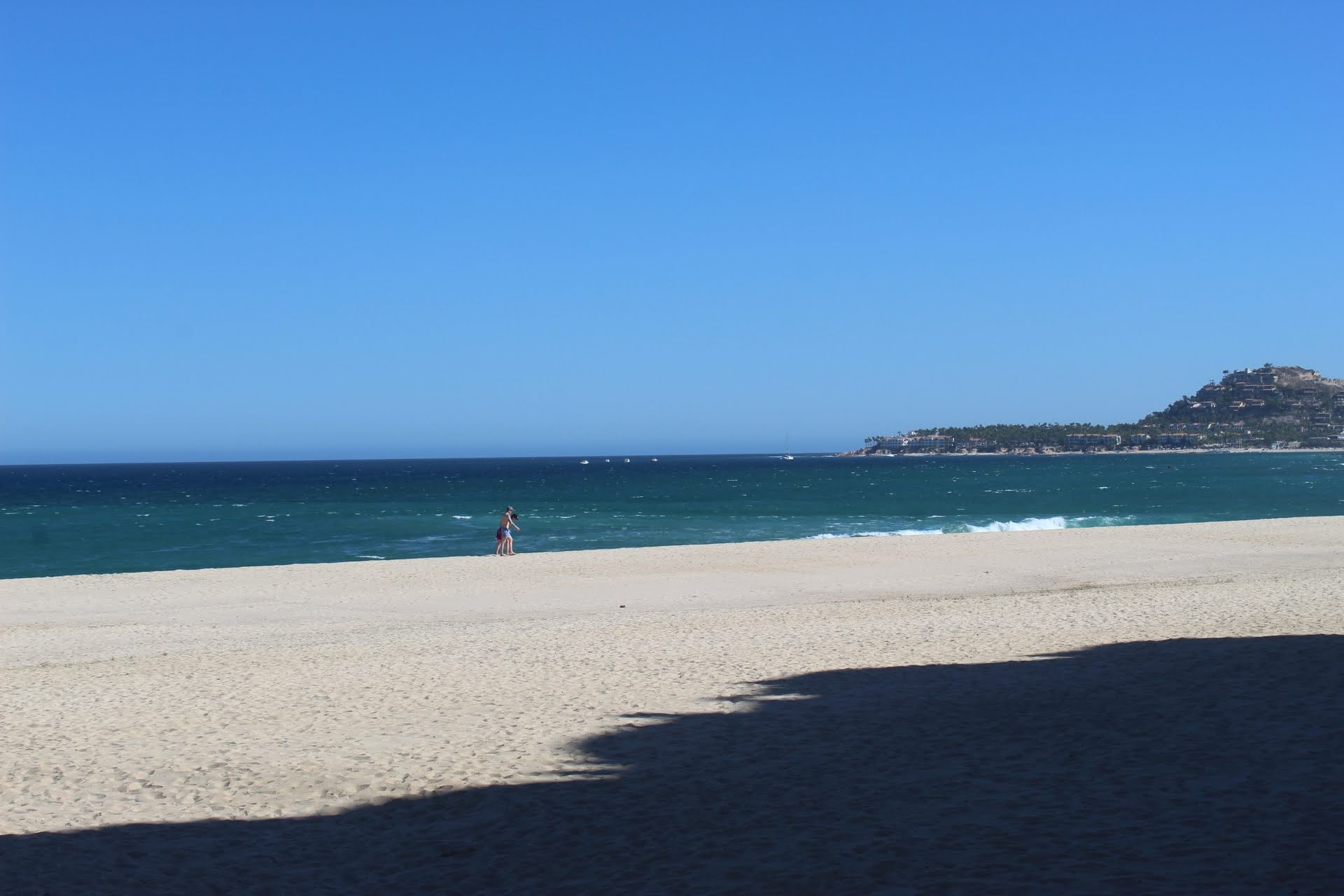
We didn’t realize Sea of Cortes in this part of Baja was too rough to swim in, thus, all the resorts had big swimming pools for swimming while looking at the sea, like in the first photo on this page.
Krystal Grand was actually only a mile or two from downtown San Jose del Cabo. Of the three towns we visited, we liked SJDC the best. We parked the car on a side street a few blocks away from the main square (Plaza Mijares), and we walked around.
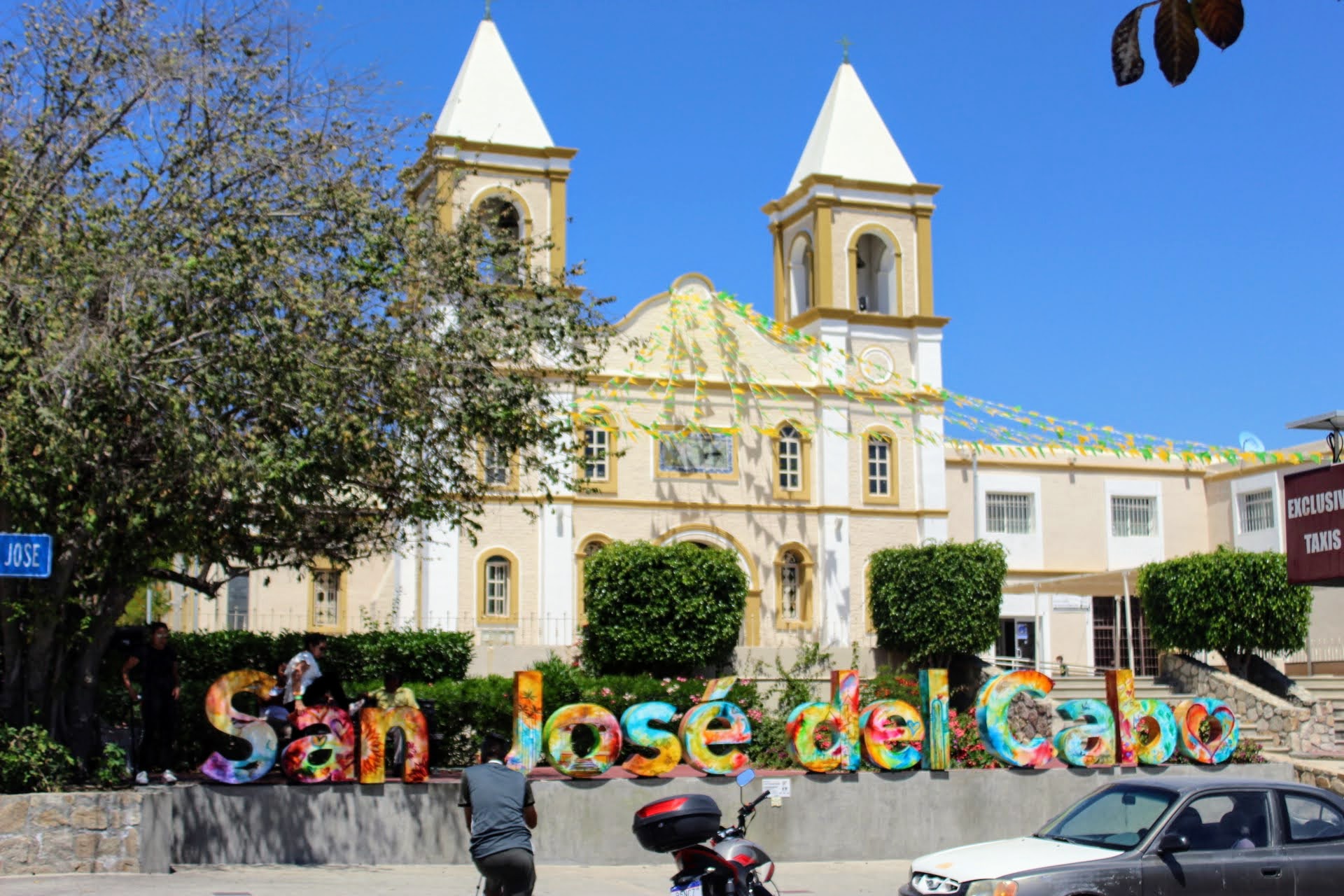
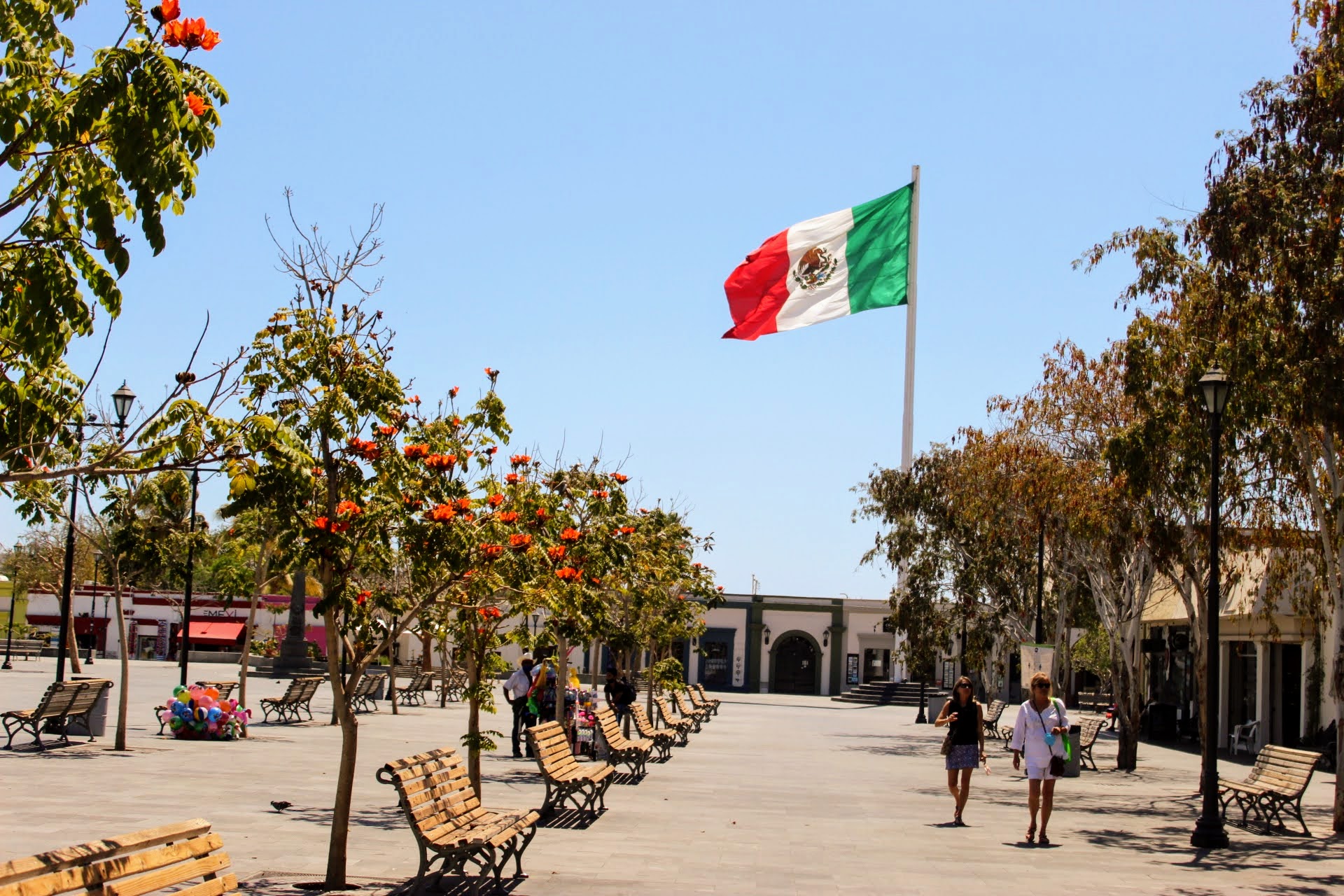
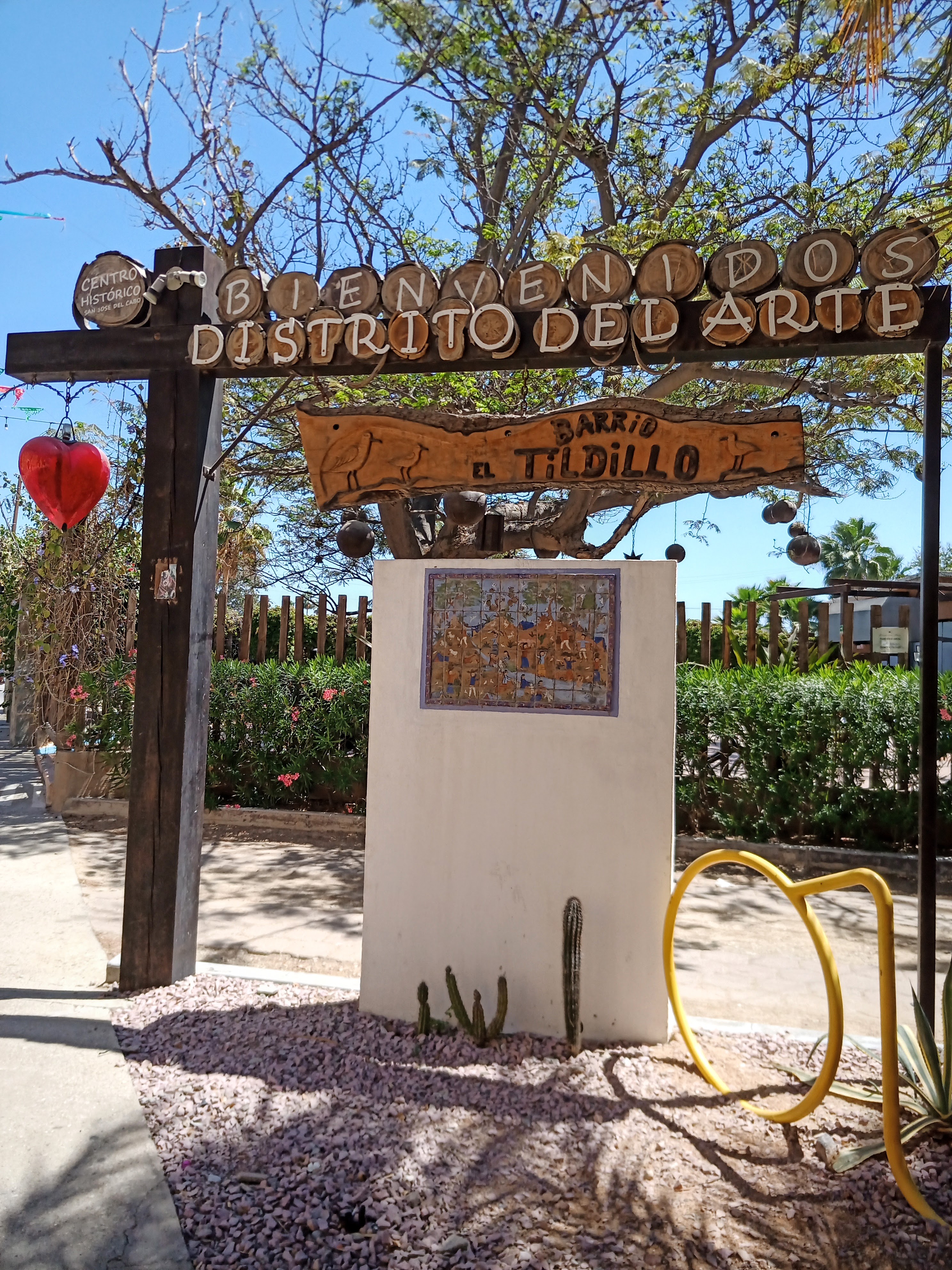
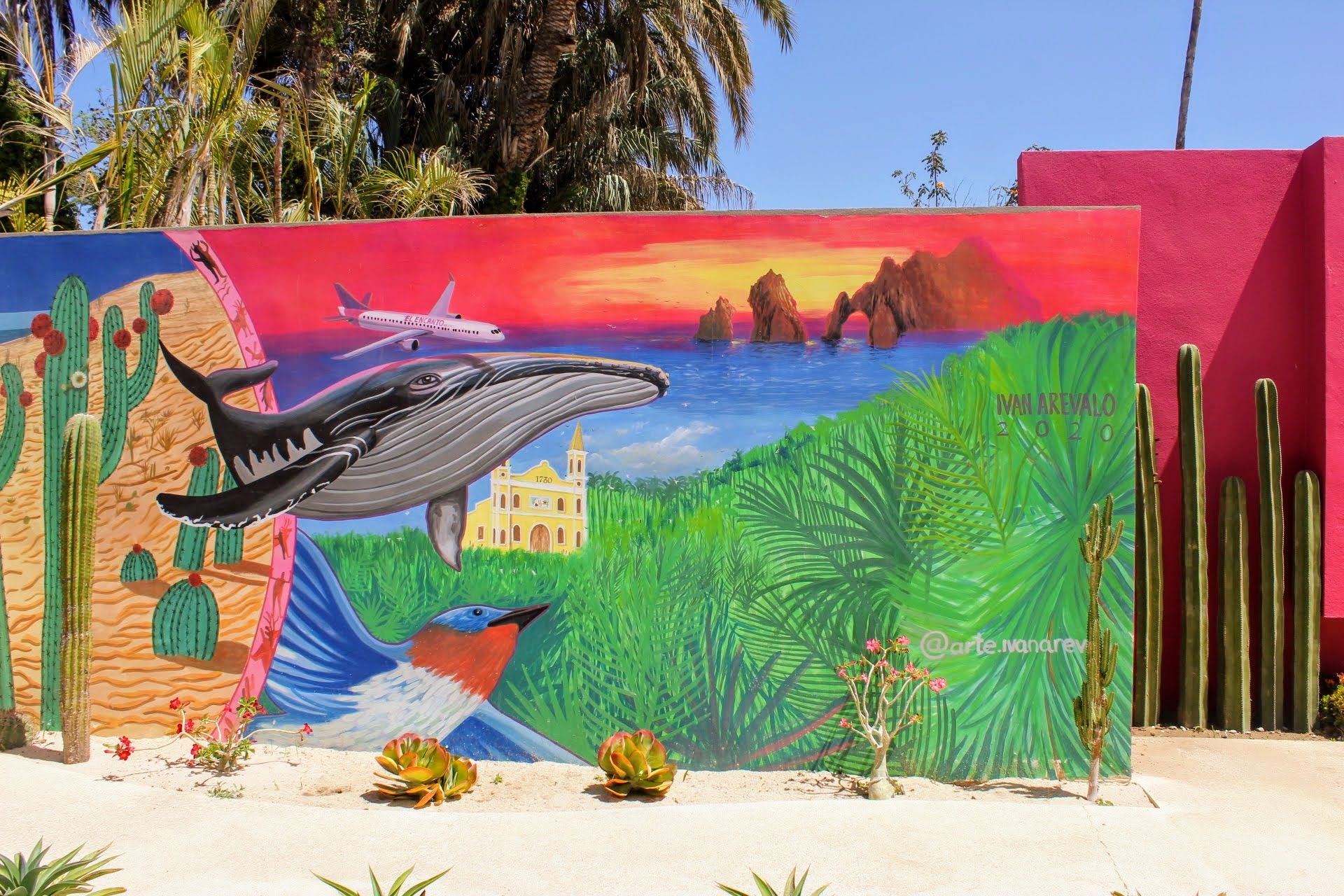
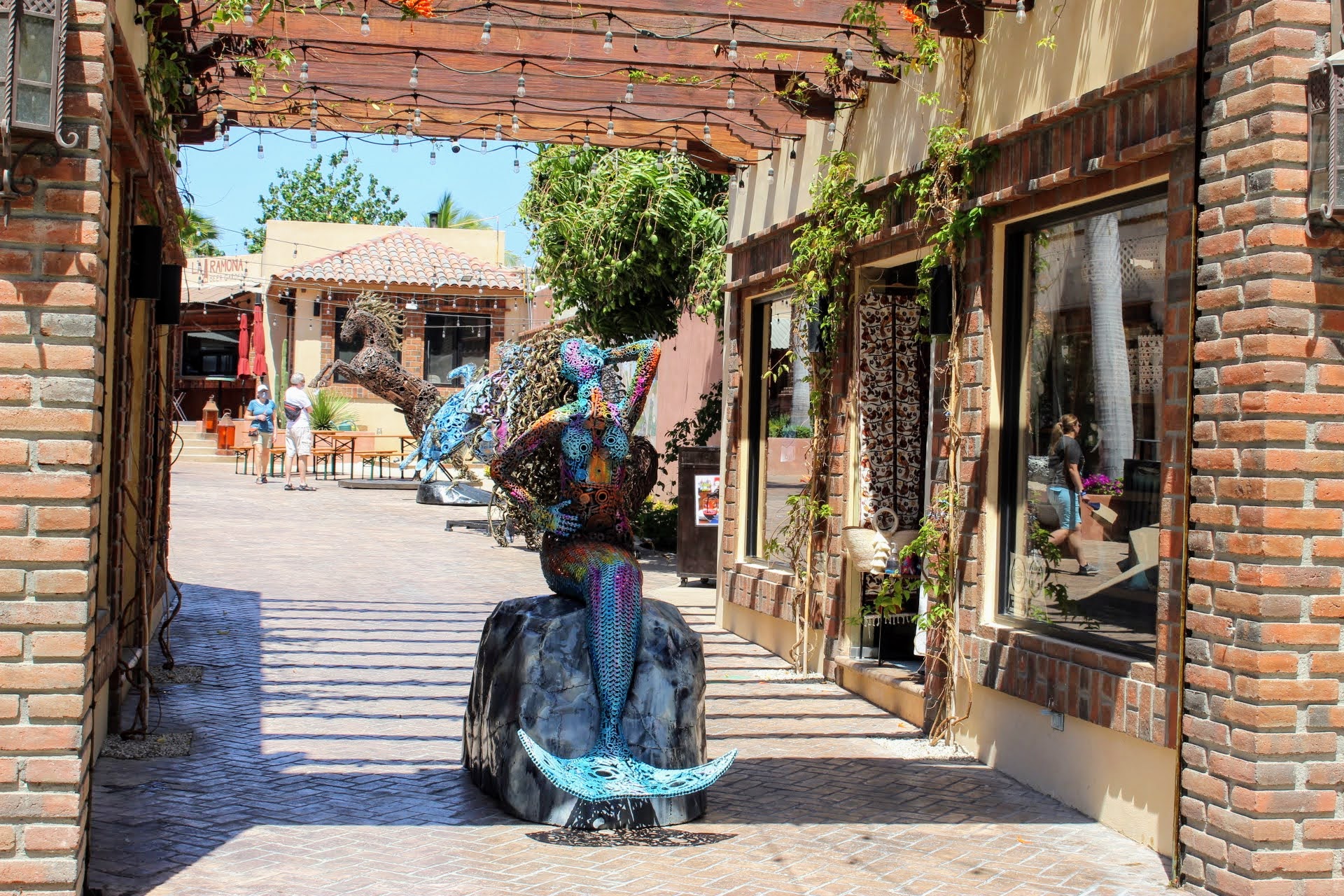
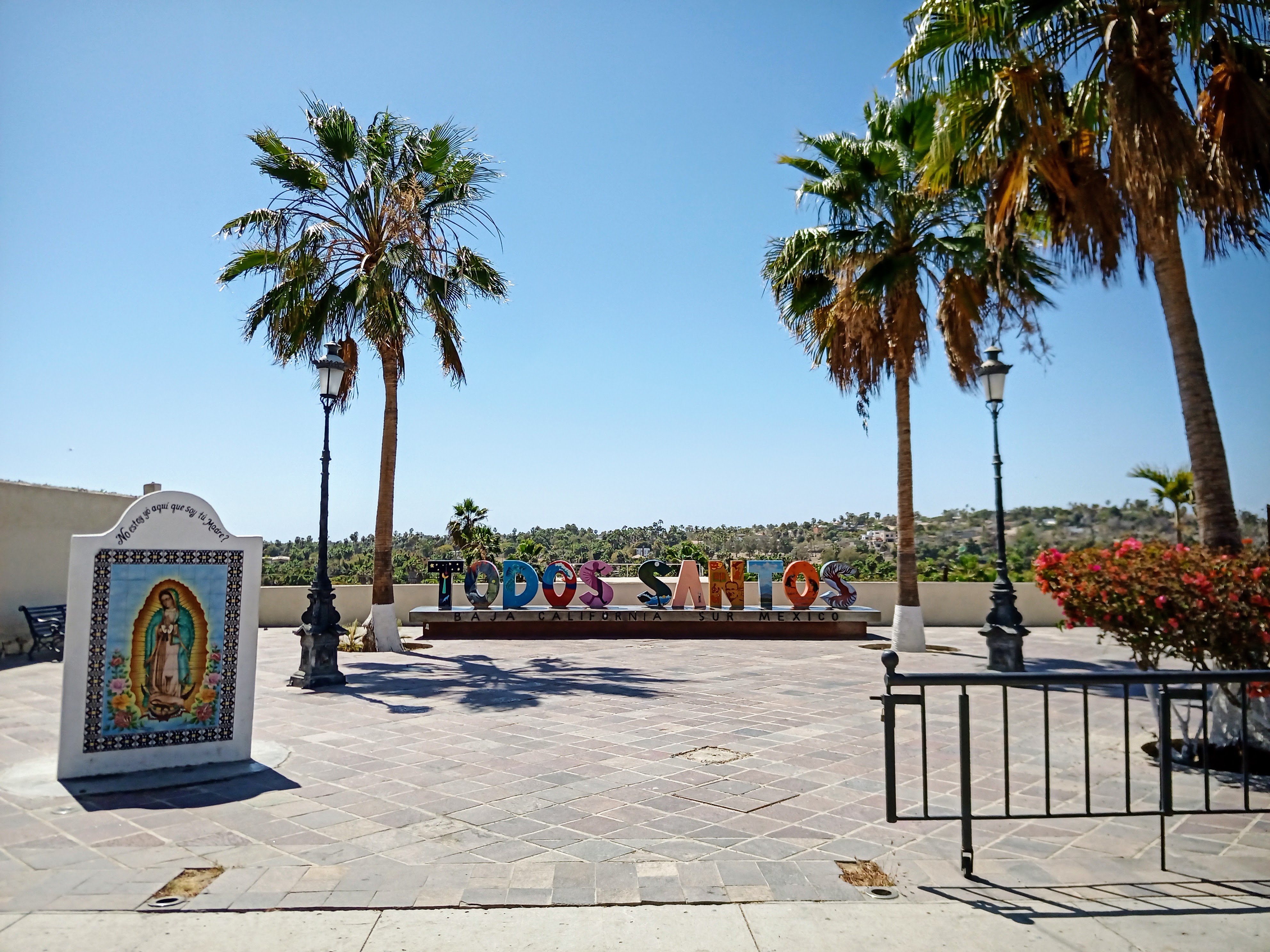
Just to make sure you know where you are, there’s a big name plate for the town in front of the main catholic church (Mission San Jose del Cabo) on the town square.And the town square has a huge national flag displayed like in so many town squares in MexicoPlenty of shops and places to eat and drink line the streets. Tourists and locals mingle as they become part of the scene.Art works were everywhere. We missed the Art Walk which happened on Thursdays.
Due to the pandemic, many businesses were not open. Thus, we just went back to the hotel and ate. Maybe because of the high temperature, we didn’t have a lot of energy, either. We did enjoy our visit, though.
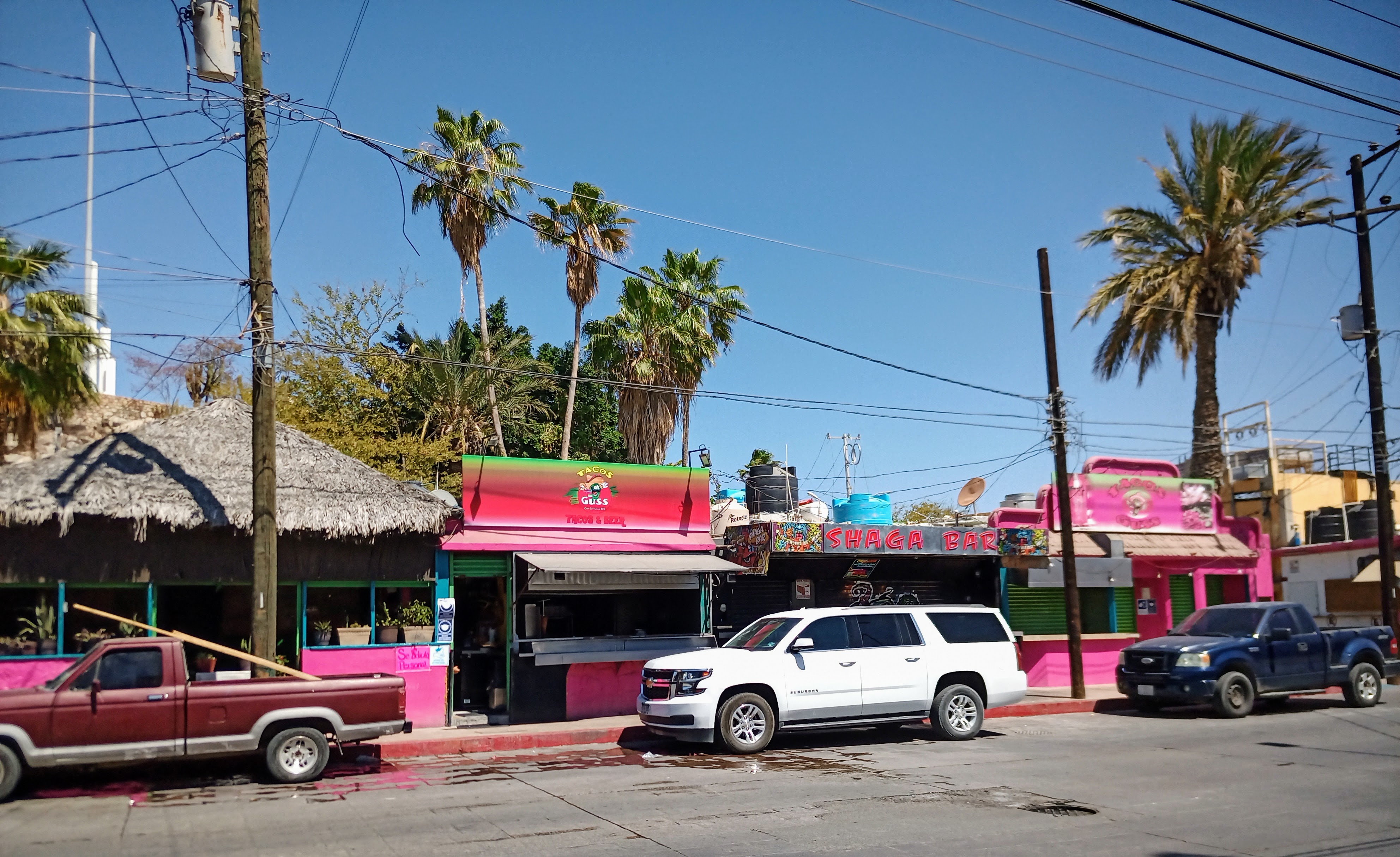
Cabo San Lucas: colorful for tourists’ eyes
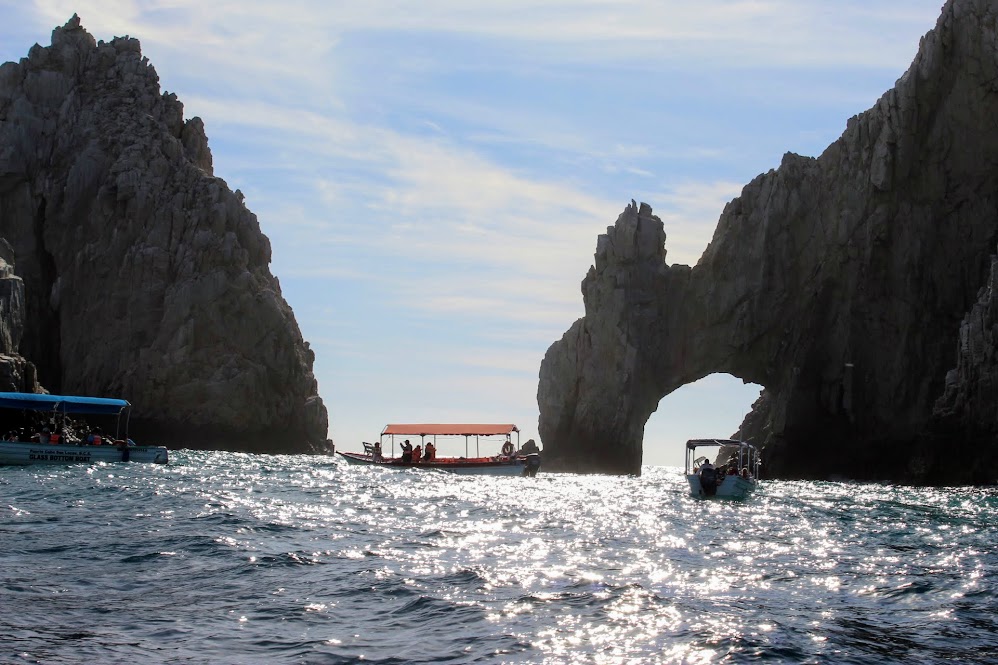
We had been to Cabo San Lucas as a cruise stop in December 2019. At that time, we signed up for a boat tour & got to see all there was to see off the coast of CSL. The shore excursions offered by the cruise ship were not cheap, but, we booked a glass bottom boat tour found on Tripadvisor.com. We got to see the Arch rock and other top attractions for $20 per person. We thought it was worthwhile to do this tour.
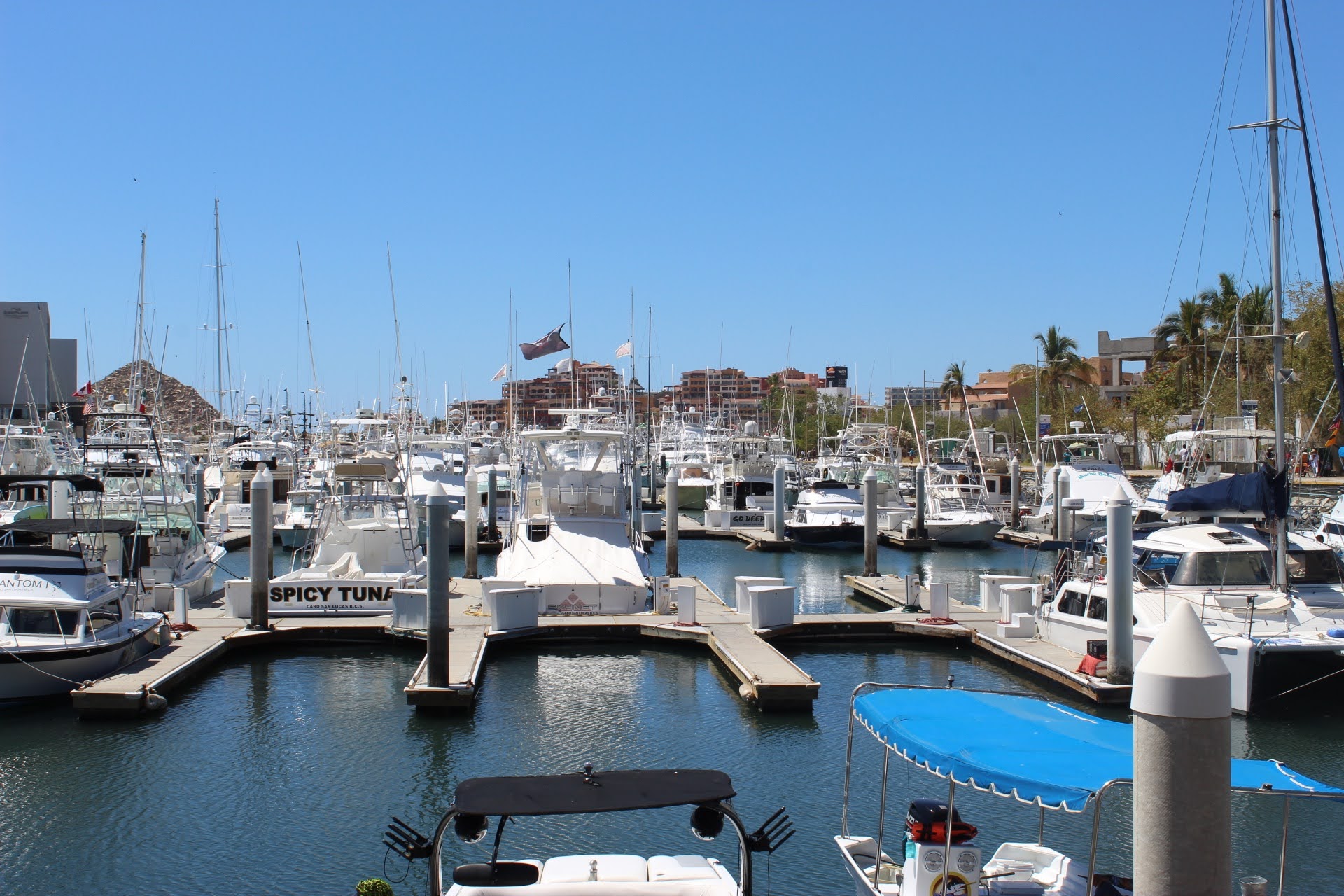
the view from our boat tourAll the boat tours start from this marina.
This time we wanted to discover other parts of Cabo San Lucas. We drove into town and wanted to check out the cathedral, but parking was impossible around there. After driving around to park, we drove into a shopping center and paid a fee (not unreasonable) to park there. We didn’t know this shopping center was connected to the Marina – we just could not get too far away from it no matter how we arrived in town either by ship or a car.
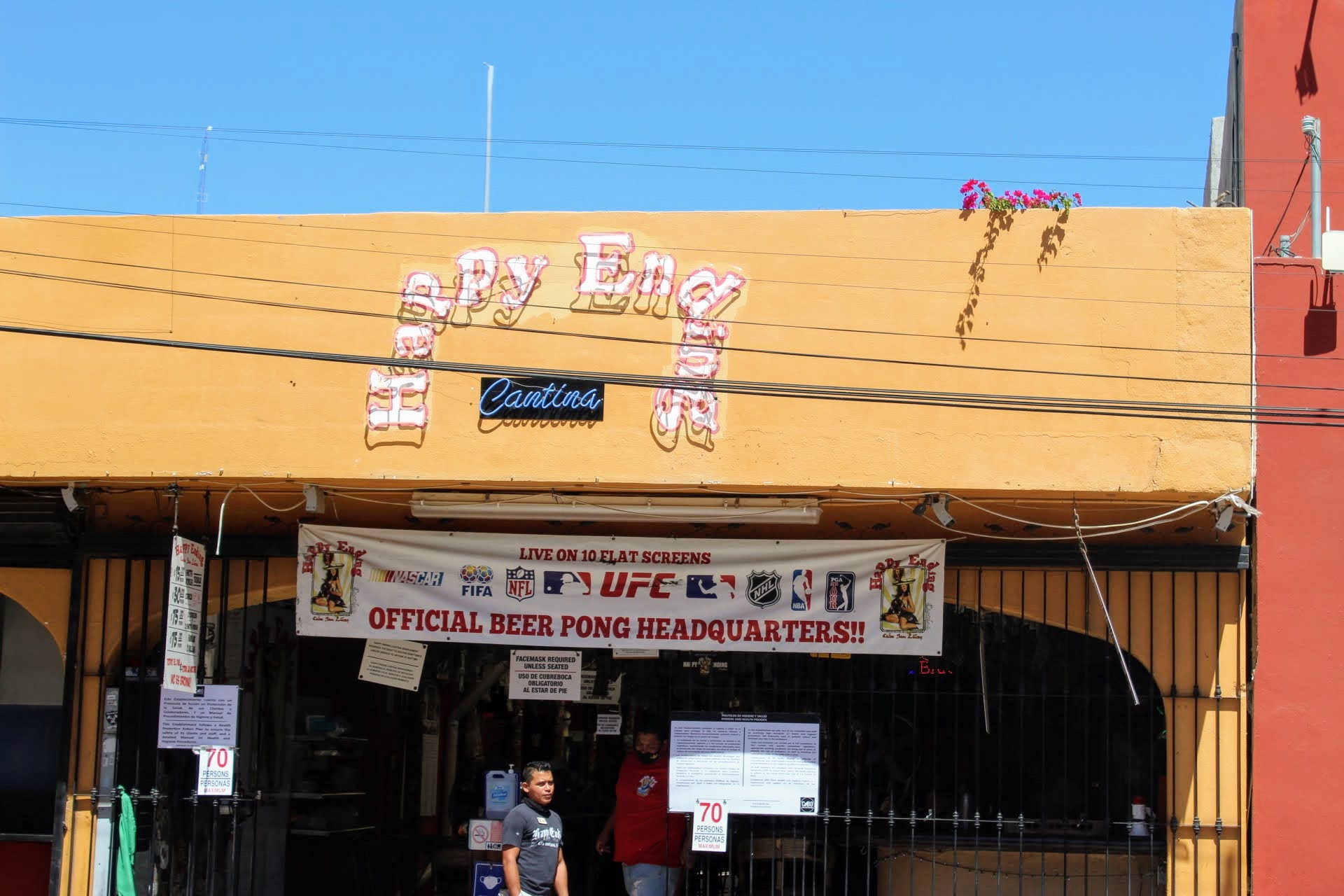
Cabo San Lacas seemed to be basically a tourist town. Locals provided goods and services to the visitors, and the most tourists either stayed at a resort or swung in and out on a cruise ship. Developed from a small fishing village, there was not a whole lot of “local culture” that a visitor could experience.
Yes, there’s a colorful name plate for this town, too! You actually find it almost everywhere you go in Mexico.
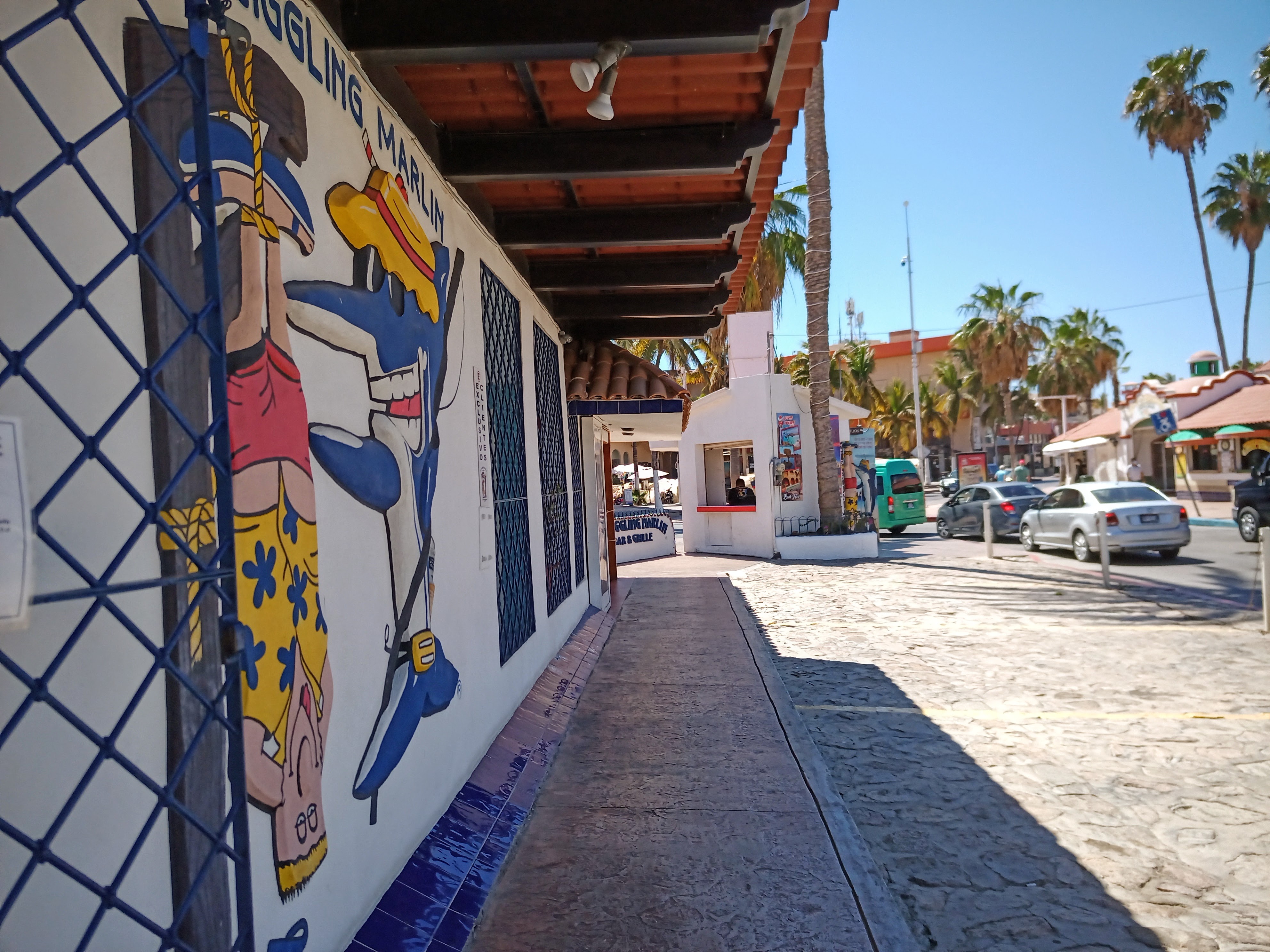
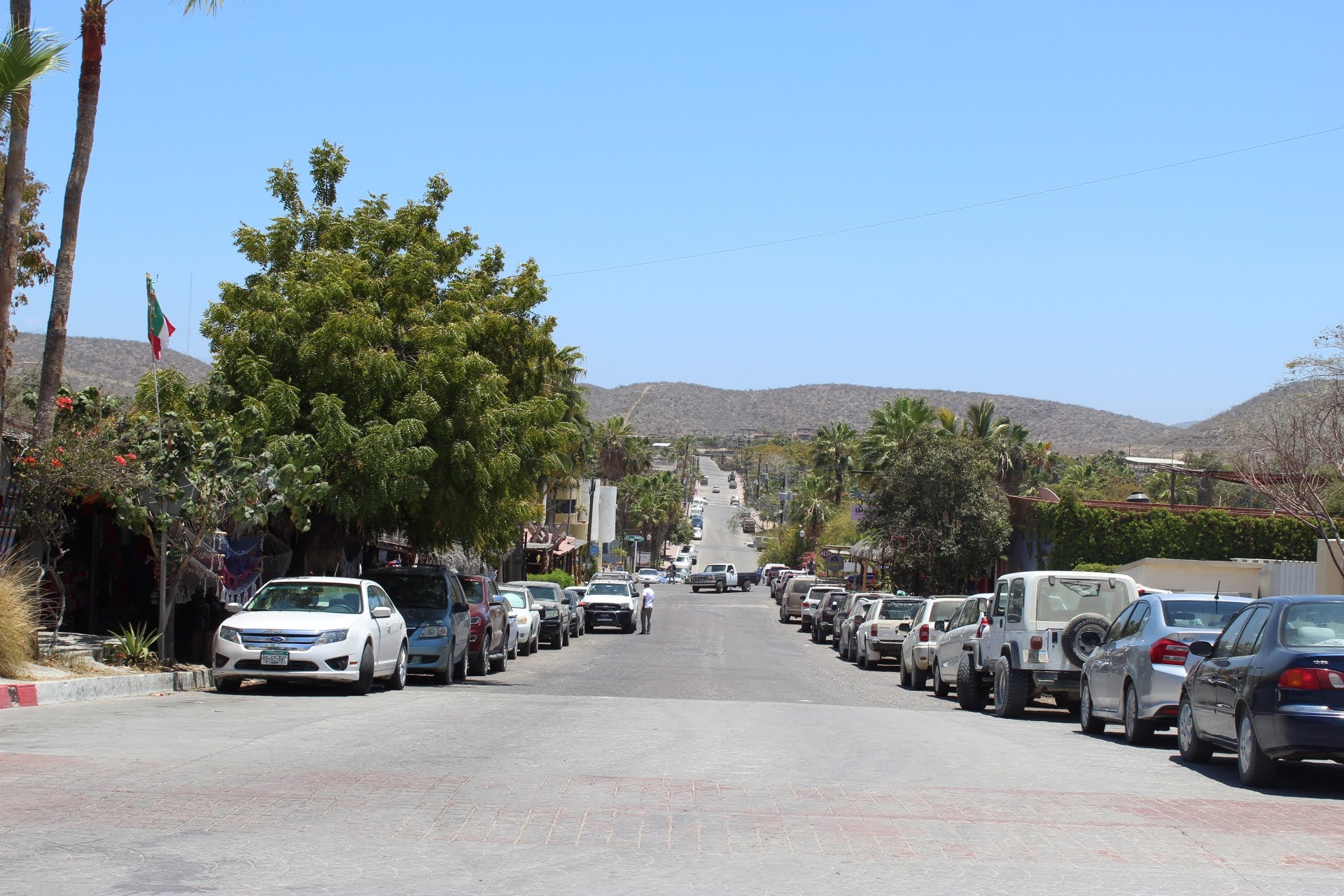
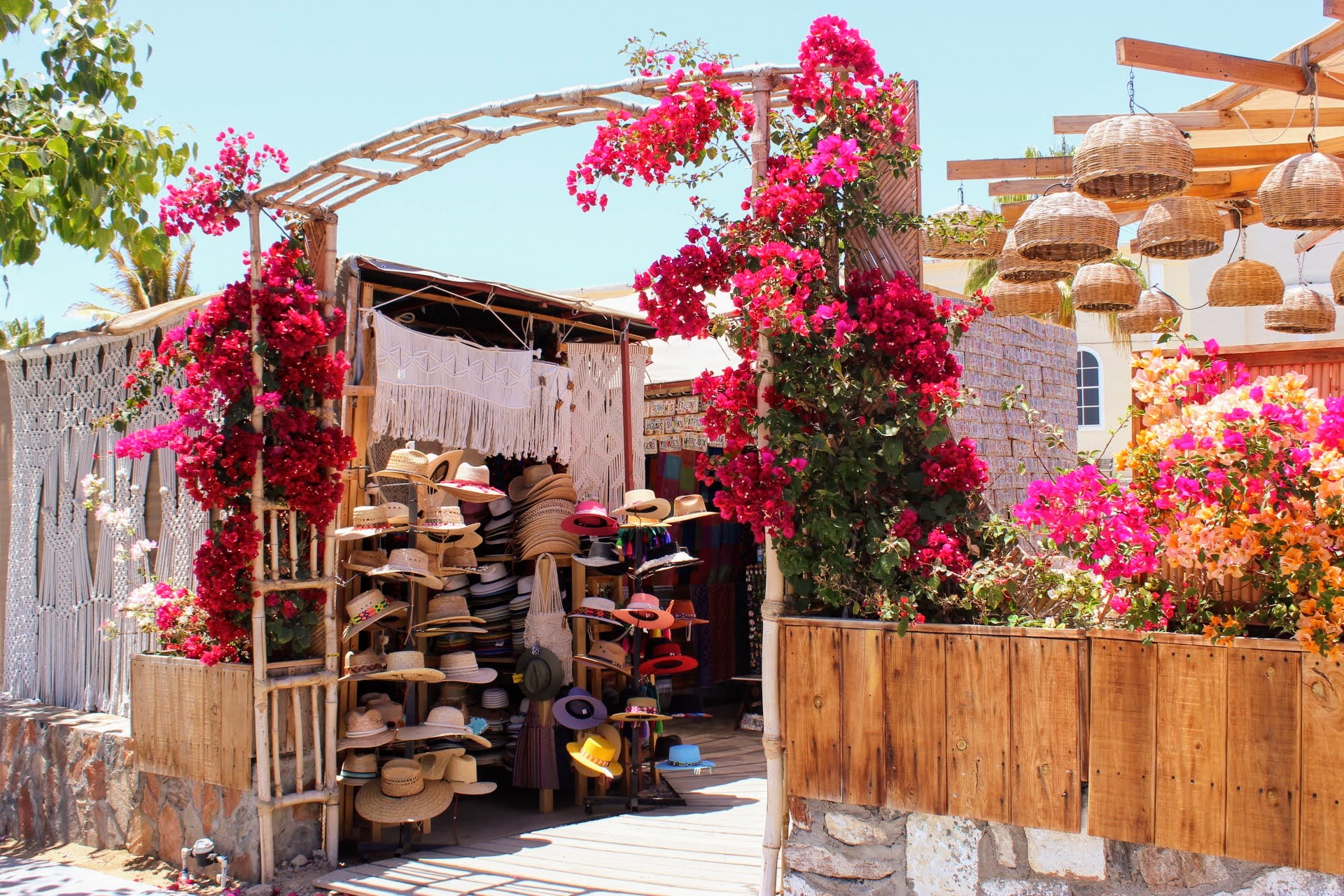
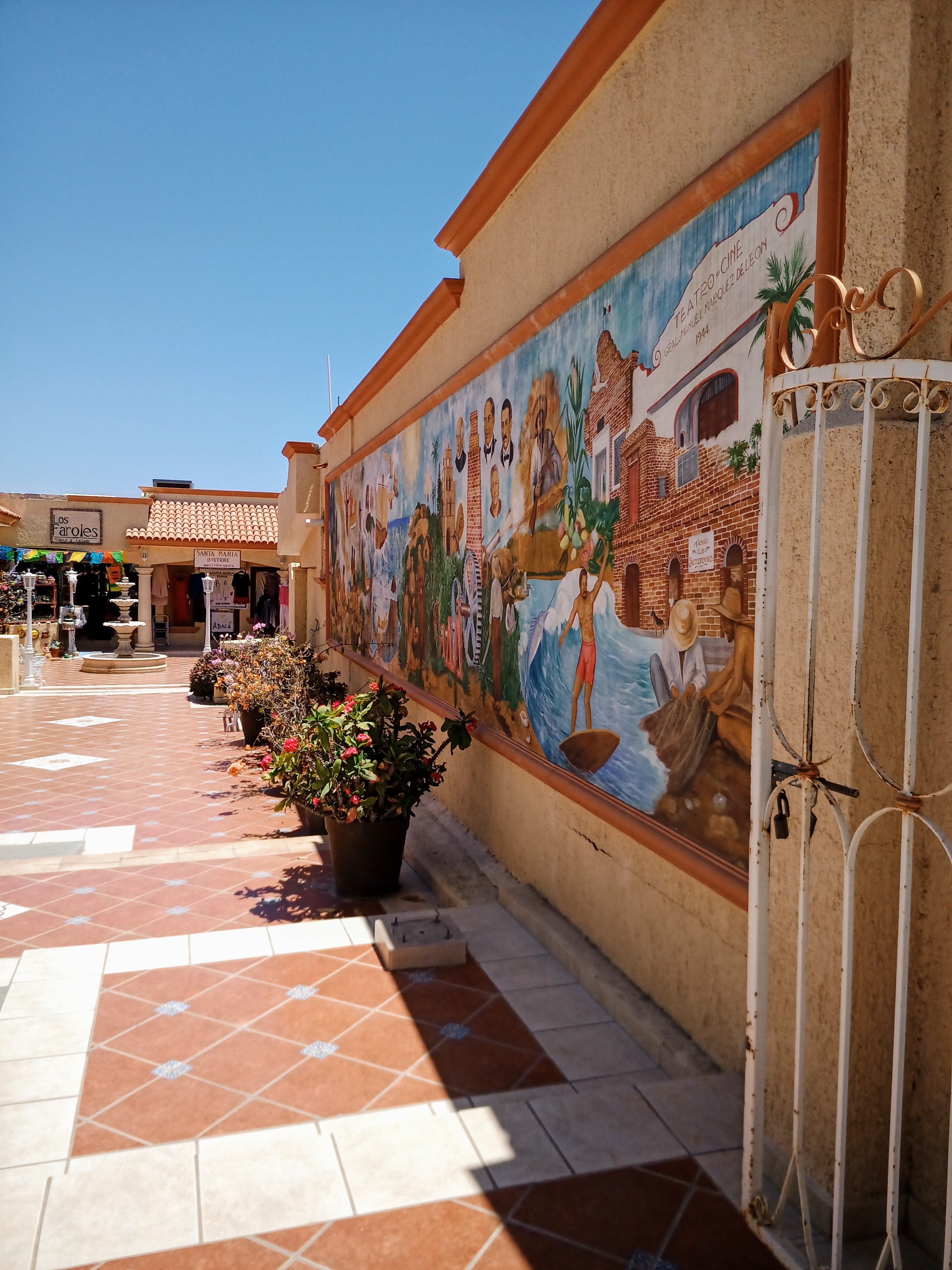
Todos Santos (population: 6,485) is a little artists’ colony an hour north of Cabo San Lucas. It is pretty much a one street (Benito Juarez Street) town, and is pretty laid back and welcoming. Street parking was not hard when we were there.
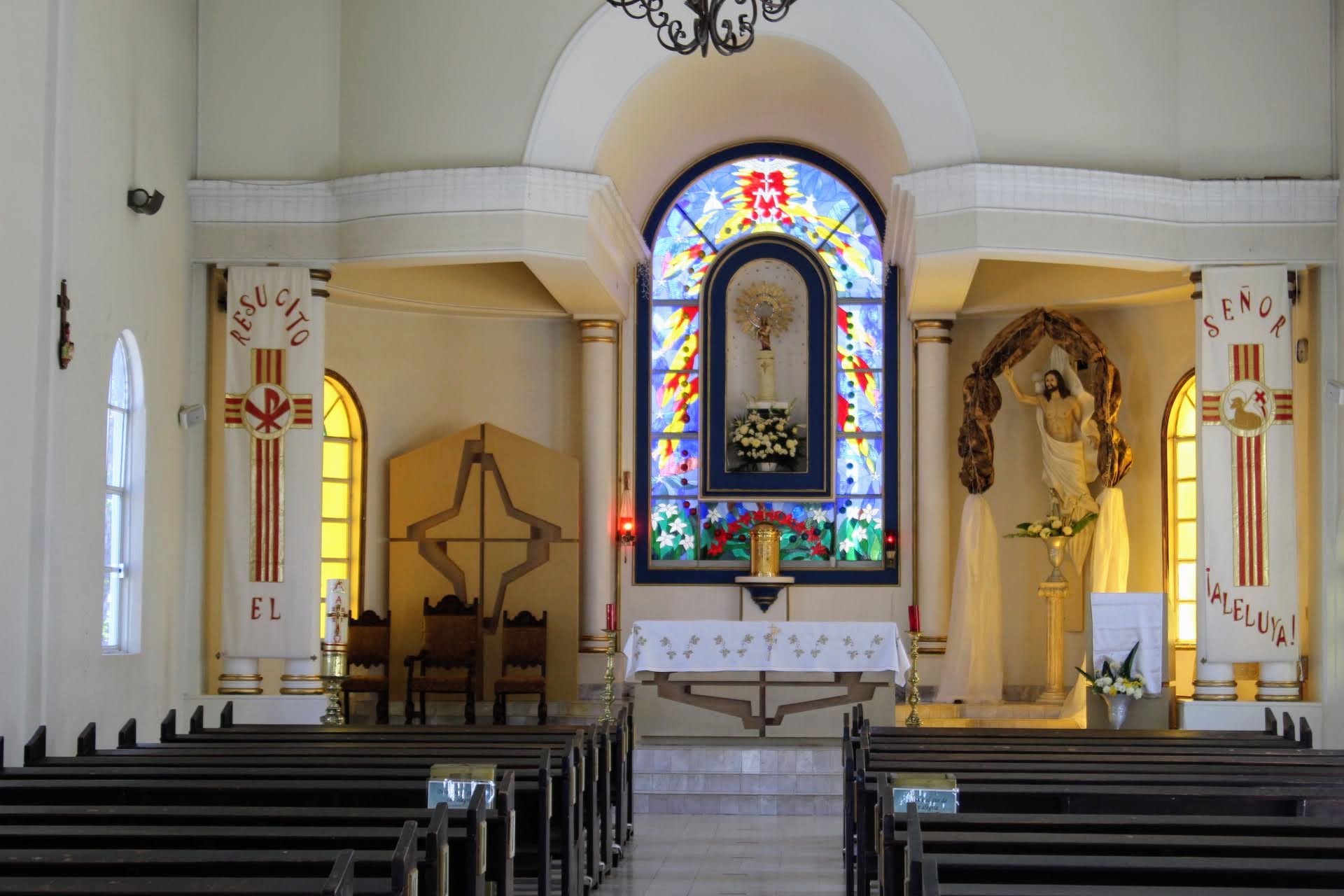
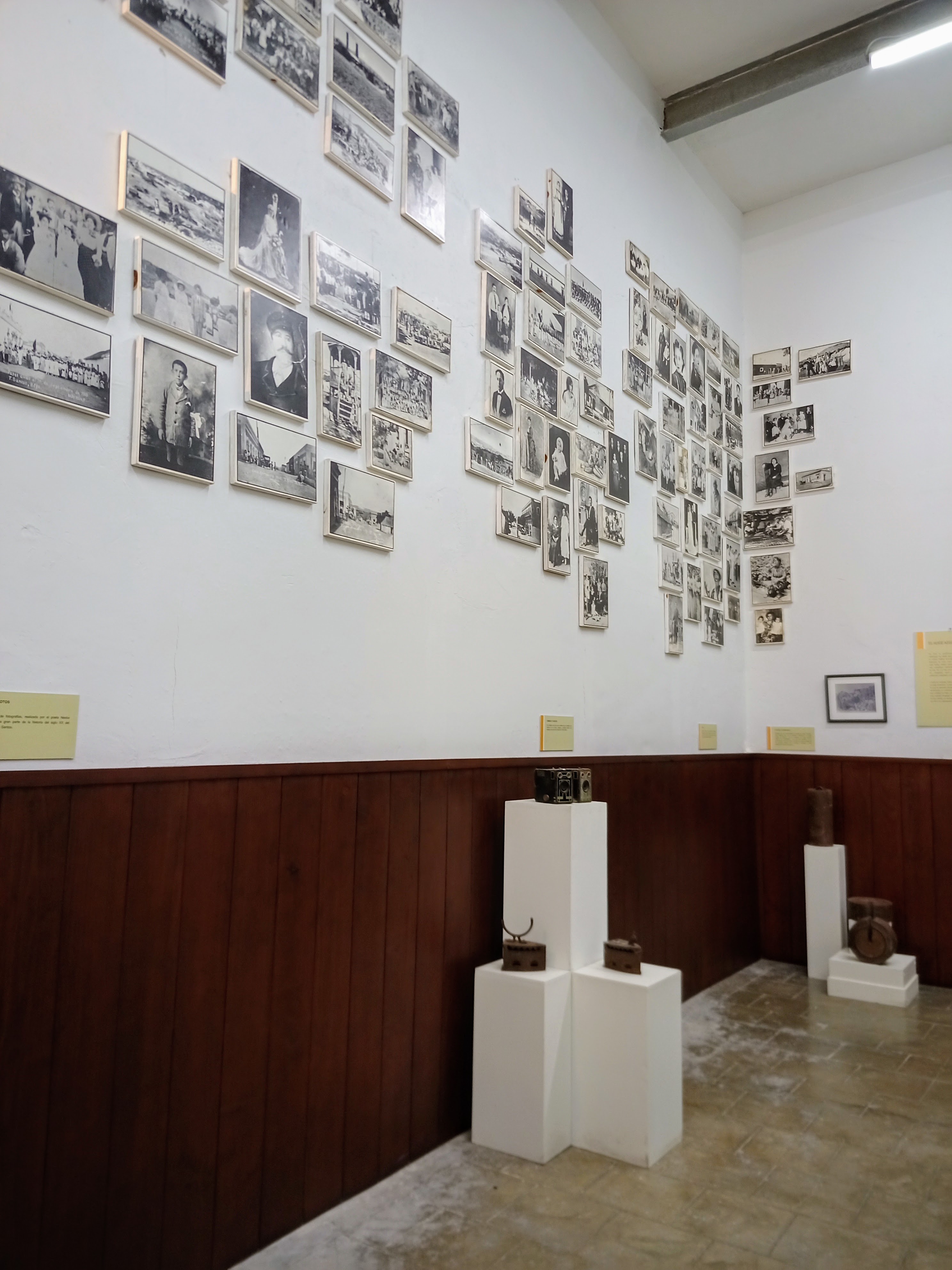
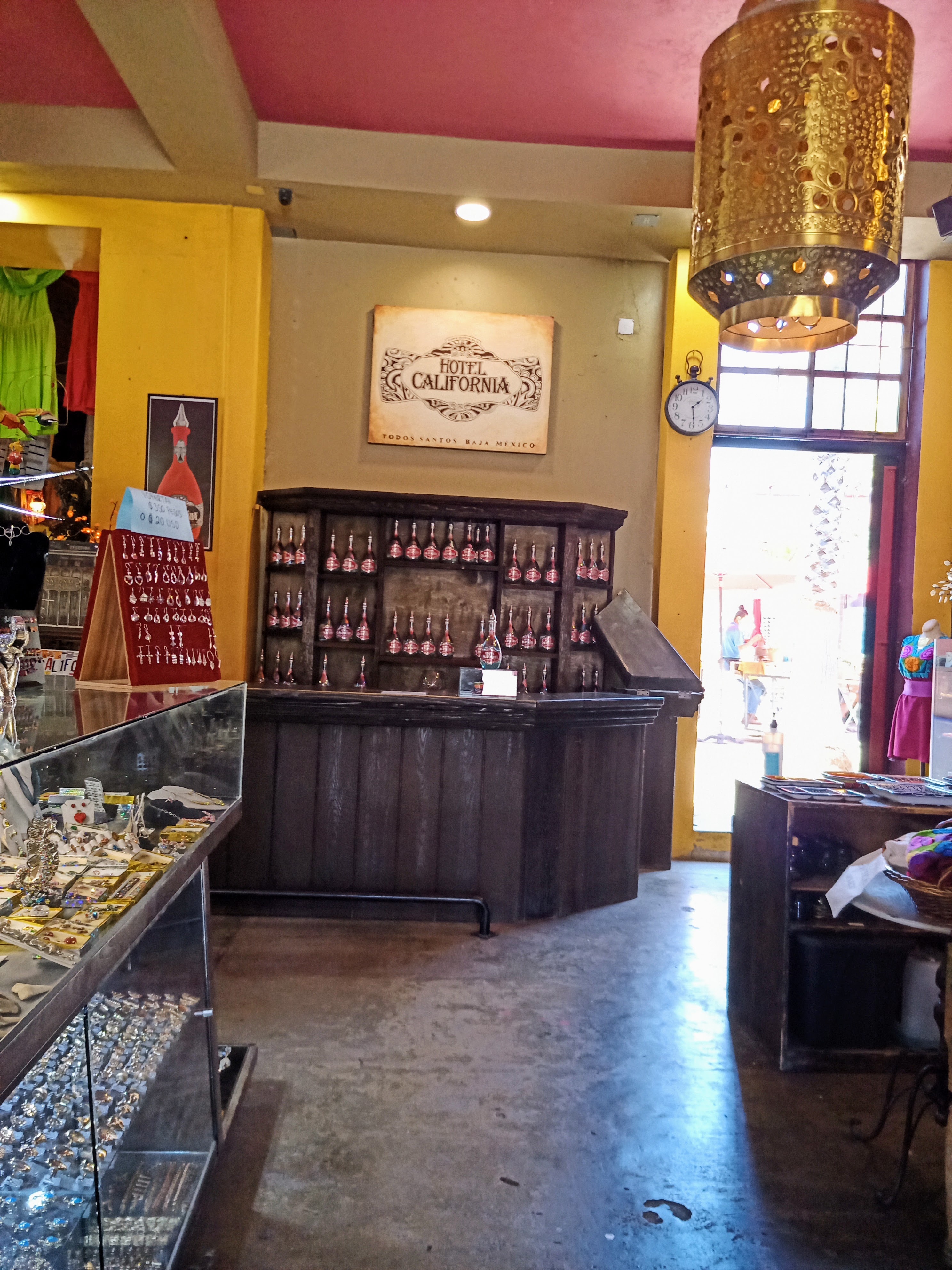
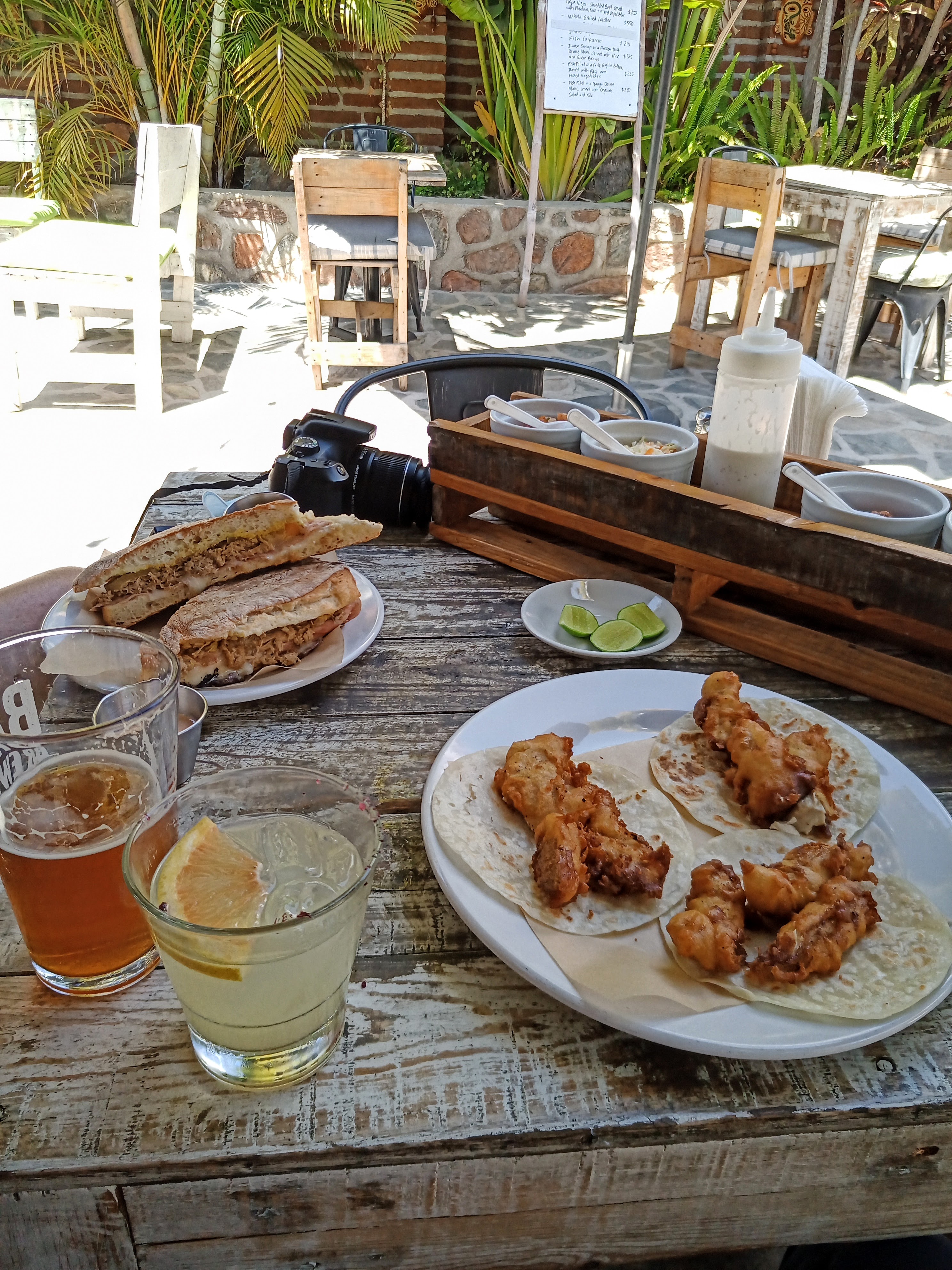
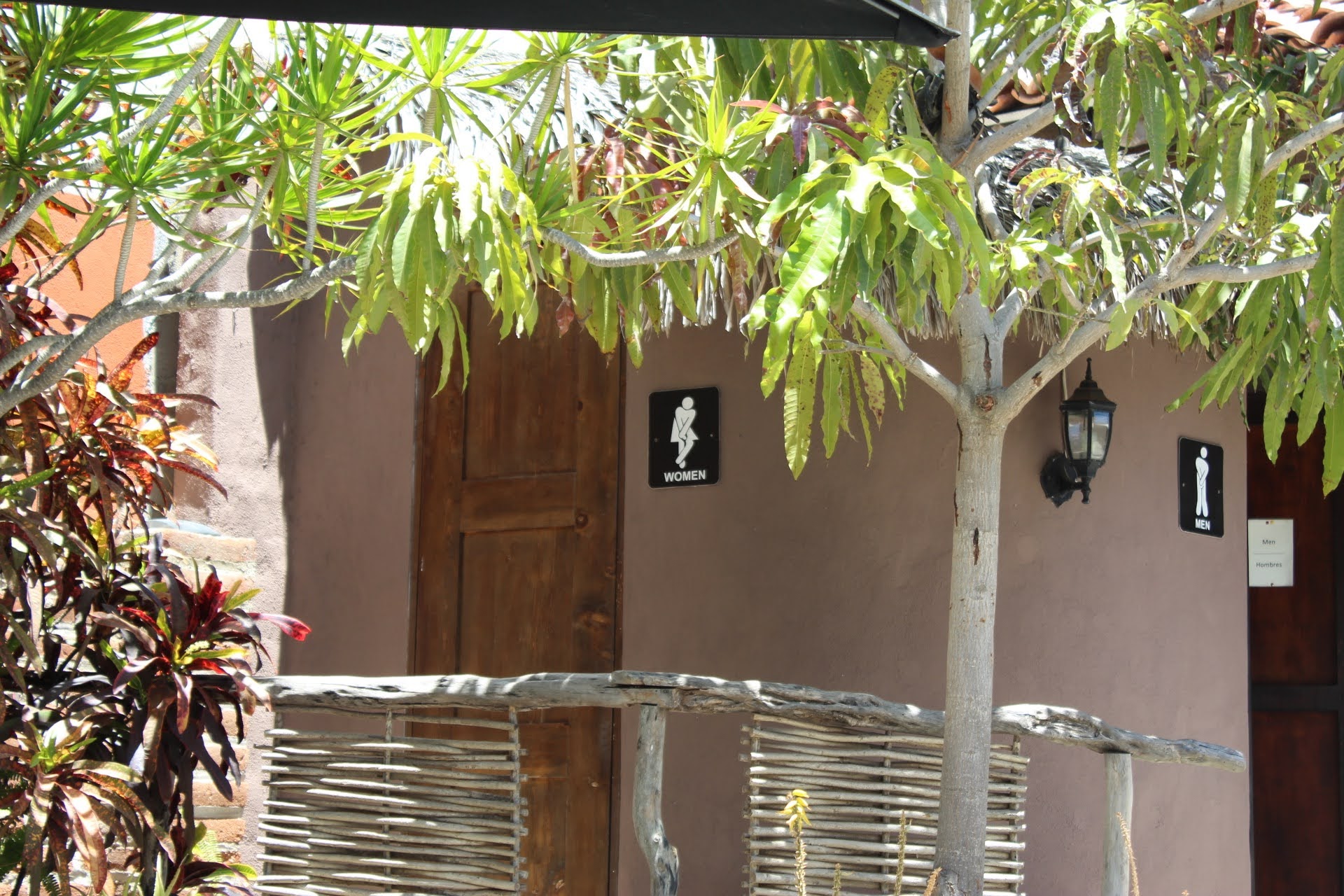
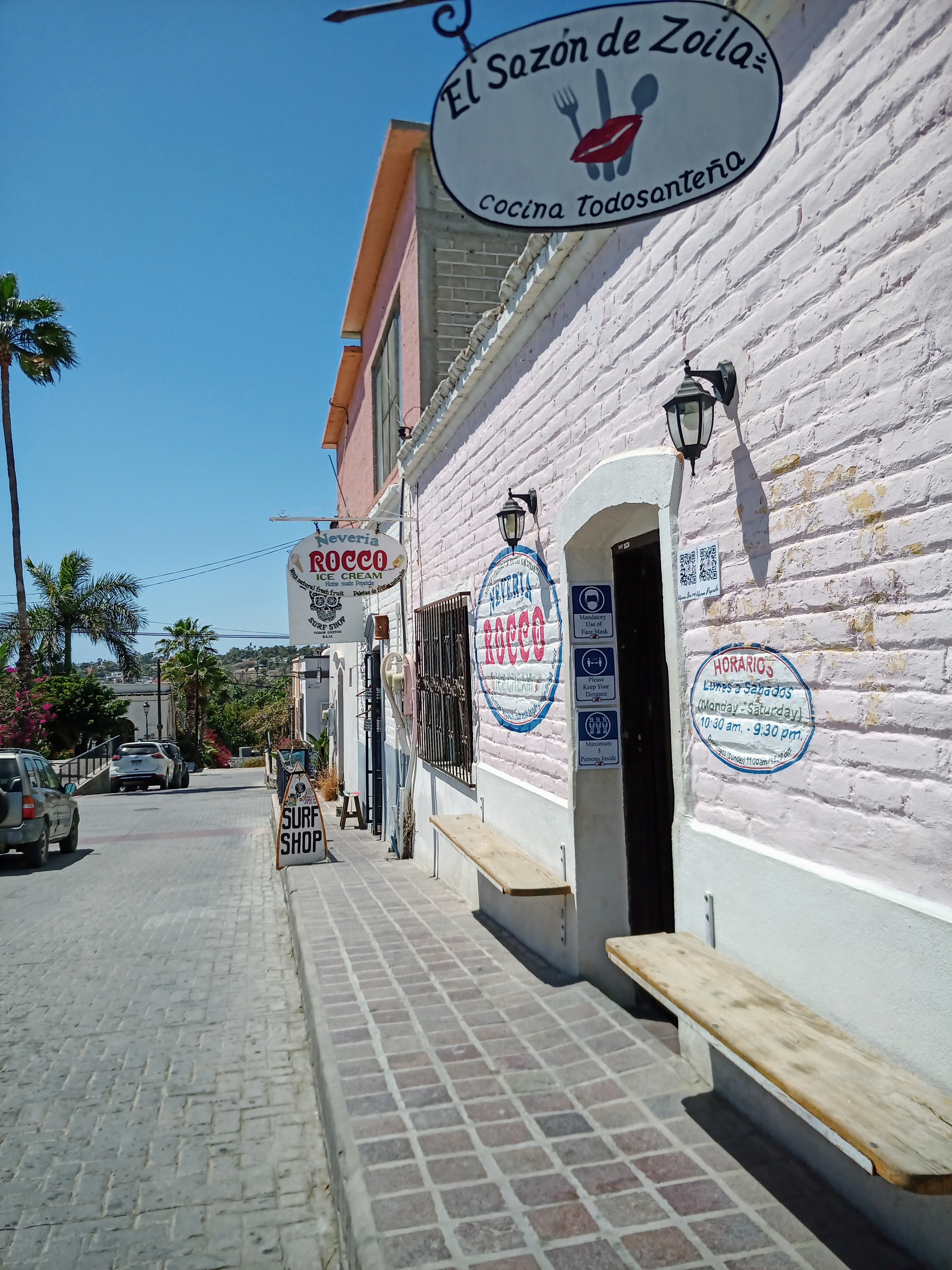
You will have to work really hard to get lost in this town. The main drag that led us here from the freeway continues through the town & that’s where most things are on the uphill slope.Jill Logan Gallery. One thing they have enough of on one street in Todos Snatos: galleriesMission La Paz was established in early 1720’s. Museo de la Casa de Cultura looks like a big building in the little town & it has a nice courtyard. You are not going there to find a compelling exhibit, though. Is this the hotel that the group Eagles sings about? Some want to believe so. Many of the restaurants were not open either because of the pandemic or we got there on a Monday. We were happy that we walked into La Morena: great food, nice setting – and the fun bathroom signage.No, this photo is not about the restaurant but the ice cream shop, Rocco, which was on a side street. It was a hot day. Not that we would’ve missed a chance to taste a good scoop because of weather.
The restaurant that I really wanted to try was Hierbabuena which is off the highway before reaching Todos Santos. A friend of mine who goes to Todos Santos as often as she can manage swears by this restaurant, but we were too hungry to wait till 1 PM opening time.
Maybe next time, we will start the day late & go to Hierbabuena first, have a leisurely lunch, then head on to Todos Santos. That may well be a nice full day.
The best part of our package at Krystal Grand included the free Covid-19 test, which we needed in order to get back to the U.S. We usually preferred the old colonial towns in central regions over resort beach towns in Mexico. But the pandemic brought us here, and, we were glad we did finally spend some time in Los Cabos. Now we know for sure that our original preference was valid.


























 Small Wide World