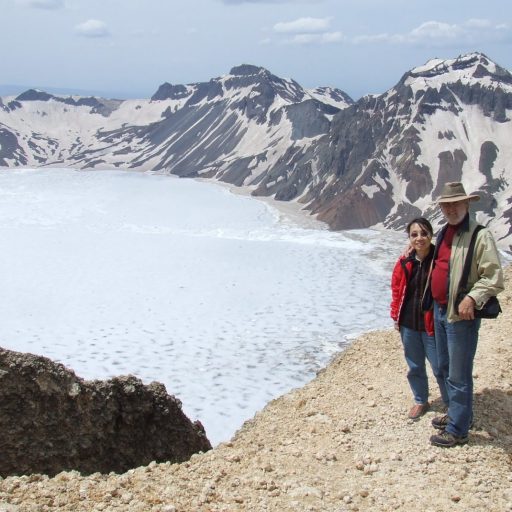
June/July 2021

Around the time we got our second shots of the Covid-19 vaccine earlier this year, I received an intriguing proposal through Homeexchange.com: “can we swap houses for a month or two – my family has houses in Swiss Alps and Salobrena in Andalusia, Spain?” At that moment Switzerland was still going through a rough time in the pandemic, but Spain was getting ready to receive visitors in a few months. As long as they let us in, hanging out at a house overlooking the Mediterranean might be more fun than sitting at home, we thought. We agreed to do the exchange from end of May to beginning of July & we bought the plane tickets, round trip LAX-Barcelona (on KLM for about $650).
Then our exchange partner’s plans changed a month or two later. By then the pandemic seemed to have become a bit more manageable, and I decided to drive around to see more of Spain finding home swapping partners in various parts of the country. Under this new scheme, we were to go to places where we could find home exchange partners.
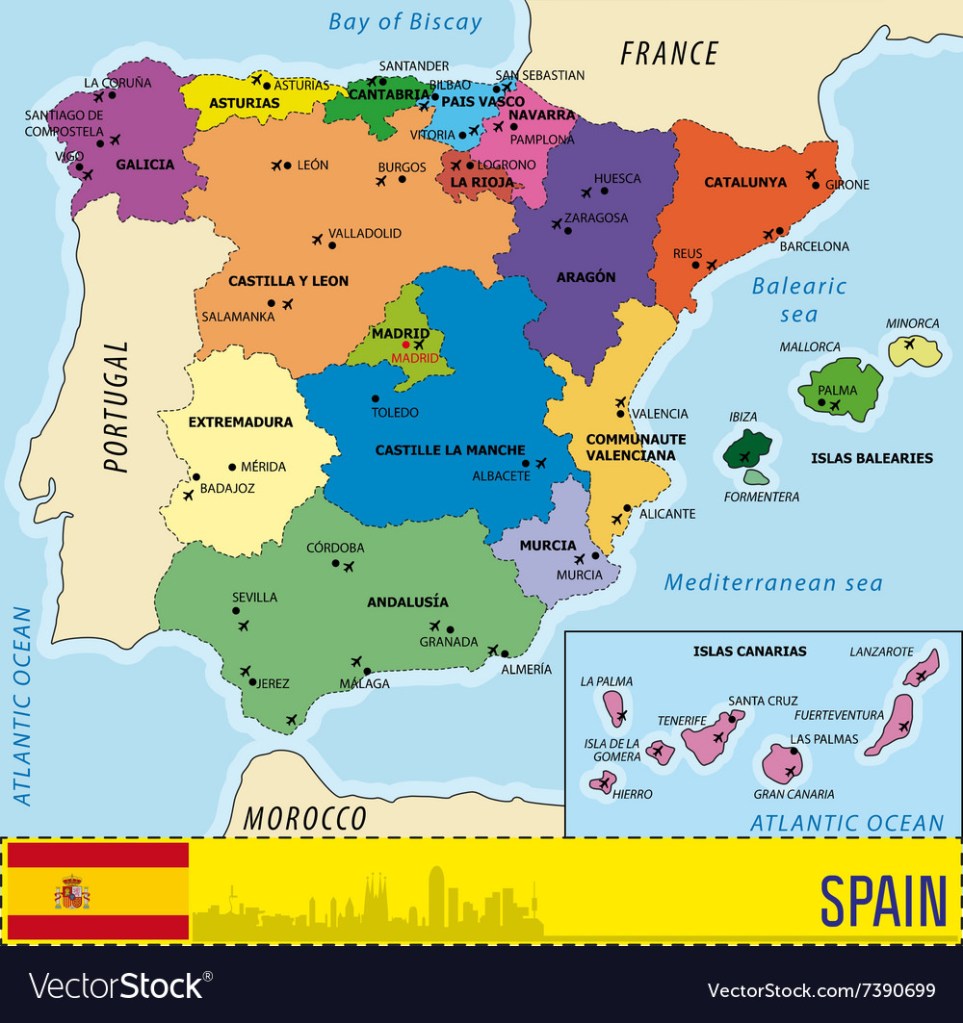
Our original exchange partner had told us about a rental car agency in Malaga (population: 569,000) that provided good price and service, and that turned out to be an excellent tip. We had to start our trip from Andalusia area anyway because some of our friends had bought tickets for LAX-Malaga-LAX thinking they will be visiting us in Salobrena (population: 12,400). We paid about $650 for renting a mid size car for 30 days including a decent insurance coverage and a second driver. We ended up driving around 1,400 miles covering 9 out of 17 regions on the map above & spent about $330 on gas. We shared the rental car+gas costs with our friends who were visiting us, thus, the final tab for us was reduced.
One thing we learned about driving in Spain: Google Map can be your best friend, but, it can also be the worst enemy because it kept sending us to impossibly narrow alley ways or kept recalculating the route to throw us off. I don’t know what alternative is there, though.
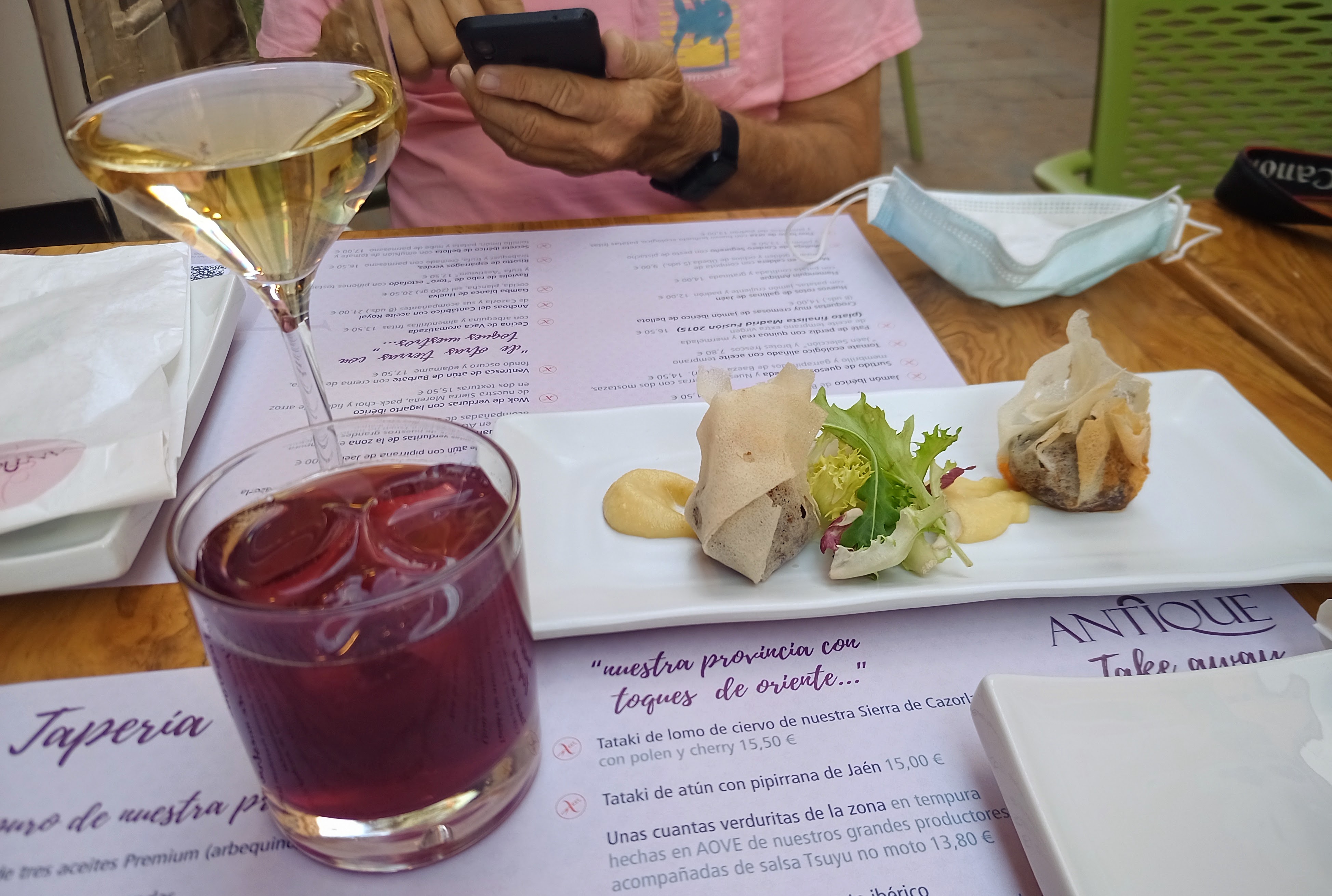
The other major cost was, of course, food. At many of the eateries in Andalusia, if you order a drink, they will bring you a free small plate of food called tapas. A drink can be beer, wine, soda, water etc. They cost about 1.5-2 Euros on the average. You can also order tapas from the menu for 1-4 euros. Similar idea is called pintxos in Basque Country, and they cost 1-4 euros each. This means you can get a nice meal for 10 Euros or less for two people. Most regular restaurant meals cost us 10-15 euros per person including drinks. We felt we ate really well while we were in Spain, and we spent way under $1,000 for the whole trip on food.
Housing was free for us for the most part, but the Airbnb’s we used for shorter stays of 1-2 nights cost us under $60 per night on the average. There seemed to be lots of good choices in Airbnb rooms in smaller towns other than Barcelona, Granada, and Malaga.
6 Days in Andalusia:
Day 1: arrived in BCN, transferred to Malaga ($59 round trip on Vueling Airlines), picked up the car, and drove to our Homeexchange townhouse in Marina de Casares, a beach side housing development area near the town of Casares. We were supposed to spend 8 nights here, but, because of mishaps caused by the pandemic, we were able to spend only 2 nights here. Bummer.
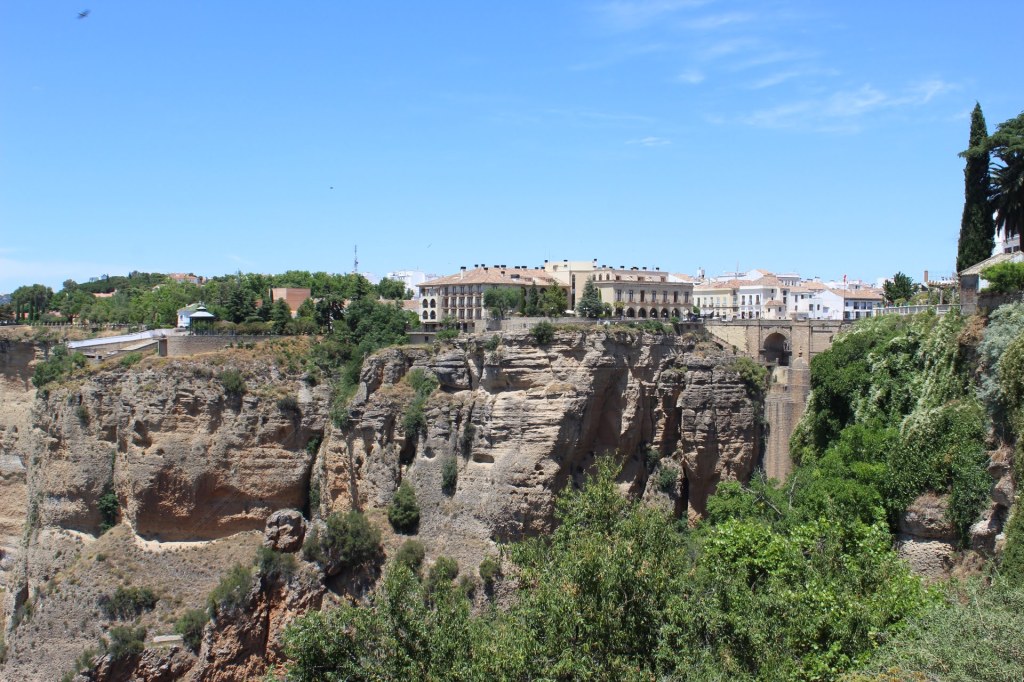
Day 2: drove up the hill road an hour to participate in a walking tour of Ronda (population: 33,900), had lunch. Back home, walked around the beach by the house & had dinner at a beach side fish grill restaurant.

Day 3: Drove a couple of hours to Alhambra Castle for a walking tour. We took full advantage of the pandemic era crowd-less Alhambra. Had lunch and rested a bit at a cafe restaurant in a hotel before going on an early evening walk in the Albaicin neighborhood with the same tour guide. Tapas dinner. Drove an hour in the dark to get to our Airbnb apartment in the mountain village of Lanjaron. It sounded like a wonderful idea in theory, but, in practice, it was too far from Granada where we wanted to spend more time. So we cut our stay here from two nights to one.

Day 4: Breakfast in a village cafe. Drove back to Granada (population: 232,000), checked into a hotel ($50/night), then walked around town. Dinner at a cafe gazing up directly at Alhambra. Flamenco show(24 euros) in a gypsy cave
Day 5: Churros and hot chocolate for breakfast, drove an hour due south to our original home base of Salobrena for lunch, drove 1.5 hours to our magical Airbnb place in the middle of nowhere near a tiny town of Turon (population: 255), ordered a wonderful dinner at the house lovingly prepared by our hosts.

Day 6: we were happy just to be there! Did go out to have lunch, though.
4 Days in Valencia:
Day 7: Drove 3 hours through beautiful mountains and ocean, then drove into a historic naval town of Cartagena (population: 213,900) by following the signs & had lunch. Too bad that we didn’t have enough time to walk around and see a bit of this town. We had been there as a cruise stop & it is a beautiful historic town. Continued on for another 3 hours to arrive at a Home exchange condo on the beach northeast of Valencia (population: 791,400).
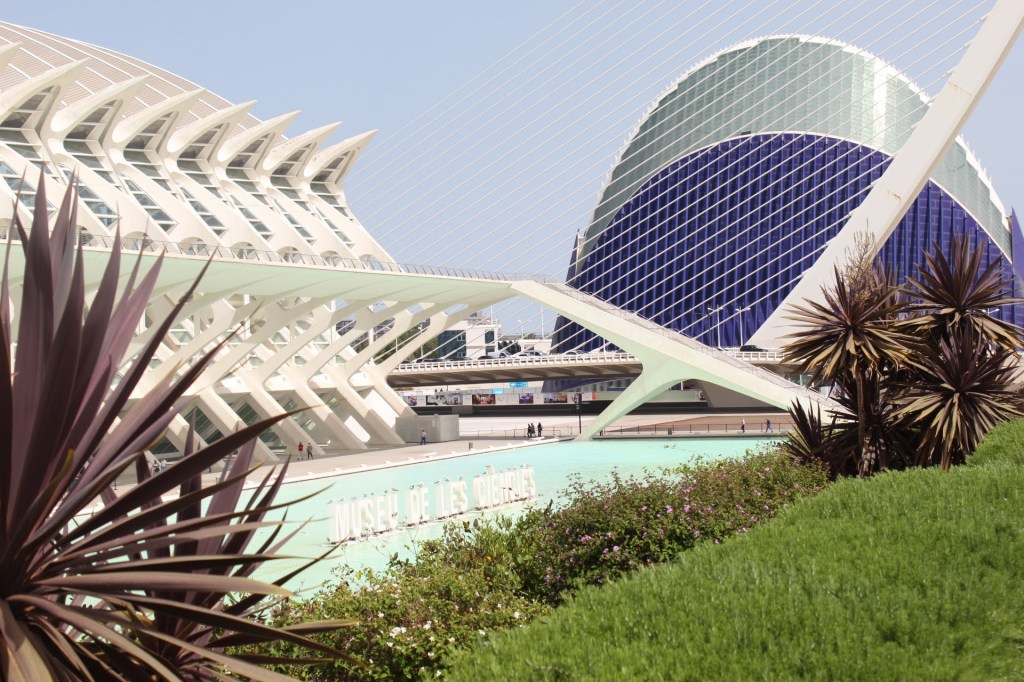
Day 8: Walking tour of historic Valencia downtown followed by a street art tour. Paella was invented in Valencia – our lunch had to be that. Next stop was the City of Arts & Sciences, pictured above, the modern face of Valencia.
Day 9: Drove 2 hours to Albarracin (population: 1,016) which is often cited as one of the most beautiful towns in Spain. Charming, certainly. (But there are so many beautiful little towns all over Spain…) Parked in one of the public lots off of the main road leading into town & walked up the hill to get into the town. Many of the restaurants were closed due to the pandemic. Our lunch restaurant was fine and eclectic although prices were not necessarily cheap.
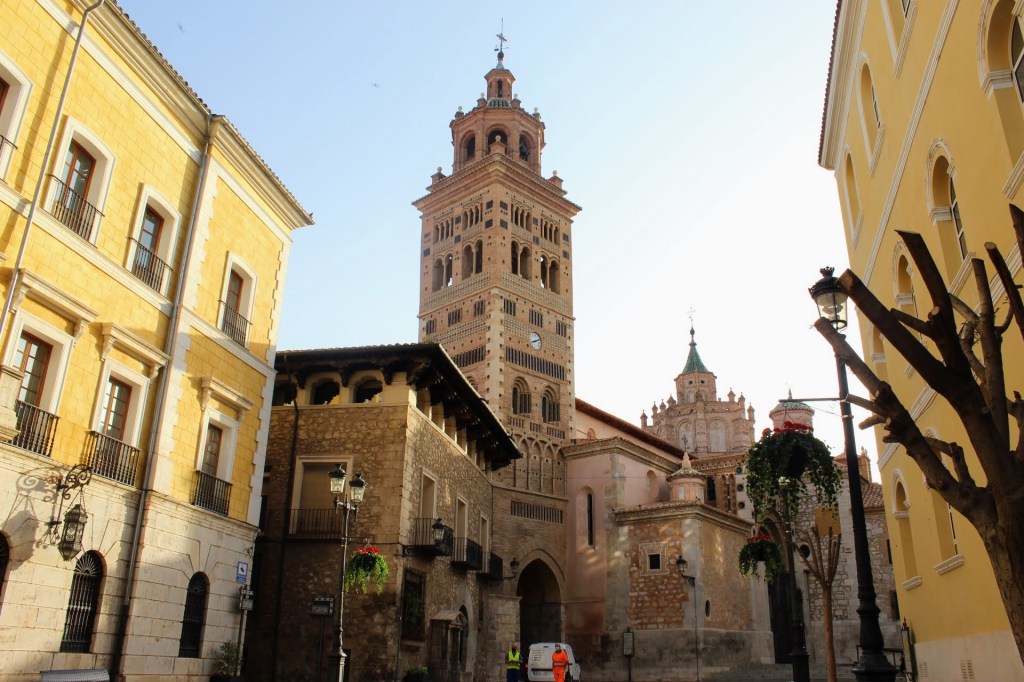
Drove 30 minutes down the mountain and arrived in Teruel (population: 35,600) to check into the Airbnb apartment ($120 for 6 people), which turned out to be one of the best Aibnb’s we’ve ever stayed at: artsy decorations, spacious rooms (3), well equipped kitchen, comfortable sitting area – all this right next to a major square. It was meant to be a convenient overnight spot close to Albarracin (where rooms were rather expensive), but, it actually was a nice place to visit with a UNESCO World Heritage entity in town.
Day 10: Drove back to our beach condo stopping at a famous horchata place. How could we not swim in the Mediterranean while we were staying right next to it, right? So we did before having dinner at a local restaurant.
9 Days in Catalonia:
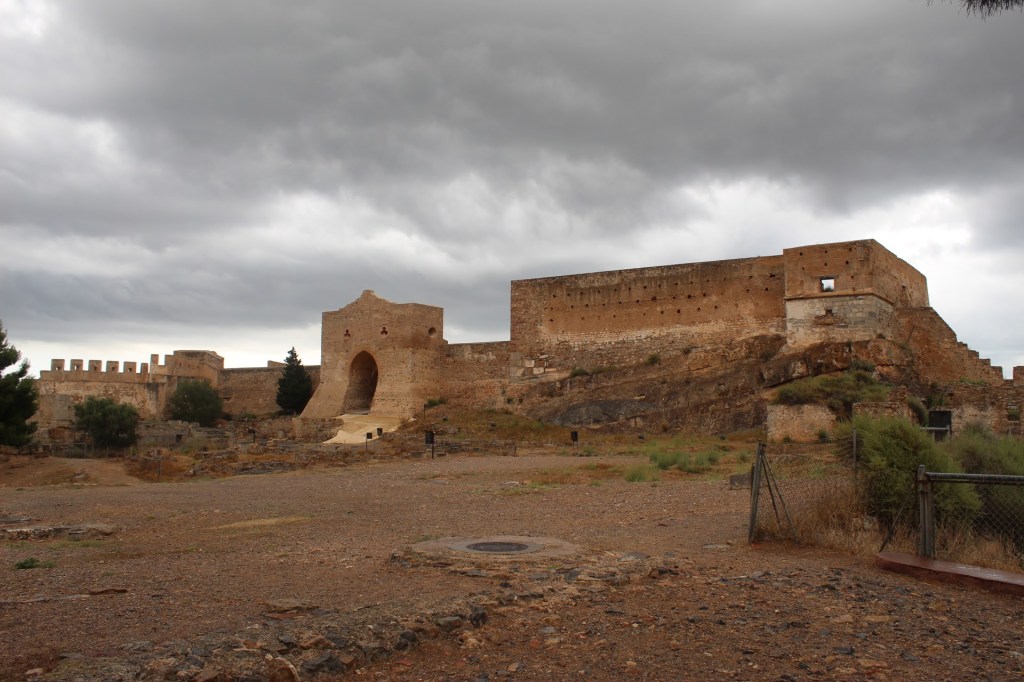
Day 11: Practically next door to where we were staying was Sagunto Castle, a 2,000 year old fortress & we checked it out before heading for our lunch at a hill top restaurant in Peniscola (population: 8,094), 1.5 hours up the coast. Not open. Drove to the port area and ducked into a restaurant for a great sea food lunch in pouring rain. Drove 130 miles to Barcelona, checked into a Homeexchange apartment. Had dinner in the neighborhood.
Day 12: Our friends joined the Gothic Tour of Barcelona, and we drove out 1.5 hours northeast to a small town called Peralada (polulation: 1,860) for an 8 night stay at a Homeexchange place.

Day 13: Drove back into BCN, had lunch with our friends at one of our favorite restaurants near Sagrada Familia where their Gaudi tour ended. We rested at the apartment while our friends continued exploring BCN. Met at our favorite tapas joint for dinner.
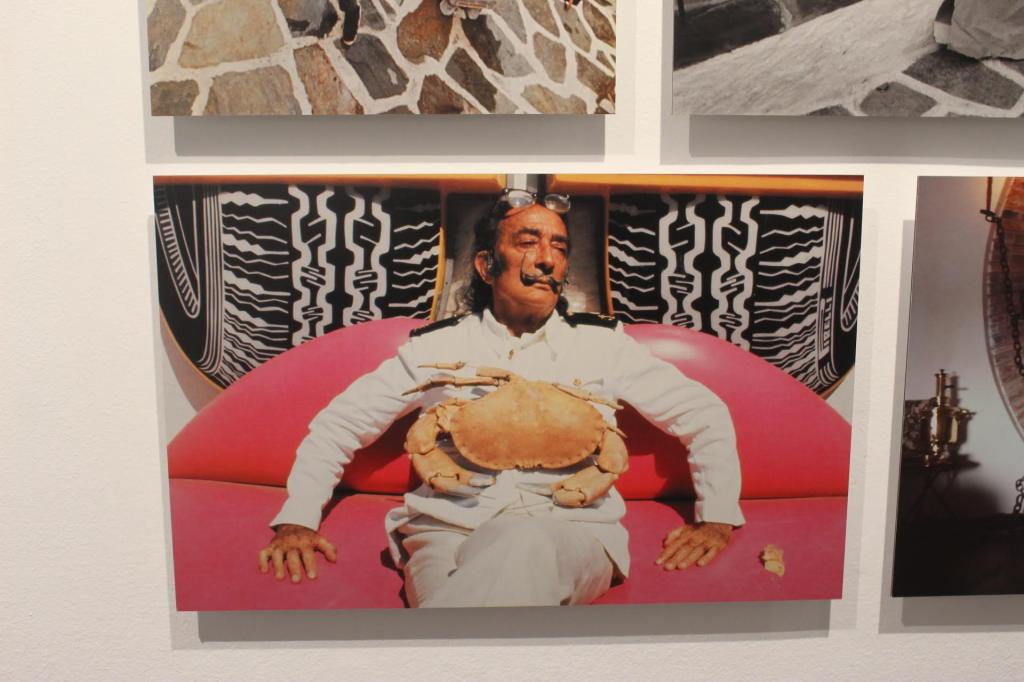
Day 14: Two friends flew back to the U.S., and two came with us back to Peralada. Stopped in Figueres (population: 46,300) to check out the Dali Museum, a fun place whether one likes Dali’s work or not, and had lunch. Settled into our Peralada cottage. Dinner in town at an excellent restaurant just up the road from our place.
Day 15: Our host recommended Peratallada (population: 155) and Pals (population: 2,460) as worthy stops, and she was right as we stopped at those two towns on our way to a walking tour of Girona. The city of Girona was almost empty of tourists and many restaurants were not open, but that gave us lots of room to roam around.

Day 16: Our host had alerted us to the basalt cliff of Castellfollit de la Roca, and we stopped by there before an excellent walking tour of Besalu (population: 2,460), yet another historic town with pretty bridges and a pleasant town center. Nice lunch (Sad to note that Cal Tronc restaurant is permanently closed now). Dinner was at an Italian restaurant in a neighboring village of Peralada.
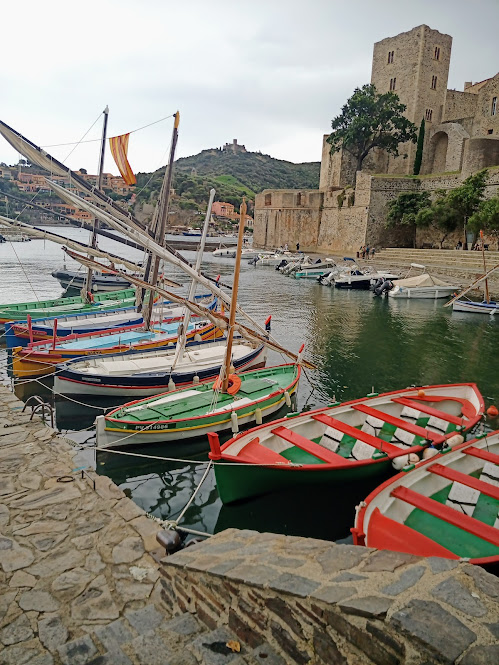
Day 17: We wanted to check out at least one town in France since we were so close. We picked Collioure (population: 2,830), supposedly an artsy little coastal town. We took the winding mountain & coastal route (1 hour 20 min.) rather than the freeway (58 minutes), and that turned out to be a wise decision. Once we got over the sticker shock (we were clearly spoiled by Spain prices), we did enjoy walking around town even though rain was in the way.
Day 18: Our last day in Catalonia was a beach day in Cadaques (population: 2,750), a resort town 40 minutes drive from our cottage. Lovely all around with clear Mediterranean water plus skinny dipping young ladies.
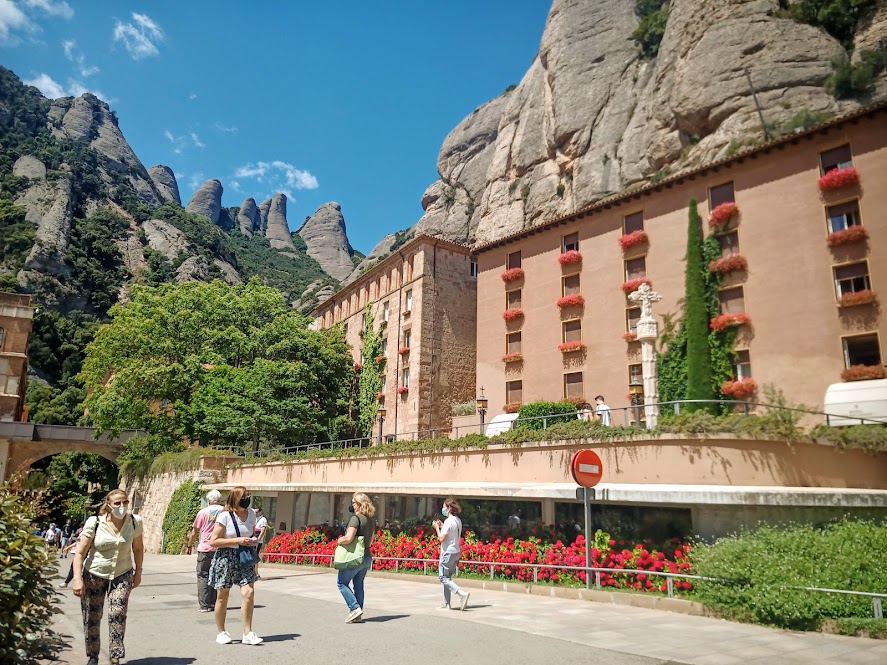
Day 19: We dropped the two friends off at Barcelona Airport & continued on to the Montserrat Monastery. Thanks to the pandemic, we were able to find a parking spot not too far from the entrance. Beautiful scenery and church structure. But we could not help feeling the whole complex was a tad bit too commercialized with an on-site tourist hotel and gift shops etc. Then we drove 1.5 hour to Lleida (population: 137,800) to break the driving. Lleida has its own share of history and attractions, but, we did not feel like walking around too much. So we did not explore much and went to bed early.

5 Days in Navarre & Basque Country:
Day 20: A UNESCO World Heritage site of Zaragoza (population: 666,880) was under 2 hours away, thus, we chose to go there and have breakfast. The city was just waking up as we arrived around 9 AM. Impressive old town area and Cathedral. We could have spent a day or two to really see this capitol of Aragon region, but we had to arrive at the next home exchange apartment in Artica, a suburb of Pamplona, at a certain time to meet our host. A 2 hour drive got us there.
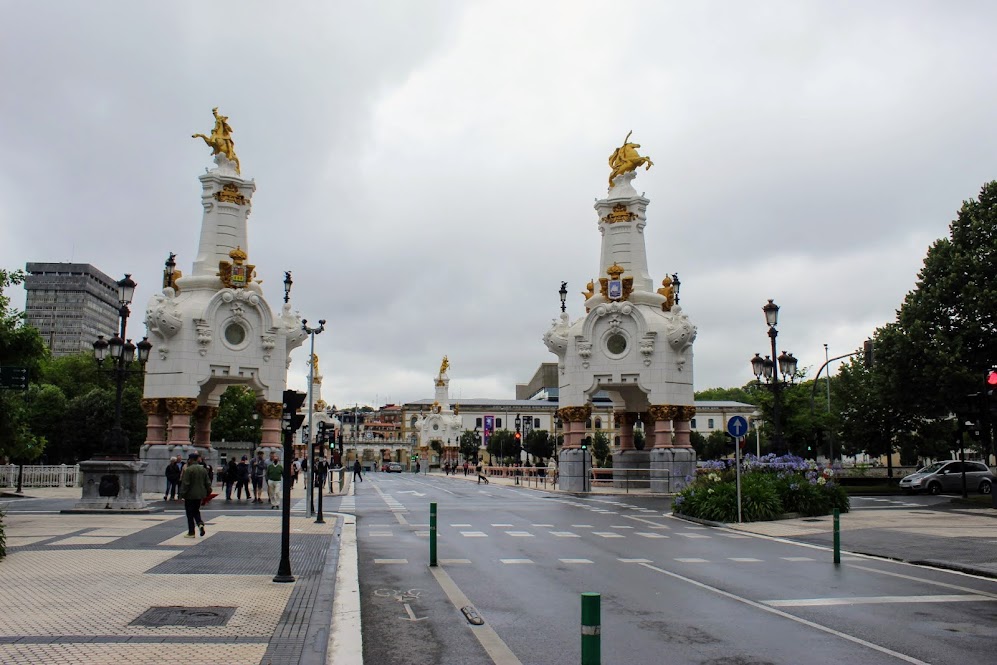
Day 21: We decided to go to Basque Country first before exploring Pamplona and Navarre region. San Sebastian (population: 188,600) was just an hour away over the mountains. Our Airbnb room was located in the city center, which was perfect, but it rained like cats and dogs as we tried to find our guide for the walking tour of the old town. We thought he might want to cancel the tour. Nope. He said it rained all the time in San Sebastian (also known as Donostia-San Sebastián) that it was not a big deal. We were glad we did the tour, but we were freezing to death. We discovered what pintxos were all about, and we fell in love with those little plates of deliciousness that typically cost 1 to 4 euros each.
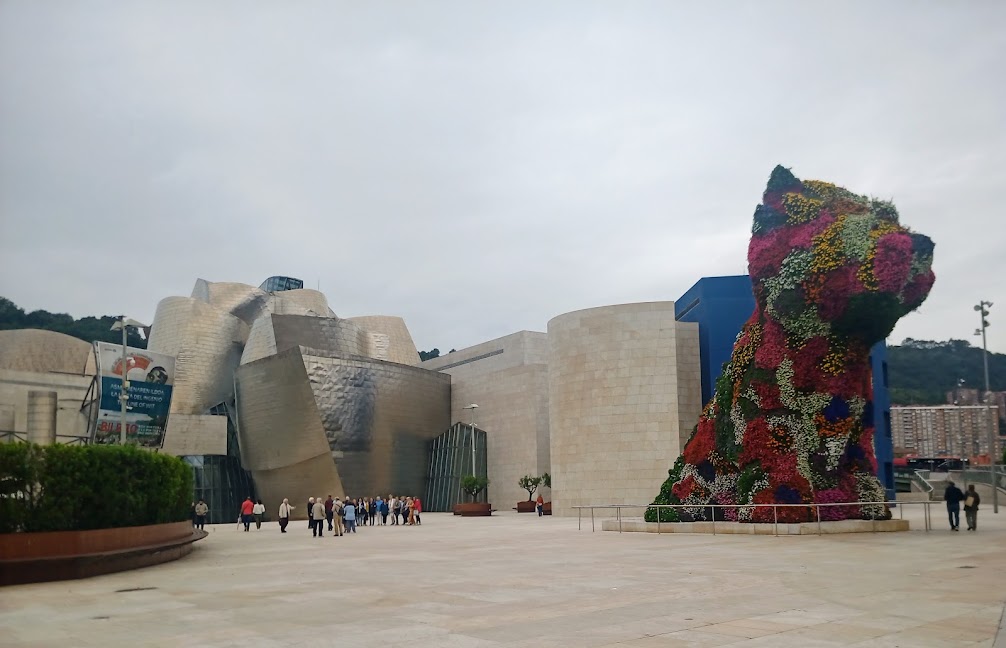
Day 22: Left the charming resort town of San Sebastian to visit Frank Gehry’s Guggenheim Museum in Bilbao, 70 minutes west. The architecture of the museum was the star of this city, but the content of the museum was not as impressive in my mind. Pintxos in Bilbao (population: 345,800) were not as impressive, and the city itself wasn’t quite as attractive as San Sebastian. After all, it’s an industrial port city. We wanted to see the flysche in the town of Zumaia on the way back but had to give up because we could not figure out how to feed the parking meter!
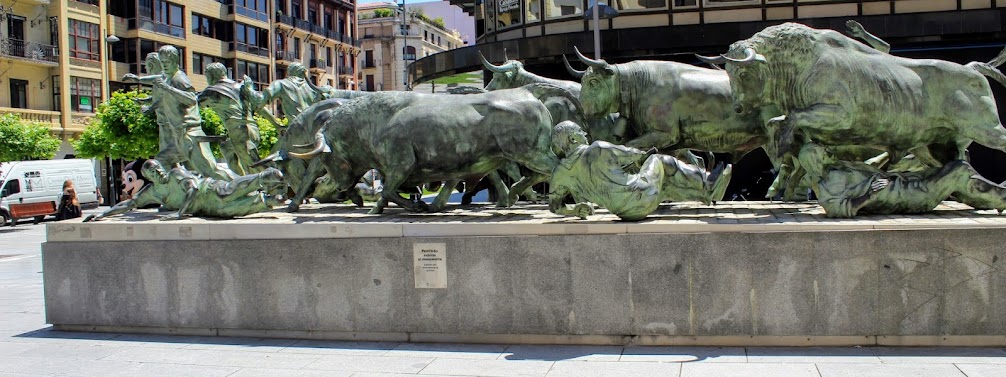
Day 23: We drove into the center of old town Pamplona (population: 199,000), found a street parking spot 15 minutes away from the main square, Plaza de Castillo, walked in & walked around. Had some great pintxos.
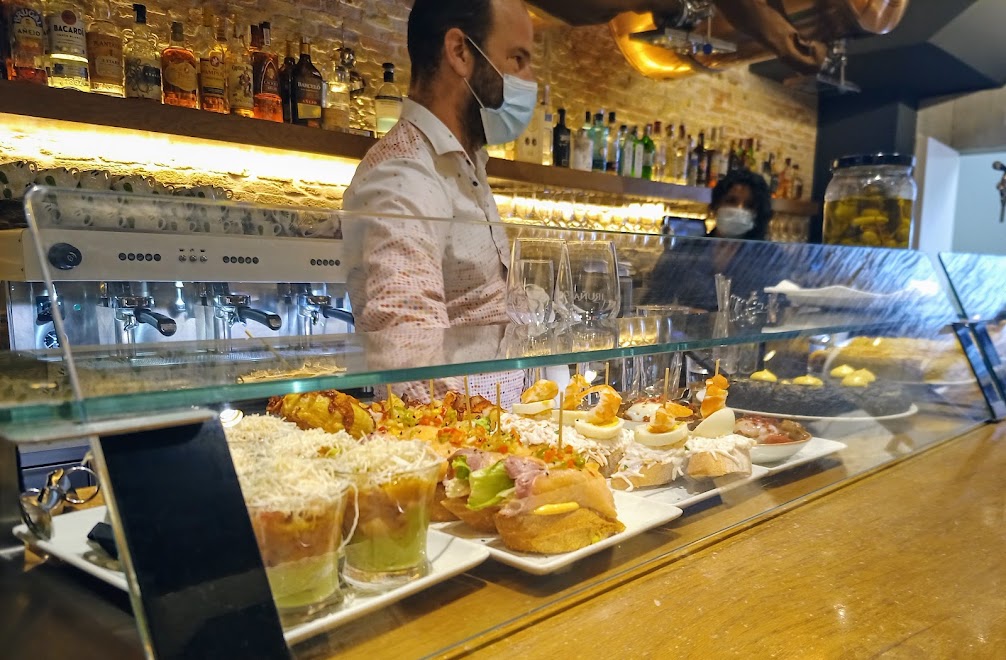
Day 24: Visited two natural wonders of Navarre region, Foz de Arbayun and Foz de Lumbier. Just a 40 minute drive southeast of Pamplona, these two spots were only 15 minutes from each other. Stopped in Pamplona for lunch and more sightseeing. This time we parked in the huge lot right under the main square.

3 Days in Castilla-La Mancha:
Day 25: Our 6 hour journey to Cuenca (population: 54,800) was broken down into several smaller segments. The first stop was 20 minute away on top of Alto del Perdon hills where metal sculptures (pictured above) of Camino de Santiago pilgrims stood. Just 15 minutes down the hill was Puente La Reina (population: 2,840), a pilgrimage town filled with cobblestone alleys and welcoming signs for the pilgrims. After an hour or so of driving, we got into a mountainous area where cars could speed up to never more than 30 miles an hour, and this was where the local police waited to give us a speeding ticket. Huh? Speeding? Our Spanish was not good enough to argue, though. Lunch stop was in Medinaceli (population: 720), another charming little town with a big town square. Arrived at the home exchange apartment mid-afternoon.
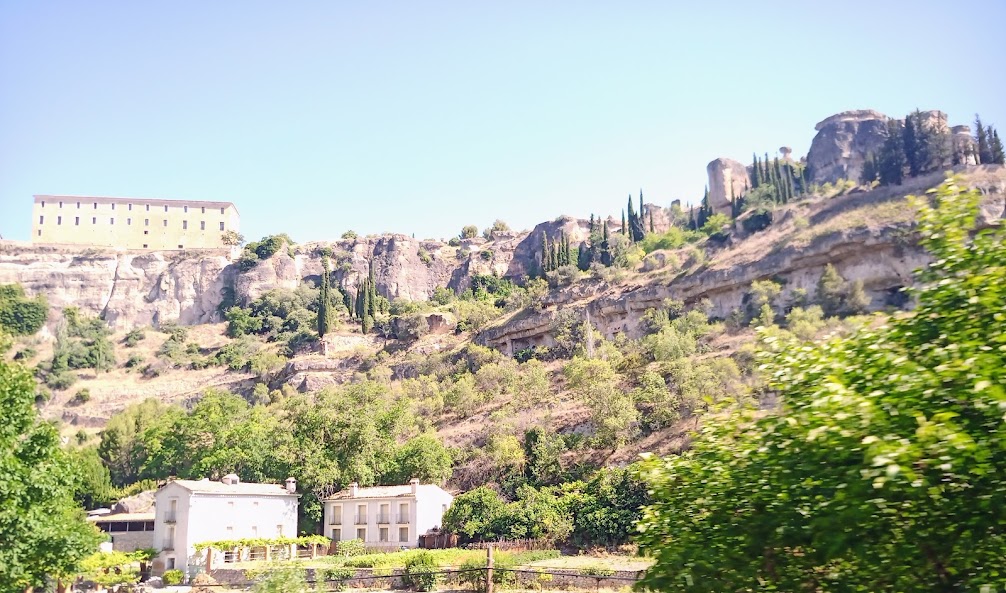
Day 26: A UNESCO World Heritage site of Cuenca’s old town was on a hillside and easily walkable. There was a free parking area on top of the hill following the main drag. Many of the major attractions and the museums were not open due to the pandemic, but we got the flavor of the town. Drove out to the Enchanted City rock park. Dinner at an excellent local restaurant not too far from where we were staying.
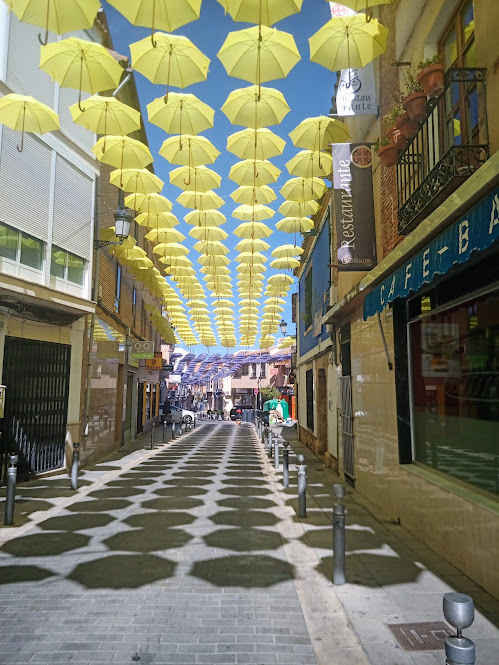
Day 27: We originally planned to spend 4 nights in Cuenca, but, there didn’t seem to be a whole lot to do there. So we decided to drive slowly toward our final destination, Malaga, stopping in small towns. Drove about 2 hours southwest and had breakfast in another town with a long name: Villanueva de Los Infantes (population: 5,030). Within 15 minutes, we visited another cute town with a great church building, San Carlos del Valle (population: 1,120). Then came the popular center of the wine growing region, Valdepenas (population: 3,0200), which, when we visited, was not very active because it was a weekend during the pandemic. We headed over to our Airbnb room in a small town of Membrilla (population: 6,000) & checked in, then drove 6 miles up the road to a bigger town of Mazanares (population: 18,000) for lunch. It seemed like a nice enough town, but we were too tired to explore much. Dinner was at a restaurant in Membrilla.
3 Days back in Andalusia:
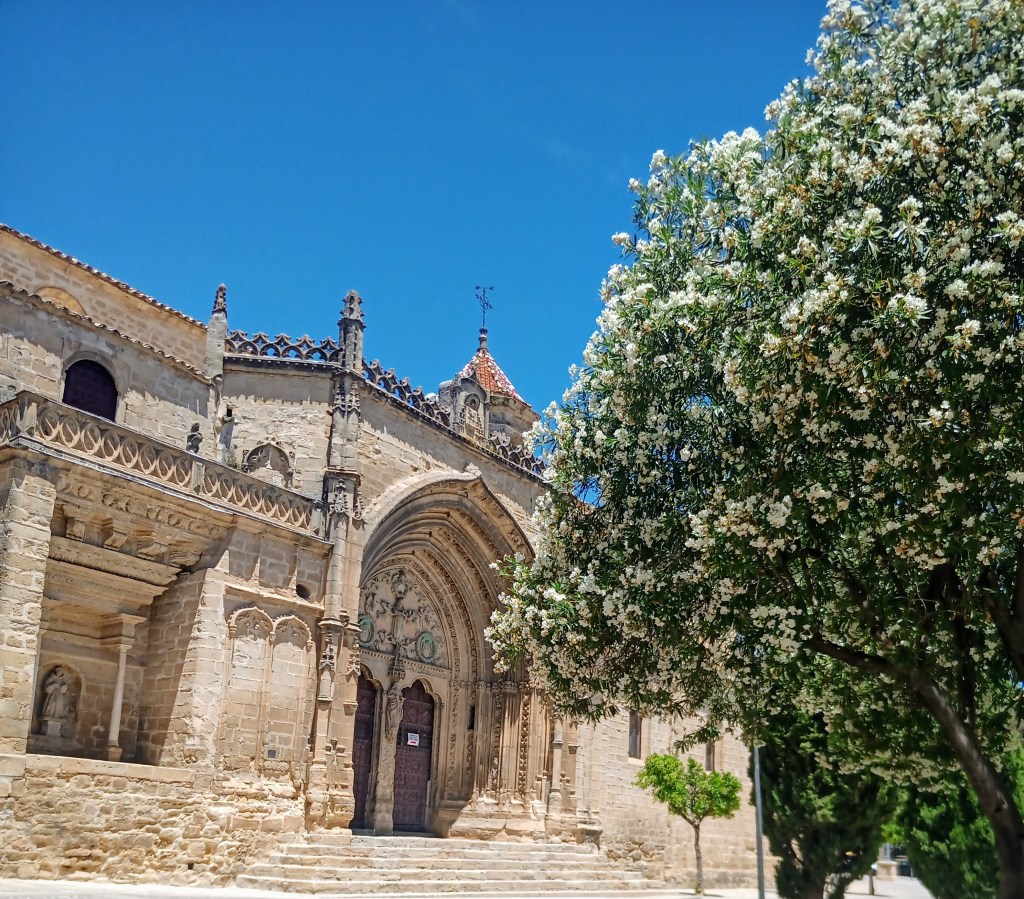
Day 28: From Membrilla to Ubeda (population: 34,600) was an hour and a half of pleasant scenery filled with vineyards and olive trees. Another of UNESCO World Heritage site, Ubeda was a very attractive, friendly city. Lots of restaurant choices. We had a great simple meal at Antique tapas restaurant, and our Airbnb apartment was perfect in every way.

Day 29: Drove to Baeza (population: 15,900), practically the next town over. We wanted to have breakfast there, but we could not find any place open at that hour. From here to Malaga (population: 569,000) was a bit over two hours. This was on July 5th, and the temperature was in the 90’s. We gave up on the Airbnb studio we had reserved because of the parking difficulty & checked into a hotel near the airport with free parking and air conditioning. Too hot to walk around.
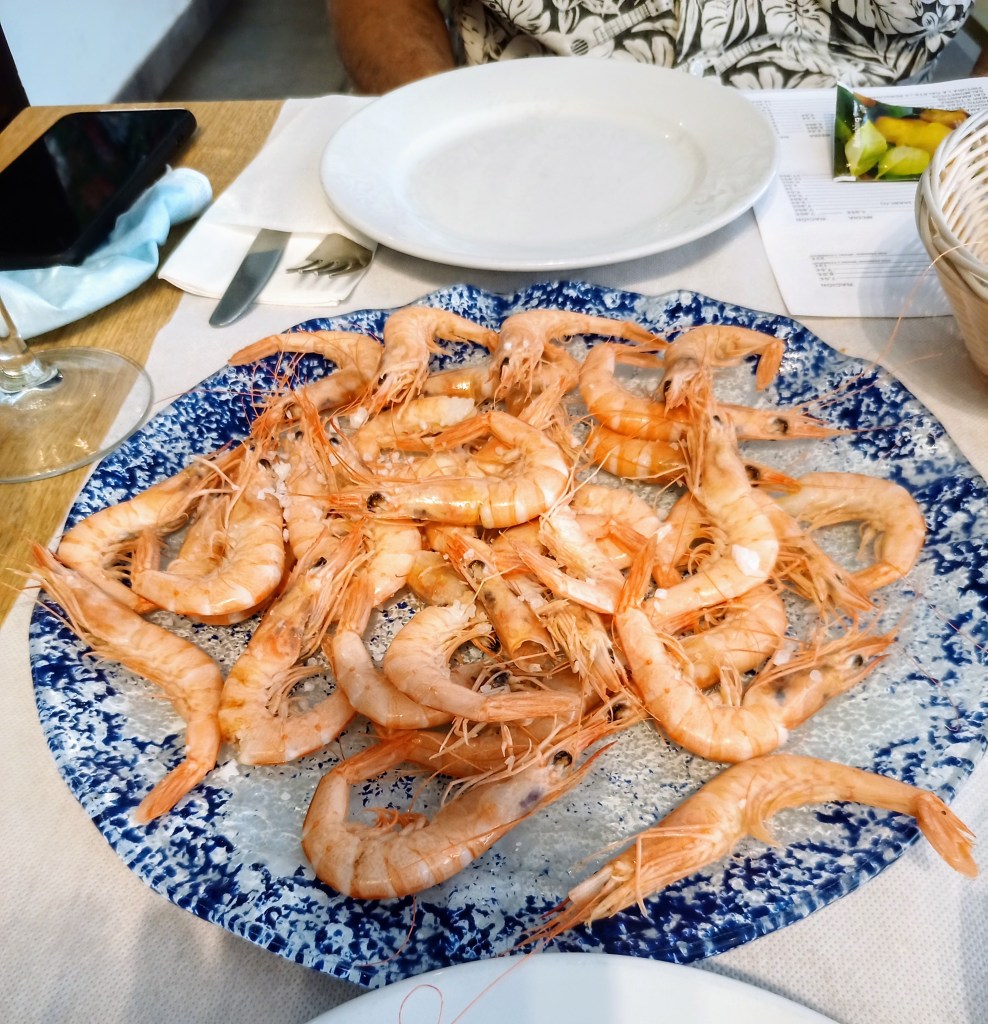
Day 30: We did not have enough energy to go into town. We had been there as a cruise stop some years ago, thus, we decided to stay local, ate at a beach side grill, checked out a shopping mall and chilled out.
Day 31: Flew out of Malaga to Barcelona, then to the U.S.
In hindsight, we might have been a bit too ambitious to cover a lot of ground. Spending a little more time in each stop or driving not as much as we did could have been a more enjoyable experience without depleting our energy. But, over all, we felt we got to know Spain better. Every where we stayed, our hosts were so wonderful. They usually went out of their way to welcome us and help us as much as possible. Sites may bring us in, but people will bring us back. We will be back in Spain for sure!

Original Andalusia Plan
Before the pandemic derailed our plan, we had a rather busy itinerary for Andalusia. Just in case anyone is curious:
Day 1 & 2: visit the towns (White Villages) within 30 minute drive from our home base in Marina de Casares: Casares, Gaucin, Jimena de la Frontera, and, possibly, the old Roman bath
Day 3: Go a bit north of Malaga to Archidona, Anteguera or Villanueva de la Concepcion
Day 4: Ronda & Setenil de las Bodega
Day 5: Costa del Sol beach towns, Market Day in nearby towns, Marbella Fair (which was going on from June 7th-11th this year)
Day 6: Cadiz
Day 7: Gibraltar or Malaga. If not, maybe Nerja Cave and Frigilana
Planning Map: Here’s a map of all the recommended places to visit I found online on 15-20 different lists compiled by various travelers.
Blog Links: will be updated as each post is ready
Marina de Casares -> Lanjaron -> Granada -> Turon -> Valencia -> Arbarracin -> Teruel -> Barcelona -> Peralada -> Figueres -> Peratallada -> Pals -> Girona -> Besalu -> Collioure -> Cadaques -> Montserrat -> Lleida -> Zaragoza -> Pamplona -> San Sebastian -> Bilbao -> Cuenca -> Ubeda -> Baeza -> Malaga
 Small Wide World