Merida(Spain)

March 2017    Itinerary Link
IMG_0130

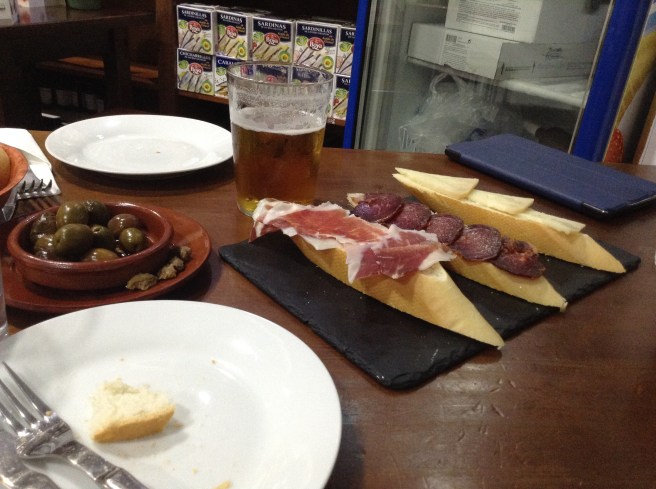
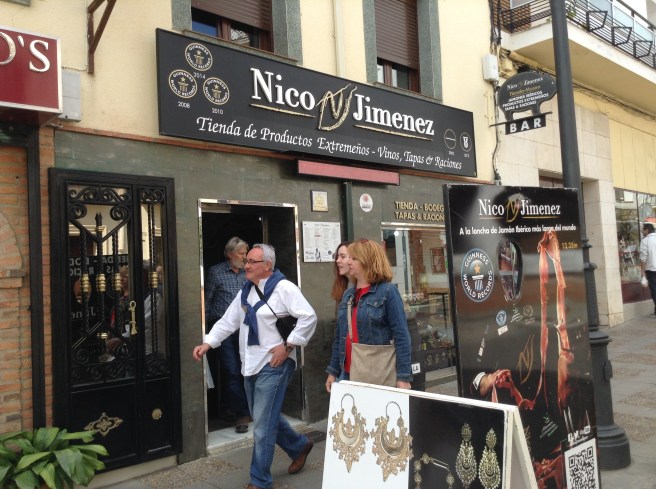
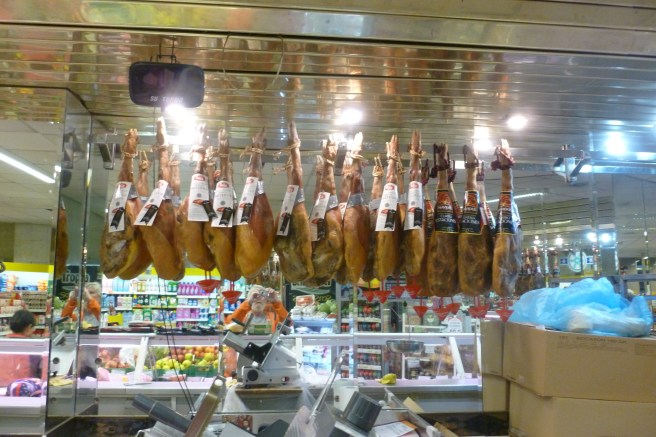
History buffs go to Merida(population 60,000) for the Roman ruins, which qualified the city as a UNESCO World Heritage Site, but we went there for jamon(ham).

IMG_0131 (3)IMG_0133IMG_0135

We drove up north for about 2 hours from Seville, and finding the center of town was not too difficult. We parked the car on a street right outside of the pedestrian-only central zone. Our destination Nico Jimenez was on the main street in this zone. Velvety jamon, smooth wine. We are forever spoiled!

Caceres(Spain)

March 2017     Itinerary Link

Caceres was an accidental stop during our driving trip around central Spain. We had planned to go to Salamanca from Seville, but, we decided to cut the driving time and spend more time in whatever town we end up.

We had never heard of Caceres(population 96,000), but a Google search pointed us to this town which is on the UNESCO World Heritage Site list. We stayed a bit southwest of the Old Town, but the uphill walk of 15-20 minutes was not too stiff or difficult. The Old Town is pedestrian only, and you can explore the whole area in 2-3 hours. There were cafes and restaurants in this zone as well.

Right outside of the wall on the south side is their main square, Plaza Mayor, and there are places to eat and shop along the perimeter. Overall, the whole town was very low key and quiet. It was a nice break from all the hustle and bustle of the bigger cities.

Where & what to eat: click!

Cordoba(Spain)

March 2017     Itinerary Link

P1030365

Moors. You see the Moorish influence all over Spain, but I had a strong urge to learn more about Moors for the first time when we visited Cordoba(population: 330,000). According to Wikipedia, Moors “refers primarily to the Muslim inhabitants of the Maghreb, the Iberian Peninsula, Sicily, Sardinia, Corsica, and Malta during the Middle Ages. The Moors initially were the indigenous Maghrebine Berbers. The name was later also applied to Arabs.”

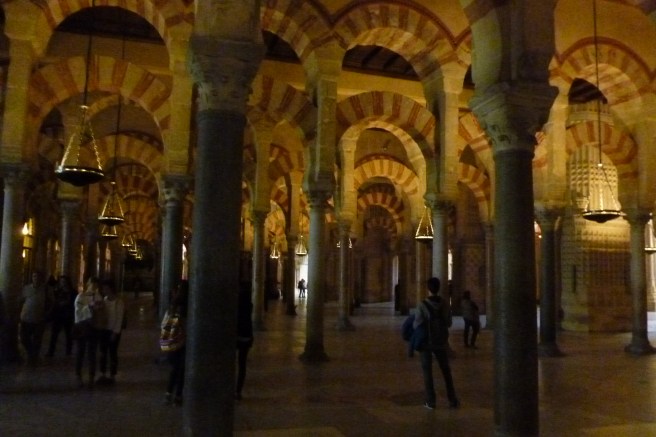
Cordoba, a UNESCO World Heritage Site, was settled by Romans in 206 BC, then colonized by Moors in the 8th Century, then captured by the Catholic Kingdom of Castille in 1236. This historical process is well manifested in the major attraction of this city, Mezquita de Córdoba pictured above and below.

There are other things to see in Cordoba, but, after the visit to this Mosque-Cathedral, we were exhausted. All our senses were overwhelmed by the juxtaposition of both religions in grandest scale.
P1030380P1030379P1030377

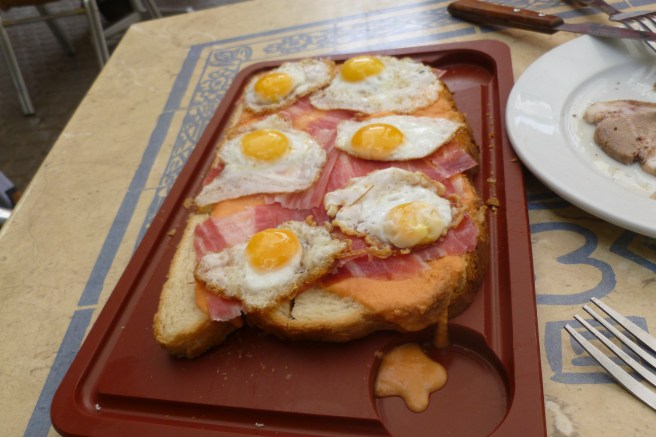
Our Airbnb apartment was located west of the Old Town, and we could park our car on the streets among other apartment dwellers’ vehicles. We walked around finding snacks and unusual items. If you get tired, you can hop on the bus in Cordoba.

Where to Eat: Click!