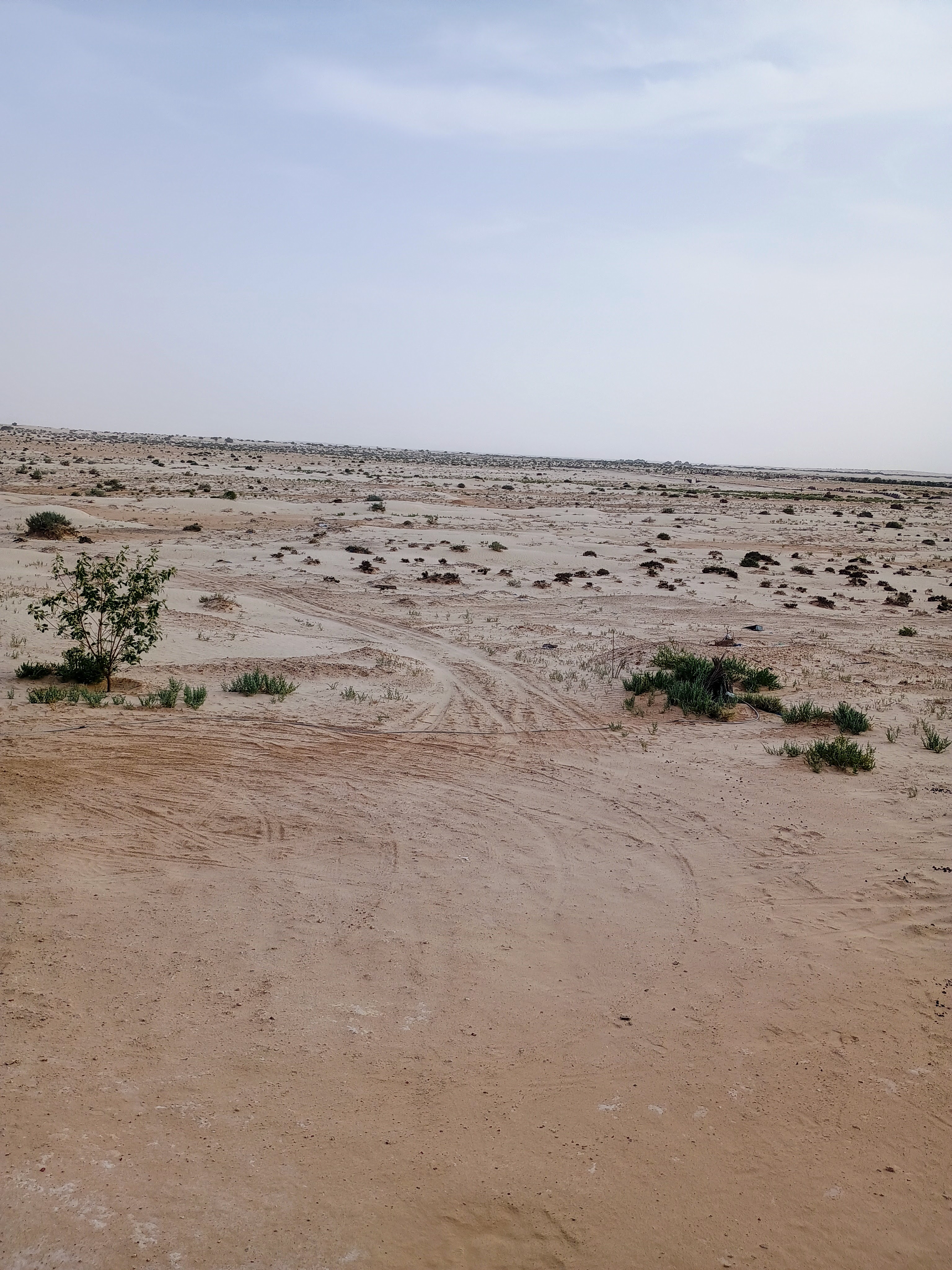
Douz & the Tunisian Sahara: 2 Nights

May 2025

The nothing land of southern Tunisia

On our third day in Tunisia, we rented a car from a local agency and drove 580 Km south to explore the desert scene. The rental agent carefully filled out the rental form by hand. The whole process was not rushed – incidentally, the name of the agency was “Camelcar” which could have been a preview. Doubt crossed my high-tech conditioned mind, but, in the end, an actual automobile, with automatic transmission no less, was handed over to us.

The A1 freeway was in good condition and not crowded. We will stop for lunch somewhere half way down, we thought

Well, the urban scenery switched to endless dark green fields of olive trees, then, after we passed the half way mark, the road was pretty much empty and there was nothing along or near the freeway but desolate land. More than half of the 12 million population of Tunisia live in the capital region, and the second biggest city, Sfax, has a population of 300,000. Most towns in southern Tunisia are more like villages than cities.
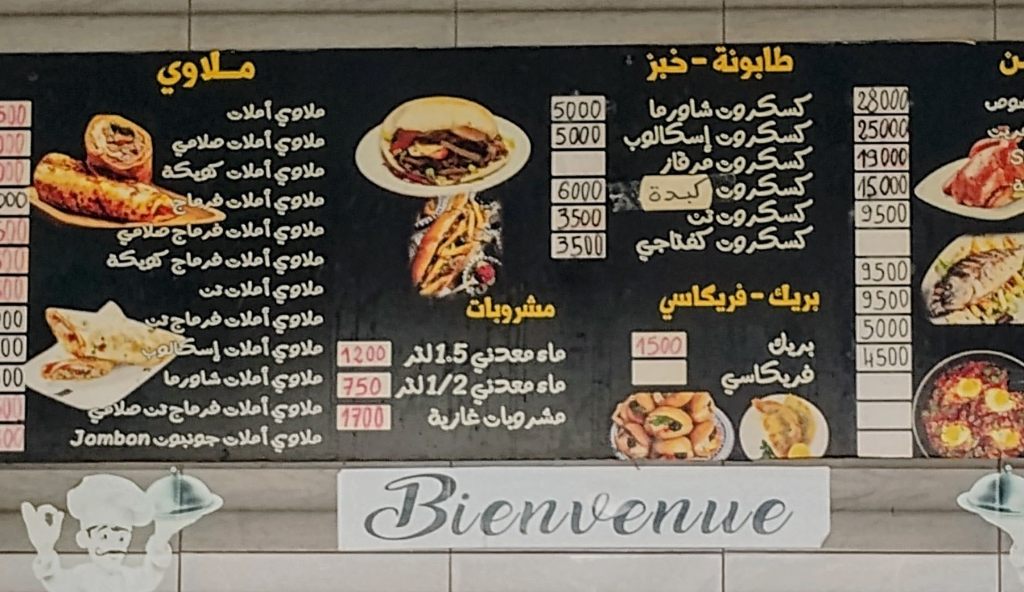
We were hungry and were looking for any sign of food. After getting off the highway and turning onto a paved local road that led to our destination, Douz, we saw a place where people were sitting around tables. Stop here, we all agreed. Sorry, we only serve coffee.. Where can we eat? Keep going a bit. We were so happy to see a food stand with the sign in the picture above hanging on the wall.

We ordered by pointing, combined with a  few words of French. We were confused by the prices, though. Roughly, 3 Tunisian dinar was about one USD, but the menu showed too many zeros. It turns out that 1 dinar is divided into thousandths, not hundreds as in most currencies.

The food was delicious! Probably over 4 hours of unintended diet helped, too.
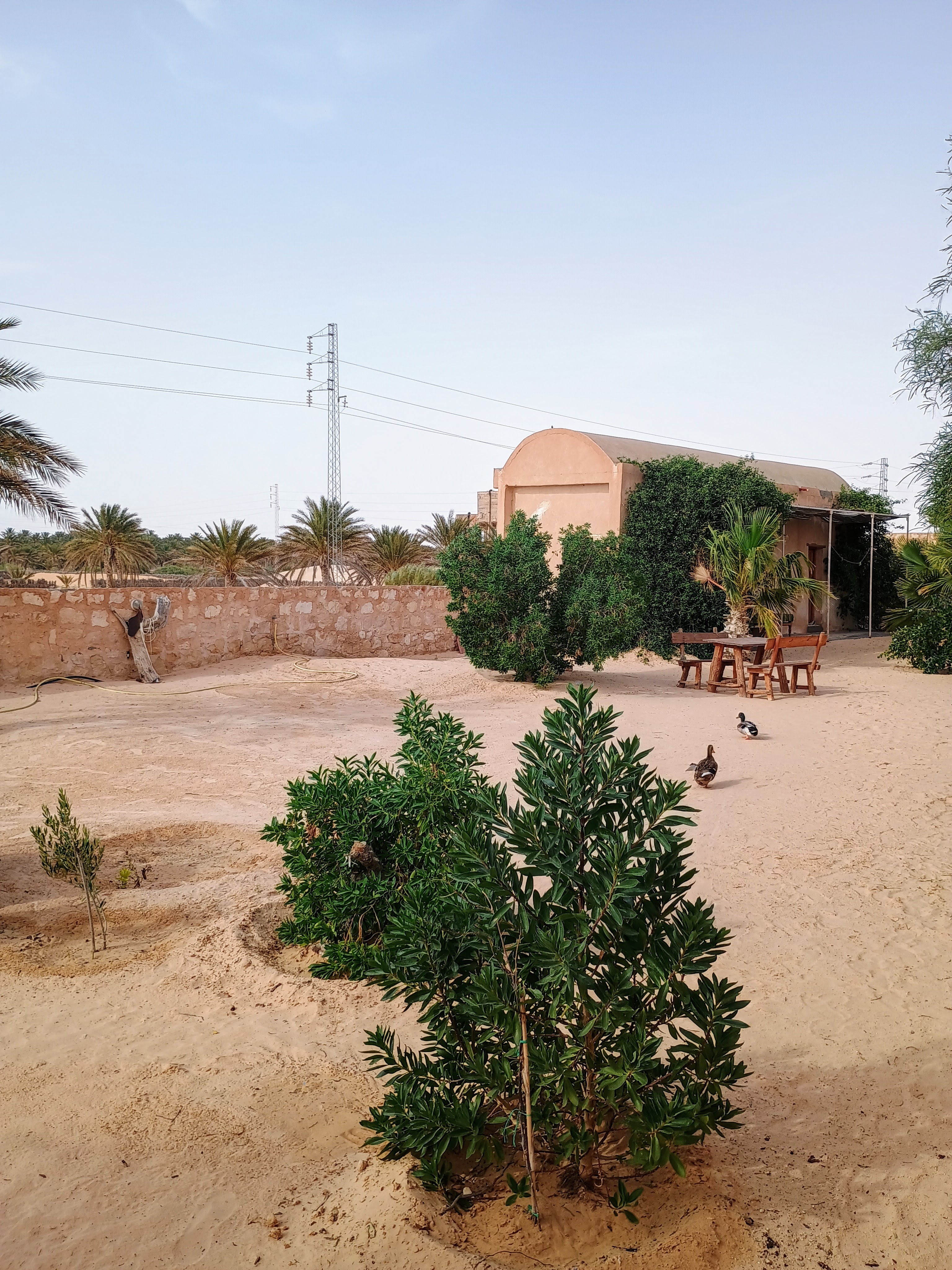
Grand Sud was not fancy or grand but a very comfortable B&B

One of the best travel memories of all time, for us, was the night sky filled with billions of stars in the Moroccan Sahara. I was hoping to have that experience again in the Tunisian Sahara, thus, I chose a lodging right next to the desert.

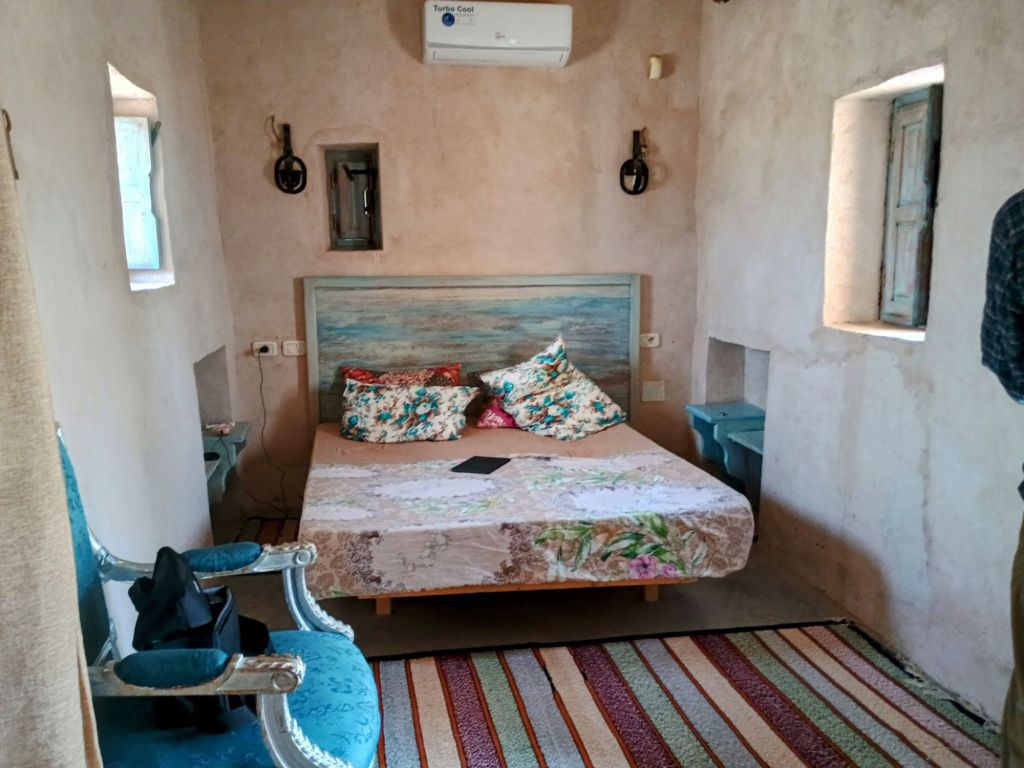
desert chic?

We were picked up by the driver/guide for a two hour sunset 4×4 desert experience (about 5 euros per person) arranged through the B&B.

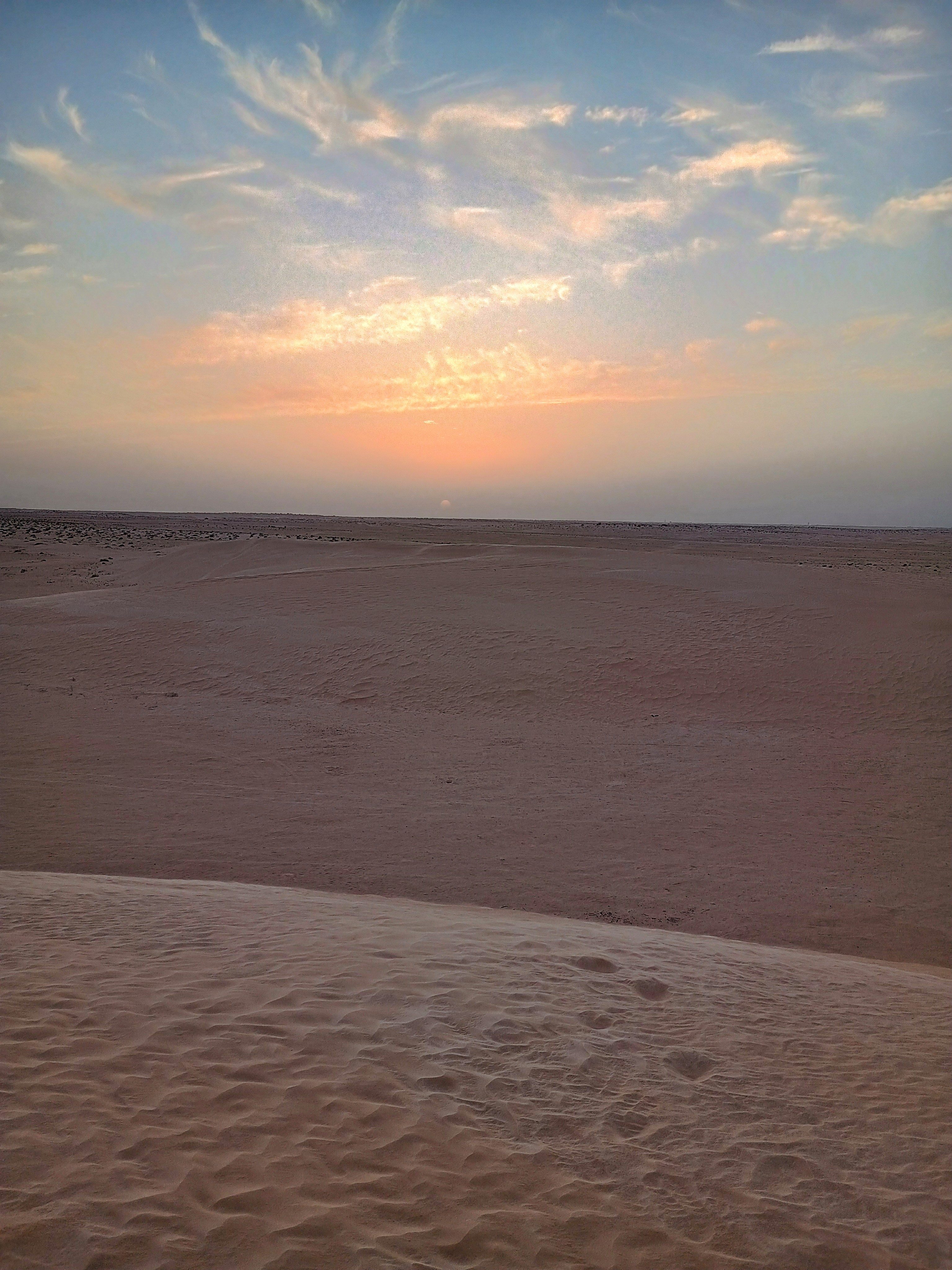
All so quiet. Suddenly, Pat’s cell phone rang. A random marketing call from the U.S. came through!

Douz, population 30,000, is known as the gateway to the Sahara desert. Not really a scenic town, there was quite a bit of commercial activity going on in the center that brought occasional chaotic traffic.
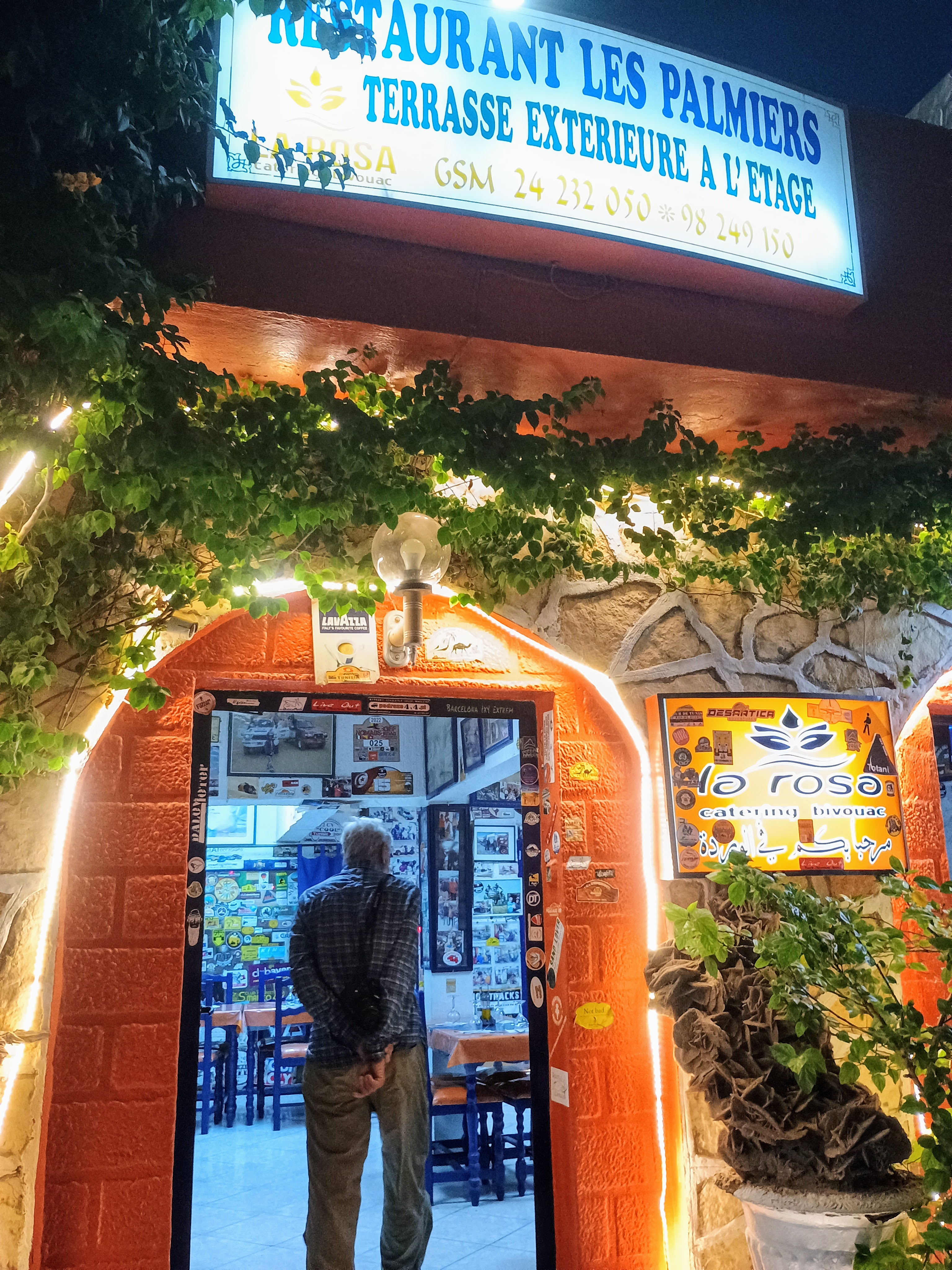
Our B&B owner recommended Restaurant Les Palmiers
Their grill dishes were quite good: tender meats and crispy fries
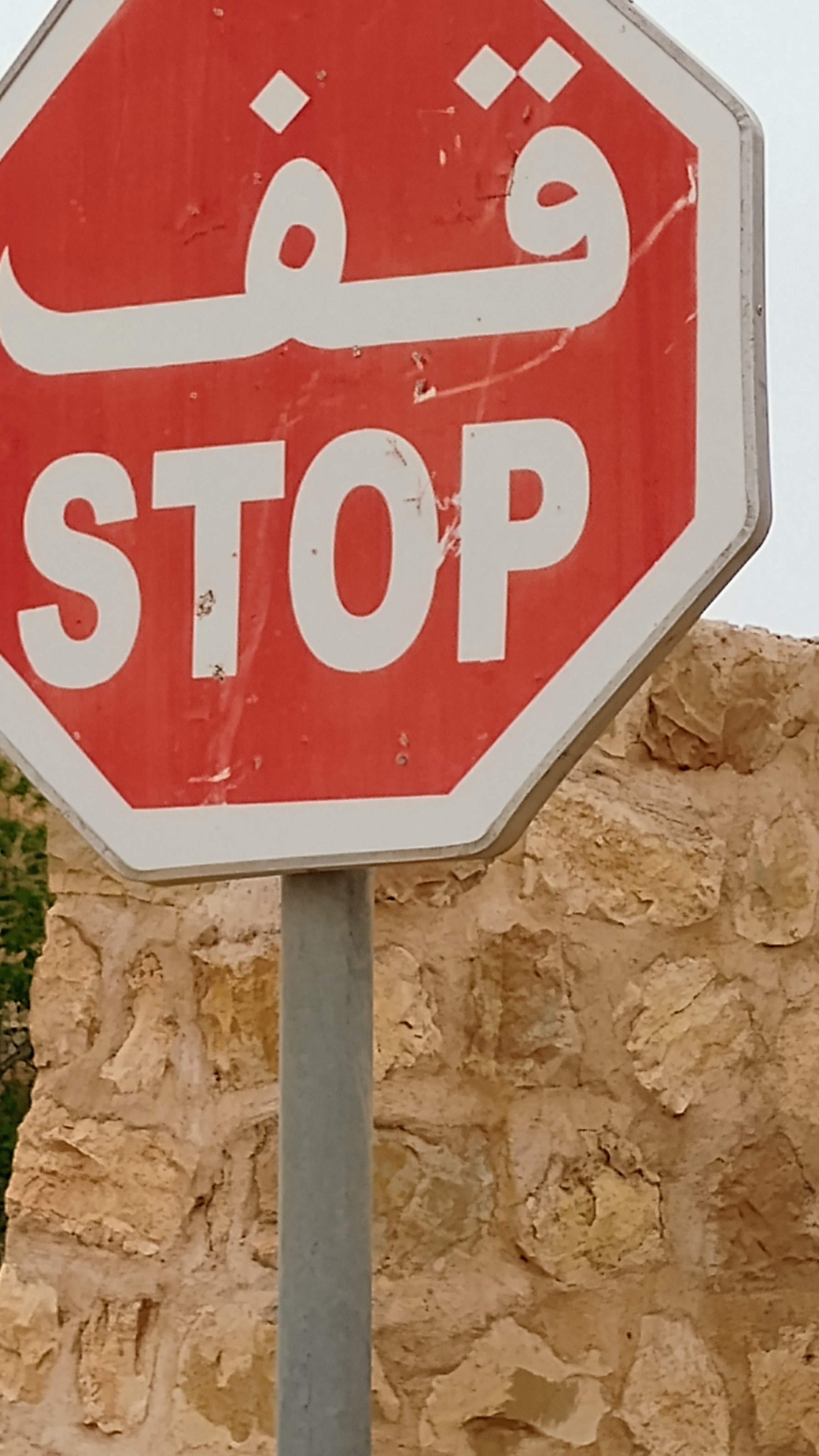
This stop sign caught Pat’s attention

We didn’t see any stars the first night because it was cloudy.

The second day we drove across Djerid Lake and visited Tozeur. This will be reported in a separate blog post.
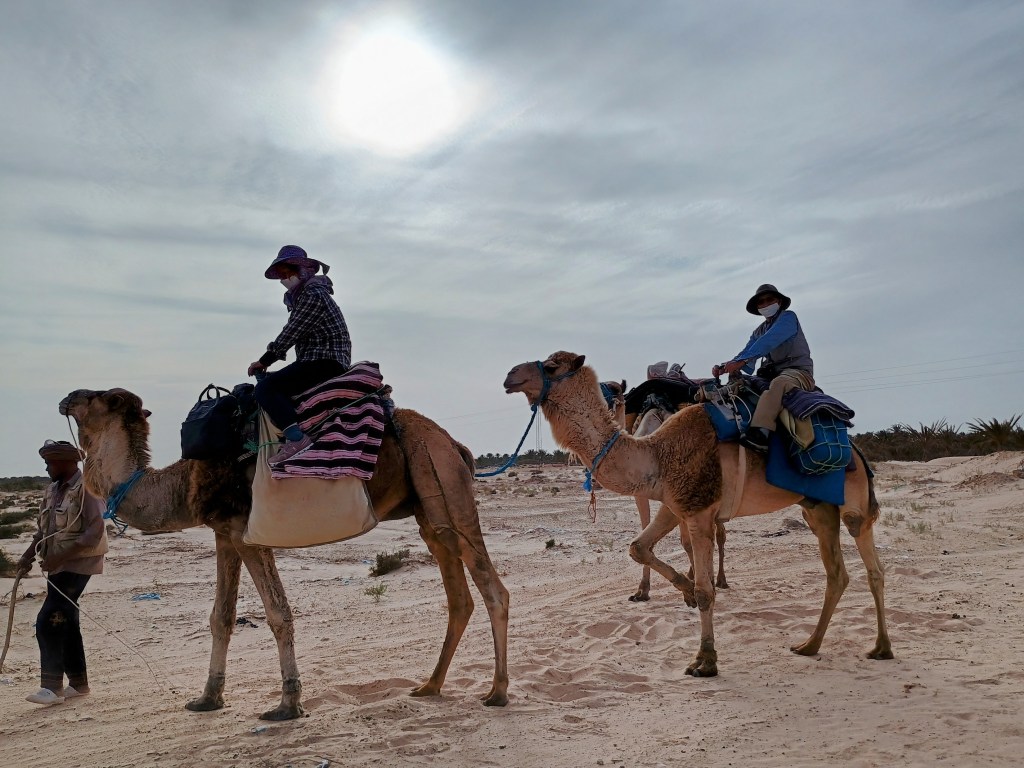
That evening, our friends were picked up by a guide and led into the desert on camelback for an overnight camping experience. (about $60/person).
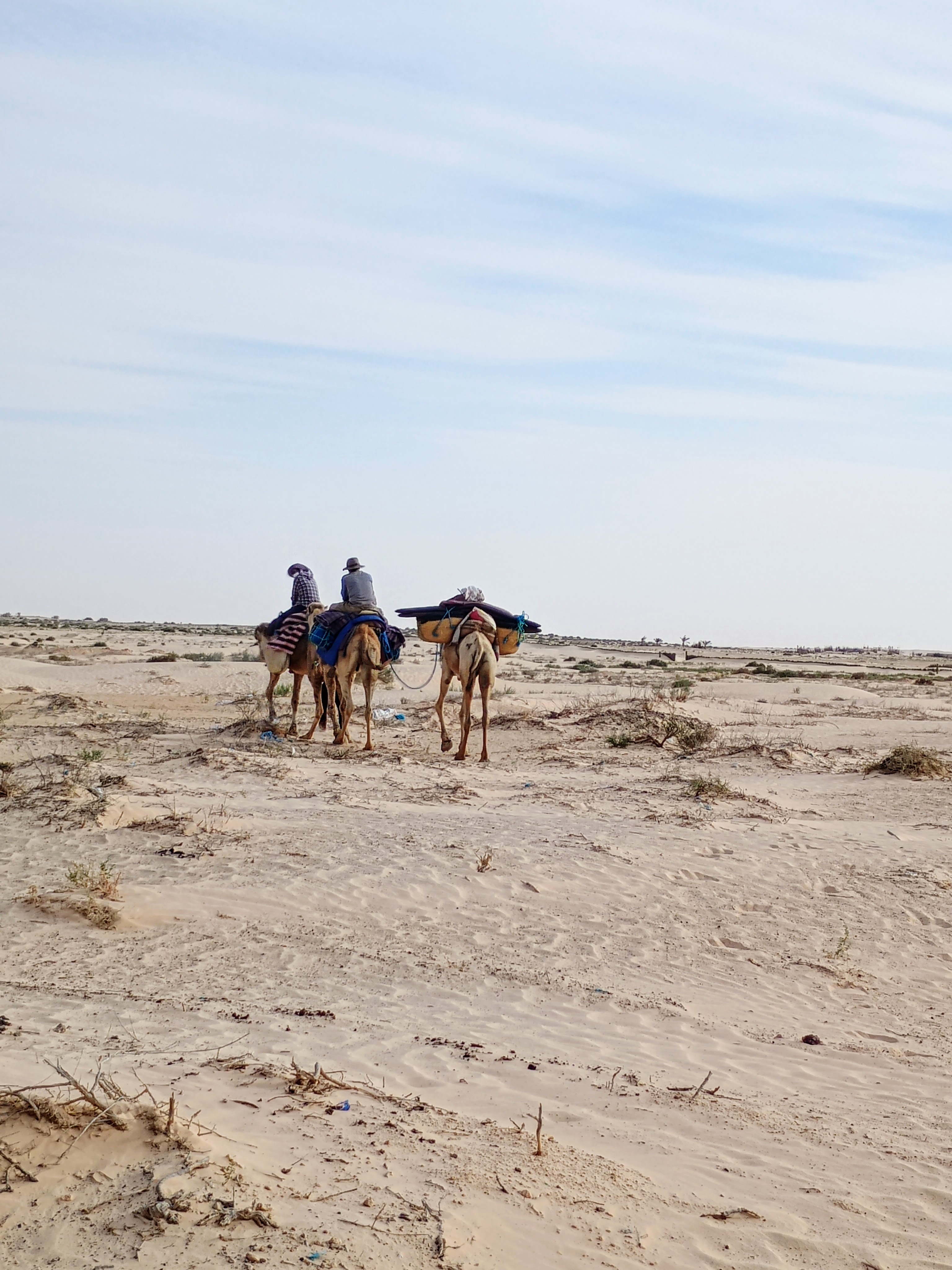
There they go!
Pitching a tent

Their report: The guide cooked a delicious meal, and the beds were comfortable enough. But the sound of strong wind kept them awake.
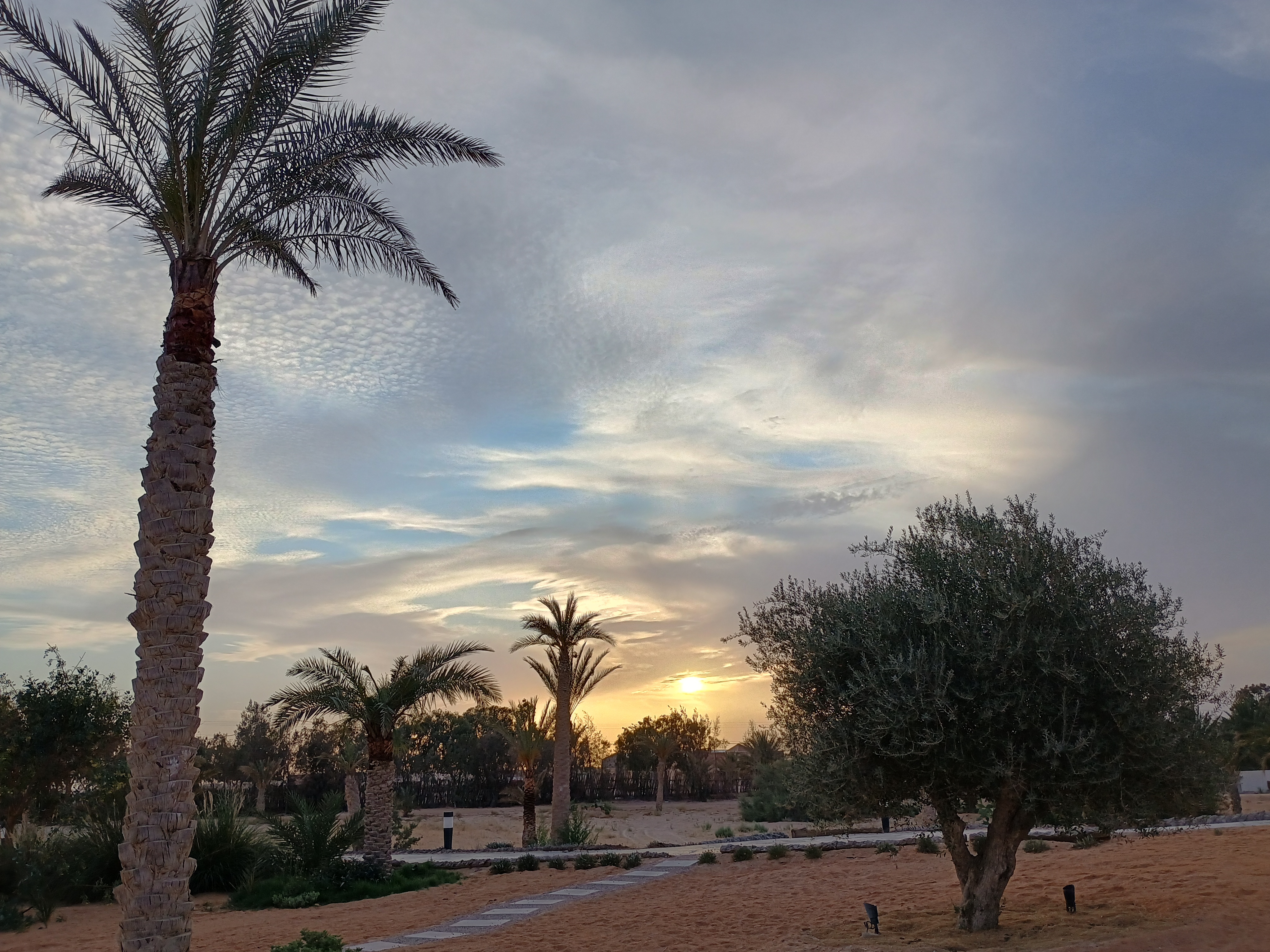
Meanwhile, we went for dinner at the fanciest hotel in town. 😛

We ended up here because… we had no money. We ran out of dinars and didn’t know where to get more. So we had to go to some place that surely will take a credit card. The Residence Douz welcomed us (our cards) with open arms.
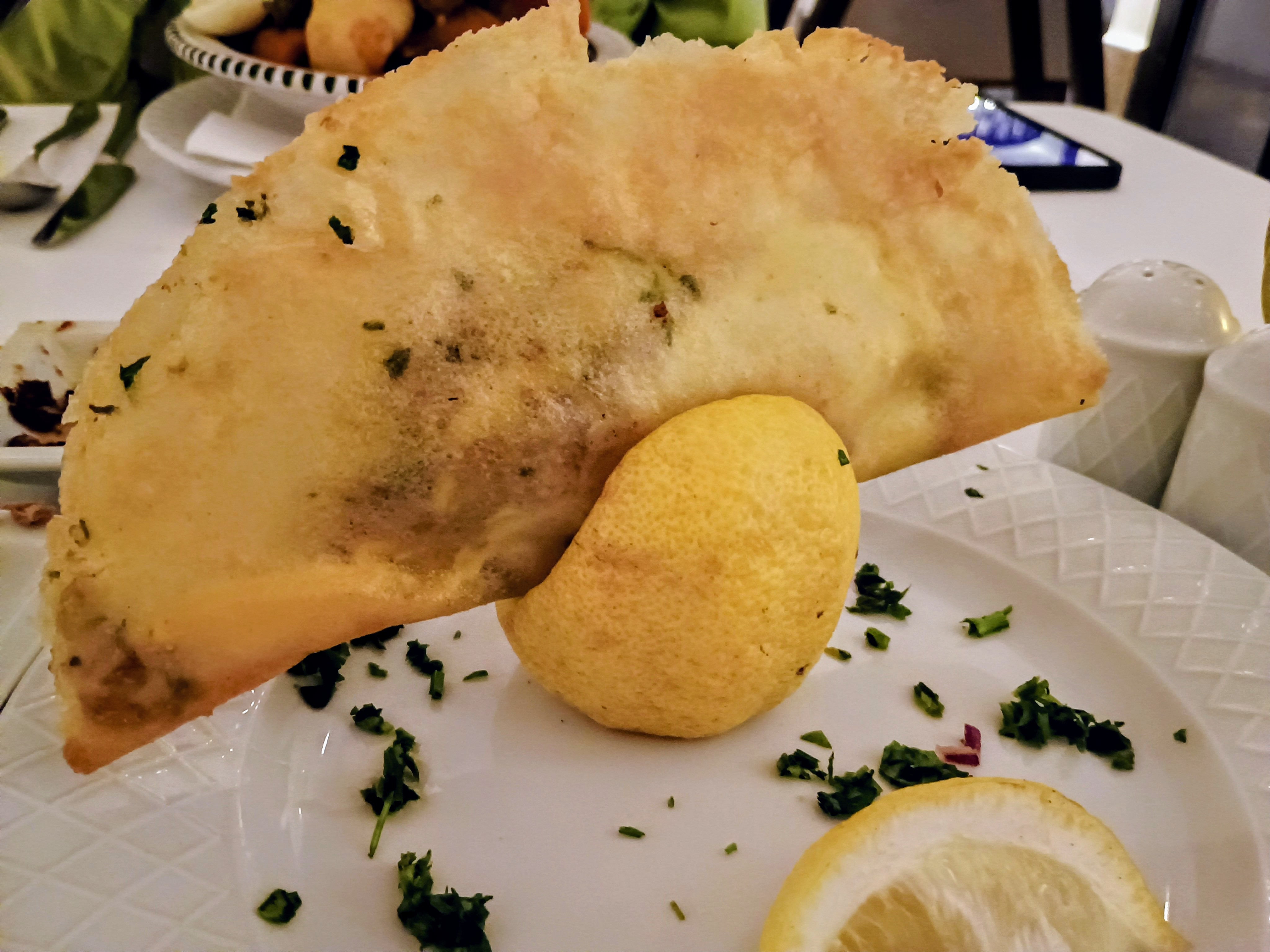
No customer frequently signals mediocre meals. Not here. Everything was delicious with impeccable service. It wasn’t too expensive, either.

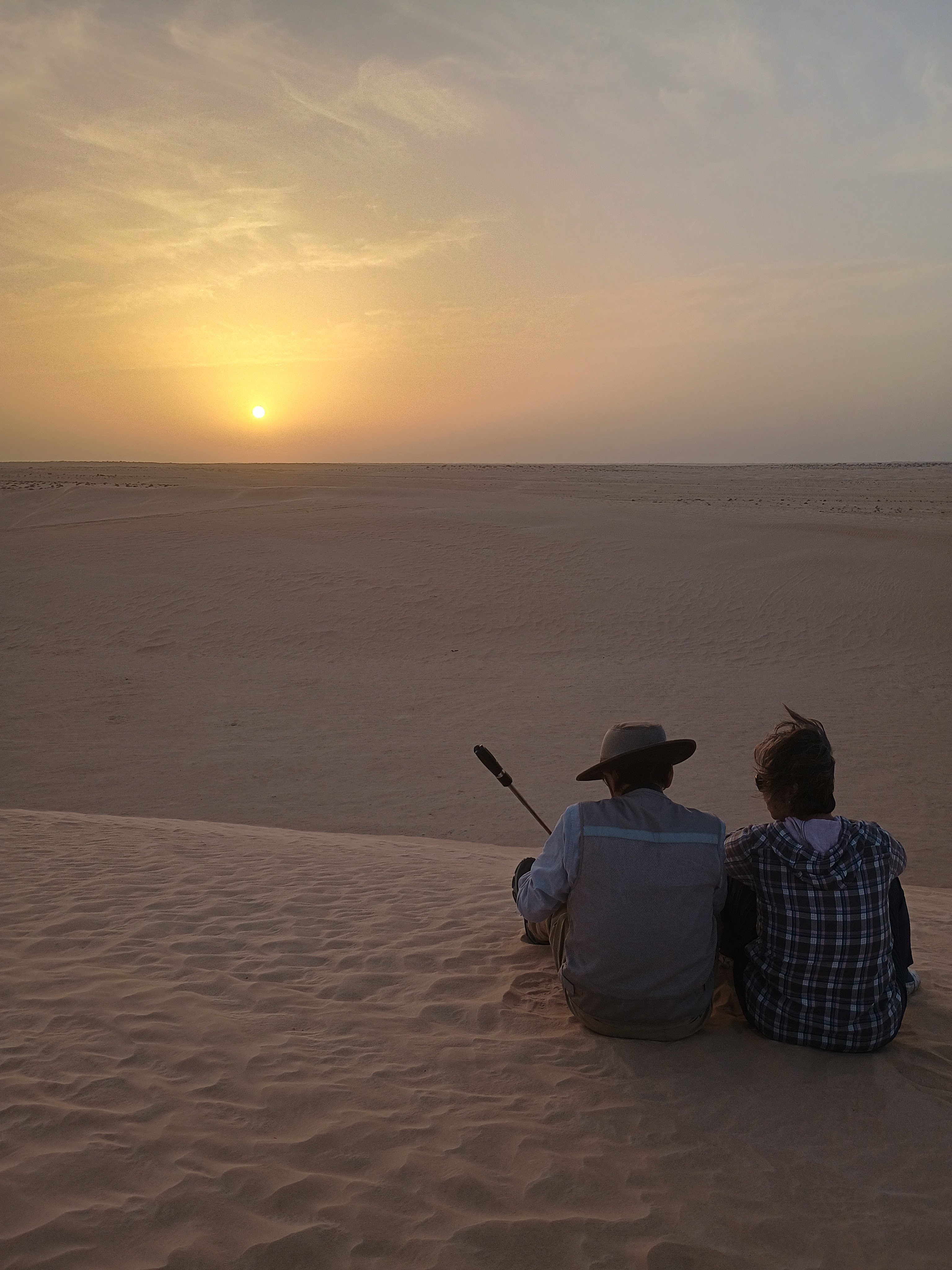
By the way, did you notice clouds in the sunset picture above? That meant no star gazing. I was crushed!

We stopped at the Museum of the Berber Culture on the way back to Tunis the next day as we were passing through the cave & underground dwellings areas in Temezret and Matmata.

Berbers are the indigenous people who have been living in northern Africa for thousands of years – they were there before the Arabs or Romans.

The museum’s owner seemed to be living in the house in a private quarter

The cave or the underground homes were developed to protect people from extreme elements. Rather surprisingly, some of the homes are well equipped and decorated with modern comforts nowadays. Come to think of it, why would that be a surprise? We all want to be more comfortable if at all possible!
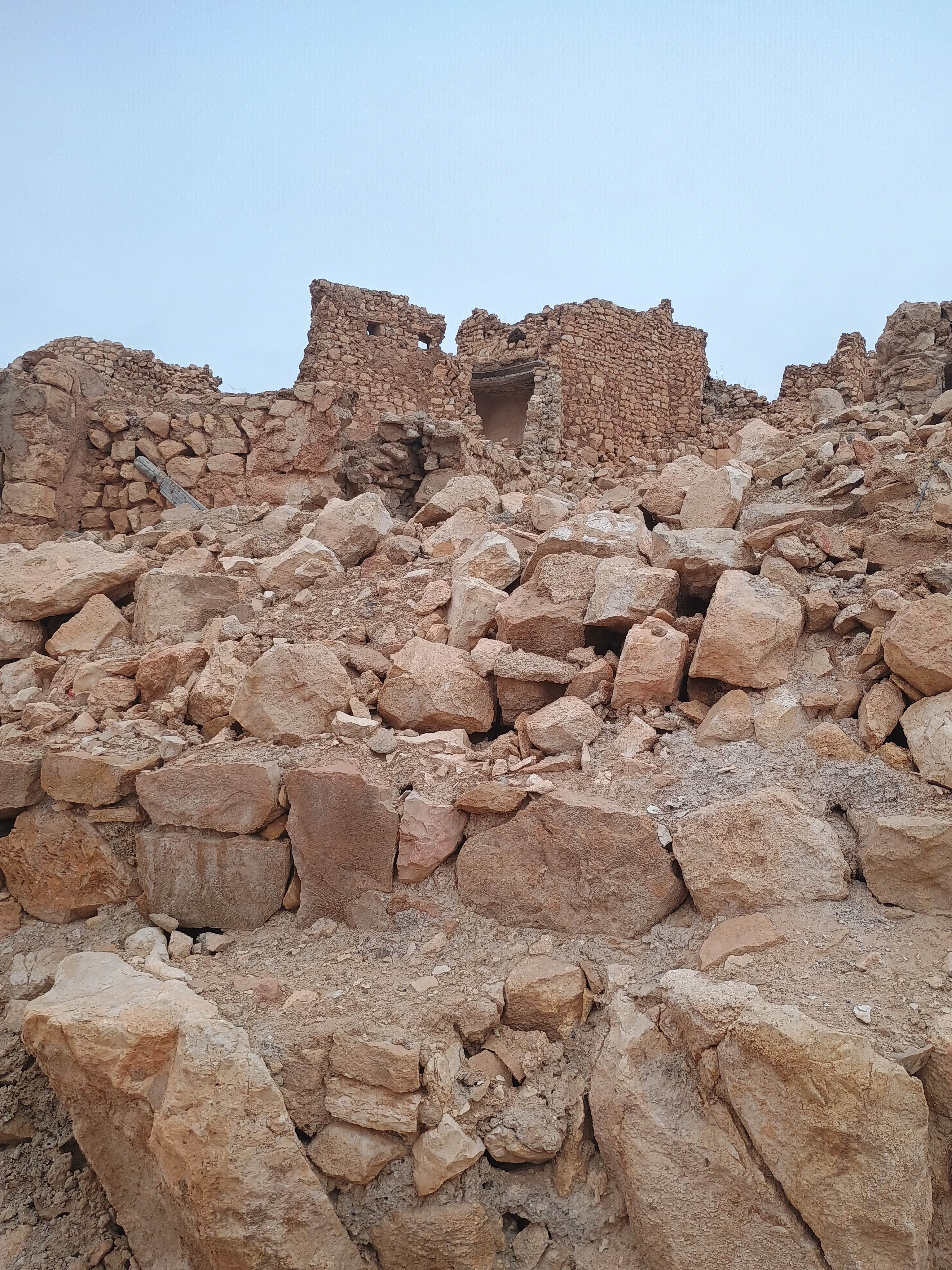
Old dwellings are crumbling, which is not surprising.

We stopped in El Jem for lunch and visited the biggest Roman amphitheater outside of Italy. This will be another blog post.

Tunisia itinerary link
Carthage (Tunisia): a day visit

May 2025

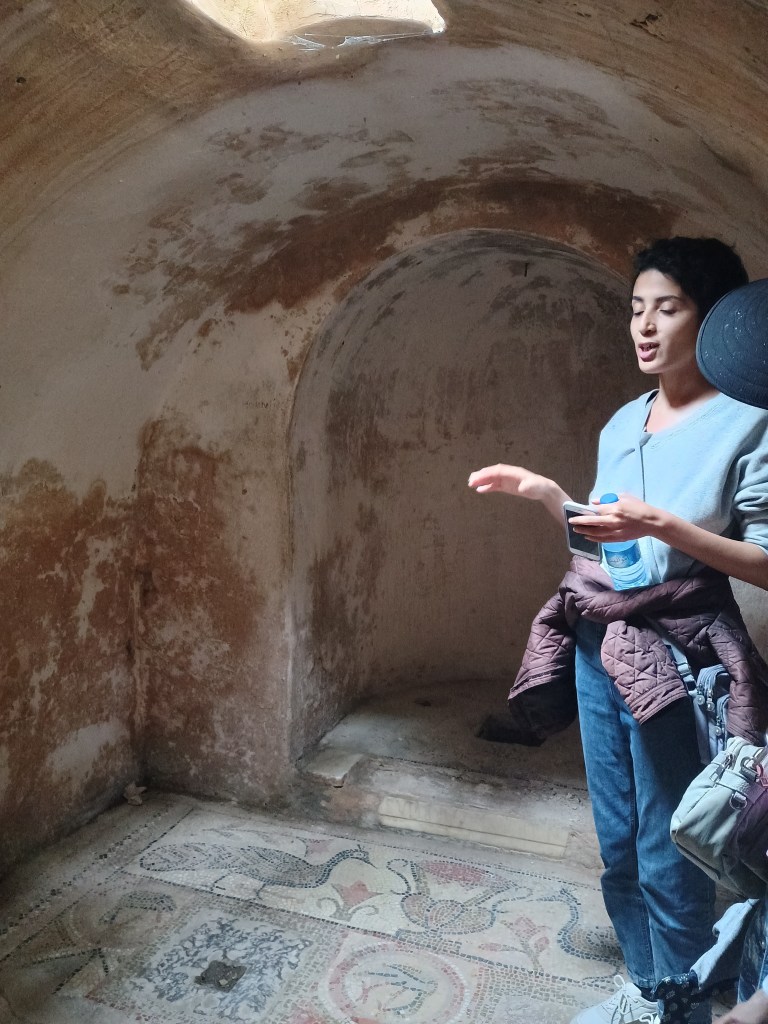
Our guide was a graduate student in archeology

Carthage was a city founded by the Phoenicians about 2,800 years ago. They were maritime traders based in modern day Lebanon & are believed to have developed the original alphabets that we use today.

Phoenician settlements
Old Carthage

The city thrived and was one of the population centers of the ancient world with a population of 100,000 to 250,000. They were more advanced than the Romans, but the Romans kept  challenging them and finally overpowered them with military strength in the 3rd Punic War in 146 B.C.

Romans destroyed the city and rebuilt on top of the old city.

The Carthage Archeological Site is not small. At 793 acres, it’s almost as big as Central Park in New York City and more than twice the size of Hyde Park in London. As someone with only mild curiosity about ancient civilizations, it seemed rather daunting to explore this place on our own. After all, in my experience, a ruin is a ruin and they all look pretty much the same after the initial wonderment has faded. So we joined a walking tour.

We were lucky to find a wonderful, knowledgeable guide, Hayfa, on the freetour.com website. She had us meet her at the Bath of Antoninus entrance to the archeological park and we purchased our tickets – one ticket (about USD$ 4) covered all the locations within the park.

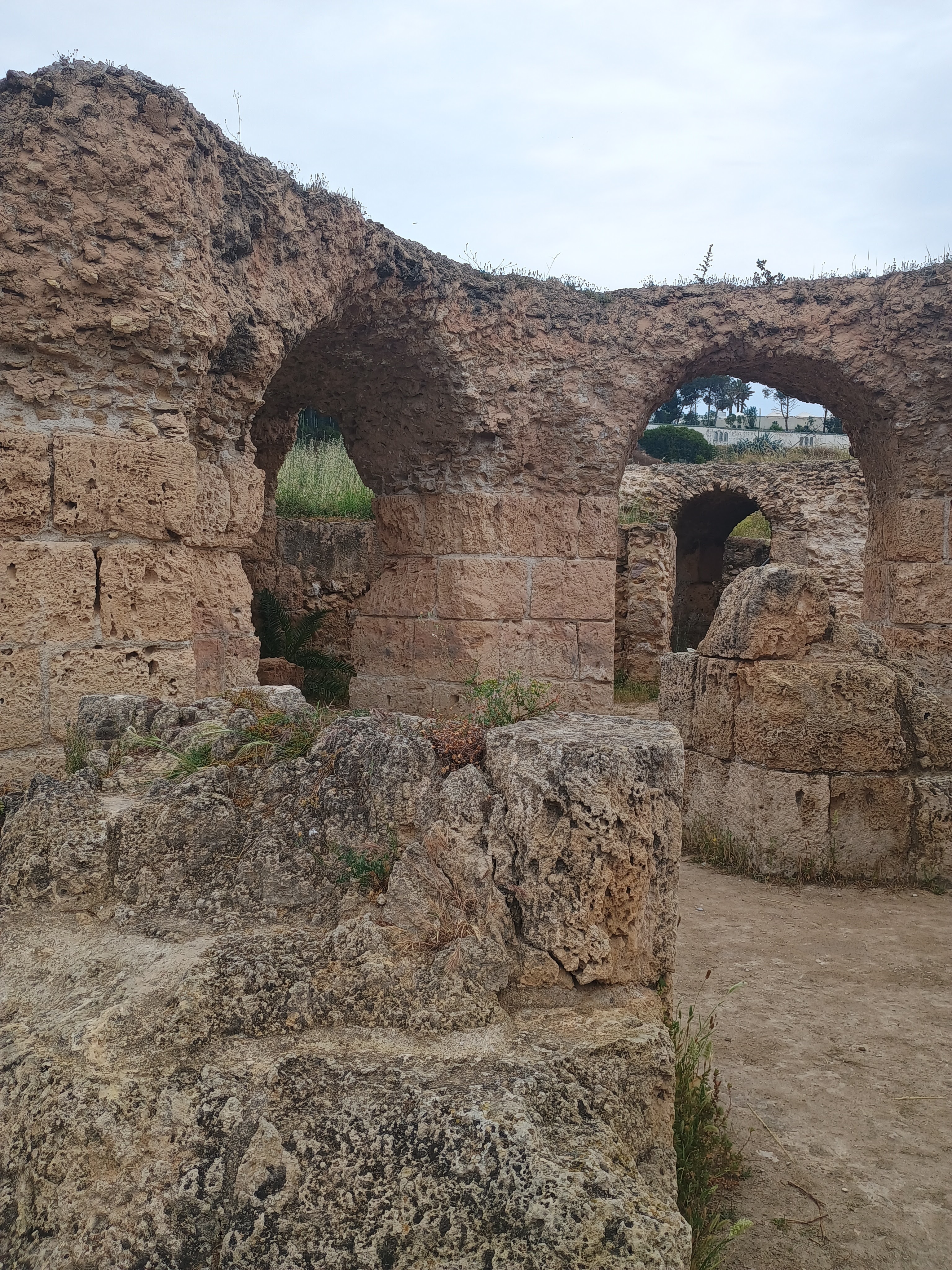
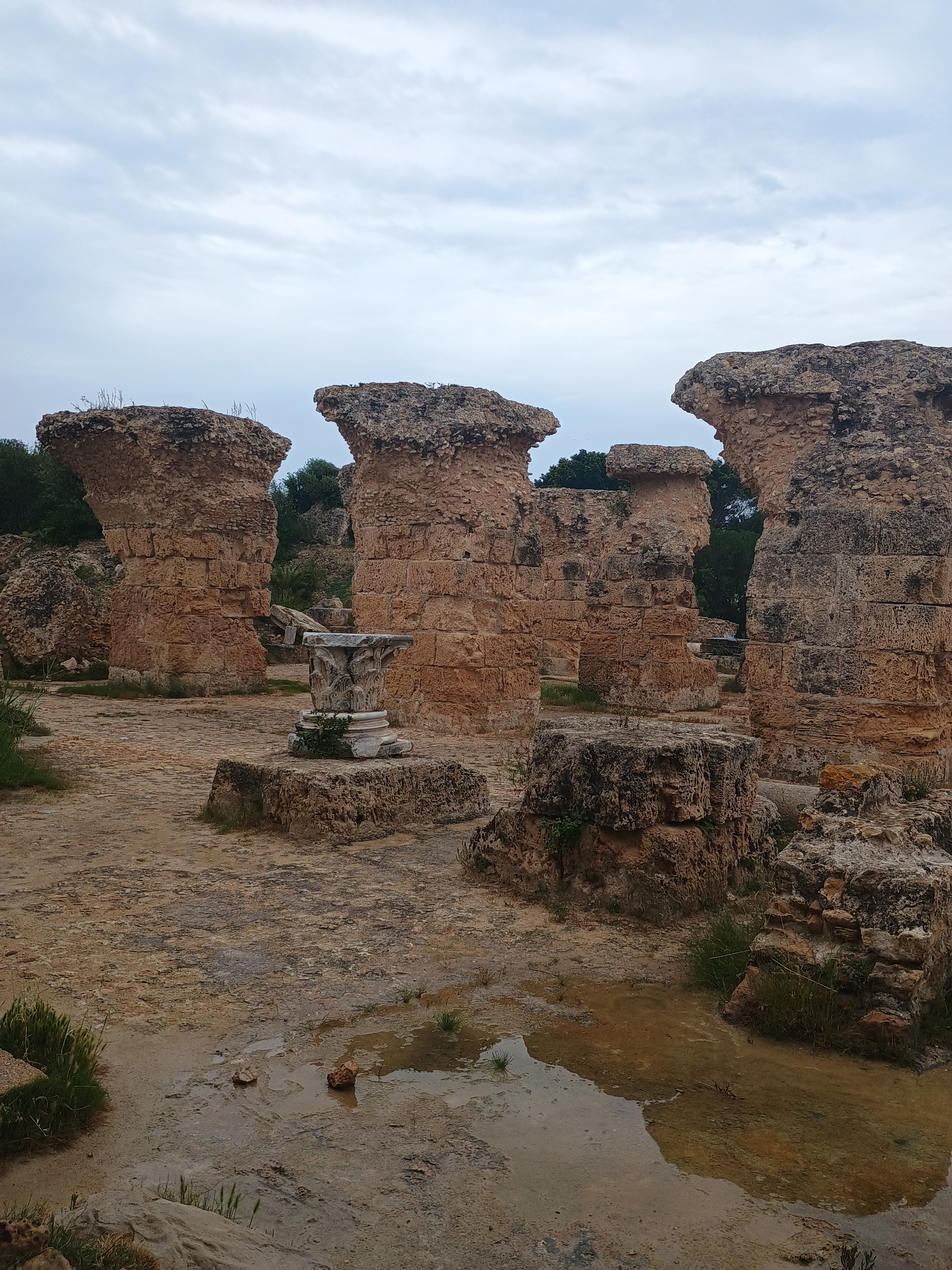
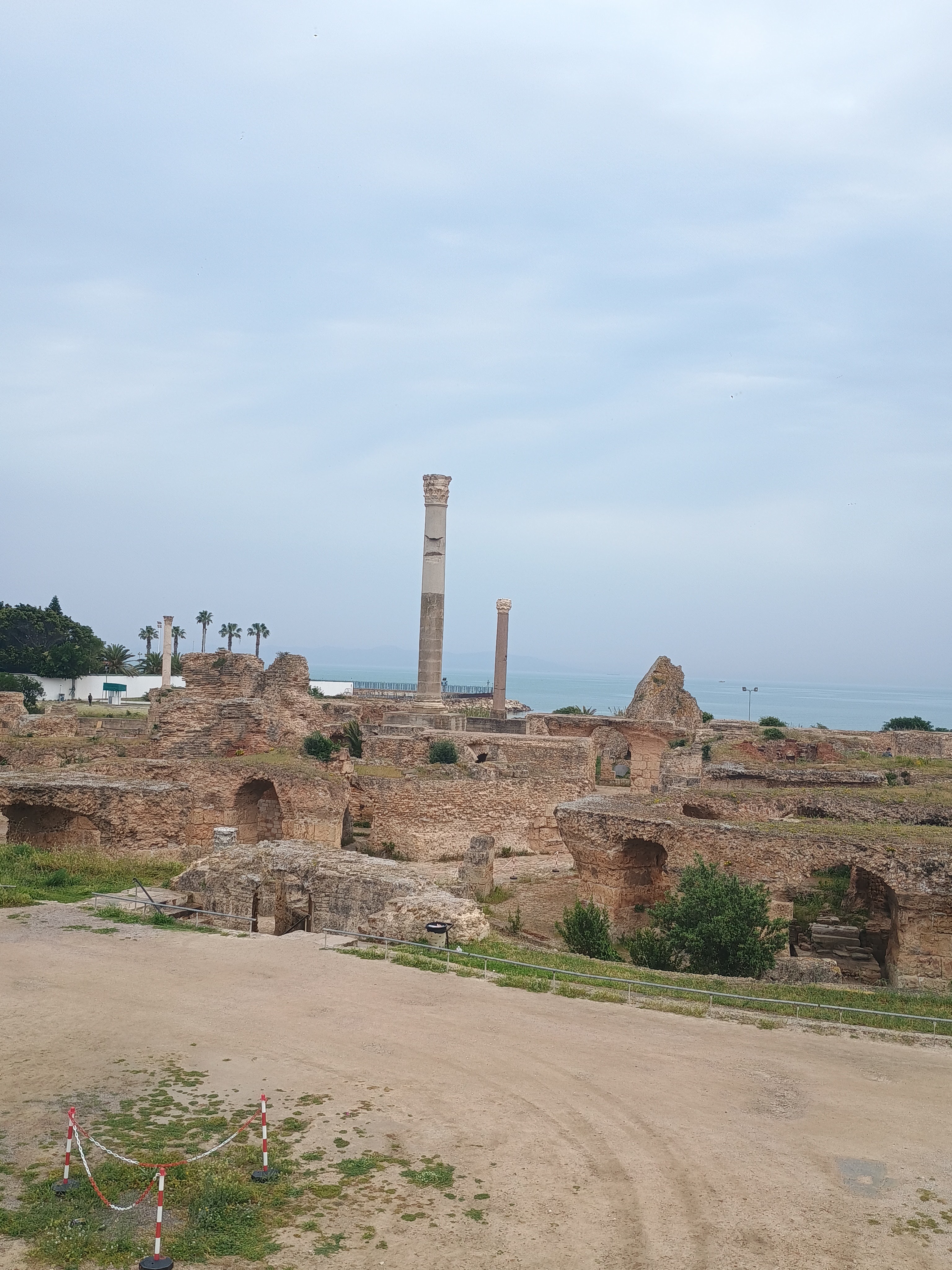
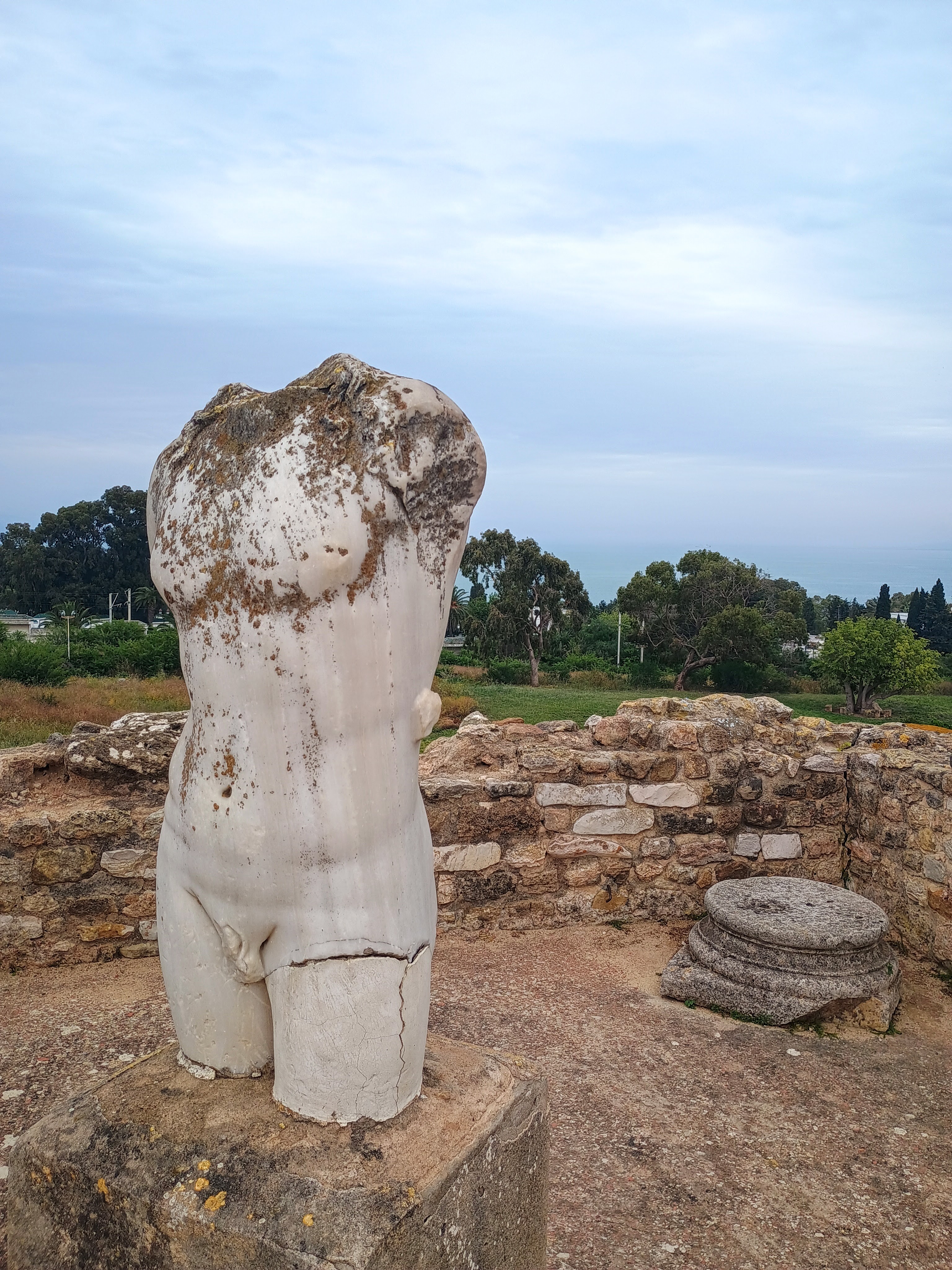
As far as ruins go, there were enough well preserved structures in the park to get the idea of what it might have looked like thousands of years ago.

I think she chose to begin the tour in this area because there are different types of structures to show an old community where people gathered to socialize – we had a glimpse into the lives of the people who lived there.

Of course I can’t remember what’s what even after listening carefully to Hayfa a few months back

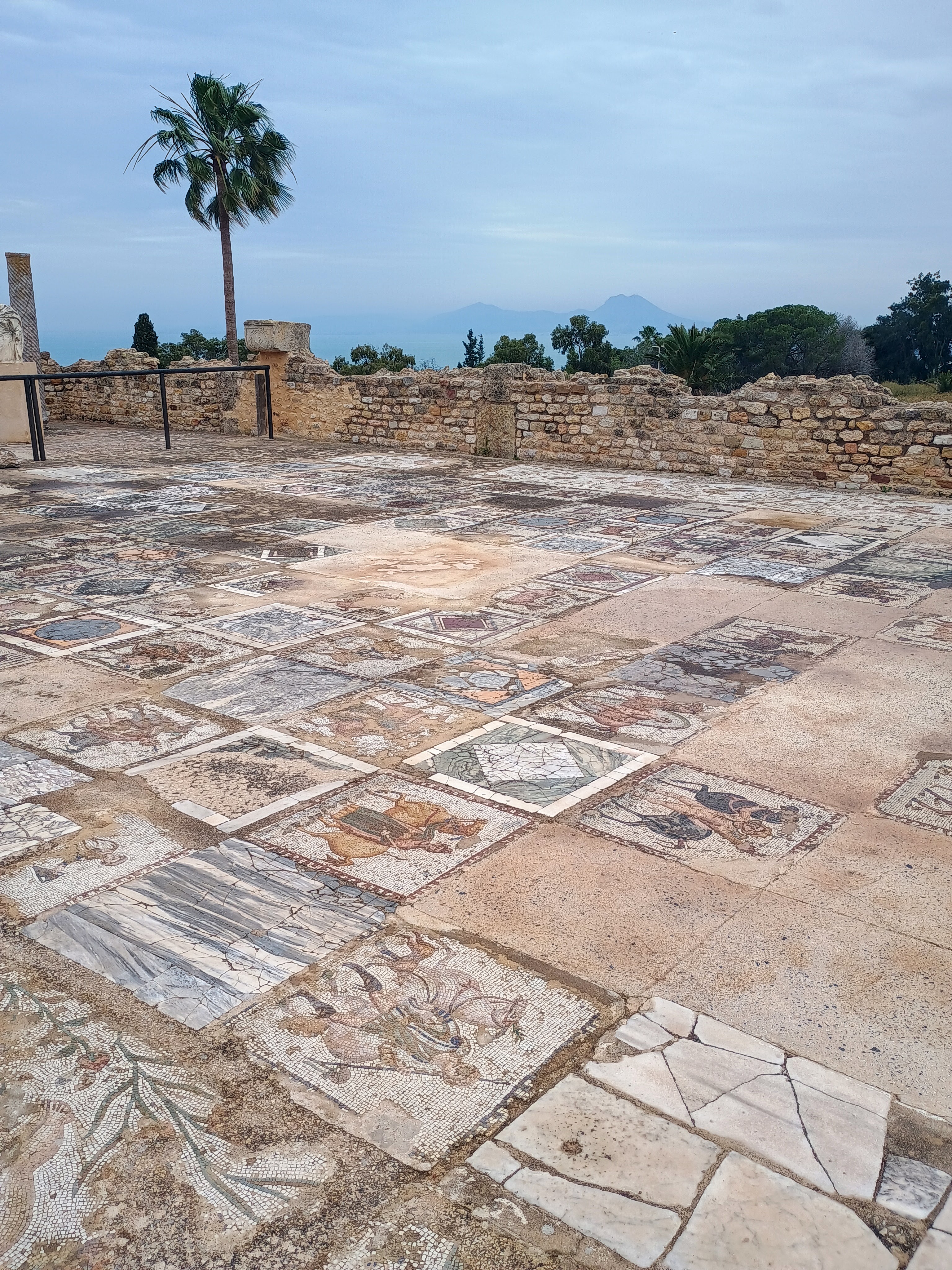
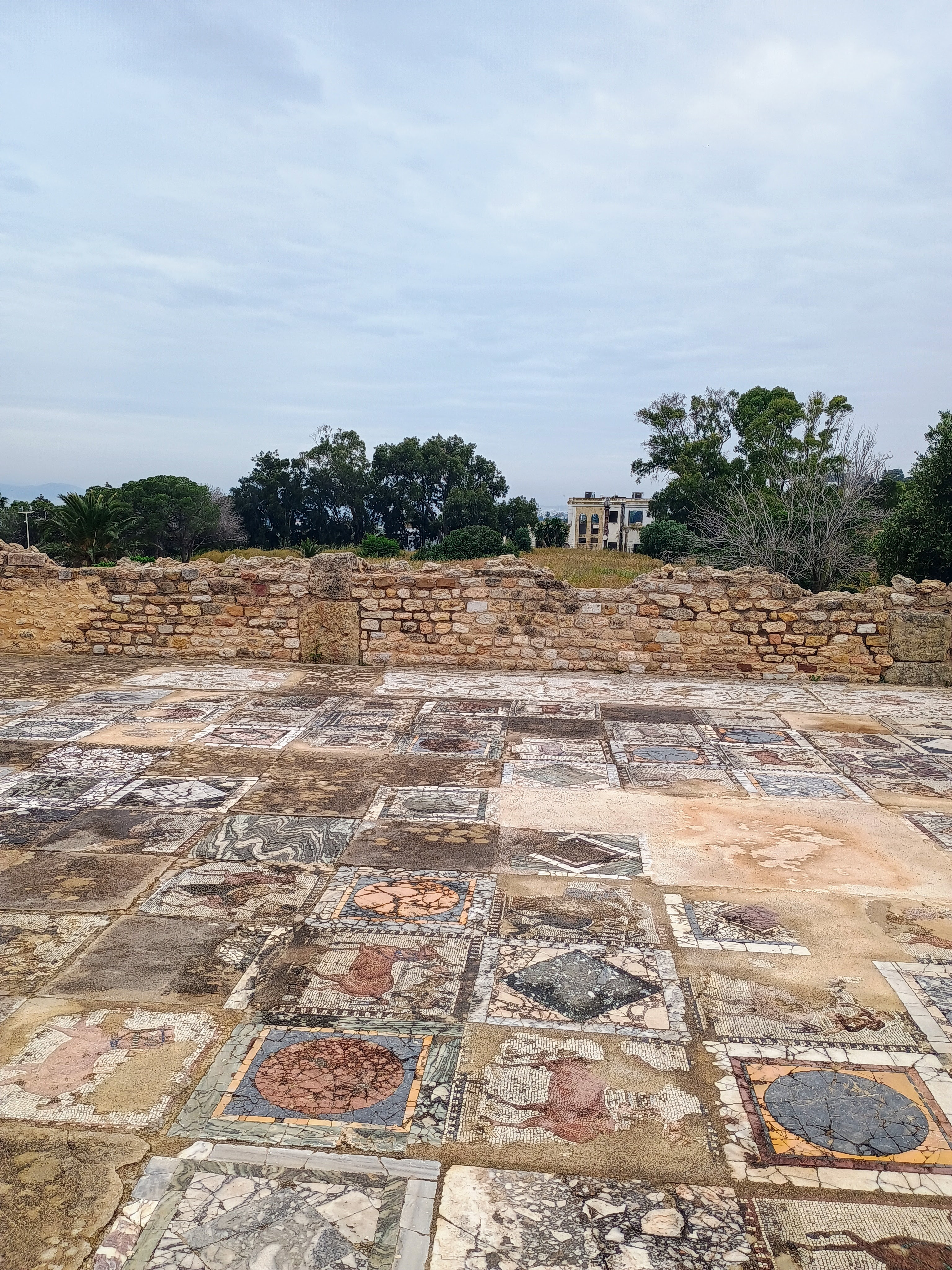
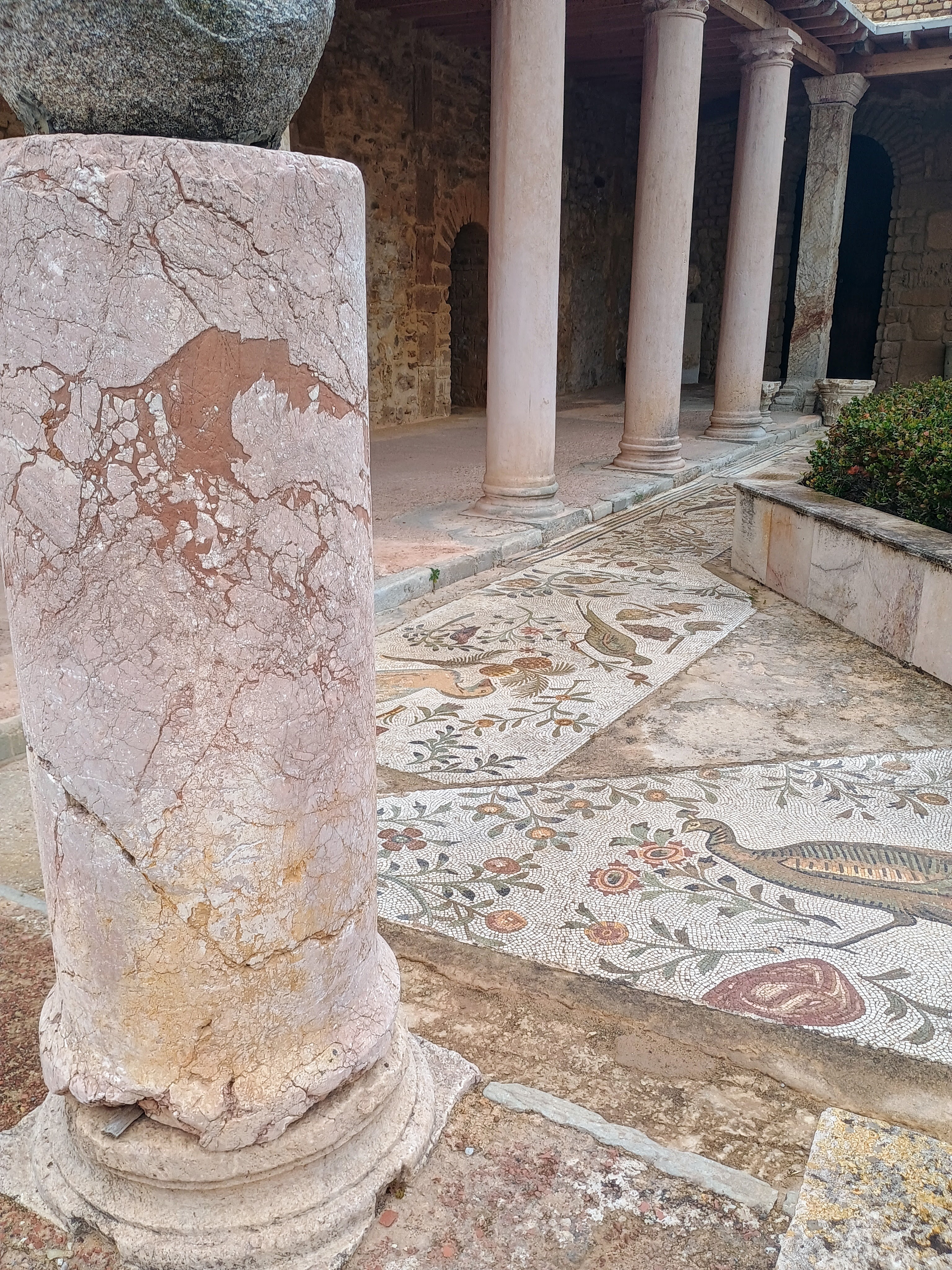
Next, we moved on to the Roman Villa area. We could tell the Romans lived well here.

And the last stop was at the Roman Theater. This place is rebuilt and is used as a concert venue at times. In fact, they were setting up the stage for a concert when we were there.

Tunisians are proud of their connection to Carthage as they should be. Having this site practically next door to their capital city serves as a constant reminder that recapturing an old glory is within reach, perhaps.

Tunisia itinerary link
Sidi Bou Said (Tunisia): 4 Nights

May 2025

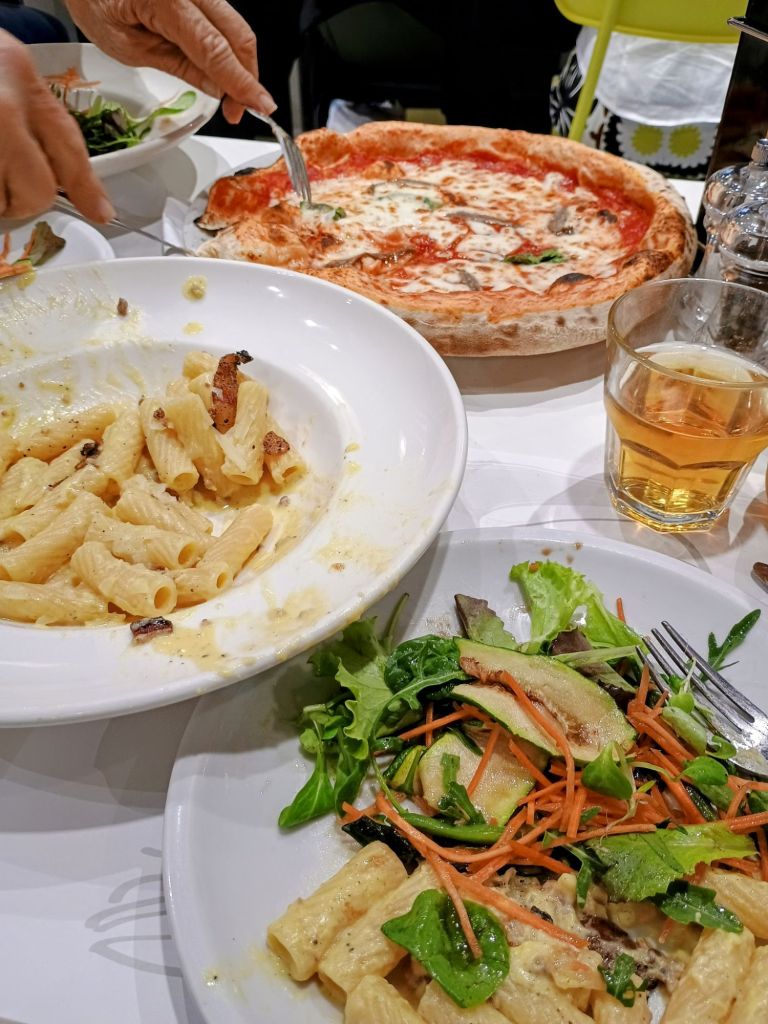
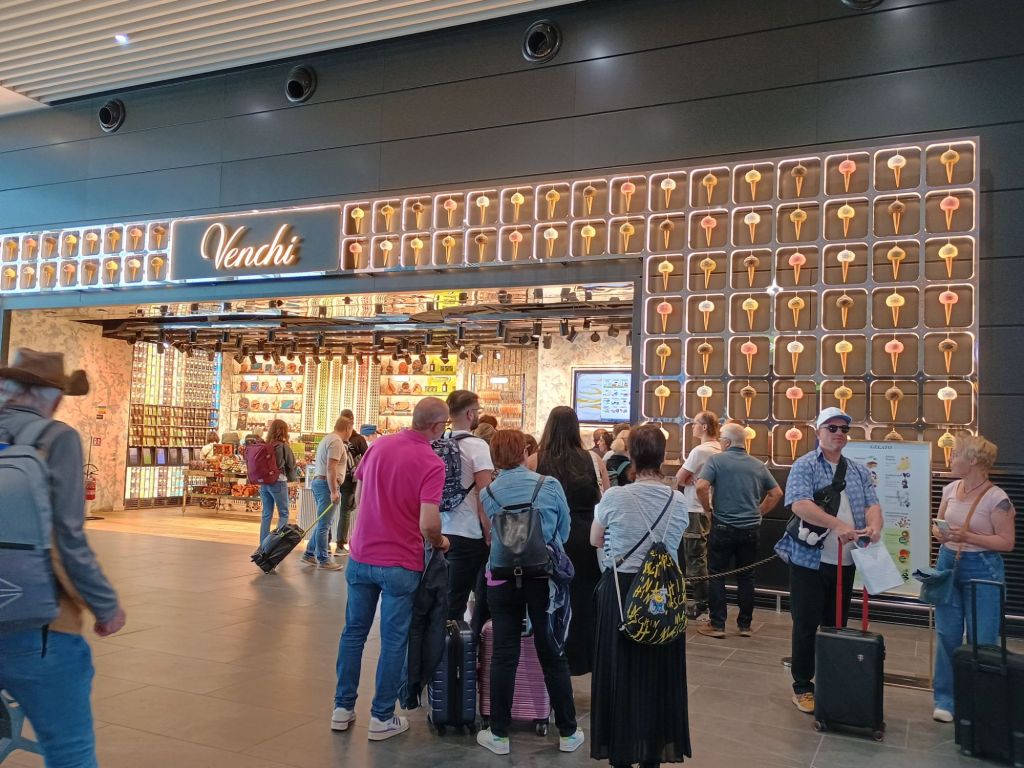
Considering the proximity of the two cities, I assumed there would be plenty of cheap direct flights from Barcelona to Tunis, but there was only one available daily & that was too late to be useful after our early morning arrival in Barcelona on a transatlantic cruise ship. So we chose to go through Rome’s Fiumicino Airport, and that ended up being a wonderful call. Great pizza, pasta, and gelato – what more would anyone need in an Italian airport!

The long line at the gelato shop promised a superb quality? Fortunately, yes!

Finding our travel mates at the humble Tunis Airport was not hard & they were still in decent shape after a long day of flying from California. Our Airbnb was a 20 minute drive from the airport, and the cabs were pretty cheap.

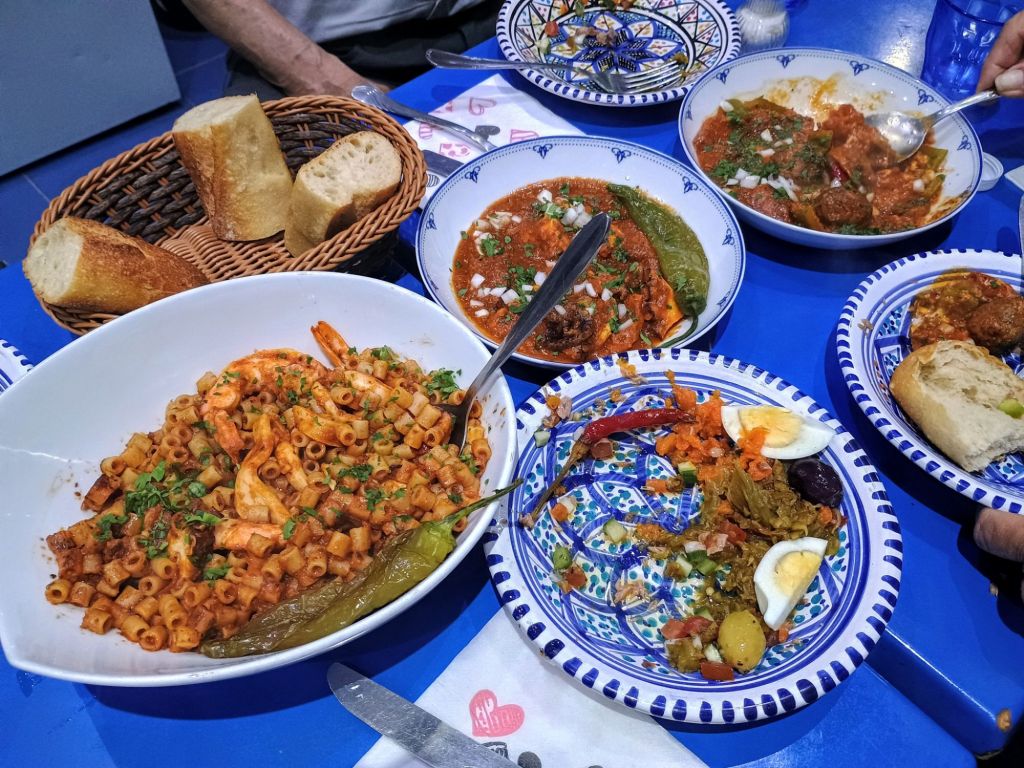
By the time we checked into the Airbnb apartment, it was dinner time. We hopped over to a neighborhood restaurant recommended by our host, Chez Wald Moufida. It sounded like a fancy French restaurant, but it was a tiny local place that served great Tunisian food which we enjoyed.

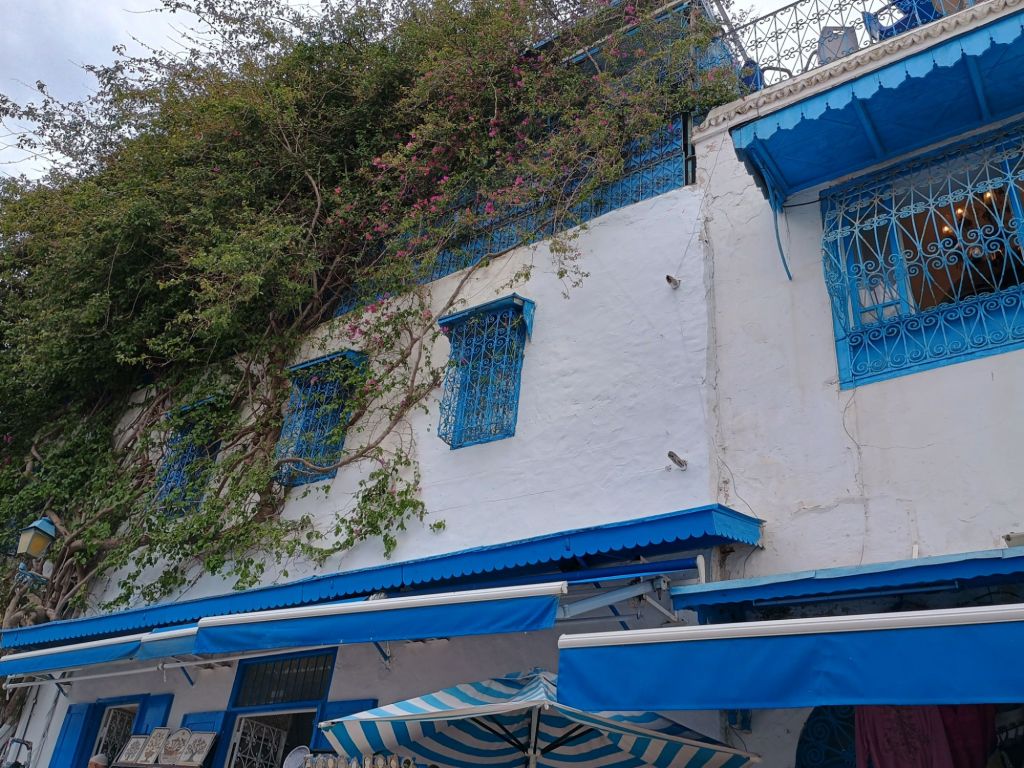
Our Airbnb apartment was on the second floor of this building on one of the main streets of Sidi Bou Said & was very spacious, well decorated, and comfortable with all the necessary amenities.

I chose the Sidi Bou Said area to stay because this area was described as safer and more atmospheric than the Tunis city center. Looking back, that was the right decision.

We signed up for a free walking tour, and our guide Dominic was an Irish expat living in the neighborhood. He and his companion were doing this tour in the spirit of sharing, not really needing extra income, and we had an excellent introduction to the area.

He explained that the village was named after a respected religious scholar who lived there, Abu Said al-Baji.

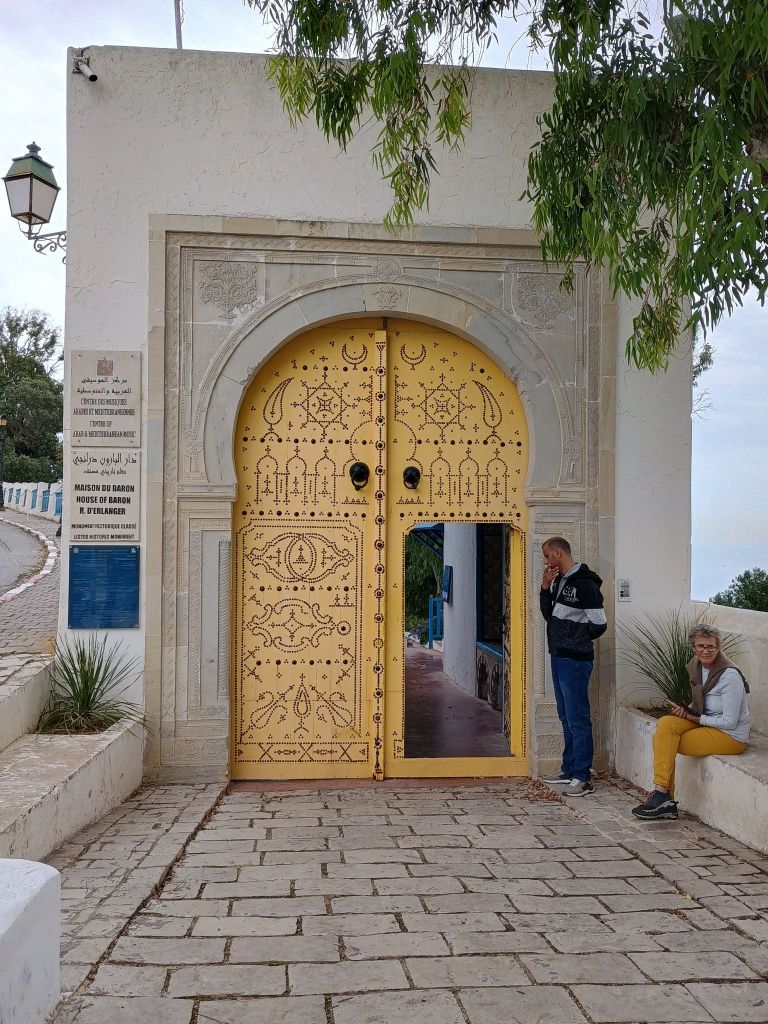
He led us to the Ennejma Ezzahra Palace shown above to start the tour which is where the French artist and musicologist Baron d’Erlanger (1872 – 1932) lived. Being the most influential cultural figure in Sidi Bou Said during his lifetime, he was the one who came up with the color scheme of white and blue for the village. The Palace is now owned by the Tunisian government & is a museum of Tunisian and Arabic music. Dominic said it had the killer view of the ocean & the fascinating collection of musical instruments – and well worth the admission cost of 10 dinars ($3.50). We meant to visit it later, but, unfortunately, we never had enough time to do so.

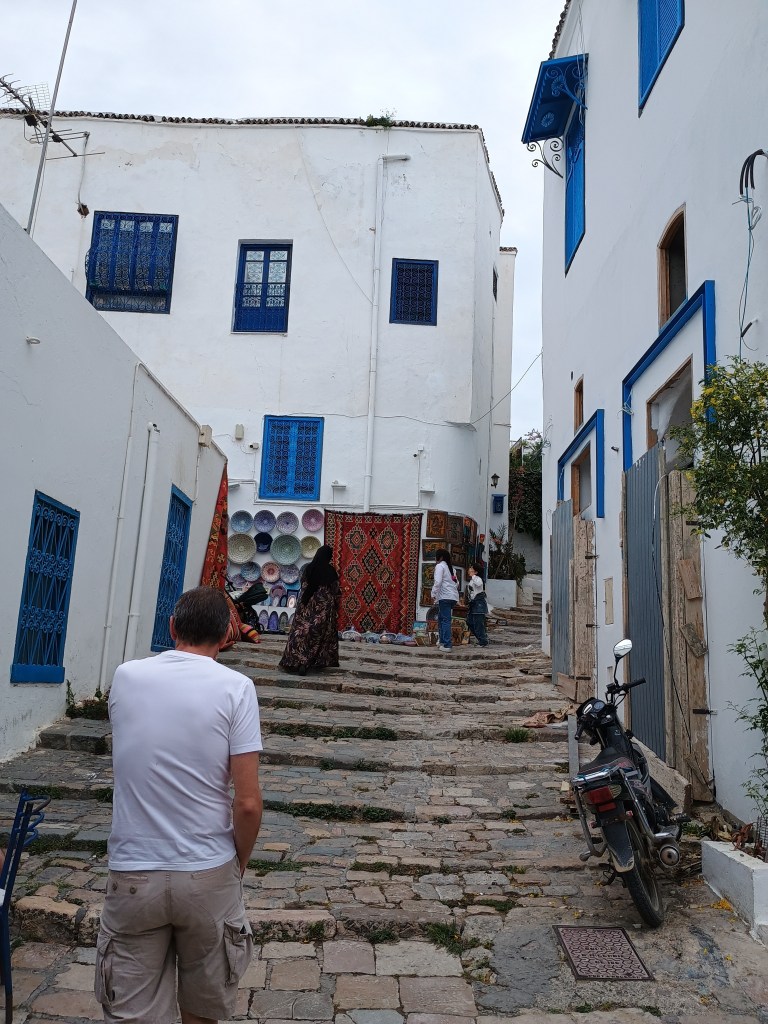
Sidi Bou Said is not that big. You can just slowly meander through the hilly alleyways without thinking about the passage of time.

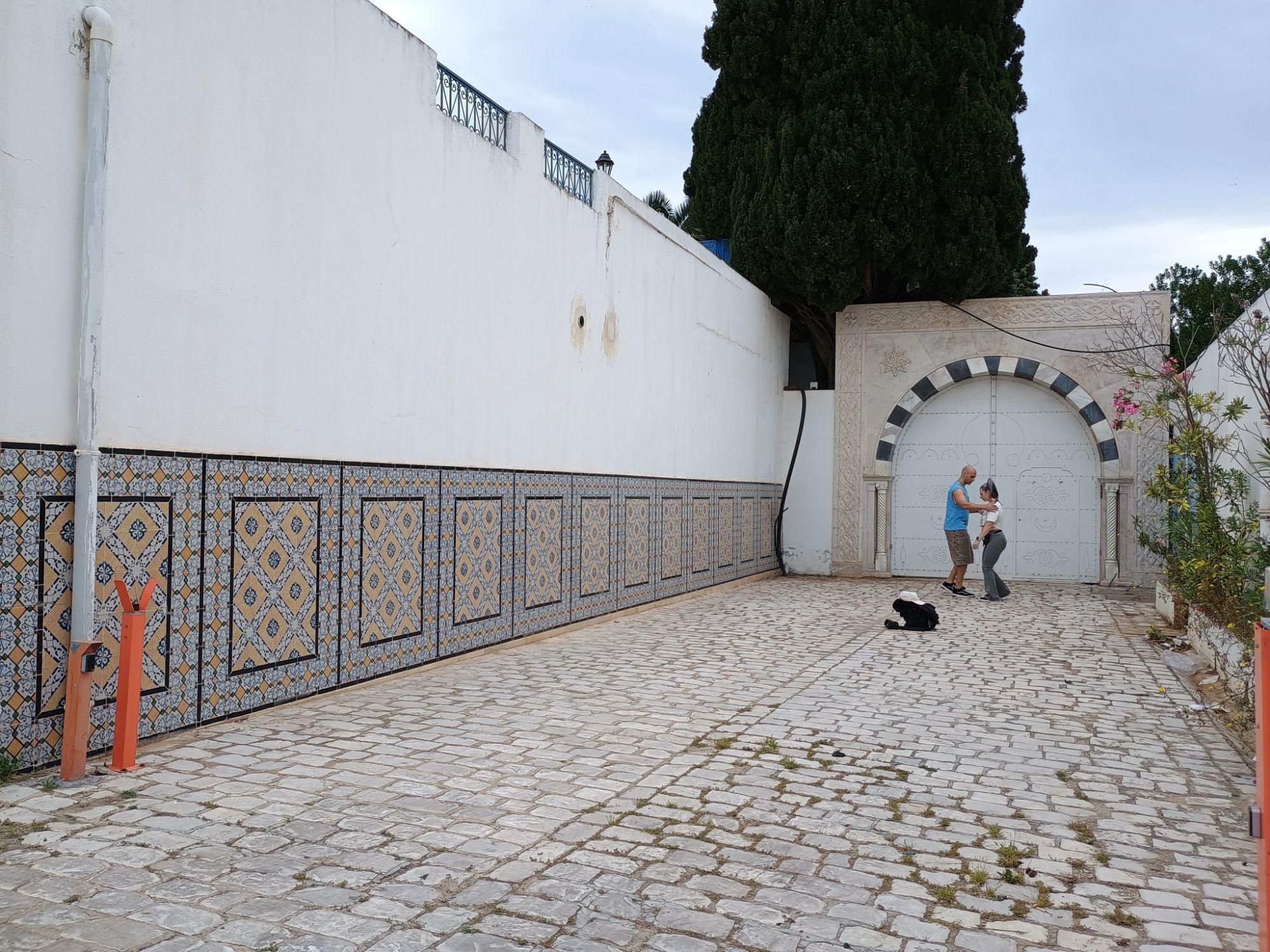
I could see why someone would want to dance in one corner of the village.

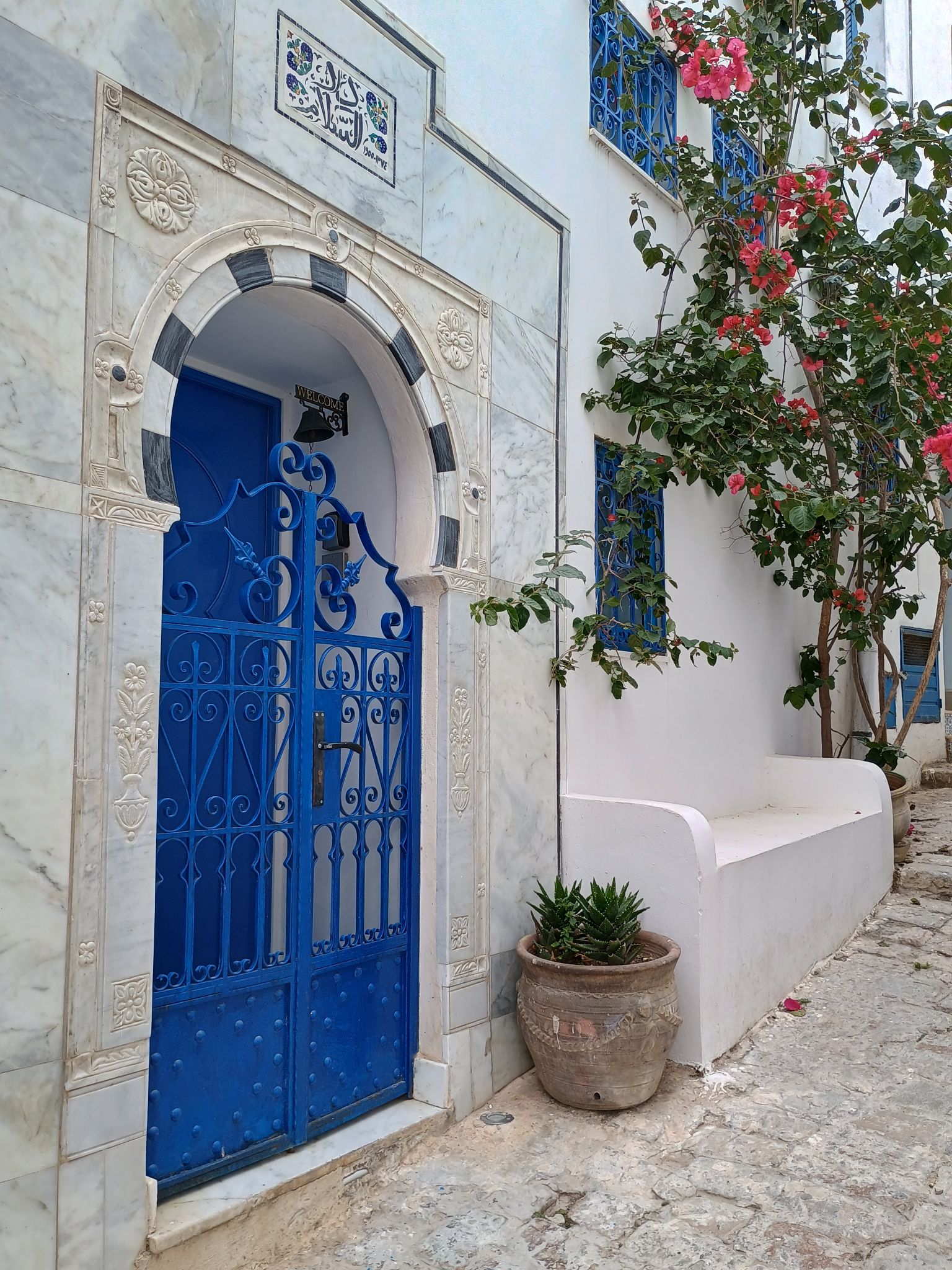
I particularly loved the doors that were in all different shapes, colors, and intricate designs.

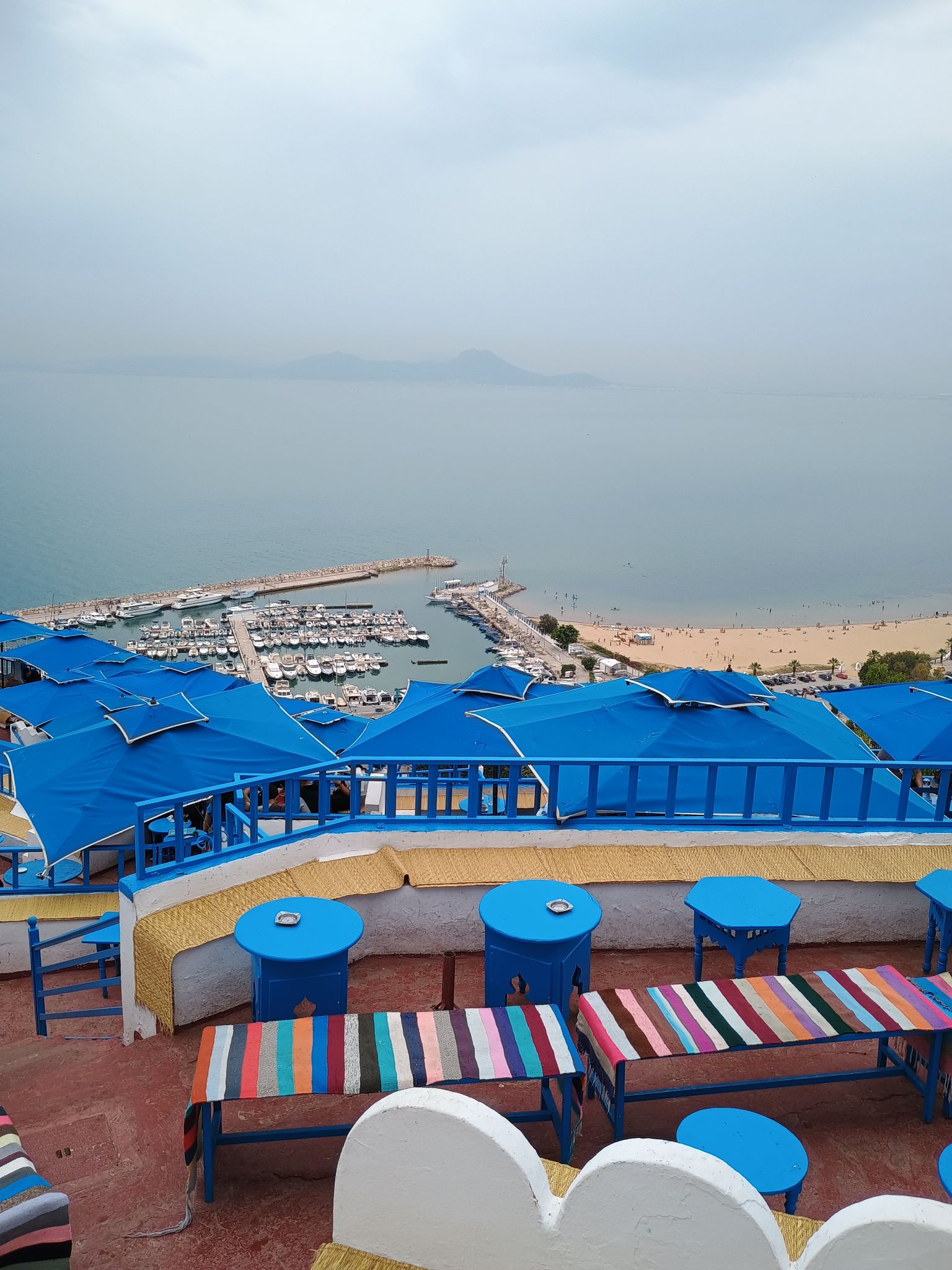
The Mediterranean Sea was right below the hills of Sidi Bou Said. There’s a beach bearing the village name at the bottom of the hills.

What was the line for? People peeking in to get the view below. We did it, too, obviously.

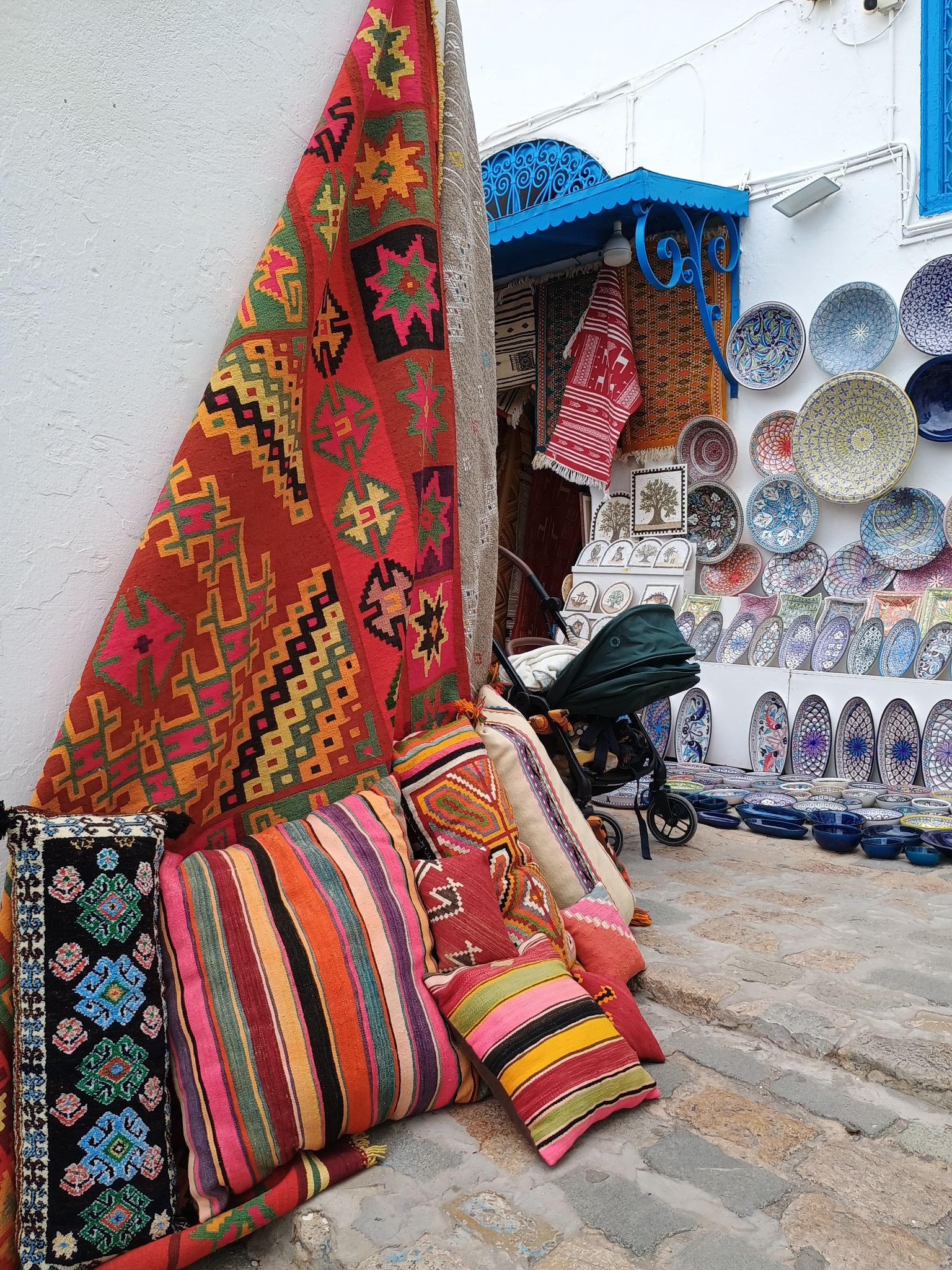
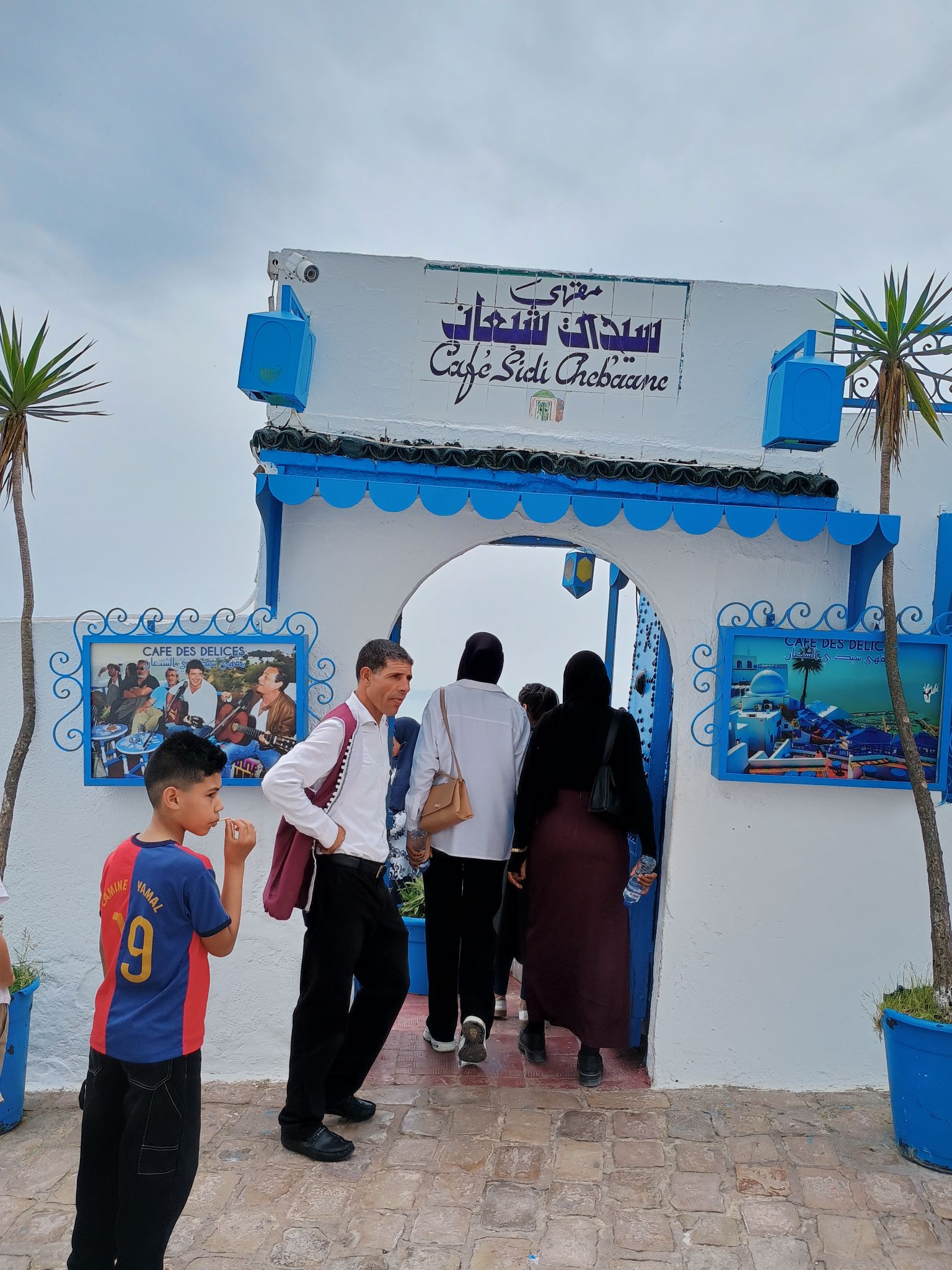
There was no shortage of little shops and cafes and restaurants & our apartment was only a 10 minute walk!

Bleue! restaurant was recommended for great sandwiches by Dominic & he was right. We went back there a couple days later, but, sadly, it was not open that evening.
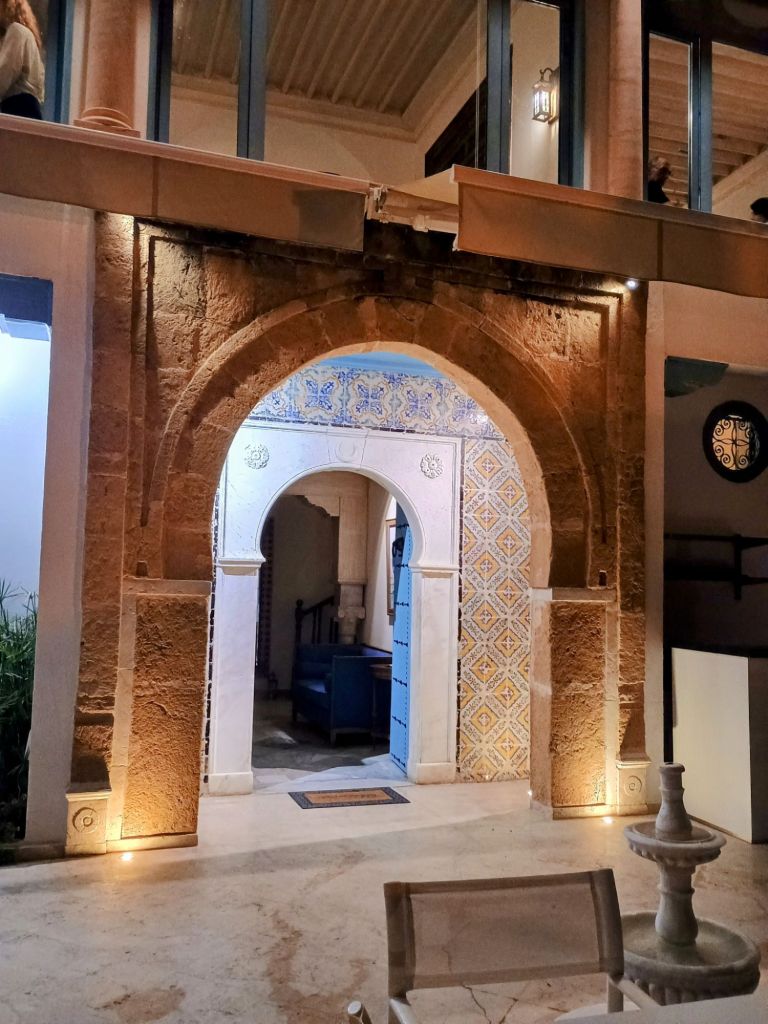
We went to the Sahara Desert area for 2 nights, and, after that, we only had one full day left in Tunisia which we spent in the city center of Tunis. This left us with just one more dinner opportunity in Sidi Bou Said. Let’s have a fancy dinner, we all agreed.

Based on Dominic’s comment, we went straight to La Villa restaurant, but, they would not even let us step into the lobby without a reservation. So we went on to another restaurant that Dominic said was good: Au Bon Vioux Temp, pictured above.

If anyone is a fan of the Nobel Literary laureate Andre Gide, he lived in this house 1942 – 43
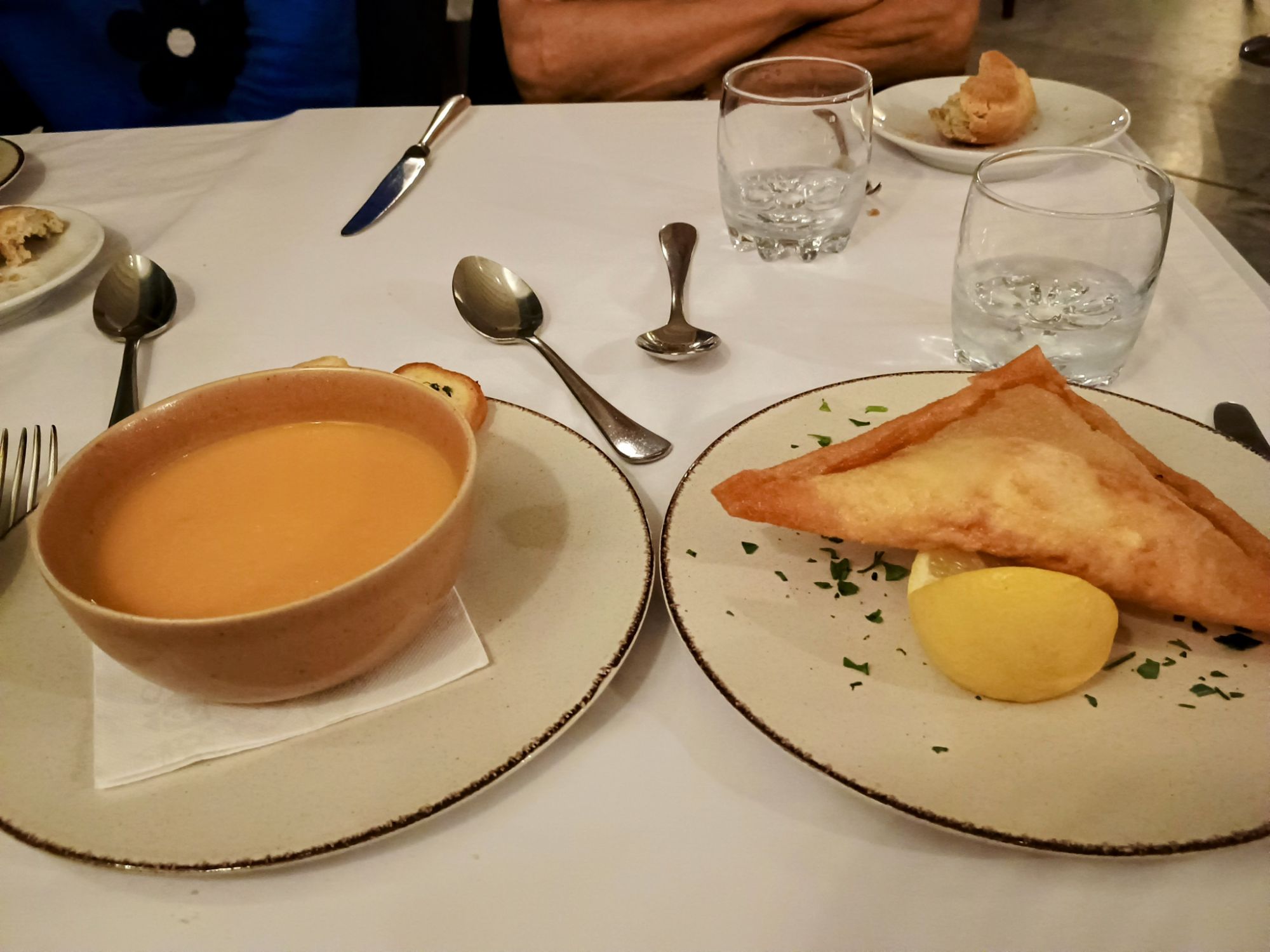
Brik, on the right, became my favorite Tunisian food
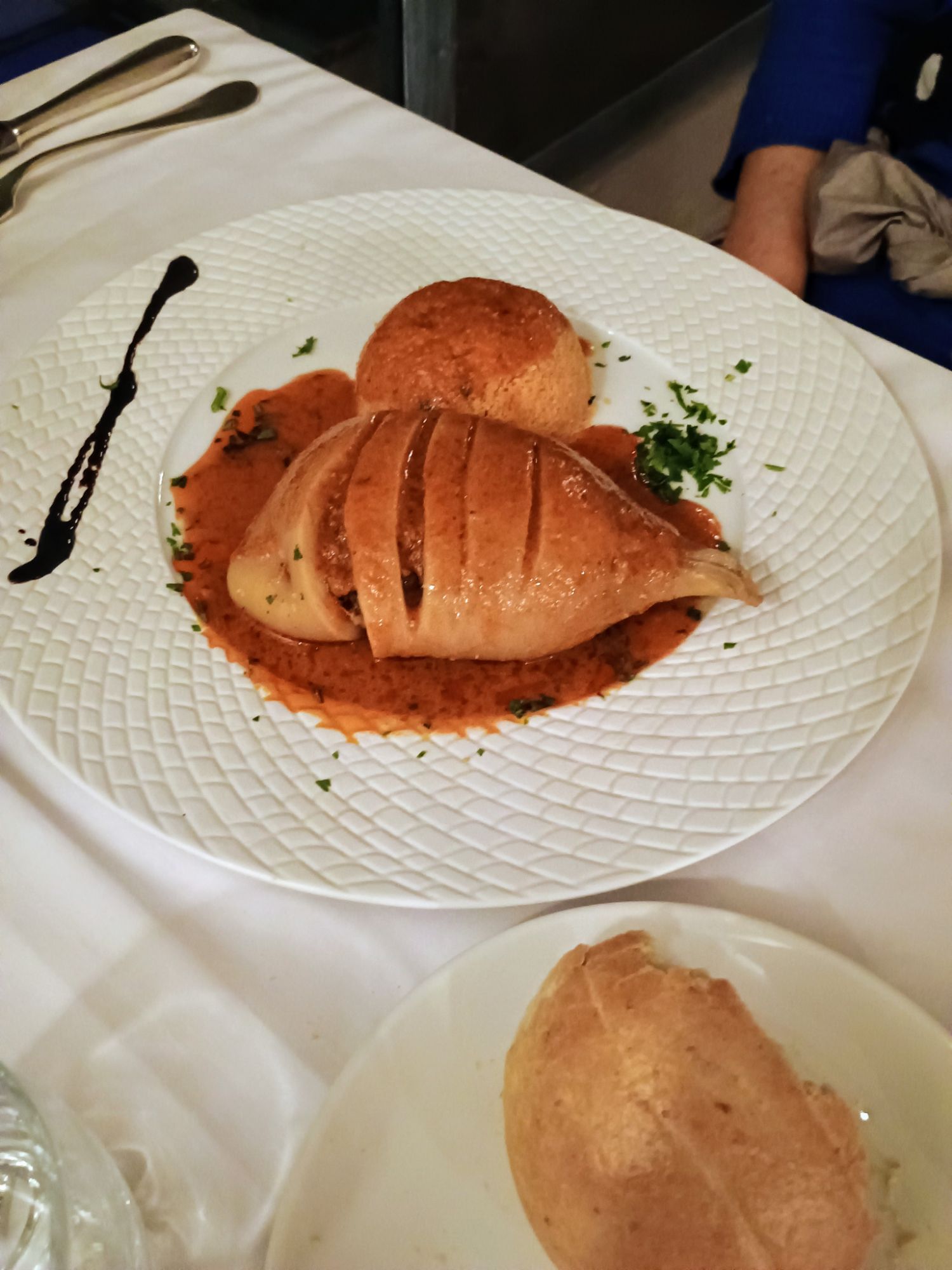
I guess we can say their food is refined Tunisian. Expensive? Well, $20 – 30 per person with a glass of wine (instead of $17 at most other restaurants we went to in Tunisia).

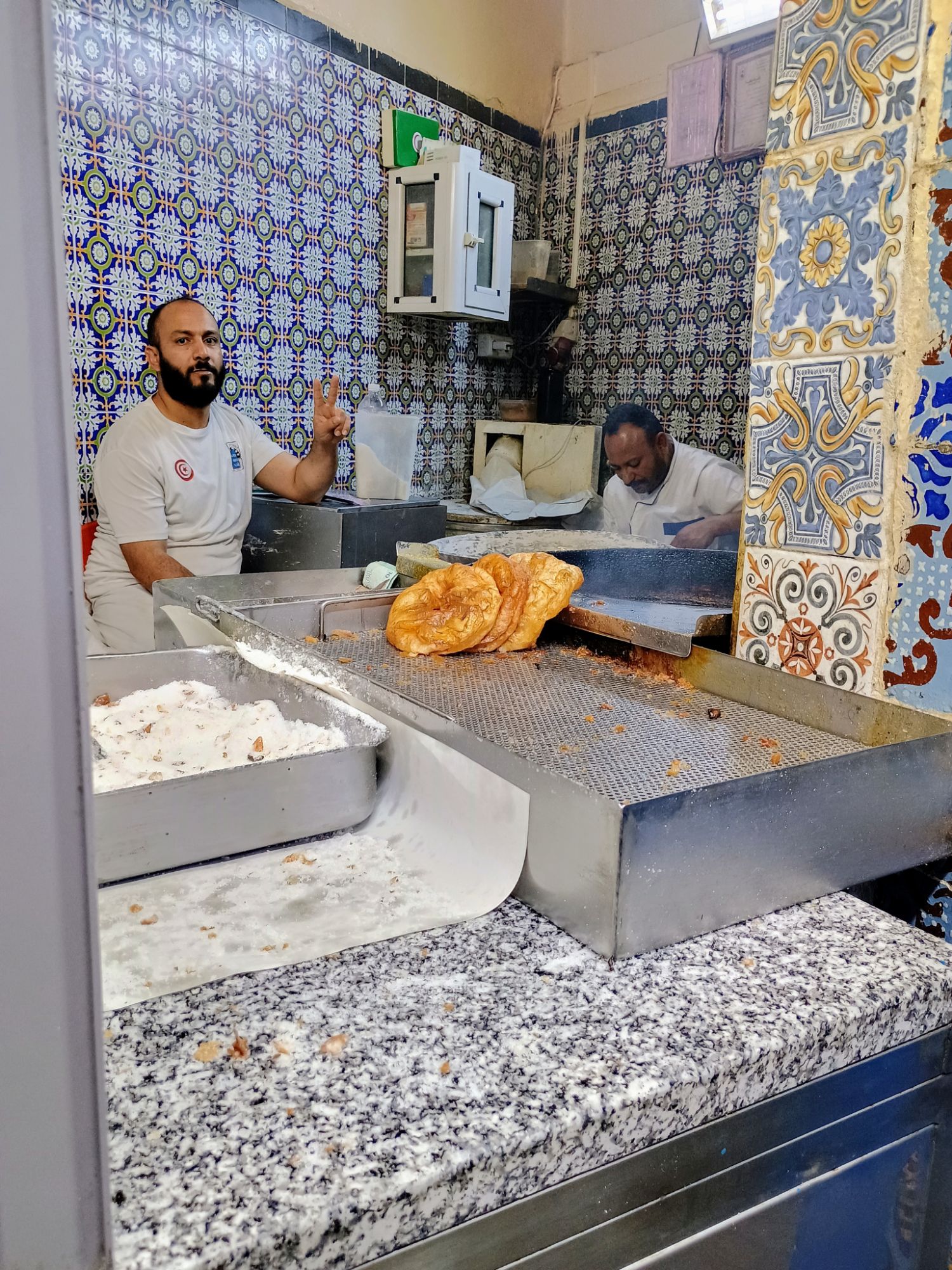
Dominic introduced us to bambalouni (60 cents) & the best one was on the same street as the restaurant. It belongs to the donut family, I guess, but this Tunisian version is so tasty that I didn’t care about the calories or the fat content. Enjoy & the endorphin will cure everything!!

Tunisia itinerary link