Beijing (China): Itinerary Suggestions

June 2020

at the Summer Palace

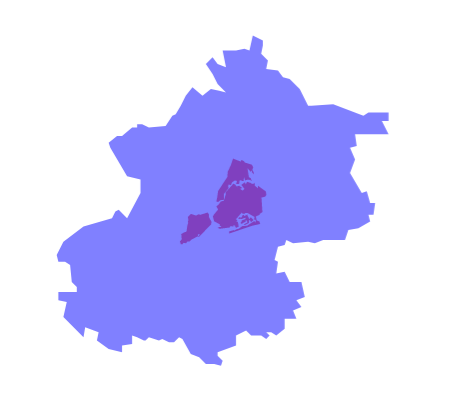
Beijing. It is the biggest capital in the world with Over 21 million people. (Only 58 out of 235 countries around the globe have population over 21 million.) It’s been a capital for over 1,000 years. How big is the area? The purple is NYC and the blue is Beijing in the map below.  A lot to see and do? You can say that. So how many days should you plan to spend in Beijing to get a sense of the place? I’d say at least 3 full days – which means 4 nights.
Beijing-NYC 2020-06-13 at 4.38.45 PM - Edited
source: mapfight.appspot.com

The first thing you need to get familiar with is the concept of the Ring Roads. The location of a place is explained in relation to the Ring Roads in Beijing. The red star in the middle is Forbidden City where the Chinese emperors used to live, and the palace ground surrounded by a moat on 4 sides is the First Ring. Then the first red square is the Second Ring (2 Huan 二环 in Chinese) so on and so forth up to 5th Ring on this map below. (It actually goes out to 7th Ring.)

Pollution Free Cities: Introducing Congestion Charging in China

Most touristy things are within 4th Ring (8 km/5 mile radius from the Palace) except Summer Palace and the Great Wall. When we first started going to Beijing around 2002, there were more bicycles than cars in the city, and you could get to and from one place to another within 4th Ring  in under 20 minutes by using a cab (under $4). By the end of 2009, Beijing was adding more than 1,500 new cars per day, and this brought traffic jams and smog. This means potentially spending a lot of time stuck in traffic for visitors. So choosing where to stay takes some consideration.

it is not unusual for a building to take up the whole block in Beijing

I’d recommend staying close to the east or north side of Second Ring as first time visitors. This way you can come back to rest if needed during the day if the schedule gets too hectic as you follow the itinerary on the map below.

One thing you have to remember: Chinese taxi drivers rarely understand English. Have someone write down that day’s destinations in Chinese characters every morning so that you can show it to the cab driver or passersby if you get lost. And make sure to keep the business card of the hotel that shows the address in Chinese characters (or ask your host to write down the address in Chinese characters for you) in your wallet or pocket . I will try to include the place names in Chinese characters in the itinerary, too. Does this mean you will use a cab a lot? I still think that is the best way for a tourist to get around. The subway is efficient, but it involves extra walking and confusion (which exit etc.). We love to get on the bus and just go around the city, but that’s for later not in your first visit.

Tiananmen Gate

Another thing you will have to get used to: crowds. Now that domestic travelers have taken over all the tourist attractions, there will be lots and lots of people everywhere you go.

Day 1: Center & Southwest

Go to Tiananmen Square (天安门广场), look around the enormous square, and enter through Tiananmen gate into the Forbidden City (紫禁城), which now is Palace (故宫) Museum. It will be best to buy the tickets (around $6-10) online beforehand. You are starting from south of the complex, walk almost 1 km (961 m) plus side steps to look around, and exiting through the north gate. It will be good to have the official audio guide, available in multiple languages including the one by Roger Moore in English. You can spend hours here or you can walk though in 20 minutes. In my opinion, take 60-90 minutes to walk slowly and follow the audio. There will be so much other things to see in the city!

As you exit, go across the street and climb up the hill in the middle of Jingshan Park (景山公园) to have the best view of the Forbidden City under your feet.

Catch a taxi and go to the Capital Museum (free), 5-10 minutes southwest from the park to learn a bit about the history of China through art.

Bianyifang - Wikipedia
Bianyifang (image from Wikipedia)

By now you should be hungry, and you should have Peking Duck at the oldest duck restaurant in the city, Bianyifang (600 years old but not at the same spot). We usually order half a duck plus a couple other vegetable dishes for the two of us at these duck restaurants.

After lunch, walk a few steps to check out the Undergroud City (地下城), an extensive old bomb shelter that holds a lot of mysteries, and see whether it’s open. It was mildly interesting when we saw a small section of it, but since then some articles came out in the West claiming as many as over a million people lived there in a not-so-desirable condition, and the government is not eager to show it to tourists. After all, it is a part of life in this city, though.

Grab a cab to the Silk Street Market (秀水街) where you will find knock-off brand name merchandises and silk and other souvenirs. It used to be a street market, but it is housed in a big building now.

Maliandao Tea Street in Beijing - China.org.cn | Beijing china, My ...


You can’t talk about China without talking about tea. So next you get on yet another cab and go to Maliandao Tea Street (马连道路 茶叶街). You can find a huge range of teas from bargain priced to too precious to sell, go into a shop and sample some, admire beautiful tea wares etc.

A short cab ride will take you to Liulichang (琉璃厂), a street of traditional Chinese art since 1600’s. It’s become a bit too touristy to my taste, but it still shows its own character. There are many hutongs to peak in around here. It’s close to our dinner and evening spot, Lao She Tea House (老舍 茶馆) where you get a one stop service of a dinner, tea, and a variety show of Chinese tradition.

If you still have energy, cab or walk to Wangfujing Pedestrian Street, a commercial street since 1300’s, and stroll around. More modern than you expect, but there’s a snack street, and there tend to be a lot of stuff going on in the evening.
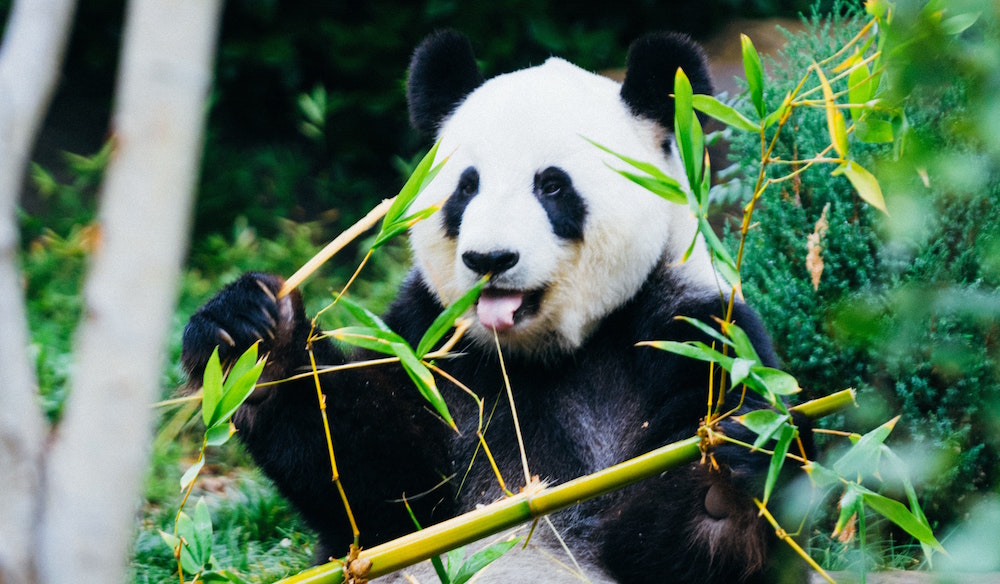
Beijing Zoo Reopens Public Areas Today | the Beijinger
image from thebeijinger.com

Day 2: Center & Northwest

If panda is your thing, go to Beijing Zoo (北京动物园) first thing in the morning (opens at 7:30 AM) when these creatures are more active. Once they are fed, they tend to sleep a lot. Sleeping pandas are cute, some say, but we found them not as interesting. The Zoo has other things, but you have other things to do, too. That’s probably why they put the panda section right by the entrance.

Cab to the Summer Palace (颐和园) & see how the Chinese emperors wanted their gardens to be. You will immediately know they wanted it to be big. Buy tickets online in advance to avoid the line. (if this link doesn’t work on your phone, try to copy this address: http://www.summerpalace-china.com and look for the information )

Next to this huge complex is another garden known as the Old Summer Palace (Yuanmingyuan 圆明园), an older royal garden. This is not as popular among the tourists, thus, you can make a quick stop if you want to see the garden once known as the ‘Versailles of the East’ most of it now in ruins due to destructive foreign forces.

beijing-dajie-lunch - Edited


Lunch will be at a courtyard restaurant Bai Jia Dayuan (白家大院) to eat like an emperor for one meal. Frankly, we have not been there because there are too many great restaurants in Beijing that our local friends wanted to take us to & we are, in general,  too cheap to splurge on a meal like this. But, as a tourist, this can be a worthwhile experience and you wouldn’t order as much food for lunch.

A taxi can take you quickly to the Bird’s Nest, the National Stadium (北京国家体育场) of China, the site of 2008 Summer Olympics, for a photo op. The Water Cube swimming center is right next to it.

Another quick cab ride will get you to the Lama Temple (Yonghegong 雍和宫) to have a glimpse of Tibetan Buddhist artifacts and structures.

Confucius Temple


A few hundred meters down on the other side of the street lies Temple of Confucius (北京孔庙), the second largest Confucian temple in China, after the one in Confucius‘s hometown.

Now go to Houhai Lake (后海) for a leisurely stroll. The cab driver may ask you where  you want to go at the lake since it is not a small lake, then you show him the map on this site and point to it. There’s a lot going on around here with bars, restaurants, cafes, parks, boat rides etc., but you may not have a lot of energy by now. So just walk along the north shore of the lake so that you can be closer to the dinner spot. You will see Chinese families and young couples having a good time along with tons of tourists.

HouHai Lake bar and restaurant area - Picture of Novotel Beijing ...

Dinner will be at a modern Chinese restaurant at a hotel on a hutong: Furongji at the Orchid Hotel (address: 宝钞胡同63号). This is another popular hutong area in Beijing.

Now time to relax. Really relax. Get a cab and head to Bodhi Therapeutic Retreat for a Chinese massage. Call earlier in the day to make a reservation. Yes, they speak English.

Day 3: Great Wall & Northeast

Today you will go to the longest (2½ km, 1½ miles) fully-restored Great Wall section open to tourists, Mutianyu (慕田峪). It is 70 km (43 miles) northeast of Beijing, and you should hire a cab ($27 – 35 each way) to get there in 60-90 minutes. If you are with more than 4 other people, you may want to consider hiring a van/driver. Ask your hotel to arrange it. $150 for the day would be a fair price. Or try this site which we used in other countries (worked well) but not yet in Beijing.

the slideway on the left, the cable cars on the right

We like Mutianyu better than Badaling, the most popular section closer to town. It is not as crowded and is more fun because you can use the cable cars to go up and take the slideway down (5 minutes). There are 3 watchtowers to climb in and look out, too. We usually spend a couple of hours walking on the wall.

There are many restaurants within the park mostly between the ticket office and the cable car station. We saw this restaurant in the picture above after we ate our lunch. We should remember to try it next time.

image from 798district.com

On the way back, we will go to 798 Art District (798 艺术区 a.k.a. Dashanzi Art District 大山子 ) to witness the thriving art scene in Beijing. It is a huge old military factory complex that has been turned into an art zone, and you can spend hours browsing among hundreds of galleries, cafes, restaurants, shops etc. Even if you are not an art lover, you will get a kick out of visiting this hipster/artsy area. Beijing has other interesting art venues, but you don’t have enough time for that now.

HAIDILAO HOT POT, Singapore - 313 Orchard Road 313 @ Somerset ...
image from tripadvisor.com

Dinner tonight: Haidilao Hot Pot (海底捞) is one of the popular hot pot restaurants in Beijing. “All diners at Haidilao are entitled to free fruit salad, ice water, shoe shining and nail care, melon seeds, and guests might play cards or chess when they wait.” How do you beat that?

from chaoyangtheatre.com

If you are up for another evening show, try Chaoyang Theater (朝阳剧场). Not necessarily cheap for Chinese standard ($37-117), it is a well produced acrobatic show. Buying tickets in advance online will save money.

Beijing Airport / Foster + Partners | ArchDaily
Beijing Capital Airport: nice to look at (photo by Foster+Partners)

Getting in: Getting from Beijing Capital Airport to north or east side of the Second Ring Road will normally take 20-30 minutes by taxi and cost never more than $20 unless there’s a horrendous traffic. All taxis are metered, and make sure the driver turns the meter on. Most of them do, but some might try otherwise.

When you are heading out to the airport, the taxi driver will want to know which terminal you want to go to – terminal 2 or 3 (terminal 1 is domestic only). These two terminals are not close to each other, thus, it will be good for you to find out in advance which terminal your flight is leaving from.

Getting Around: Beijing has an efficient subway system and cheap (1-2 yuan) buses. But for the first time visitors, it is not easy to figure our where to catch what and come out through which exit etc. Cabs are cheap, and, even with the traffic, it will be easier to do the trips mentioned on the itinerary by taxi.

Stay: If you need your room to meet certain international standards in comfort and cleanliness, you should stick with international brands – the usual top end ones plus Holiday Inn, Howard Johnson, Days Inn etc. Local hotels vary quite a bit in quality even when they have the same star rating. Most 4-5 star hotels are fine for the most part,  though.

We used to have fun trying out different types of local hotels in all parts of Beijing. There could be certain quirkiness with each arrangement such as:

  • traditional courtyard hotels: we experienced super hard mattresses at times
  • serviced apartments: kitchen space was there but not set up to cook
  • claiming to be “super luxurious” hotels: fancy looking but not very well maintained interiors
  • “boutique” hotels of all sorts: the room was a bit too tight or too cute (cartoon characters, anyone?) at times

But, these days, we just stick with places that have good reviews and clear photos & are close to where our friends live. We usually find decent deals by searching on skyscanner.com or on a Chinese site trip.com for Beijing. We have had mixed results on Airbnb in China mainly due to miscommunication (unexplained cancellations, no clear directions, slow responses etc.). When it worked, the quality was quite satisfactory in general.

– last time we were in Beijing was in November 2019
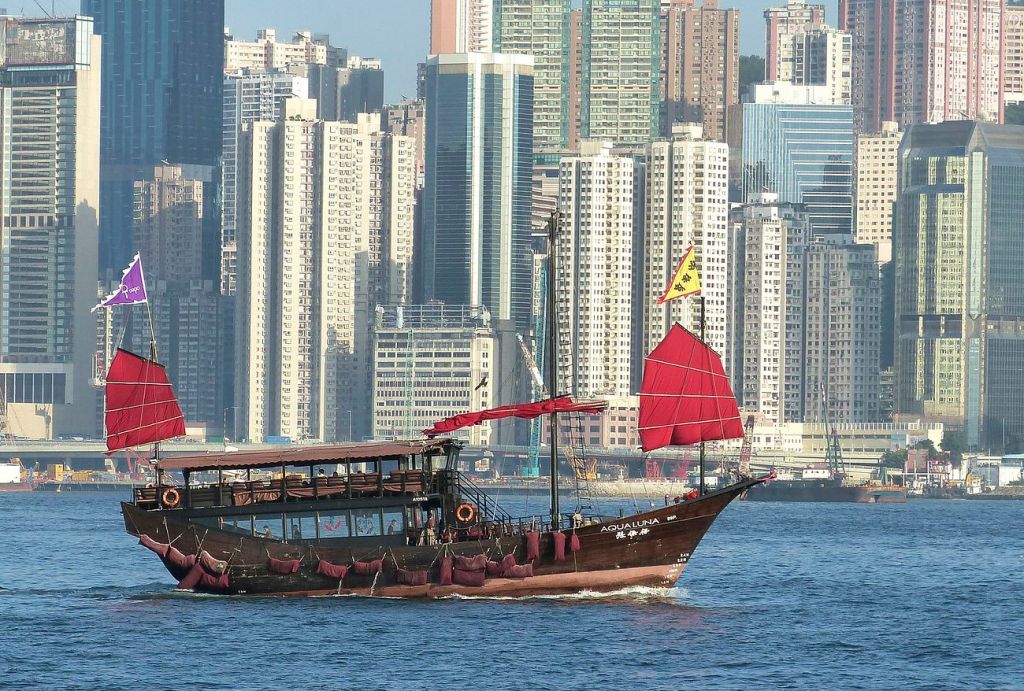


Hong Kong: Itinerary Suggestions

June 2020

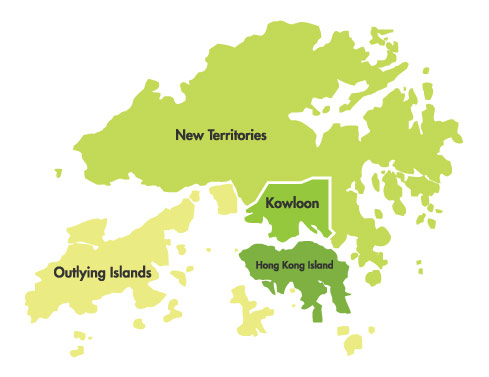
I  once met someone who said he was from a small fishing village in Hong Kong. It was hard for me to fathom that such a thing existed in the ultimate urban center, jam packed with skyscrapers, that is called Hong Kong. Hong Kong is actually comprised of the Kowloon peninsula, Hong Kong Island, New Territories, and over 260 islands (these are technically part of New Territories). Well over half of the 7.5 million total population live in Kowloon and Hong Kong Island, and that’s where most tourists visit. Apparently, there still are fishing villages in some of the Outlying Islands.

Best Hong Kong Layover Guide - 6 Hour, 12 Hour, Overnight Things To Do

So how many days should one plan to spend in Hong Kong? It depends on what you want. You can see the highlights of Kowloon and Hong Kong Island in a day, or you can spend days exploring all the alleyways and backstreets lined with interesting shops and cafes and restaurants and trying out all the locals’ favorite meals and snacks – then hike all the trails around town to shed off the calories. You can visit an outlying island or two or New Territories, or Macau, or even Shenzhen, a super modern Chinese metropolis of 12 million people right on the other side of the border.

Isn’t Hong Kong part of China now? Yes, it is, but, it has its own governing and economic systems as a Special Administrative Region & there exists a border.  As a former British colony, English is an official language along with Chinese. However, there are people who do not speak much English in Hong Kong, and this can be true at some local restaurants as well.

Doing it in one day:

Doesn’t matter in which order, but I suggest your day should include the Star Ferry, Victoria Peak, streets of Hollywood/Cat/SOHO, the lobby bar at the Intercontinental Hotel, Nathan Road, Symphony of Lights, Temple Street Market, and a dim sum meal.

This is how I would take a friend around:

decorative animation
from Star Ferry website

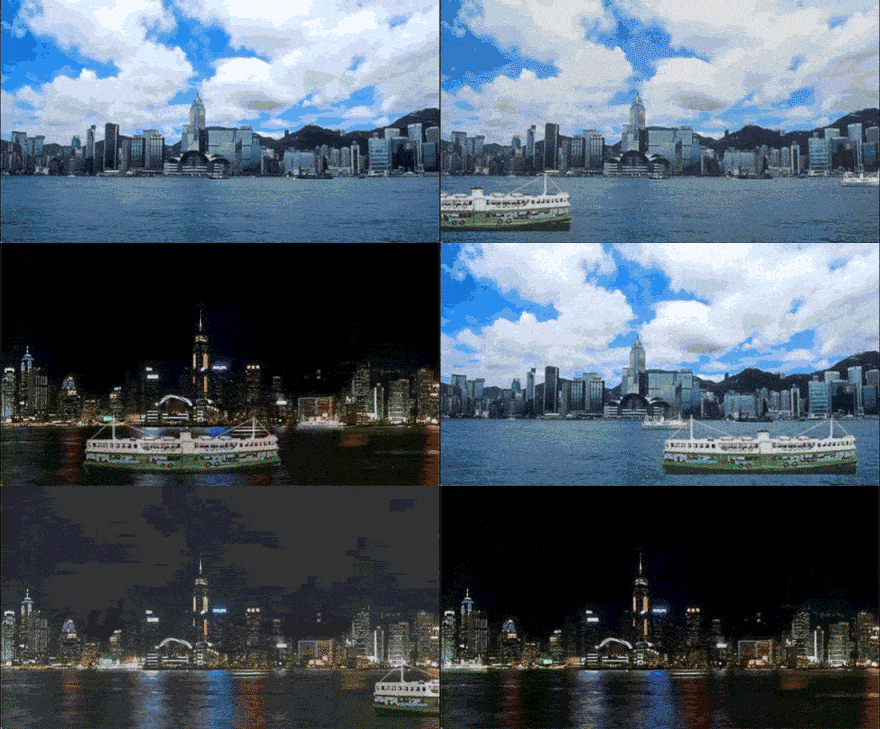
If we are staying in Kowloon side, we will go to the Star Ferry terminal and get on the next ferry going to “Central.” Arriving on the other side and stepping outside of the ferry terminal, we will catch #15 bus to the “Peak.” If we are staying in Hong Kong Island, we will catch the bus at a stop nearby.

Top Places Where to Stay in Hong Kong - Feb 2020
Hong Kong: 10 Things to Do — 1. Victoria Peak - TIME
image from Time magazine

Victoria Peak: the highest hill on HK Island at 552 meters/1,811 feet. There’s the Sky Terrace with an admission fee, but most people say this is not necessary. We have never done it.

Peak Tram Image

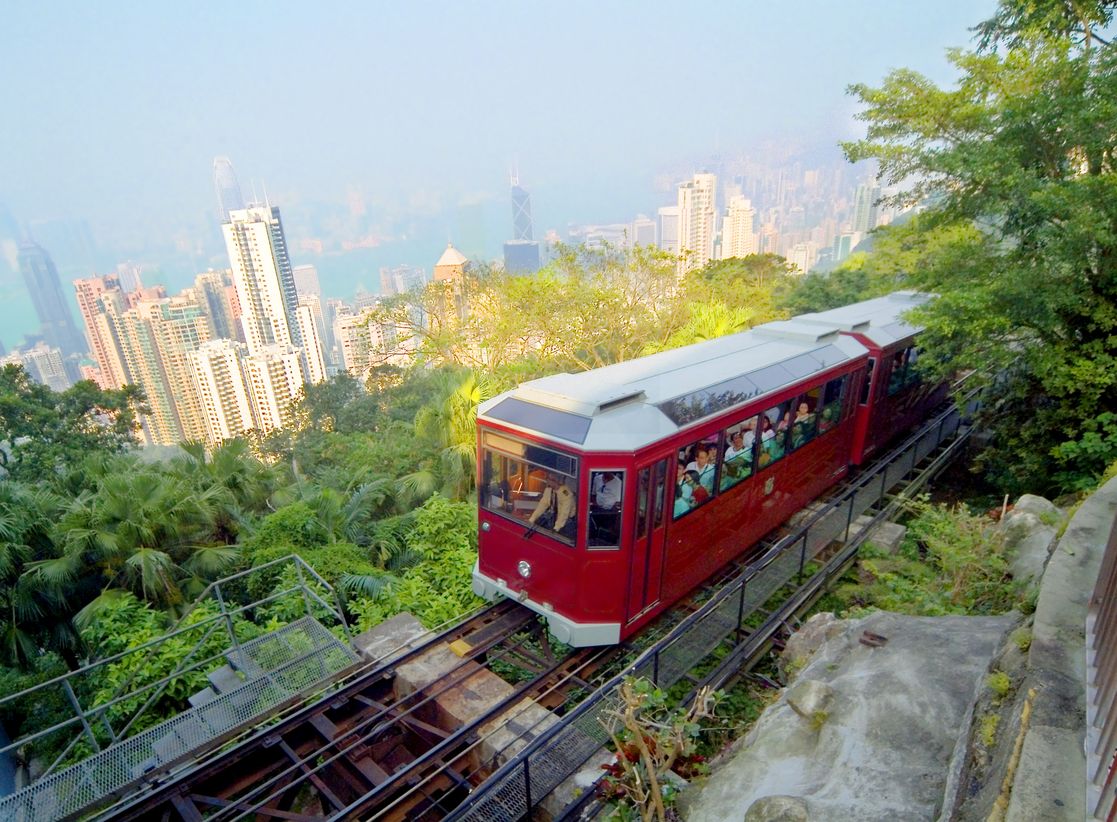
Take the Peak Tram down. If my friend likes animals and flowers, we will make a quick stop at Hong Kong Zoological & Botanical Garden (free) next door. On the way down, we can step into St. John’s Cathedral, the oldest Anglican church in the Far East, if so inclined.

Now we have to decide how hungry we are. We can walk down to the City Hall (Maxim’s Palace) or IFC Shopping Mall (Tim Ho Wan, the cheapest Michelin star restaurant in the world – often with a long line) to have a dim sum lunch. If my friend wants a fancy dim sum, we will get a cab and go to Fook Lam Moon in Wan Chai. Or we will go to the next destination, Central-Mid-Levels Escalators, and eat at one of the little noodle shops around there. (Get off after the first section at Wellington Street & go to Mak’s Noodle Shop, supposedly one of the best won ton noodle shop in HK.)

Hollywood Road Hong Kong | Travelodge Central, Hollywood Road Hong ...
SOHO, Hong Kong style

Now we will pretty much just wander around the area on Hollywood/Cat Streets and SOHO (South of Hollywood) area. We can stop for drinks at a cafe or a bar if we need a break. This article has pretty comprehensive directions about using the Mid-Level-Escalators and navigating the area.

LOBBY LOUNGE (INTERCONTINENTAL HONG KONG) - Tsim Sha Tsui - Menu ...
the best view of Victoria Harbor at your seat

Now we really need a nice break. Hop on the Star Ferry heading out to Tsim Sha Tsui/Kowloon, turn right when we get off, and walk over to the Regent Hotel. Their lobby bar serves top notch cocktails (they charge you for that!) and the Victoria Harbor on the plate. First time we were there many years ago, we liked the view and the cocktail so much that we each had a second drink even though their drinks cost more than the nice dinners we were having in HK.

One of my favorite places in the world, Nathan Road, Hong Kong ...
Nathan Road

All refreshed, walk slowly up Nathan Road on the right-hand side of the road and take in the bullseye view of this humongous urban center. Stop in Chungking Mansions to witness what the word “multi-culture” was invented for. Turn back at Austin Road and walk back toward the waterfront through Kowloon Park where the city suddenly looks not as hectic.

Here we will make some decisions: have a quick meal (at Mak’s Noodle in Ocean Terminal or similar) now and eat more later at the night market or have a nice dinner now. A full dinner can be at a busy local restaurant (Spring Deer Restaurant for Peking duck) or a fancy place with a view (Hutong). In any case, we will have to head out to the waterfront by 8 PM to see the Symphony of Lights, the world’s largest permanent light and sound show (if we miss it tonight, we can come back tomorrow – it’s on every night).

Then take #2 bus from Star Ferry Terminal & get to Temple Street Night Market. If we still have energy after browsing this area, we will hop on another #2 bus and go to Mong Kok Ladies Market, which is open till 11 PM.

Temple Street Night Market - Perihla Travel Guides
Temple Street Night Market
Lamma Island Hong Kong Ferry Services
Yung Shue Wan ferry port on Lamma Island

Second Day: If there is one, we will go to Lamma Island. Go to the pier #4 in Central (same general area where Star Ferry was yesterday) and get on the next (runs every 30 minutes, under US$ 3) ferry to Yung Shue Wan.

The insider's guide to Lamma Island, Hong Kong's own little slice ...
Main Street

Walk onto their Main Street, stroll around. Stop to refuel if thirsty or hungry because you may need it (a couple of possible places are marked on the map above). 6,000 of 7,000 total population of this island live in Yung Shue Wan. Notice no cars? That’s right. Only way to travel on this island is to walk or bike. What difference a 30 minute ferry ride makes!

Things to Do on Lamma Island, Hong Kong

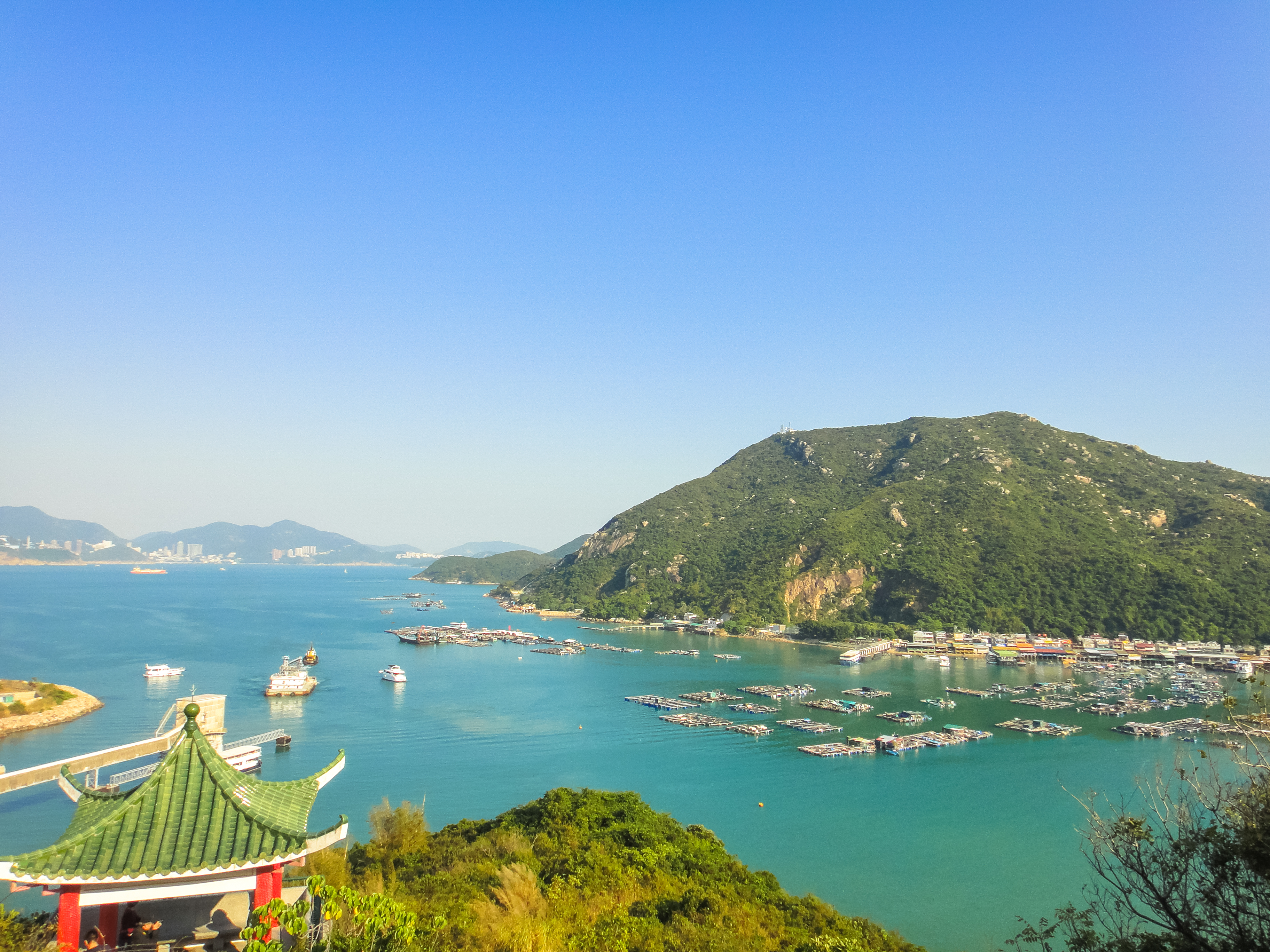
Our lunch will be at the other major town on the island, Sok Kwu Wan (population: 500), and we will have to walk there. It will be a 90 minute hike (we will do the other way around from this linked article). A hike? Right. It will not be a flat walk. You will enjoy the view, and it will be a relatively easy hike.

Sok Kwu Wan - Wikipedia
Sok Kwu Wan port

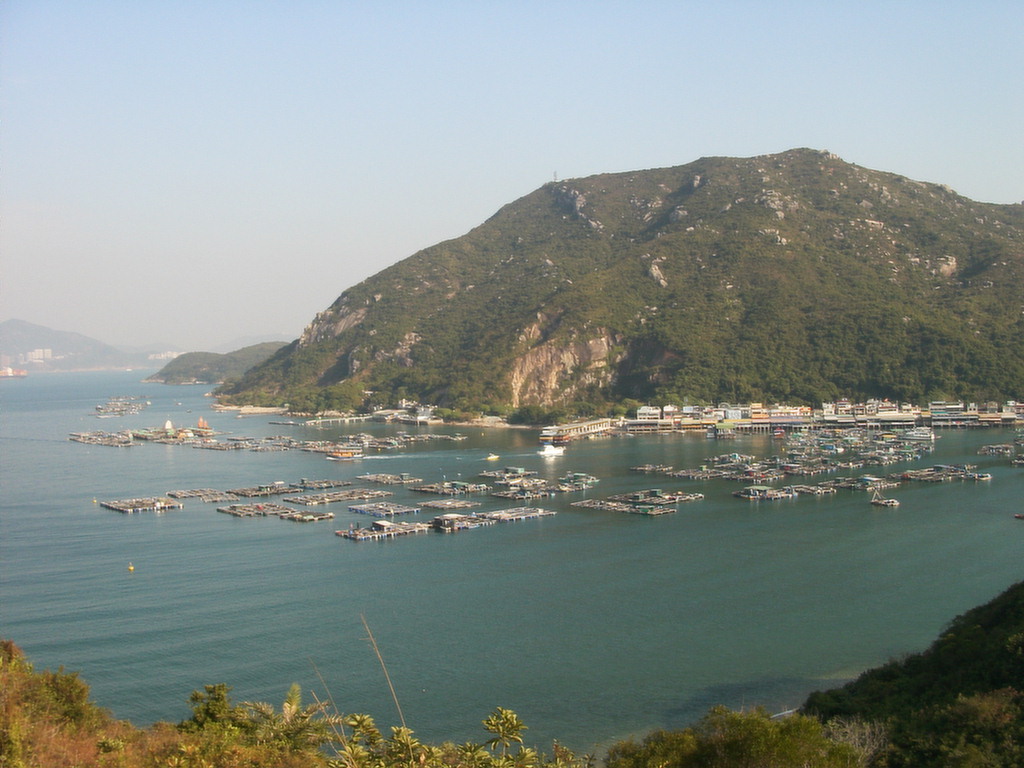
Sok Kwu Wan is a fishing port, and this means great seafood. Tai Yuen or Rainbow Seafood? You will have to decide.

From the ferry port here, we will go to Aberdeen Port on southern Hong Kong Island. You will have to watch the time because the ferries don’t run as often in this route. In fact, it will make sense to plan the whole day keeping this ferry schedule in mind.

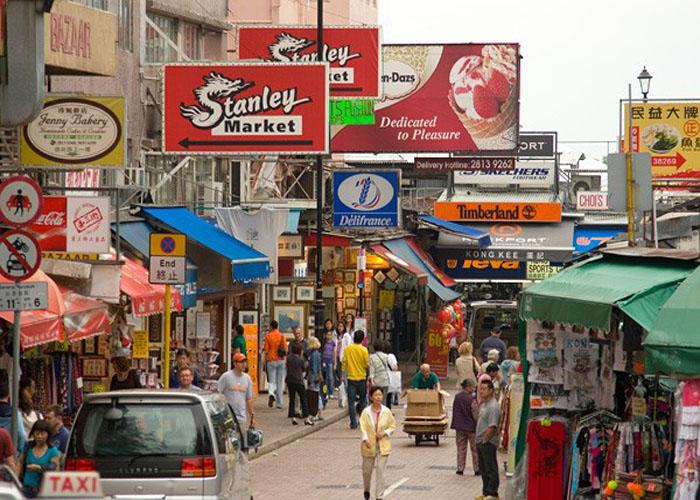
In Aberdeen, you will see the Jumbo Floating Restaurant, and you can eat there if you want to. Otherwise we will take any bus that goes to Stanley Market.

Hong Kong Stanley Market: Open Hours, Bus, Reviews

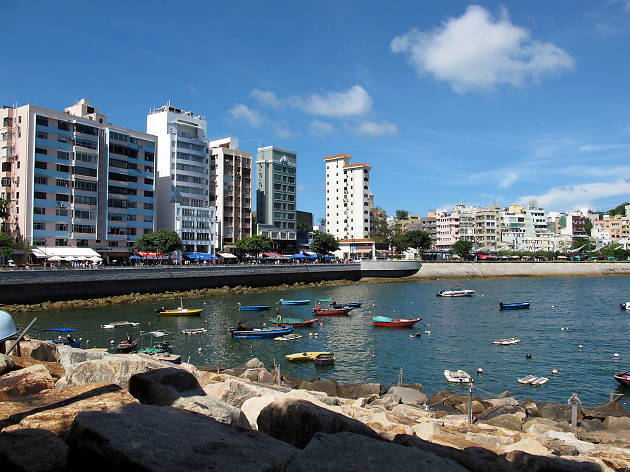
Walk around Stanley area. There are beaches, shopping, restaurants etc. Dinner?  Lots of restaurants to choose from. You can eat in the market area or at a nicer place such as Henry’s, Boathouse, or Ocean Rock Seafood & Tapas.

Stanley: Ultimate Neighbourhood Guide
image from Timeout.com

Next we will get on #260 bus, get off at Statue Square & go to Lan Kwai Fong district to witness the night life of HK. Wander as much or little as your heart’s content.

Lan Kwai Fong | Hong Kong Tourism Board
image from HK Tourism Board

Third day on, these would be my choices:

Macau - Wikitravel
Macau image from Wikitravel.com
  • Macau: Another of Special Administrative Region of China, Macau deserves to be visited: this not-too-huge town of 630,000 people has two UNESCO World Heritage sites (1) (2). Fairly easy to get there either by the bus or ferries, you can make a nice day trip out of it for under $70 per person including all the transportation and a lunch. Bring your passport & avoid holidays – we ended up on a Chinese holiday, and it was so crowded we could barely walk!  These are pretty comprehensive write-ups: how to get there, what to see
Hong Kong Wetland Park | Hong Kong Tourism Board
HK Wetland Park (image from Discoverhongkong.com)
  • New Territories: We have not tried this, but we’d like to do it next time.                      (1) Kowloon bus #53 from Tsuen Wan to Yuen Long (83 minutes) – a quotation from an article in South China Morning Post (SCMP):

The number 53 takes a long and winding route between Tsuen Wan and Yuen Long, avoids the highway and stops at every stop along Castle Peak Road.

The route is long, but worth the ride – there are some great views and scenery to ‘gram along the way. Make sure to get the bus from Tsuen Wan, as you’ll get a sweeping view of the Tsing Ma Bridge and Ting Kau Bridge. If you’re lucky enough to ride the bus on a day without smog, you might even be able to see Lantau Island, and the planes landing at and taking off from the airport

(2) visit Yuen Long town, have lunch

Stocks Blog: Hang Seng is now ahead 6.3 per cent in September, as ...
Tai Kiu Market in Yuen Long (image from SCMP)

(3) go to HK Wetland Park (transportation link)

(4) visit other attractions in the area as we see fit especially the Maipo Nature Reserve (click “sightseeing” list to see all the options; Maipo is under “The Maipo”) if possible (need to sign up for a tour). 

(5) Head back on metro, which would be faster (30 minutes) than the bus              

(6) if feasible, we will try to fit in Chi Lin Nunnery and Kowloon Walled City Park (a 3 minute cab ride from the nunnery).

image from Wikipedia
  • HK Tramway self guided tour of HK Island: This is another one that we have not tried even though we’ve used the trams at times. In operation since 1904, the Tramway runs between the east and west along the north coast of Hong Kong Island on a total of 30 km (19 mi) of track. Its website has an extensive information about what to see along the tram stops, and we’d try to follow the suggestions and see as much as we want of the city. Each ride costs only HK$ 2.6 (30 cents in USD), thus, we will carry lots of coins for the rides and get on and off as needed. We will try to include Hong Kong Park along the way. And, if we still have energy after this tour, we will go to West Kowloon Cultural District Art Park to see what’s going on there.  More restaurant ideas.
our $15 lunch in Guangzhou
  • You can always go to mainland China. Shenzhen is just a metro ride away. Guangzhou is only 50 minute away on high speed rail. I’d go to Guangzhou for shopping and food, and Shenzhen for food. (We’ve had the best Peking duck in Shenzhen, not in Beijing. The fact is, high-end restaurants in Beijing or Shanghai are no longer bargains, but that still can be so in Shenzhen and Guangzhou.) We’ve done a trip to Yangshuo and Guilin from Hong Kong via Guangzhou and Shenzhen.
Best of all It's in Hong Kong

Getting in: Hong Kong International Airport is on Lantau Island, and the best way to get into town is the Airport Express train (20-24 minutes to downtown). Buying round trip doesn’t save much, but their “group travel” rate applies to 2 to 4 people traveling together and it saves quite a bit. (example: one way adult ticket to HK Island would be HK$ 115, but as a couple you would pay only HK$ 85 per person.) Another nice service they offer is free shuttle bus to major spots in Kowloon and HK Island.

Taxi would cost about HK$ 250 – 300. Without much luggage, buses would be the cheapest way to get to downtown in 30 to 45 minutes at HK$ 40.

Getting around: Walk. Tram. Walk. Ferry. Walk. Bus. Walk. MTR. Hong Kong public transportation system is excellent and cheap (mostly under 50 cents in US$ per ride). We tend to prefer above the ground transportation so that we can see more of the city, but MTR is the fastest was to move around. HK’s integrated transportation payment system, Octopus Card, is convenient & a must have if staying for more than 3 days. But for 1-3 days, carrying enough cash (exact change required or no change given) will work well if you want to avoid dealing with getting the deposit/balance refunded at the end of your trip.

Cabs are not too expensive. Uber is available but not cheaper than taxi.

Differences Between Hong Kong & Kowloon

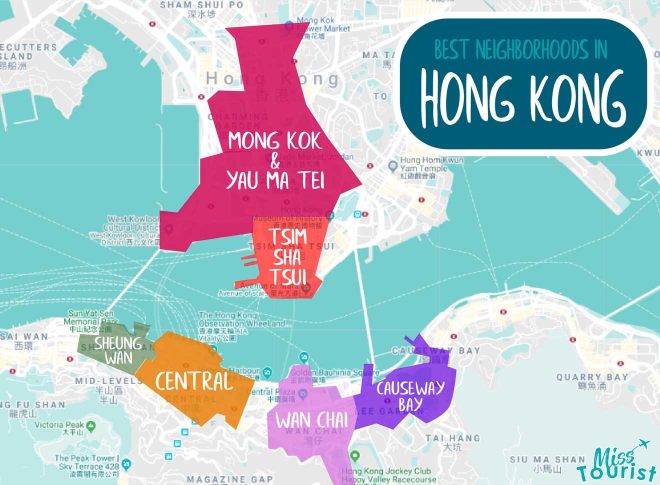
Stay: Any where close enough to public transportation will be good, and this means pretty much any where in Kowloon or northern HK Island. There are lots of hotel and Airbnb options. Don’t be surprised if your room feels tight, though. HK downtown is one of the most densely populated places on the planet, if not THE most. We tend to stay in Tsim Sha Tsui because it’s convenient to the kinds of things we want to do, and the HK Island is only a lovely ferry ride away. But things may feel cleaner on the HK Island side if that’s important.

Casablanca (Morocco): 2N/2D

December 2018     itinerary link

Casablanca at 75: fascinating facts about one of the most famous ...

I Googled Casablanca, and this is what came up first, not the city. The movie is considered to be one of the best ever made, but the city is not really a major stop for over 12 million tourists to Morocco (population: 36 million) each year. This made me rather curious.”Why is the biggest city in Morocco with the famous name that reminds people of one of the most beloved films of all time not popular for visitors?” I could not stop wondering.

Casablanca was the last stop during our 13 day tour of Morocco. We had hired a transportation service from Marrakesh, and the 3.5 hour drive went smoothly till we were on the street where the Airbnb apartment was located and could not find the number. Our driver had to call the owner of the apartment to meet up with his representative who led us to the place. By the time we settled into our 3 bedroom Airbnb apartment, it was way past lunch time, and the only lunch we could get in the neighborhood was pizza/chicken fast food. Then we started walking toward what appeared to be the center of town on the map.

A striking white structure caught our eye. It turned out to be the old Cathedral, which was under renovation. Luckily, a very nice gentleman let us in, and we could look around. Stained glass windows were stunning inside the church.

Blvd. Rachidi

Colonial era buildings lined the street that led to their main square shown below.

Place (Plaza) Mohamed V (V here stands for 5, not an alphabet letter). Various government buildings filled up the square.

not sure of its relationship with the Arab League

Heading back, we stopped at the Arab League Park. The streets in this neighborhood were lined with big exotic trees as shown below.

We noticed a pan-Asian restaurant near our apartment, and we decided to give it a try. It had signature dishes from Japan, Korea, China, Thailand etc. The food was actually not bad at all. We were happy that we went there.

The most famous structure in the city is Hassan II Mosque, and it graced the night sky from our apartment.

The first thing we noticed in the morning was: yes, Hassan II Mosque.

700 feet minaret is one of the tallest in the world

It was a 5 minute cab ride from our place, and it did live up to all the hype.

The admission ticket included a guided tour, and we were asked to take off our shoes before going inside.  The mosque can hold 25,000 people. Another 80,000 people can gather outside for prayers.  12 million people donated money to build this 585 million euro building.

Completed in 1993, it is the second largest mosque in Africa and the 7th in the world. It took 7 years to finish the ambitious project commissioned by King Hasan II. His intention was:

I wish Casablanca to be endowed with a large, fine building of which it can be proud until the end of time … I want to build this mosque on the water, because God’s throne is on the water. Therefore, the faithful who go there to pray, to praise the creator on firm soil, can contemplate God’s sky and ocean.

this is where one cleans the feet before a prayer

on the water

After visiting the mosque, we walked to our next destination, Rick’s Cafe.  We had no reservations, but they allowed us in for lunch provided we would stay no more than an hour.

The movie was actually shot at Warner Brothers studios in Burbank, California. An American expat decided to recreate Rick’s Cafe in the city of Casablanca, and the restaurant’s been there since 2004. They really did a good job of recreating the atmosphere, and there seemed to be no shortage of people wanting to eat there.

definitely an upgrade to the original fake cafe in the movie

We were at one end of the Old Medina of Casablanca as we came out of the restaurant, thus, we walked into the medina just to see. Compared to Fez or Marrakesh, the one here was much smaller and more spacious and not as attention grabbing. We must have taken some photos, but, I can’t find them.

I had a mission given by a friend back home: go take some pictures of the cafe where Saint-Exupery frequented while he was living in the city in 1930’s. Petit Pouscet of those years attracted likes of Albert Camus and Edith Piaf, however, it is now a rather sad looking old bar. We sat down on the chairs outside and tried to imagine what it was like 80 – 90 years ago.

you can get a glimpse of its golden years in certain details of the interior

Some people say Petit Paucet might have been the inspiration for Rick’s Cafe in the movie. Looking out to the street from where we were sitting, the view captured below showed some possibility of an old colonial town where philosophers and writers and artists having heated discussions over gin drinks in a smoke filled bar. Just might have happened.

Then we walked over to the Central Market where one could buy fresh fish to be cooked right on the spot for a satisfying lunch. We got there too late to see that, though.

their Central Market was where locals shopped for everyday living

We could have grabbed a cab and gone a bit south from there to Habbous quarter, which is known as the New Medina of Casablanca. But we were tired, and we had seen enough medinas by then. So we went back and had a rest till dinner time. We tried a little Italian cafe for dinner, and that was fine.

Our last meal in Morocco the next day was at an artsy organic restaurant not too far from the apartment. Surprisingly great food.

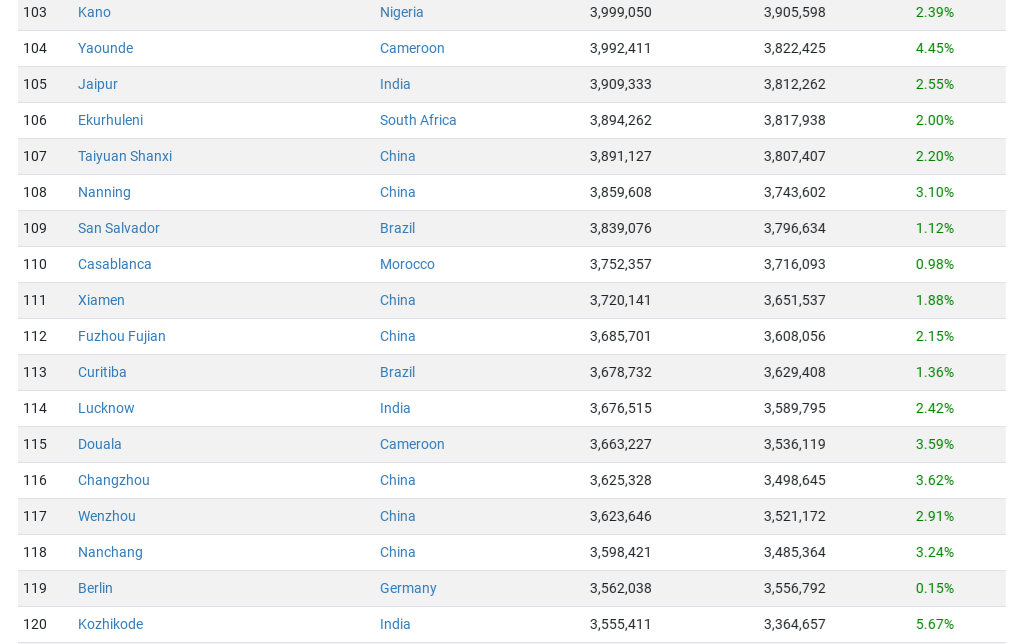
So was spending 2 nights in Casablanca worth it? It’s not an exotic tourist town for sure. Fez and Marrakesh plus the desert experience will fill up a week very nicely for most people. Casablanca is more of a mid-sized commercial urban center where 3.7 million people lead their everyday lives. Among the cities around the world with compatible size of population, I’d say Casablanca can definitely be an attractive city for its cosmopolitan vibe, decent living condition at relatively reasonable costs, and enough local color. For us, it was a nice way to wind down our long trip which started on a 2 week cruise of Dalmatian coast. I am glad we spent the last two days in Morocco in Casablanca.

Screenshot 2020-06-13 at 5.42.22 AM - Edited
Casablanca at #110