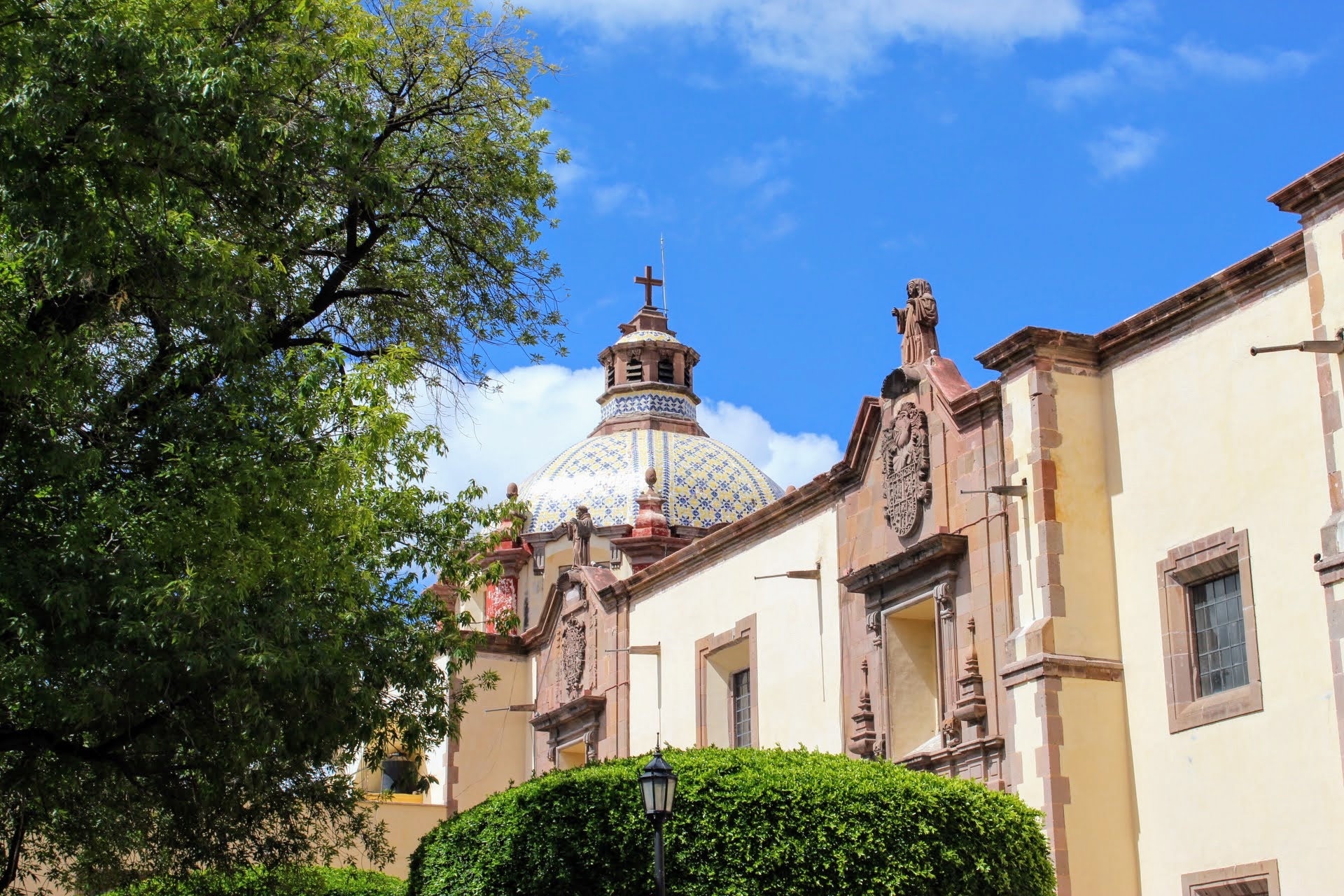
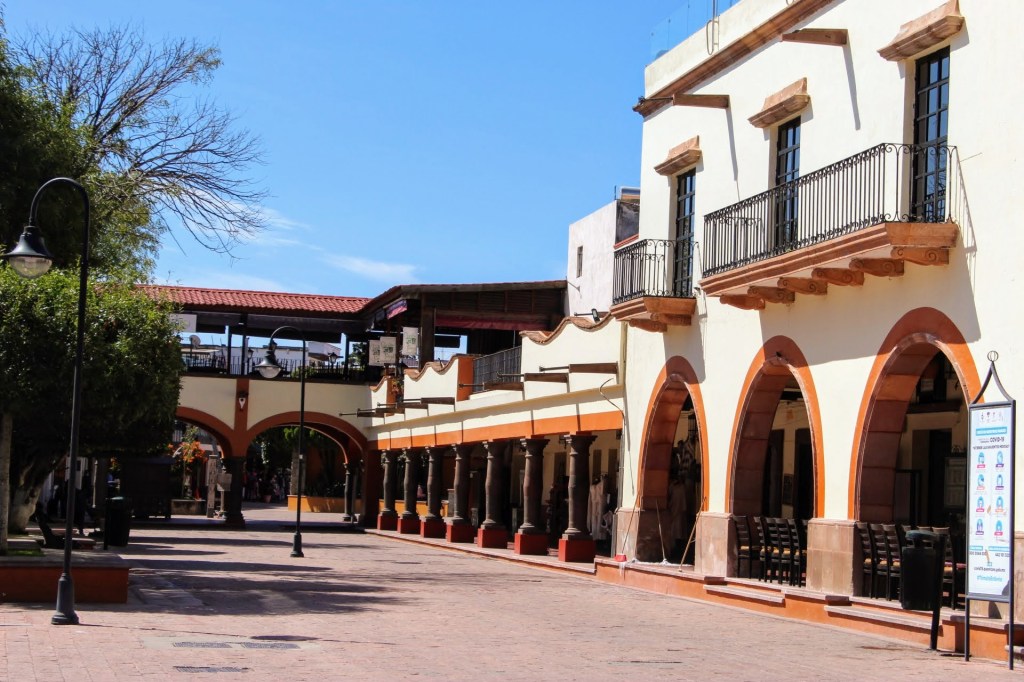
an example of a well preserved colonial architecture of Queretaro
Six friends visited us during our 17 day stay in Guanajuato in October 2021, and we decided to go out of town with them for a couple of nights. First stop was in Queretato, the capital of Queretaro State, followed by the hot springs town of Tequisquiapan for the night. From there we stopped in San Miguel de Allende & spent the second night there before heading back to Guanajuato.
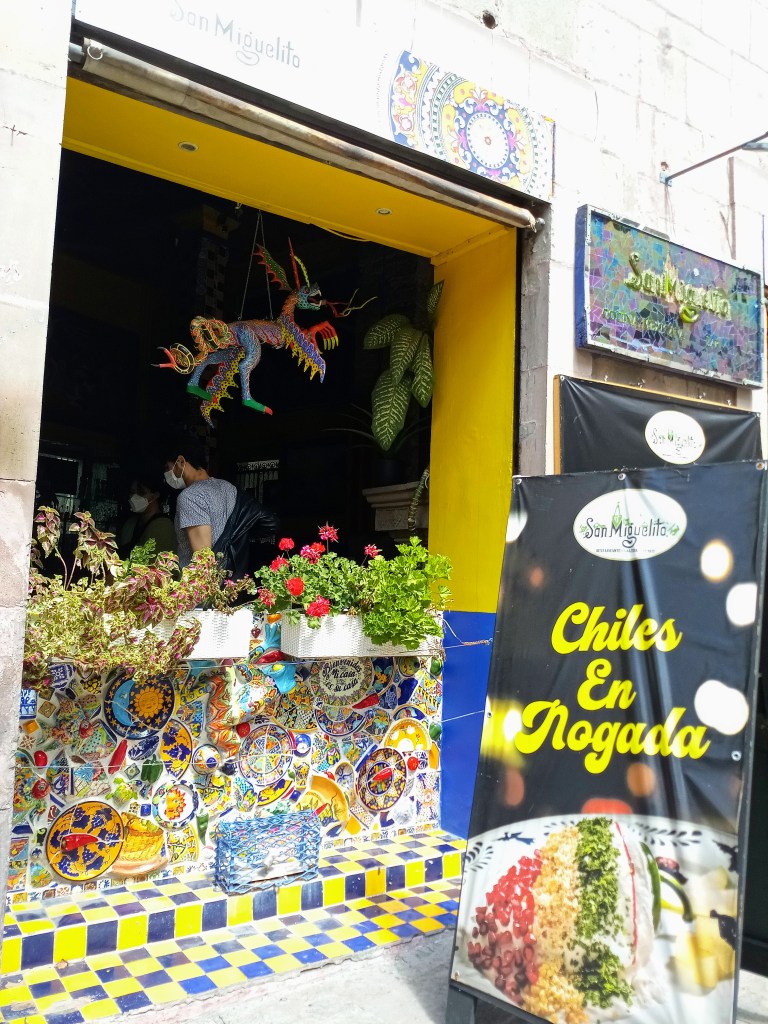
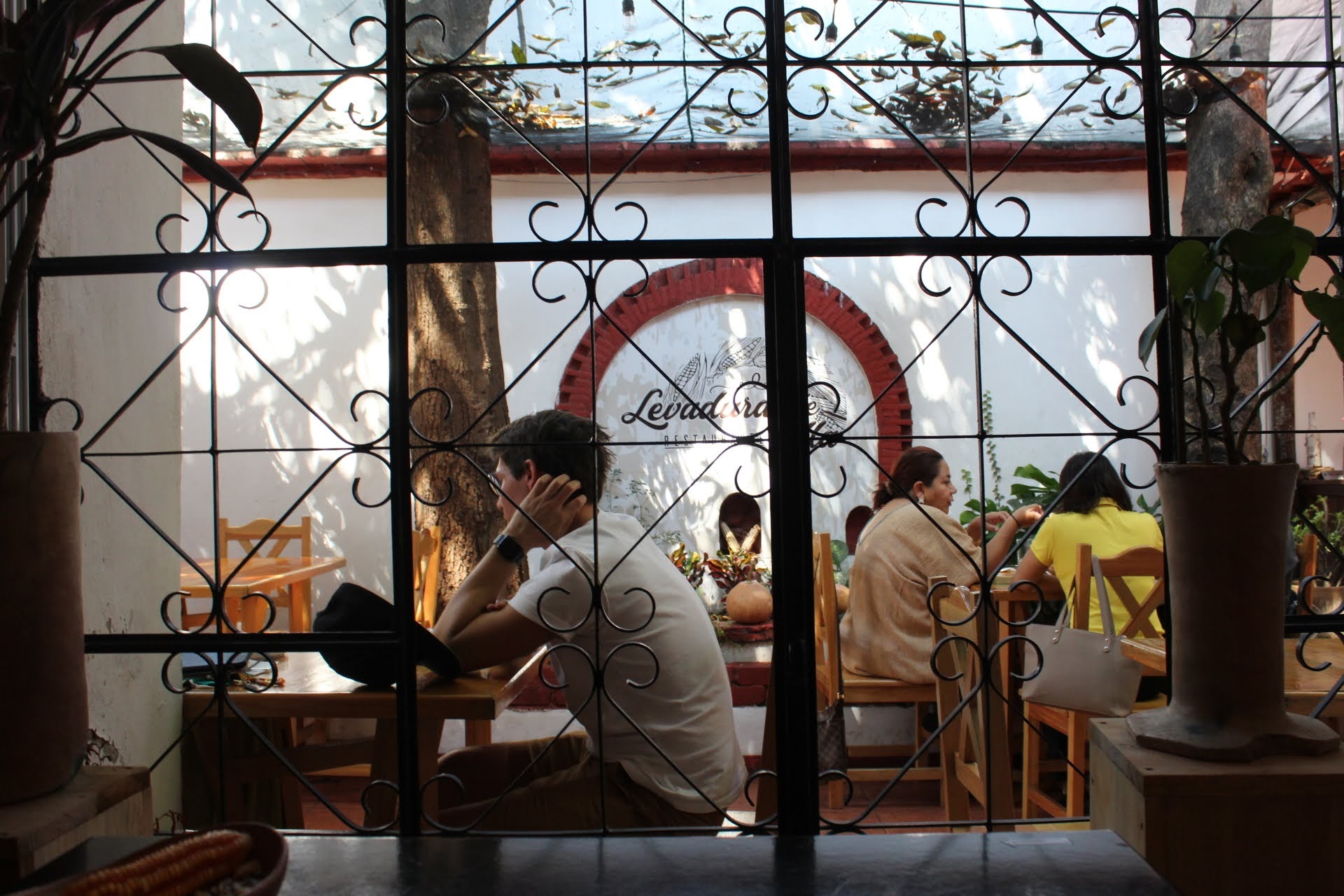
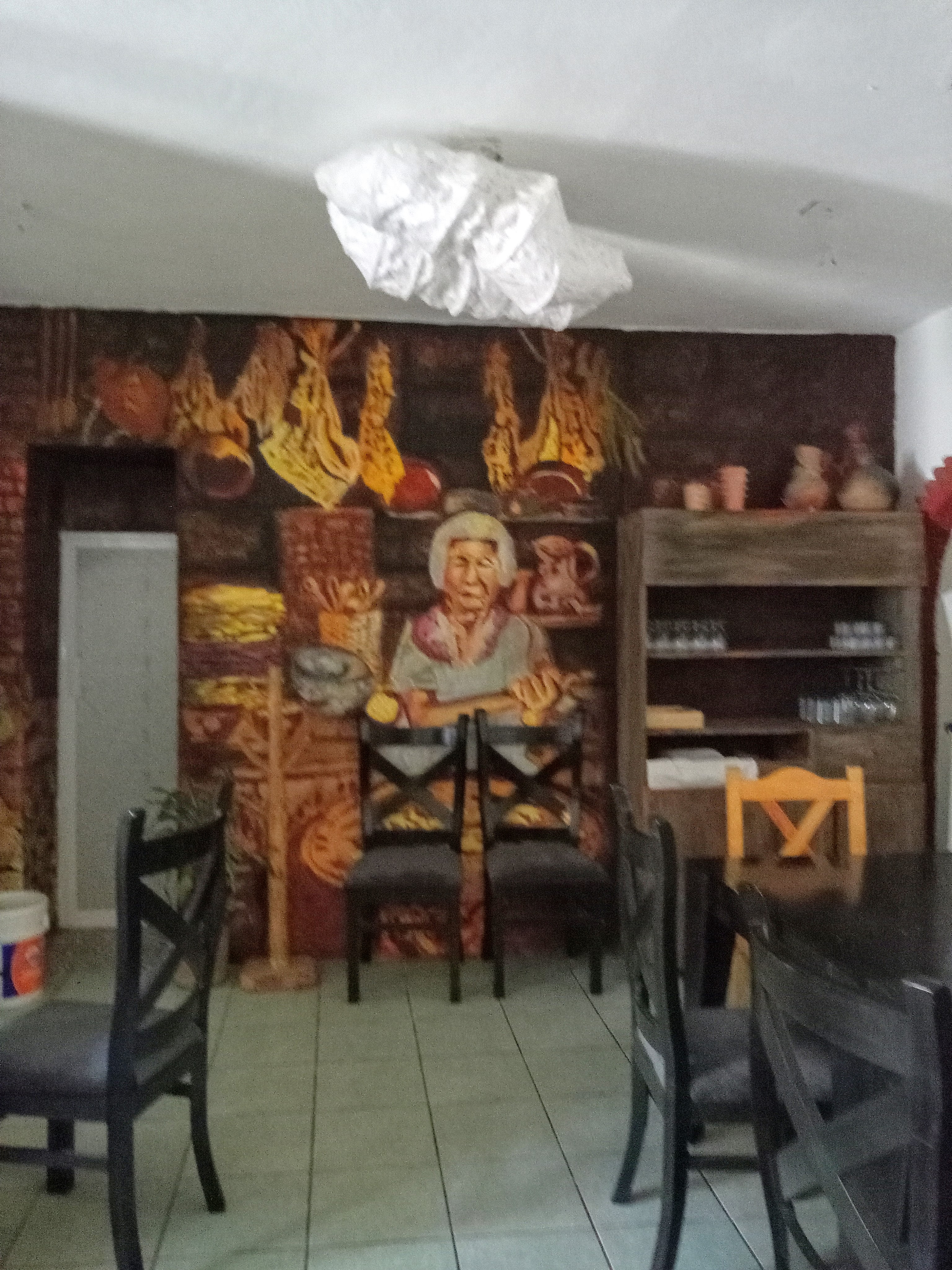
We took the luxury Primera Plus bus (2.5 hours, $13.50) to Queretaro (population: 1.05 million) and had breakfast at a hotel restaurant, pictured above, near the meeting point for the walking tour. The central bus station was a 10-15 minute taxi ride. This restaurant had an interesting interior decorations and decent food. The full name of the city is Santiago de Queretaro, and its historic downtown is a UNESCO World Heritage site. We thought the best way to see this city in a short time was doing a guided walking tour.
We waited at this park, Jardin Zenea, for our tour to start at 11 AM. No guide showed up. It turned out that we waited at a wrong place for our tour, which was supposed to start at Plaza de Armas a few blocks away. Some kind people who tried to help us gave us wrong advice because there was another walking tour by a different company on a different day. Not knowing this at that time, we didn’t know what to do. We noticed a tourist information booth across the street, and they told us about the hop-on hop-off bus that would leave in 10 minutes from the stop in front of San Francisco Church next door.
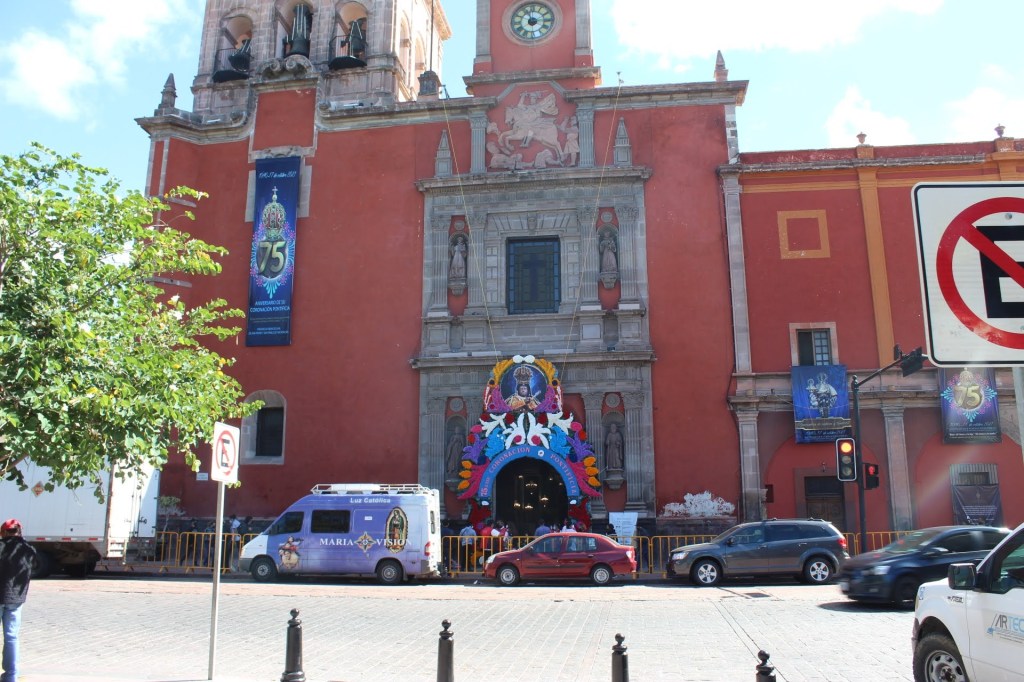
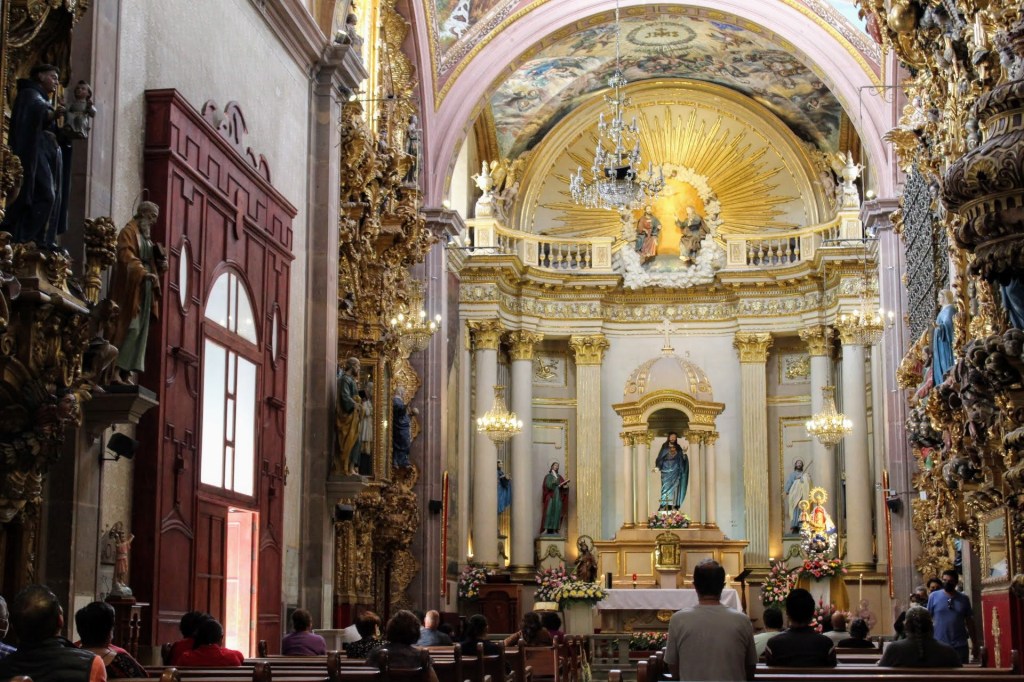
San Francisco Church was celebrating 75th anniversary of something and there was a big ceremony going oninside
We had been to Queretaro before, but, our friends hadn’t. So all 6 friends got on that bus tour (about $5), and we stayed behind and walked around.
This is a guide map by a local artist, Tanyha Lopez, that shows what she thinks we should check out. Most of the spots were covered by the hop-on hop-off bus. This map by the same artist shows how you may want to route your walking tour. We stayed pretty much in the area mentioned in the middle line here.
Our friends were back where they started in about 60-75 minutes. We found a place for lunch near the San Francisco church and went across the street for churros after lunch. Queretaro well deserves at least an over night visit, but, maybe next time. This time was just a quick introduction.
San Miguelito restaurant was a fun place with whimsical decorations and decent food
We had left our bags at a luggage storage place at the Queretaro Central Bus Station, so we went back to retrieve our bags. We got two cabs (500 pesos each) and drove to Tequisquiapan, 40 miles east, for our night of spa treatment – or that was the plan.
Tequisquiapan (population: 54,900), or Tequis in short, means place of water and tequesquite (mineral salt). I got interested in this town when I heard that this was a weekend get away hot springs town for people from nearby big cities like Queretaro and Mexico City. Unfortunately, it was not easy to tell which would be the best spa hotel for our group by looking through hotel reservation sites. We ended up picking Hotel Sol y Fiesta where we could have “king suite rooms with spa” at $44/night. The rooms were spacious and comfortable and a wonderful freshly made to order breakfast was included in the price. The outdoor pool was not in operation due to the pandemic, but our rooms had an in-room Jacuzzi in the bedroom with mineral water coming out of the faucet. It took forever to fill the tub, but, when we did, it was heavenly. We also wanted to get a 70 minute massage ($30), but, the masseurs required cash only, and we did not have enough cash on hand. Alas!
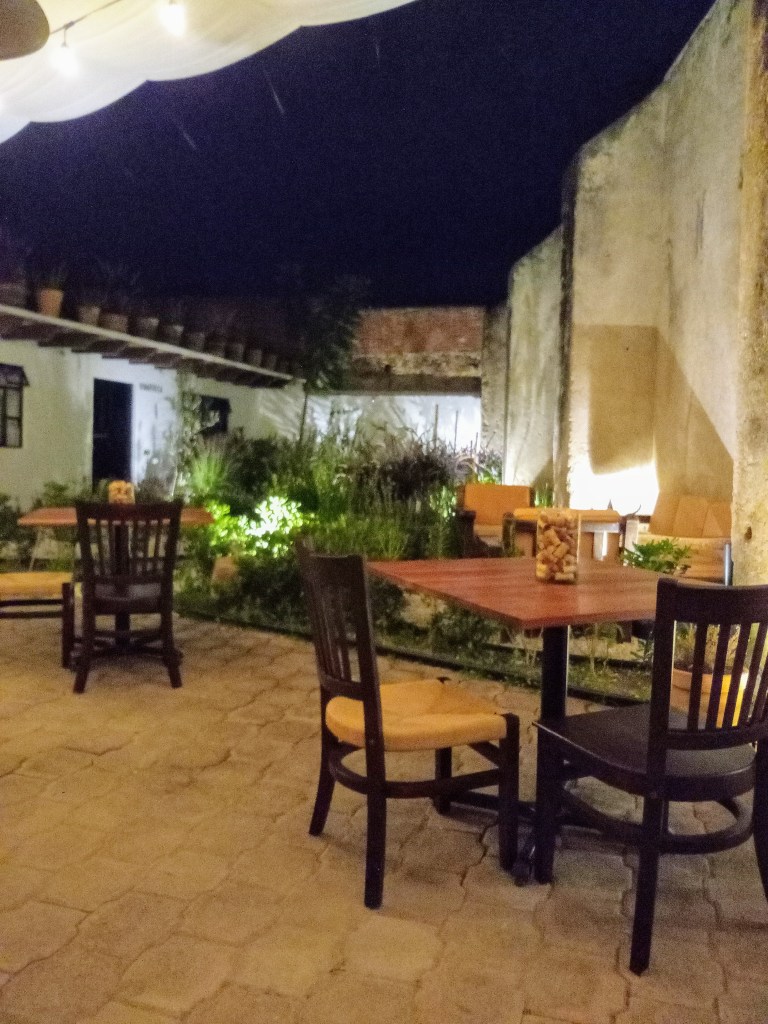
Dinner at Origens restaurant was a special treat. We had to hunt for this place which I had read about. There was no sign and the front door was closed. I wish I had better pictures to show the tastefully done setups, but, we were too busy enjoying our meals to take photos! Wonderful wine pairings and delicious desserts. We paid about $15 per head for this feast.
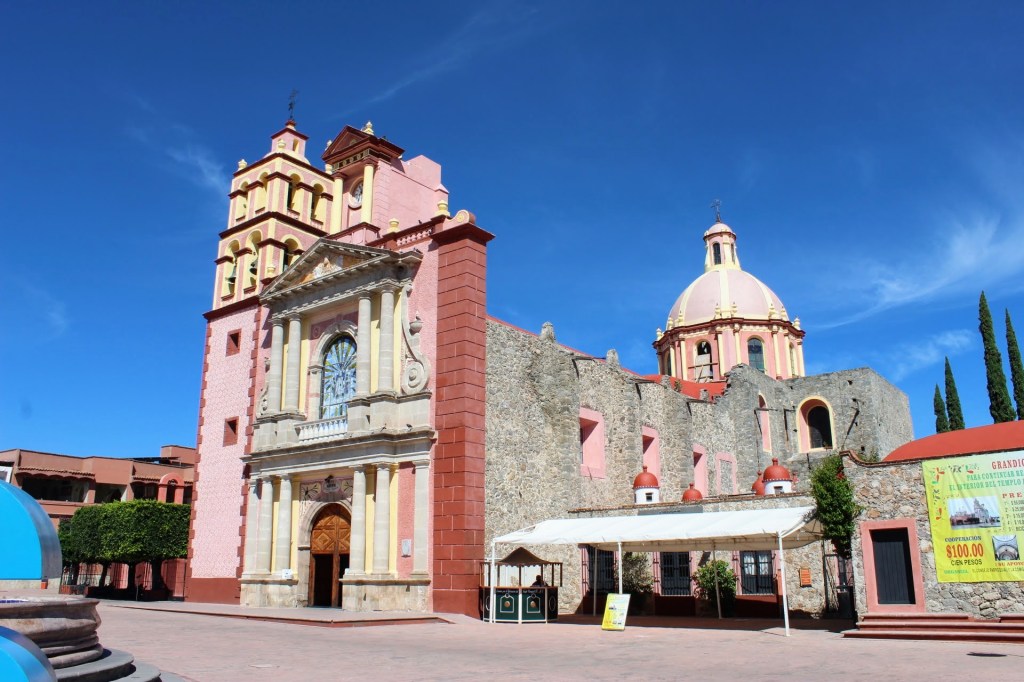
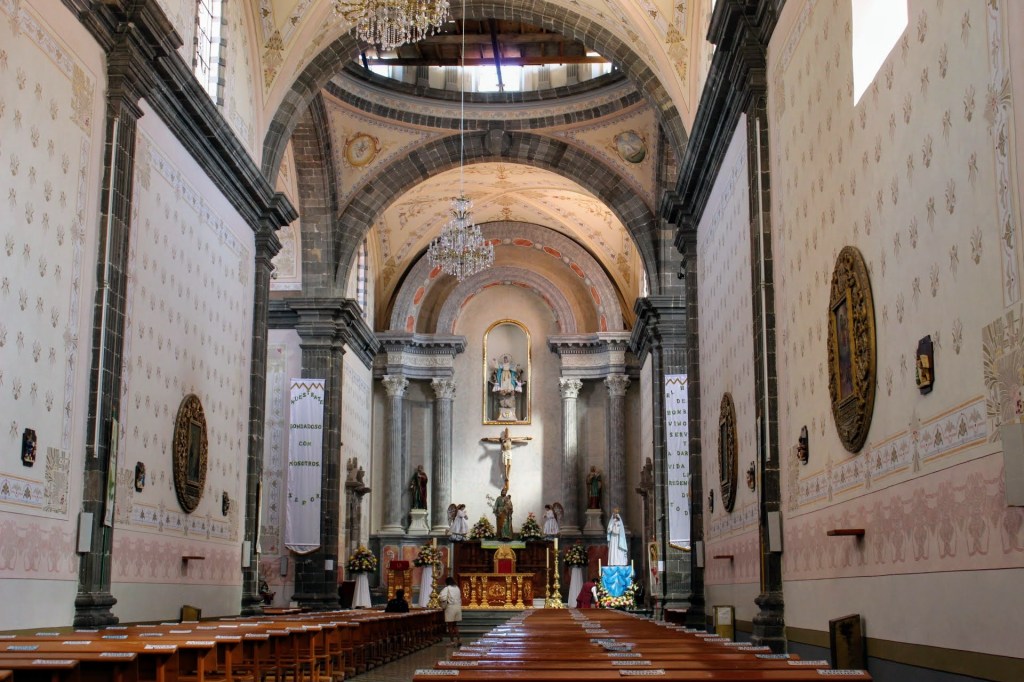
Next morning we walked over to the town square (Plaza Miguel Hidalgo) and checked out the famous pink church, their main church called St. Mary of the Assumption. Tequis is not a tiny town, but the town center is pretty much in and around this square. I could see how this could be a relaxing weekend getaway for the city dwellers, a slowly moving place filled with small hotels with warm water swimming pools. One can go to an opal mine or a winery, too, if desired.
I was actually interested in going to Bernal, a colonial village 20 miles north of Tequis. But that would get us farther away from our home base of Guanajuato. So we headed to San Miguell de Allende. The same cab drivers who got us to Tequis from Queretaro picked us up and drove (750 pesos per car) us to SMA, 75 miles northwest.
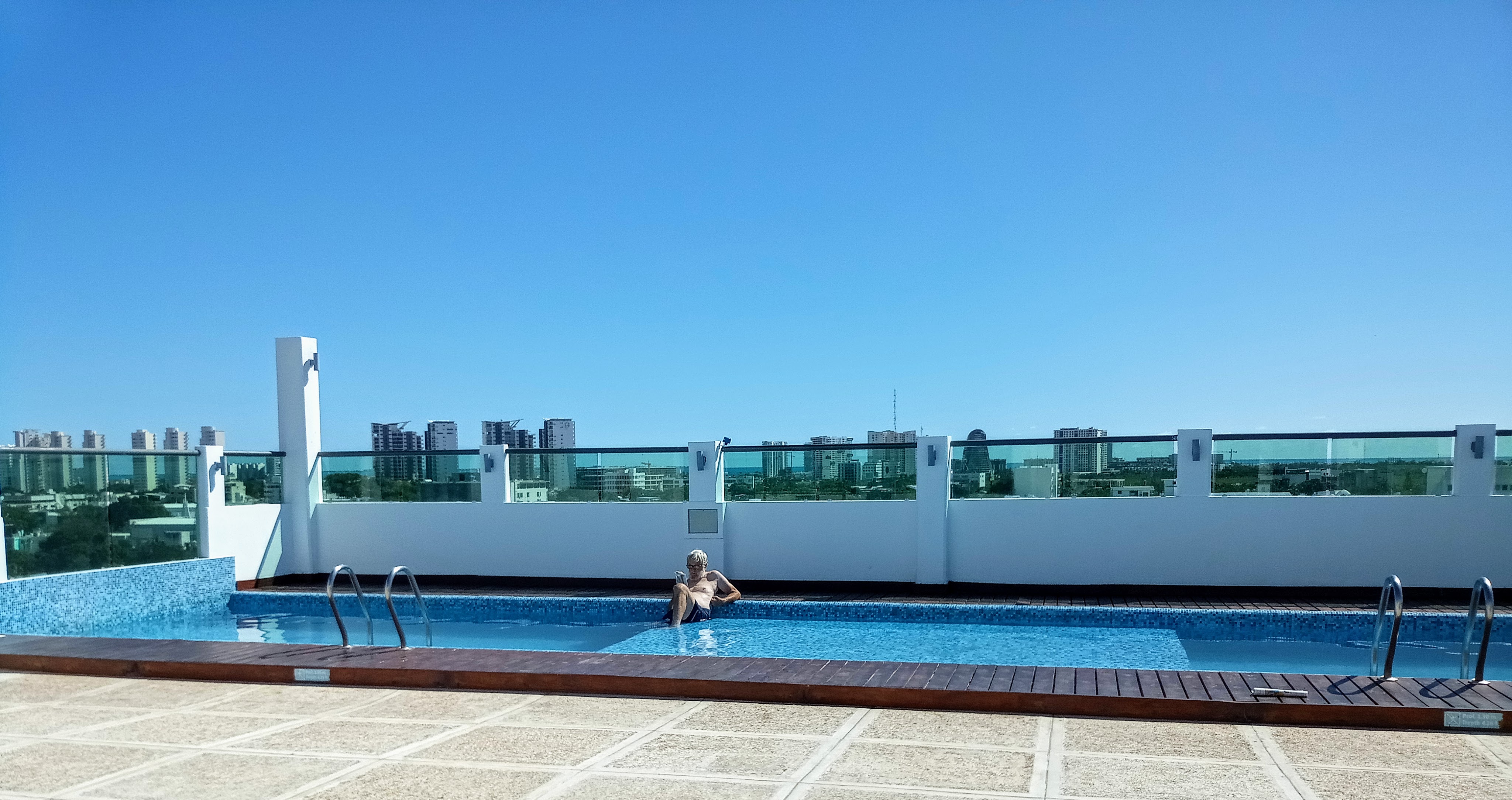
You don’t get to keep a rooftop pool all to yourself often except at a downtown Cancun hotel in the times of Covid-19
This is more of a report of an impression than a guide of any kind for Cancun. We were there because our flight from Oaxaca to Guanajuato was routed through there & we were to arrive in our destination close to midnight which was an awful time for the house manager to come out and greet us. So we broke off the plane ride and spent a night in downtown, Cancun, so that we could take an earlier flight out to Guanajuato next day. It did not cost much more to do this on Volaris Air, the second biggest airline in Mexico which nobody outside of Mexico has ever heard of.
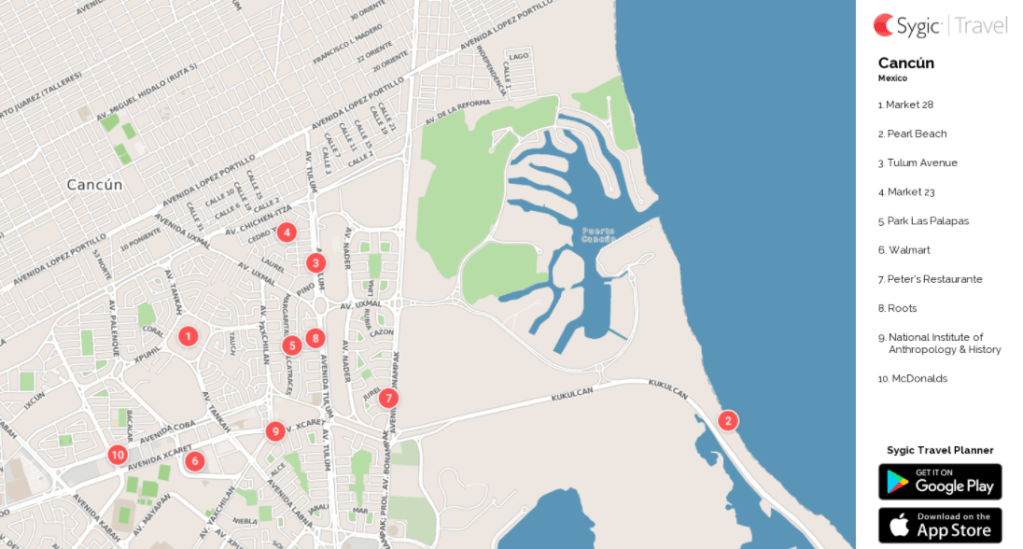
Cancun was never on our radar to be honest. It’s just another resort town that is set up to pamper tourists who are there to relax and/or have fun for a few days. It could be anywhere as long as it’s away from home and near a beach. We understand why people might want this, but, we did not need this. After all, our home is in sunny southern California very close to a nice beach. When I found this map, though, I cracked up. The “Hotel Zone” is on the stretch that starts from #2 on the map. Downtown is where all the other numbers are, and, if you look at the descriptions, Walmart and McDonald’s are included. That tells a lot about this town, doesn’t it? There is not a whole lot to see in downtown.
I had read that Cancun is the city in Mexico with the most expensive taxi prices. The 12 mile ride from the airport to downtown (US$ 20) confirmed it. My thinking was stay in downtown, which is closer to the airport, then, check out the beach area before getting on the plane the next day. I chose Hotel Kavia Plus ($42/night) based on the photo of the rooftop pool. It was comfortable enough, and we could just go across the street for a quick dinner.
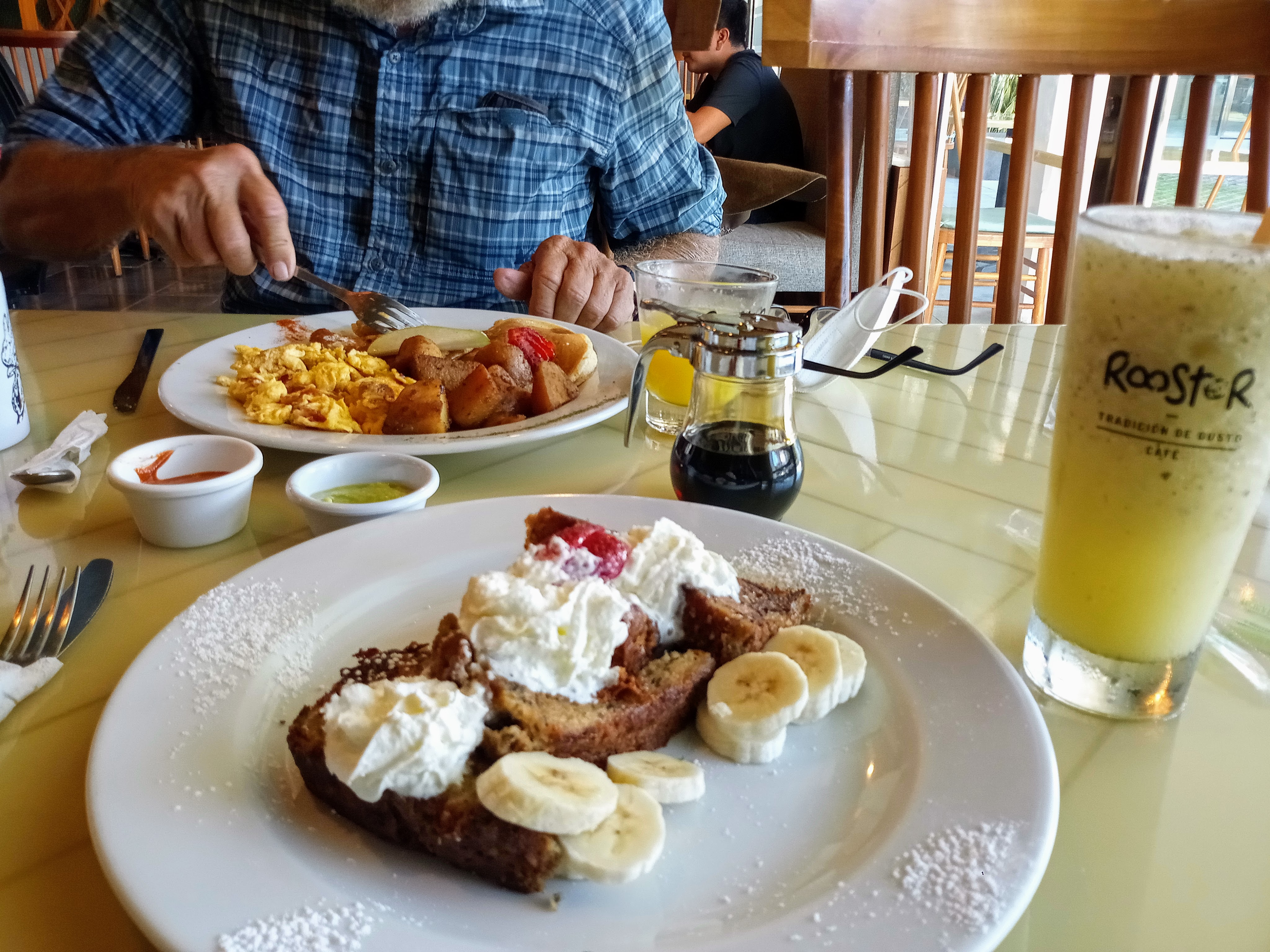
Rooster was a 5 minute walk from the hotel & served decent breakfast
After breakfast, we got in a cab and asked to go to a Westin Hotel, and we got there in 10 minutes (US$ 10). I thought we could go to their rooftop bar, enjoy the view, have lunch, then call it our Cancun experience. Well, that’s not how it worked in Cancun. Each resort hotel is for guests only, thus, we would need a “day pass” to use their restaurants. In other words, there was no way to see the beaches unless you stay in one of the resorts. All the view you get from the main drag is the hotels because the beaches are on the other side of the buildings.
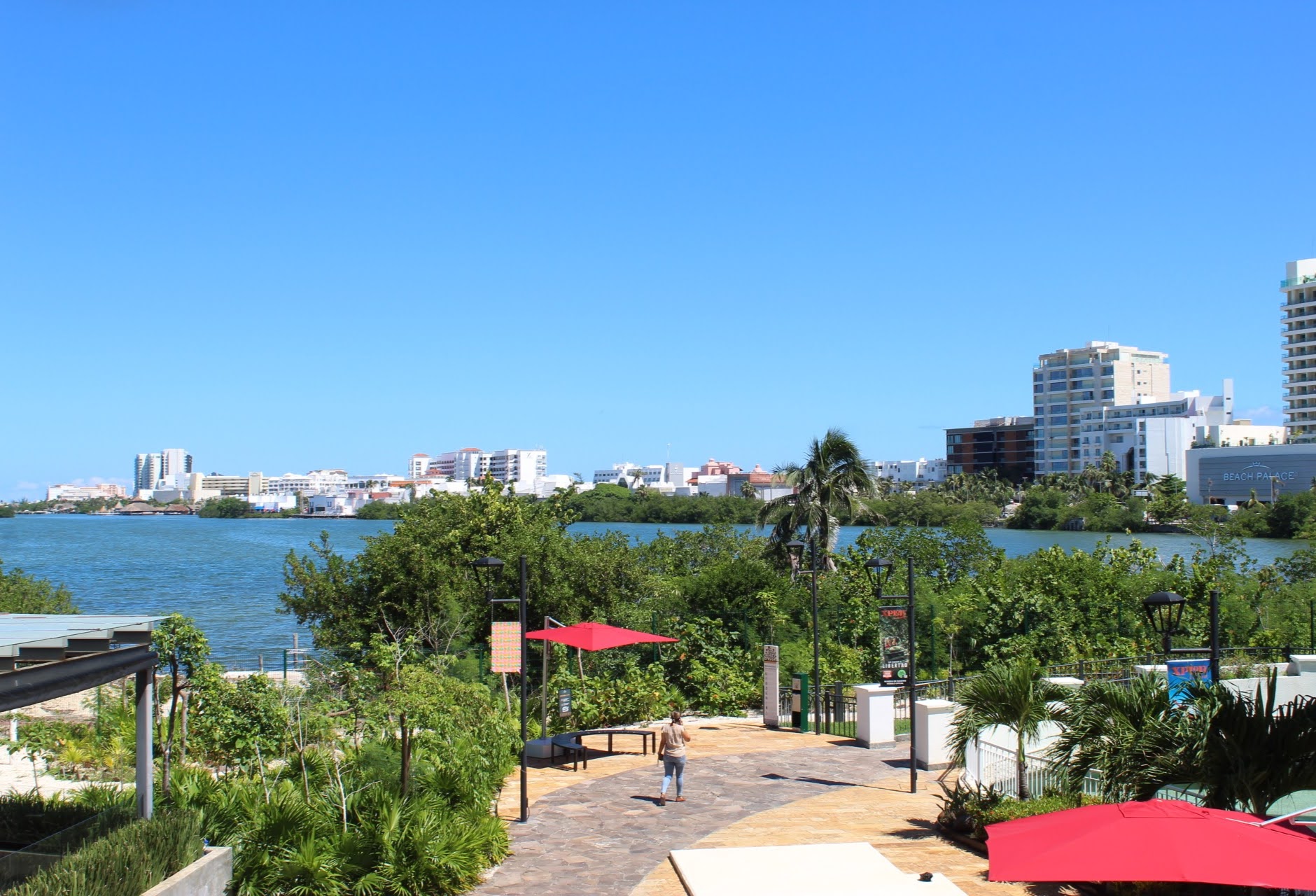
a view of Cancun from a shopping center
Sorry. That’s the most scenic Cancun photo from us. There are certain access points to the beaches if you know where to look, but, we gave up. It was too hot for us to be walking around aimlessly. We went back to our hotel and ate lunch in the neighborhood.
I confess: this looks better in a photothe restaurant was empty, but, their service was cheerful
So was it worthwhile to make this stop? At least now we know for sure Cancun is not for us unless there is an offer that we can’t refuse. And we arrived in Guanajuato around 8 PM, which was a much more reasonable time for the house manager to welcome us.
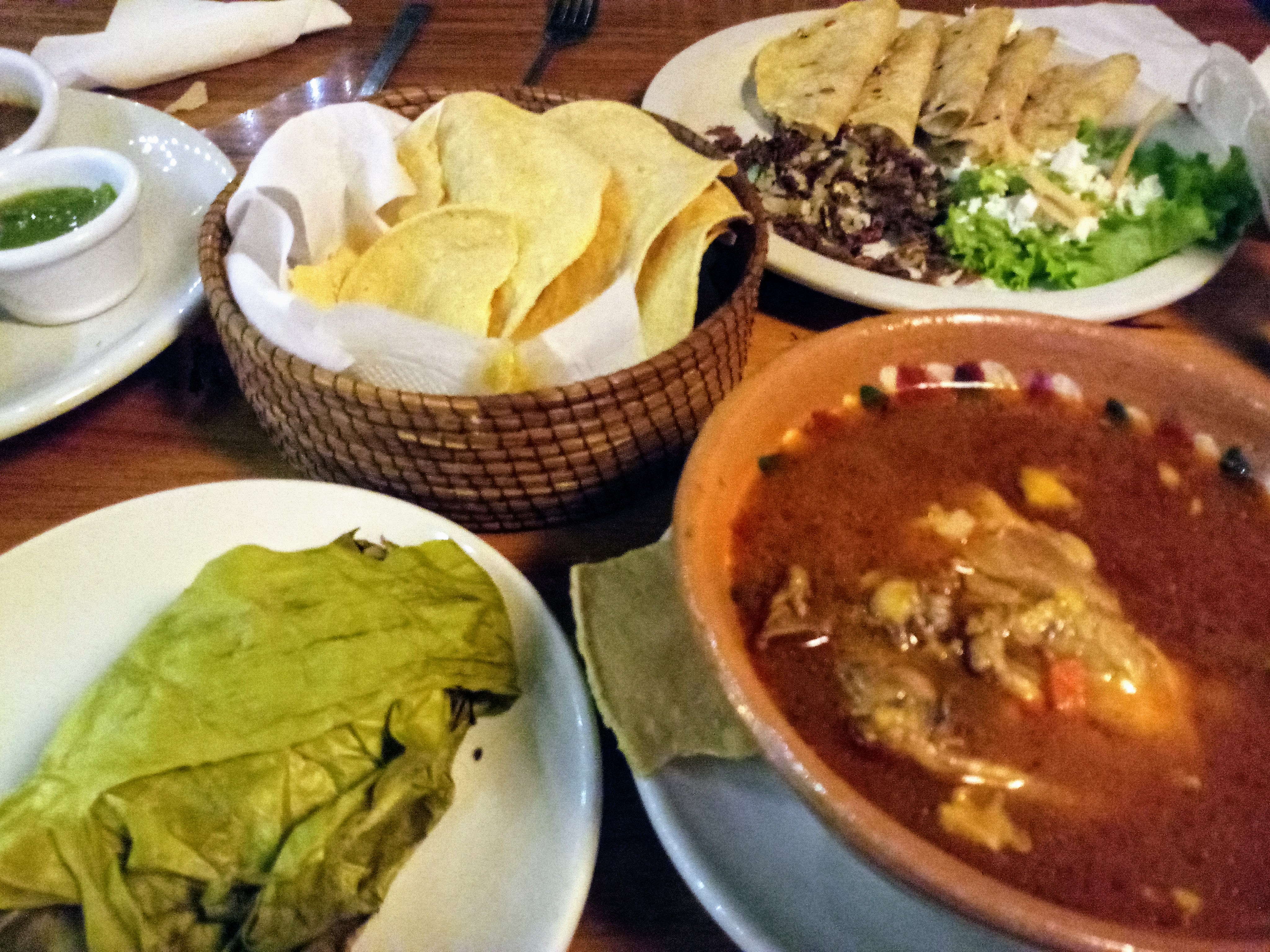
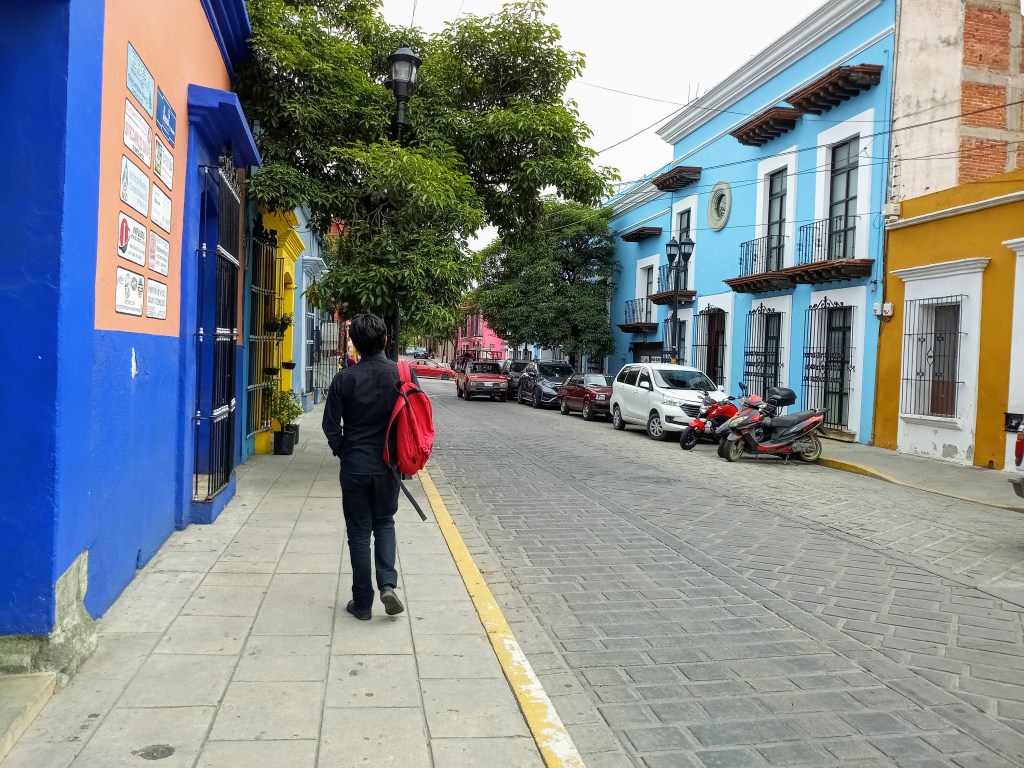
We arrived at our Airbnb apartment in the city of Oaxaca (population: 715,000), the capital of Oaxaca state, around 10 PM after a 4 hour direct flight from LAX ($120, one way, on Volaris Air). We were hungry, so, we just walked into a restaurant that was open in the neighborhood. We started with two margaritas, of course. Some hearty soup and a couple of other things shown above were ordered, and, when the check arrived, we could not believe it: under US$10 for all the delicious food!some colors of downtown
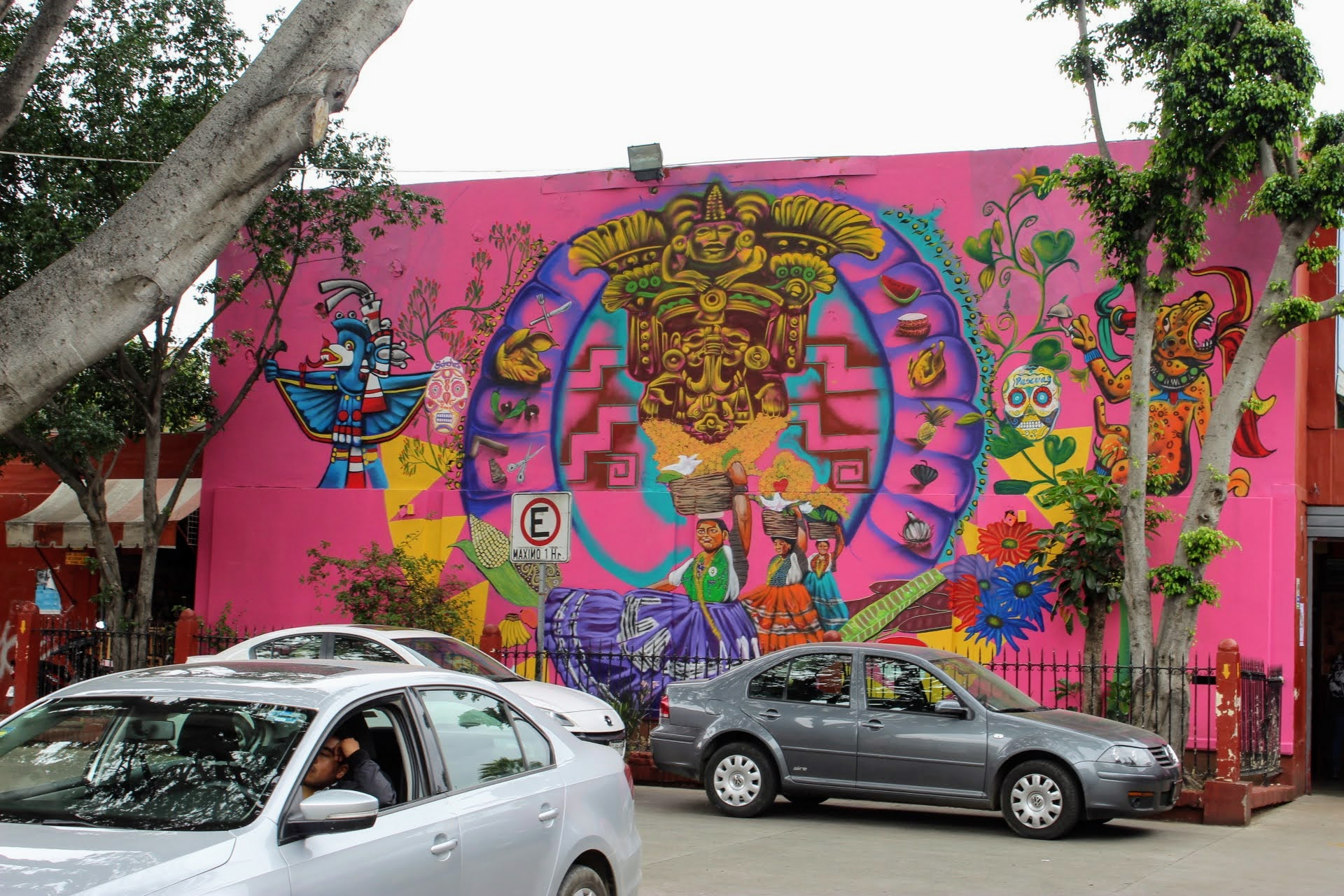
The first thing people mention about Oaxaca is food. Then they say it is the most colorful city in Mexico. We wholeheartedly agree with the food part. We never had a bad meal there, and, it was not easy to spend $20 per person on a full course dinner with drinks even at a fancier restaurants. Colorful? Yes. The most colorful? Well, Guanajuato would top it any day in our mind.
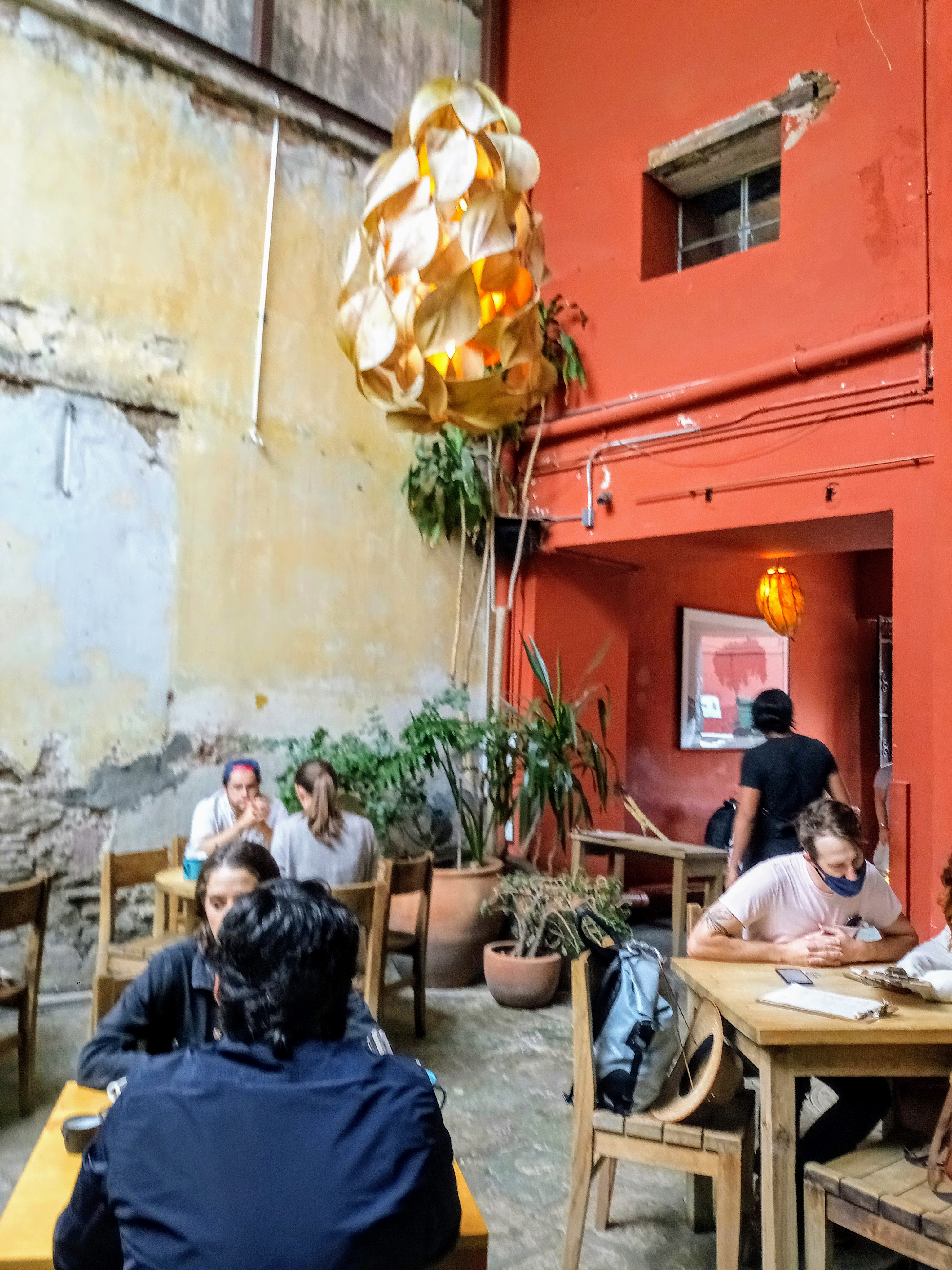
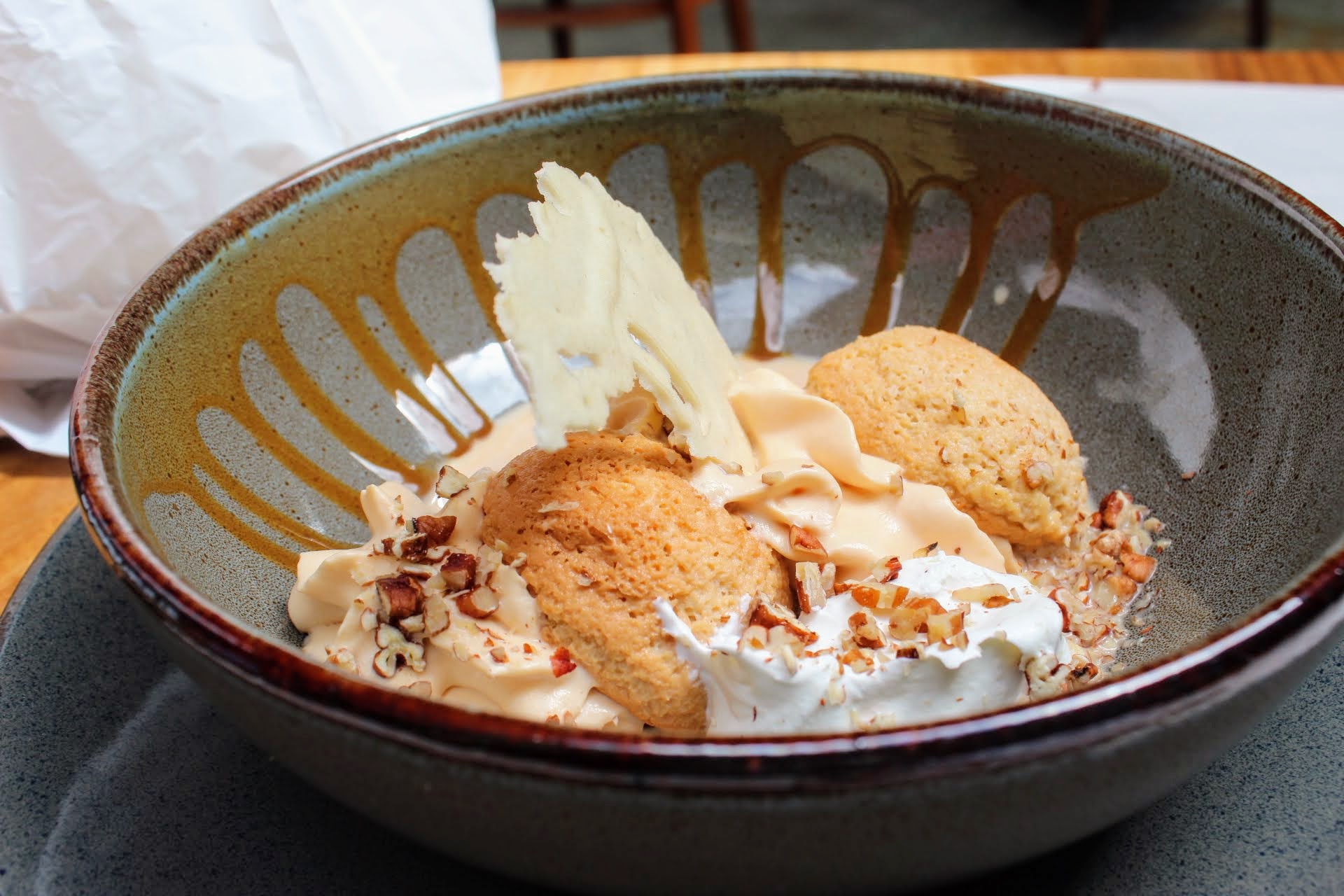
So I will try to record what we ate as faithfully as possible. The first breakfast was at a cafe called Boulenc, a few blocks down the road from where we were staying. Artsy ambience and food presentation? Check! High quality ingredients? Check! Tasty? Of course!
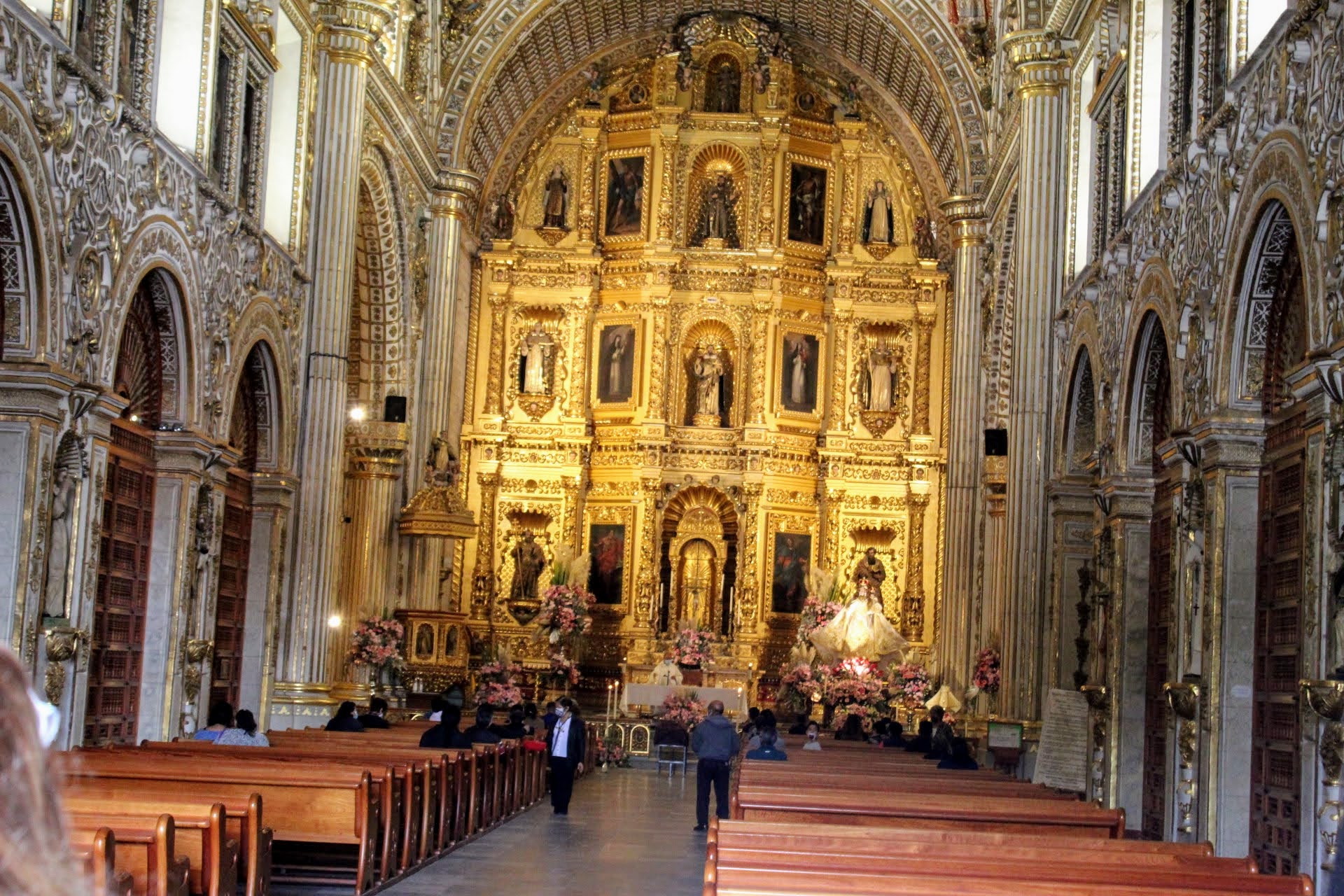
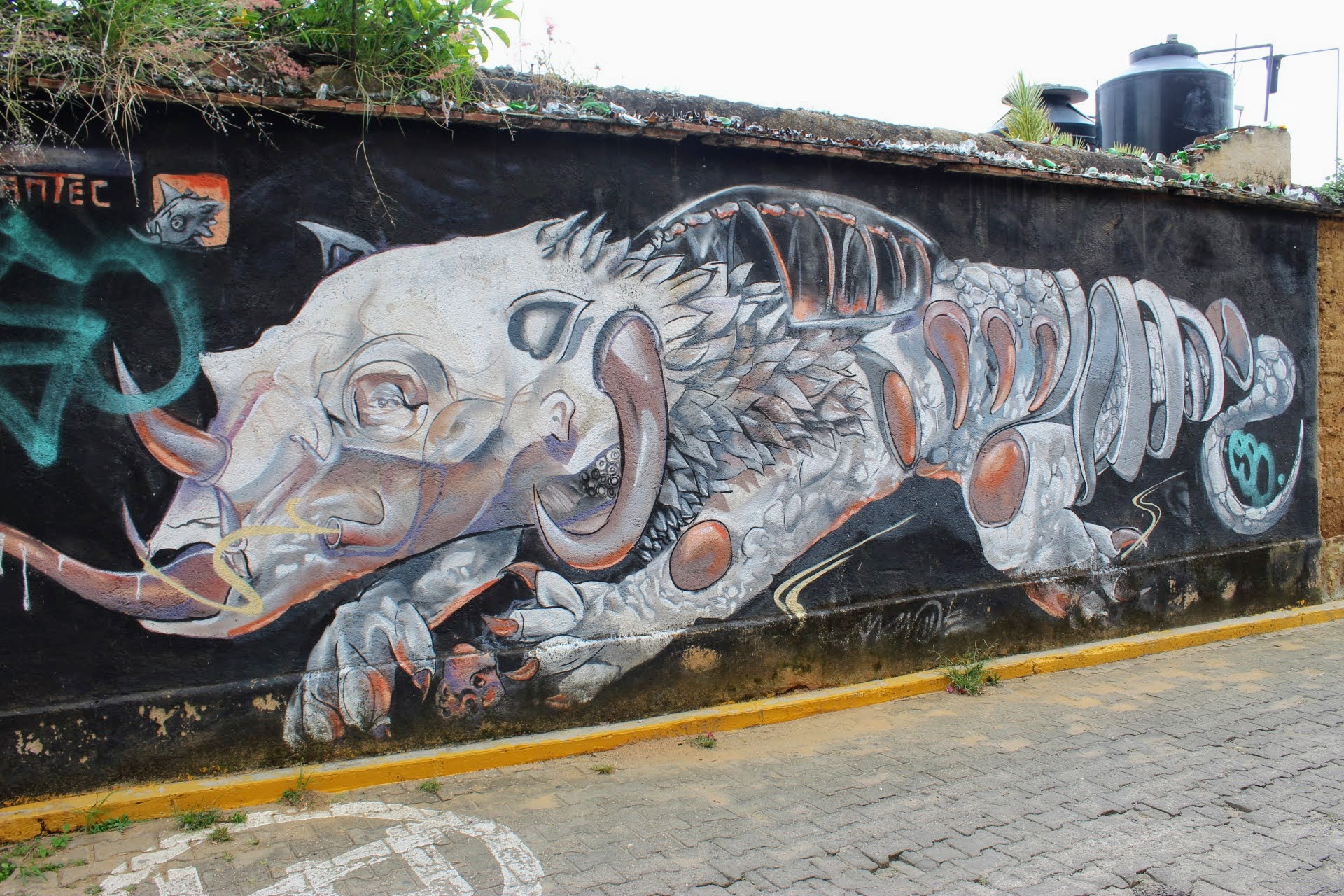
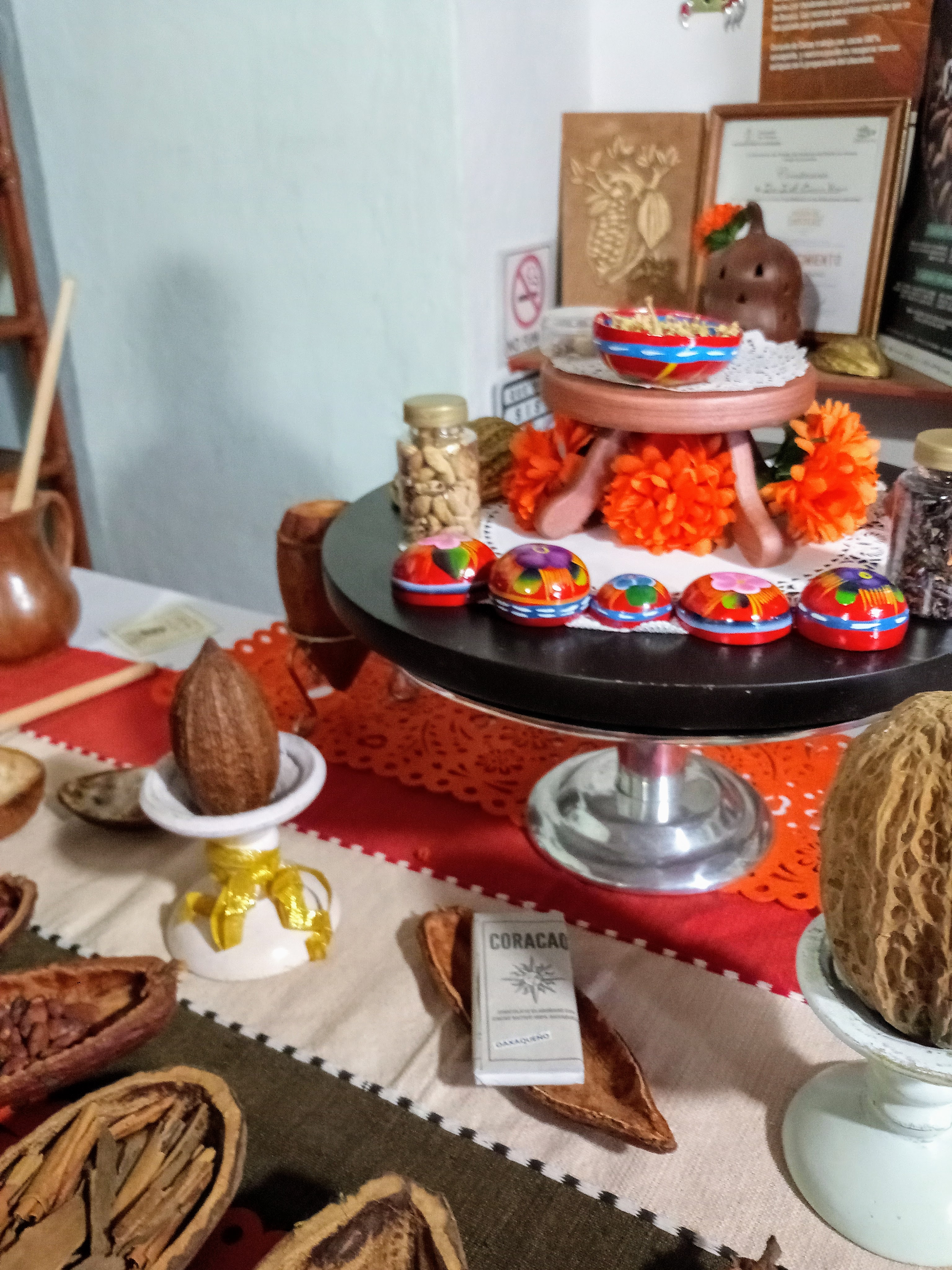
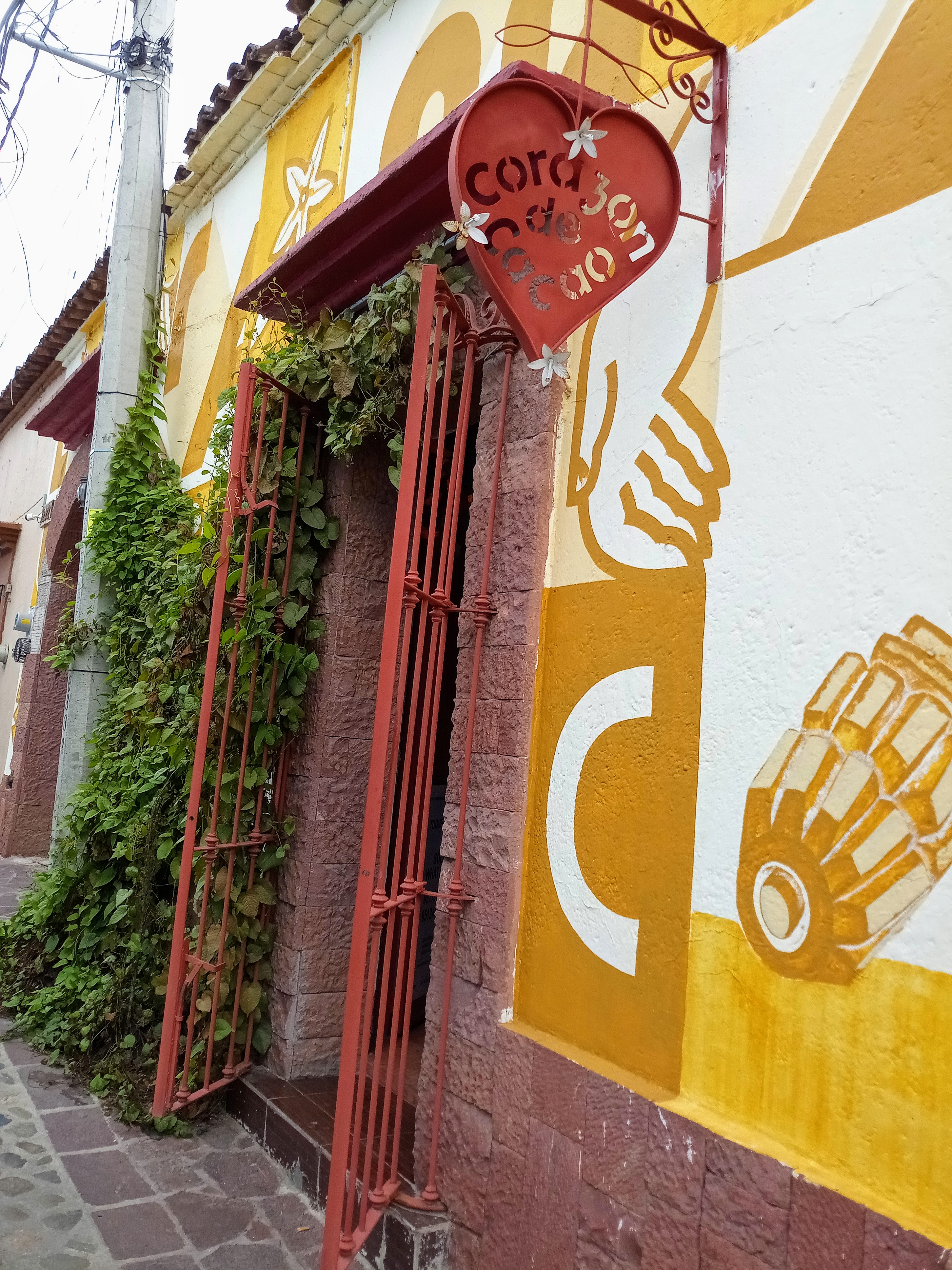
We signed up for a walking tour at 11 AM. We met at the Zocalo (central square) and walked around the town with our guide telling us about the historical background of each place we visited. He was a local college student, and he welcomed questions about anything we wanted. We covered churches, murals, artisans (a weaver and a chocolatier), markets. etc. Oaxacan chocolatesCorazon de Cacaothis is a painted facade of a building
We got tired after all that walking for 2.5+ hours, thus, we just walked into a restaurant on the main square and ate forgetting to take photos. So much for the faithful recording. It rained in the afternoon, and this gave us a good excuse to hang low & rest.
Dinner was at a rooftop restaurant (in a nearby hotel): Terraza Istmo. Good food and drinks. It was more of a bar than a restaurant & had limited menu due to the pandemic, but, it worked for us. We got a good view of the city after sundown, too.
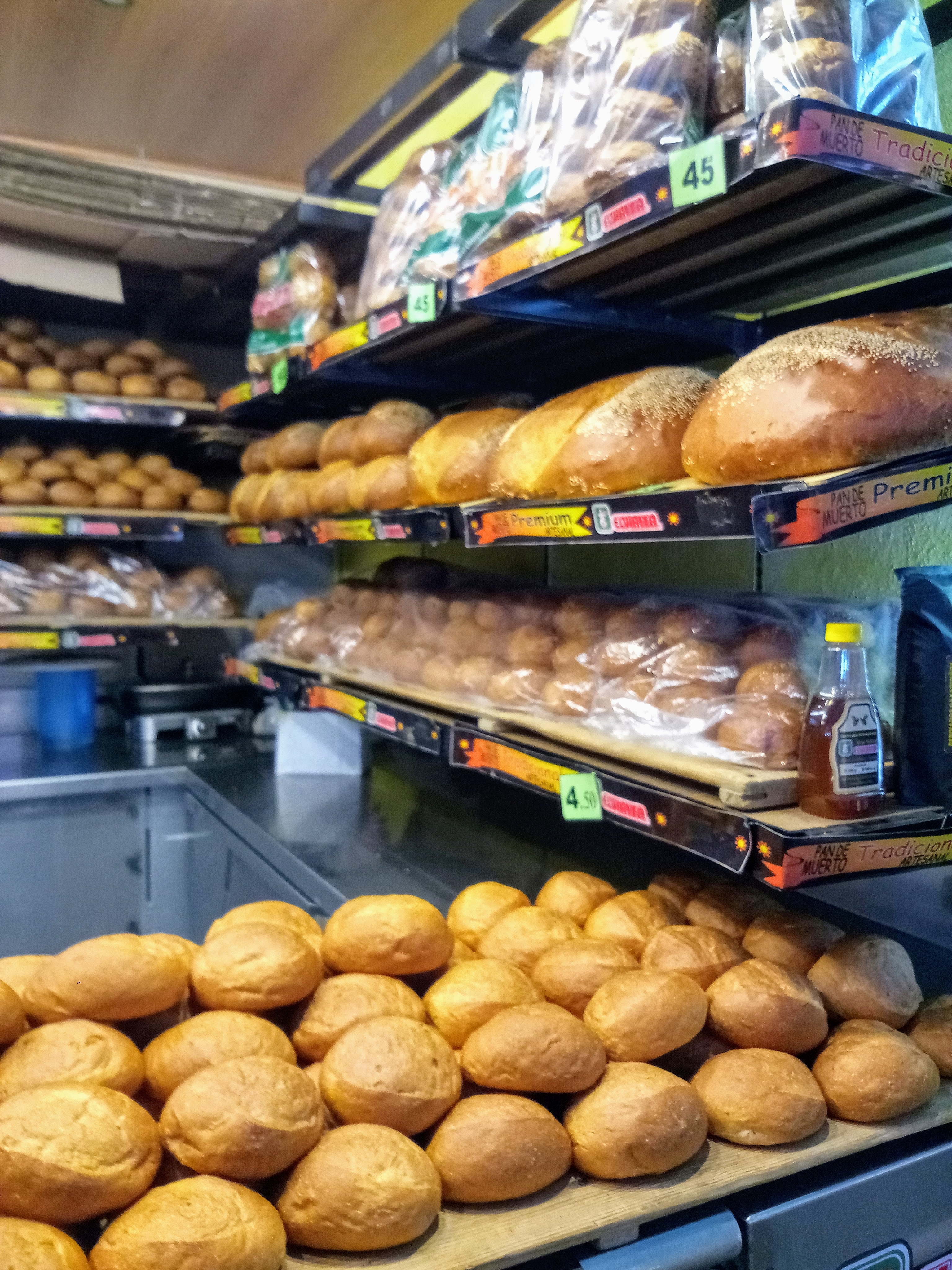
giant bread caught our eyemole, mole, mole!everyone needs one, right?the artisan market entrance: the most interesting part of the market?
We ate some pastries and coffee/tea at home for breakfast next morning while waiting for the rain to stop. We wanted to explore the city on our own after the guided tour of yesterday checking out the markets and museums.
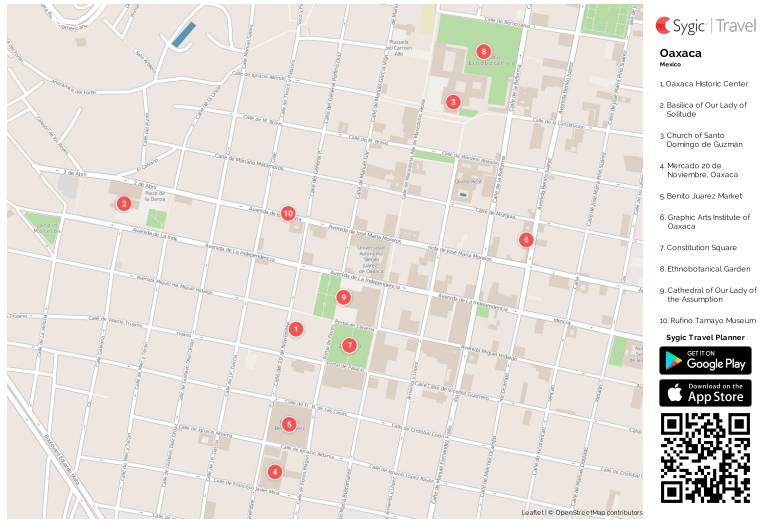
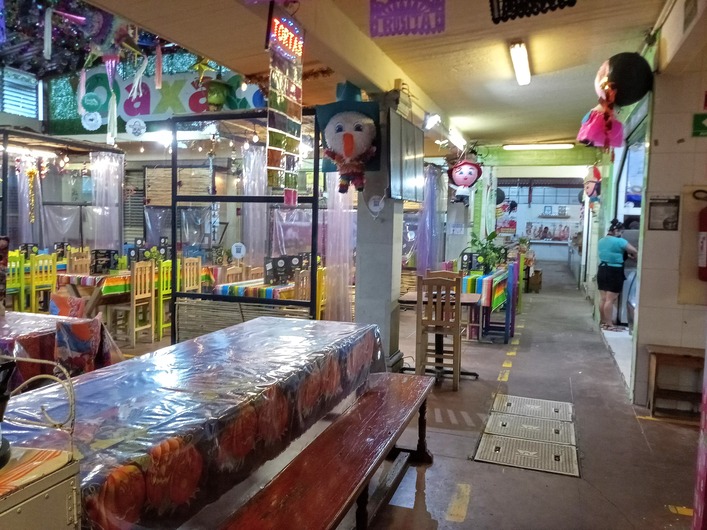
As you can see on the map below, two main markets, Benito Juarez (#5) and November 20 (#4), are right next to each other. Street food in this area is the best known feature, but, we were not hungry enough to eat. Most places were slow to open any way. The artisan market, a couple of blocks to the west from this area, was not all that special, but we did manage to find some dresses for our grand daughters. I think visiting this area before noon was not a wise decision. Yes, we were able to dodge the crowd, and that was good in the age of Covid-19. But we did not get to have the full market experience with the smell, sound, people etc.
downtown Oaxaca
Most of the museums and indoor tourist attractions were not open because of the pandemic which was a disappointment. With rain pouring down off and on, where could one go! Even an outdoor venue like Ethnobotanical Garden(#8) was admitting very small number of visitors just a few times a week with an online reservation.
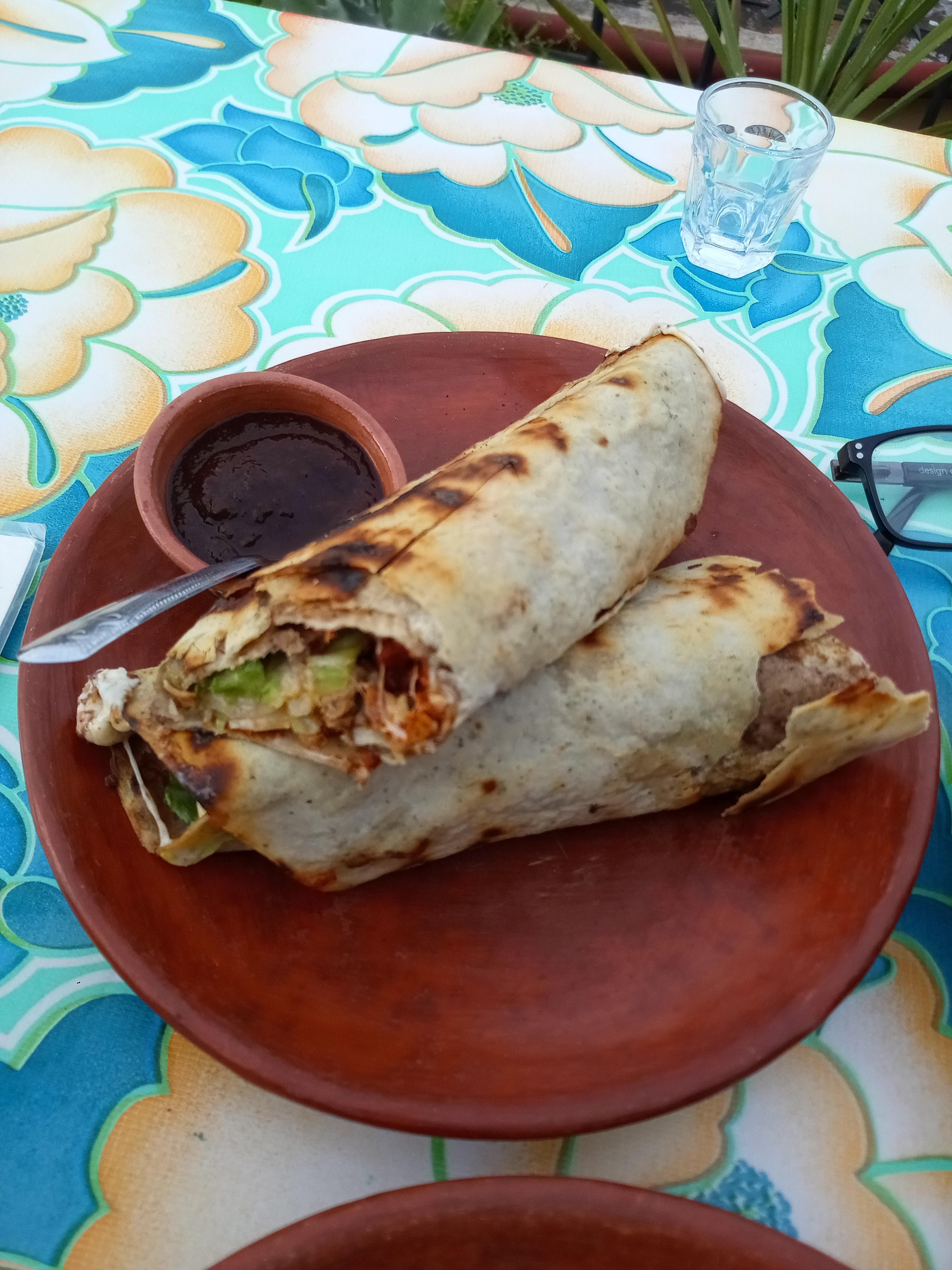
mixed grill plate
The highlight of the day was the lunch at Catedral Restaurant not far from the cathedral. We enjoyed everything about this place including the final tab (way under $20 per person including drinks and a dessert and a generous tip.)
This afternoon we moved from our rather adequate but basic downtown Airbnb room ($19/night) to a hotel because we thought we could afford a little more comfort. La Casa de Maria, a boutique 6 room hotel, is located a bit south of #6 on the map above and a few blocks east of zocalo. Even though this location was still pretty close to the center, it was quiet around there and the price ($45) was cheap for the quality. Our room was a two room suite and very comfy.
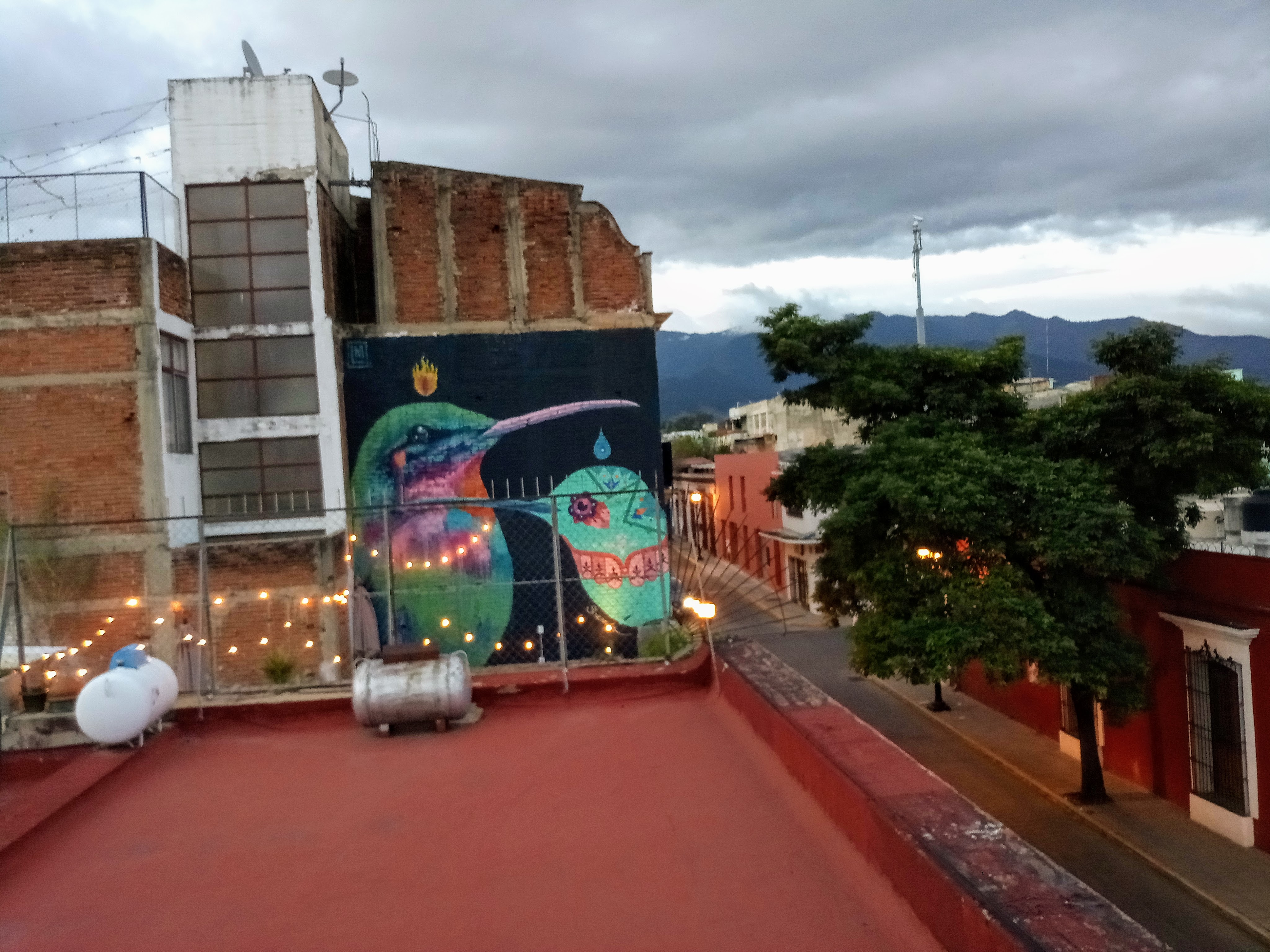
views from the rooftop of La Casa de Maria
The rooftop at the hotel was a wonderful spot to just hang out and watch the day go by. The rain finally stopped so we were able to sit around the table thoughtfully put there by the hotel and enjoy the left overs from our lunch. On the one hand, we wanted to try more restaurants in town. On the other hand, we did not have room for another full meal.
Next morning we walked 10 minutes east to the food court in De La Merced market. It was at 8 AM, and not too many places were open. We did manage to have a hearty breakfast, though, even though there’s no photo to prove it. Mitla ruins: showing the elaborate and intricate mosaic fretwork and geometric designs unique to this site
The main tour routes outside of Oaxaca town seemed to be either going west for 30 minutes to Monte Alban or going east for 90 minutes to Hierve el Agua rock formation combined with Mitla archelogical site. My main interest was Hierve el Agua, but, it was closed due to some kind of dispute between the locals and the government or some such thing. We still chose Mitla because that tour included a mezcal tasting that Pat was interested in. Our Airbnb host had hooked us up with Siente Oaxaca tour company who picked us up from the hotel. There were just 5 of us in the group, and the tour cost $25 per person not including admissions and meals.
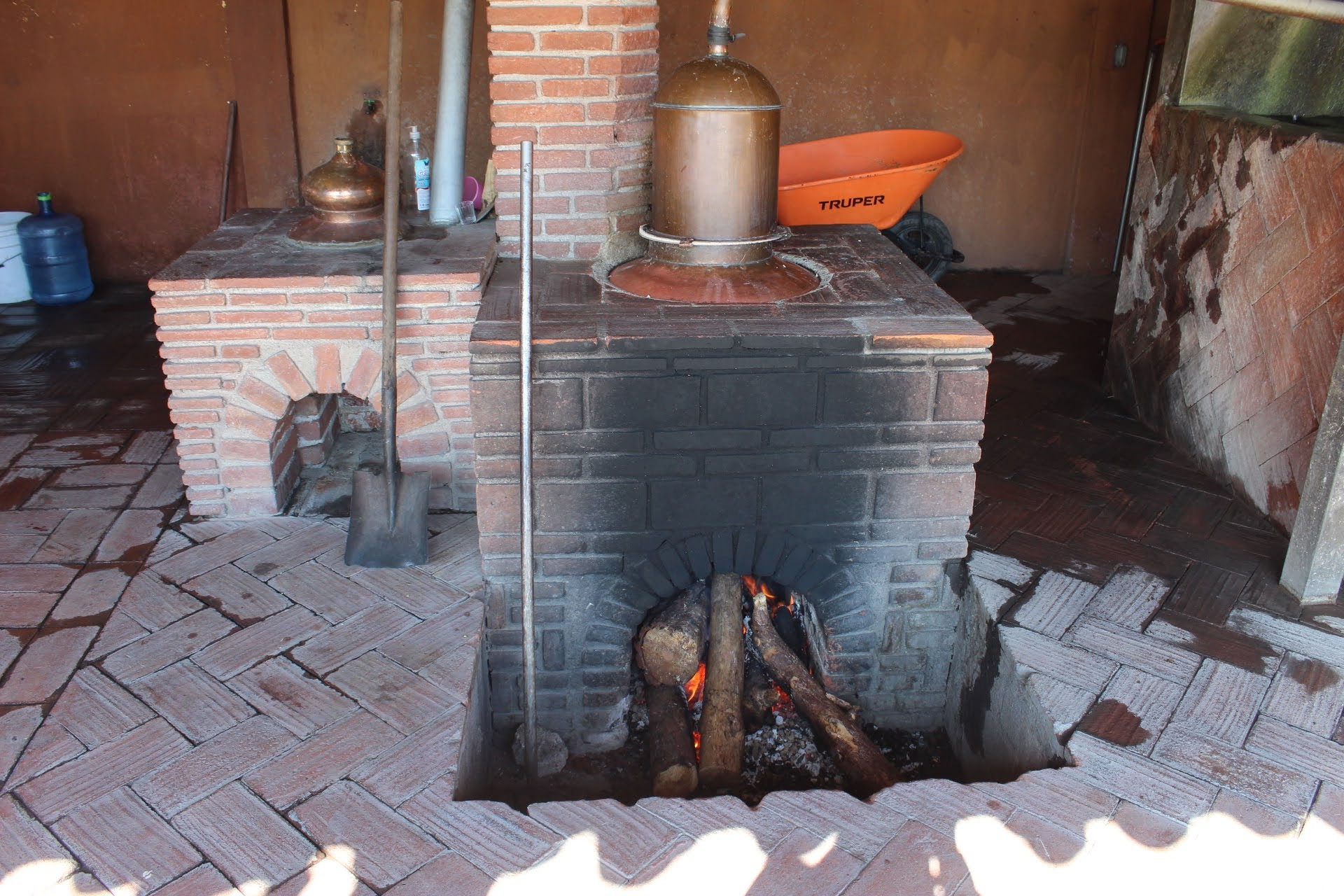
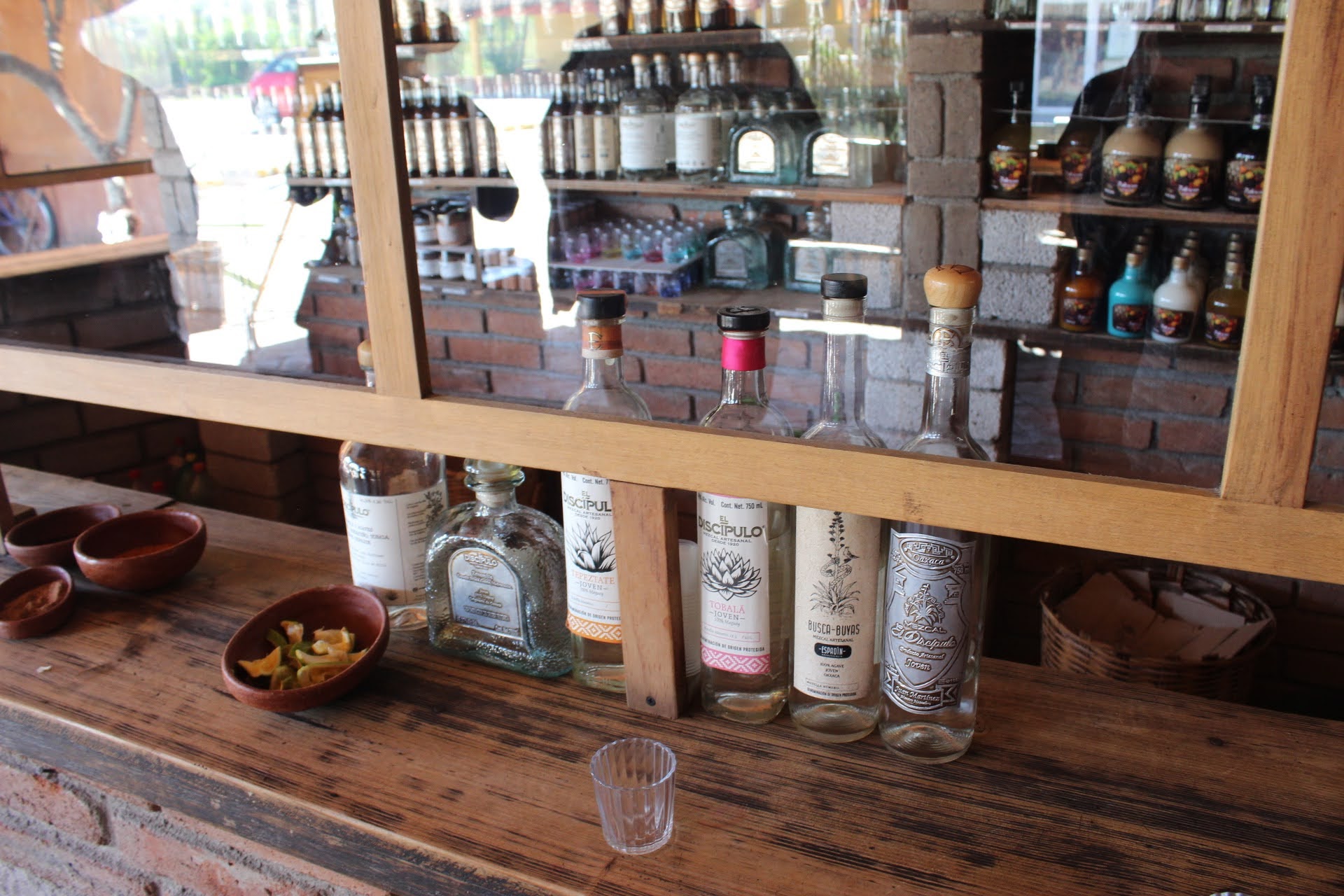
I assumed mezcal was a minority cousin of tequila mainly because tequila seemed to be more readily available in the U.S. But our guide set me straight: tequila is one type of mezcal. Unlike tequila, though, mezcal is not mass produced in a big factory setting, and they are mostly produced in small batches at hundreds of artesanal operations through out Mexico with heavy concentration in state of Oaxaca. This is why tasting gets more interesting, and the price can not be too cheap.
San Pablo church
The Mitla archaeological site was established as a sacred burial site by the Zapotec people who have been living in this area from as early as 900 B.C. The village surrounding the site, San Pablo Villa de Mitla, has been inhabited since then to this day. Over 10% of Mexico’s population (128 million) belong to one of 56 officially recognized indigenous groups, and Zapotec is the third largest group with over a half million people. More than half of the population in State of Oaxaca belong to an indigenous group, and these groups engage in arts and crafts that reflect their own cultures.
Spanish colonialists arrived in Mitla in 1521 and built a church on top of a large pre-historic platform, and this San Pablo church has been active since.
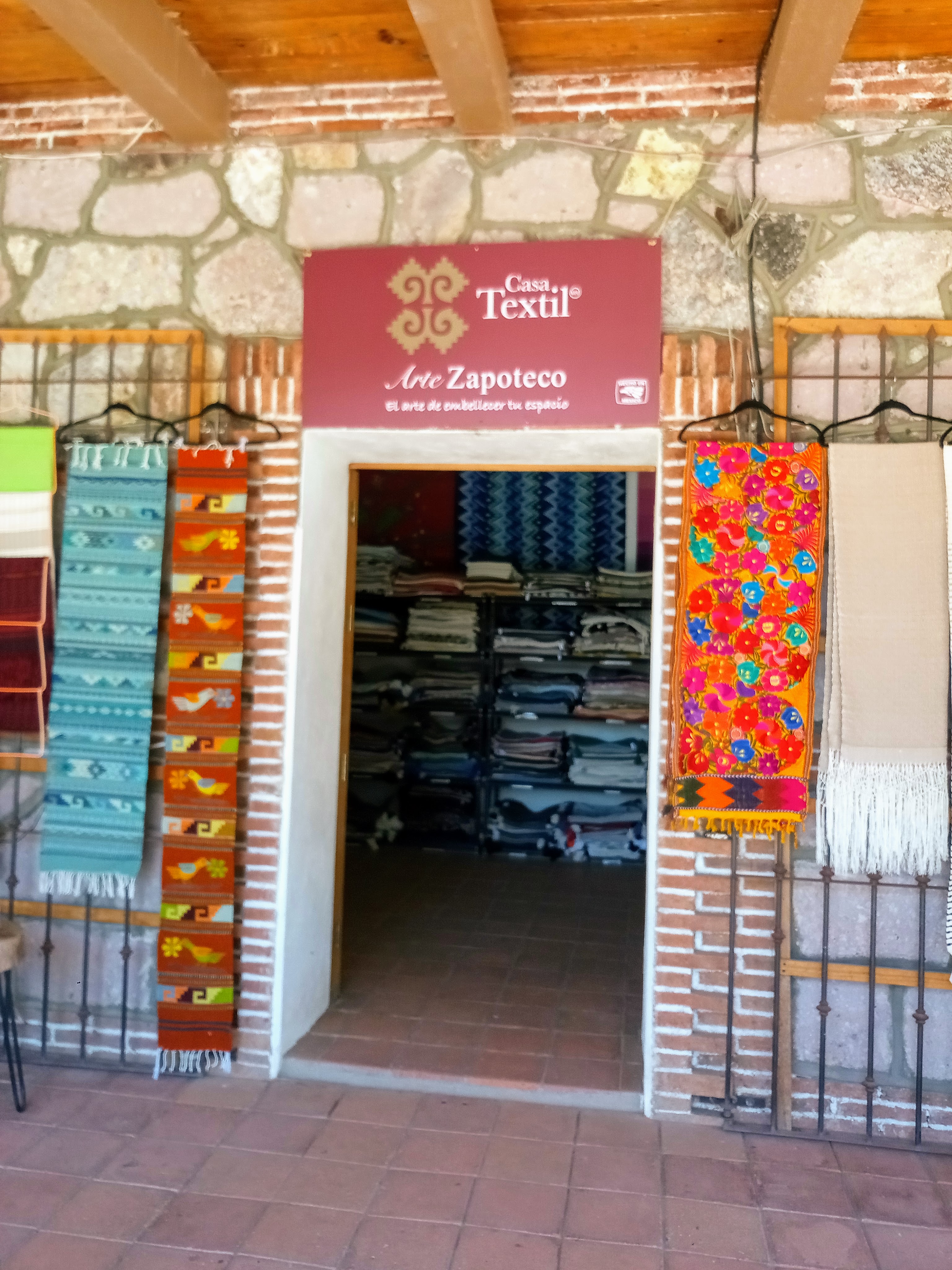
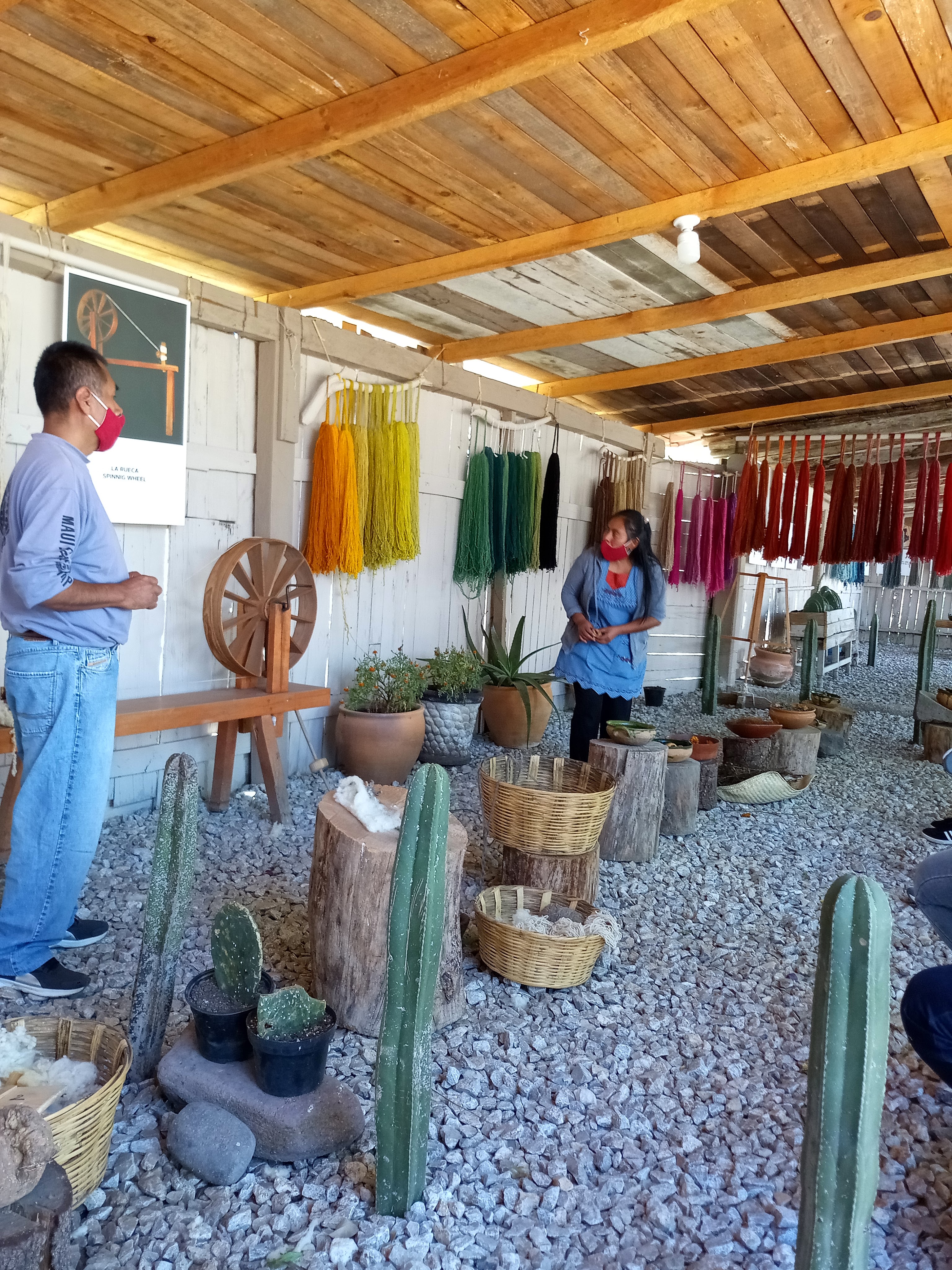
We stopped at a textile workshop that specializes in colorful wool products.
Lunch was at a place clearly set up for tourists. What do you have after your meal? Their very own mezcal tasting.
This 2,000 year old tree in the town of Tule (population: 8,250) is supposed to be the widest (circumference: 164 feet or 54 meters) living tree in the world. Because of the pandemic, though, all the areas in town any tourist may want to get close to were cordoned off.
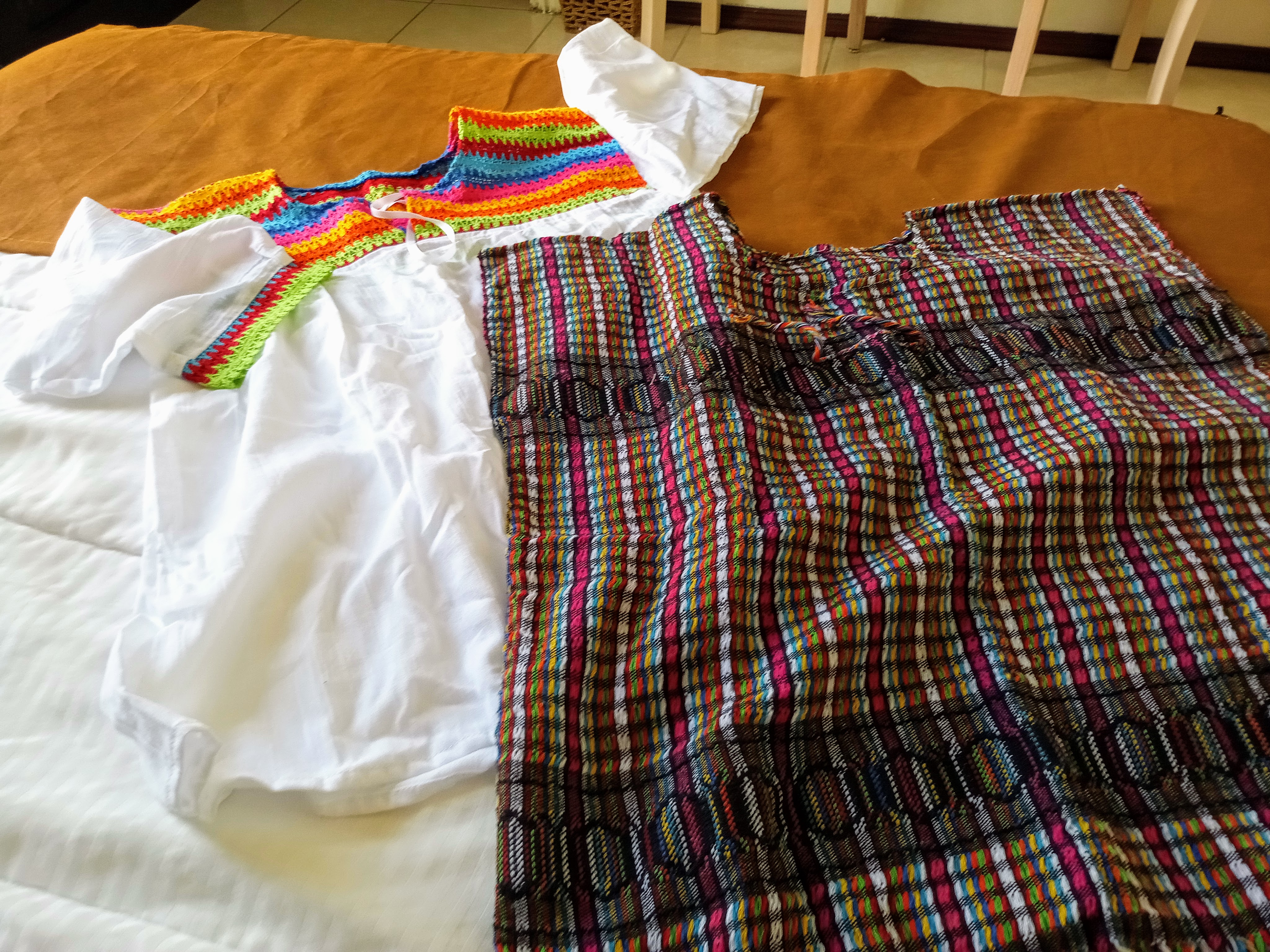
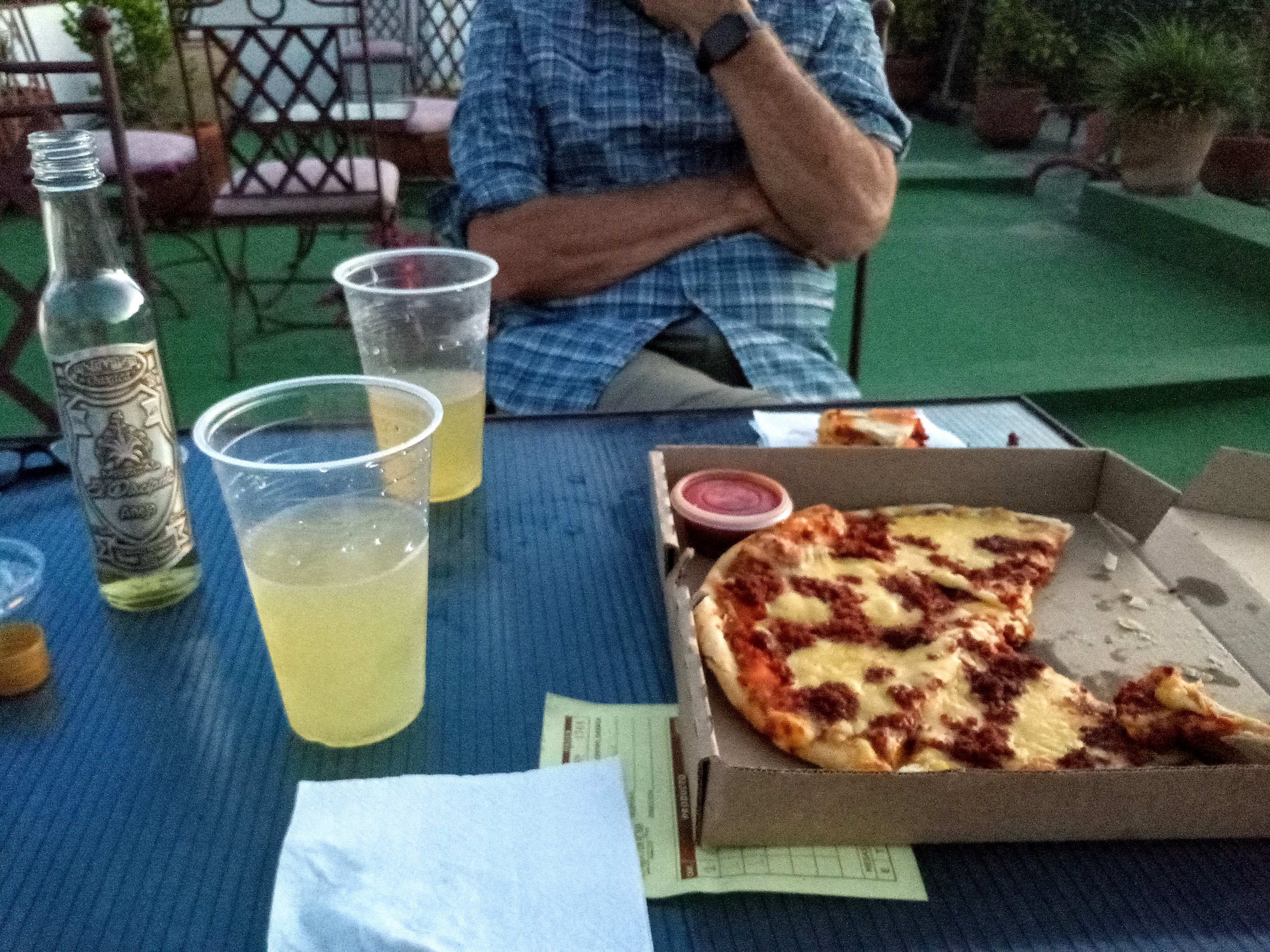
I had to buy these blouses because they were 50 pesos each (US$2.50) at the stalls near the entrance to the Mitla site. We had a take out pizza for dinner because all the restaurants we wanted to go to were closed on Sundays during the pandemic. Yes, that bottle standing on the table is mezcal. A “rooftop dining” gave us an incomparable view!
We only had two remaining meals before heading out to the airport. Ocote Cafe was one of the restaurants we wanted to try because it had a great reputation & was just a few blocks west of our hotel. The breakfast here did not disappoint us.
With just one meal to go, we had to think hard. Should we cram in one of the splurge places like Los Danzantes or Casa Oaxaca or Criollo? Luckily(?), the answer was simple: none of them were open at noon on a Monday. We just had to go wherever we could get in before our flight out at 2:30 PM.
Around the corner from our hotel was La Olla, calling itself a bar, restaurant & gallery. It seemed to be popular among locals, and, yes! Lots of eclectic art works all around. Good food.
huge, round, crispy totillas for Tlayudas, aka “Mexican pizzas” – we were never hungry enough to try this street food
And then there are the grasshoppers. We first encountered them on our first night in Oaxaca when, what at first appeared to be a side dish of shredded beef turned out to be fired grasshoppers. It was never necessary to order grasshoppers separately because this crispy Oaxacan creation was crushed and sprinkled liberally over tacos and moles and other dishes at most restaurants. How was it? Not bad. You don’t think much of it till someone reminds you that you are eating grasshoppers. How about mole verde and mole rojo? Same with these sauces – they were used liberally so we did not have to order them just to taste them. We did leave Oaxaca without trying all of these on this list, but, we got the idea. Food rules in Oaxaca. Were 3 days enough to get to know this city? For us it was a yes. But we can see how some people want to spend a week or longer.



































 Small Wide World