
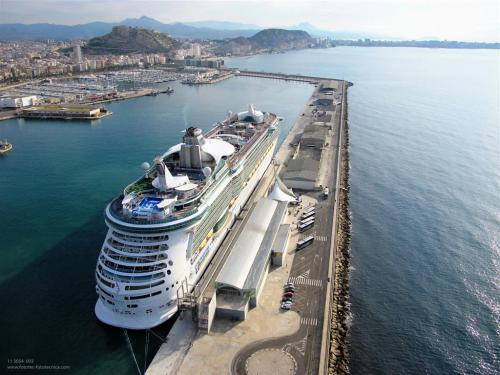
Many of our travels are built around cruise trips, thus, we pass through so many different cruise terminals. We feel welcome at some ports and terminals, and, yet, we are not sure why they bothered to open a terminal at certain ports.
To get more information about the ports, you can check out a few websites:
- https://www.whatsinport.com
- https://www.cruisecritic.com/ports/
- http://www.cruiseportinsider.com
- https://www.tomsportguides.com (most comprehensive)
And, for some reason, you want to know where a particular ship is at any given moment, check that out here, too! (http://www.cruisemapper.com)
What comes down to is this: is the terminal built with the travelers’ needs in mind? Our totally biased opinion: the grade of “functional” means there’s some evidence of investment in the physical structure of the terminal/port, but the consideration of the travelers’ needs is lacking. “Welcoming” means there is an easy access to the city, free wifi/maps are readily available, and there is friendly vibe at the port often manifested in unexpected nice details that soothe travelers.
Asia:
Aomori, Japan: Celebrity Millennium was docked at one of the three cruise docks in the harbor. Our dock was right in front of the triangle shaped tourist information center building(still took 10 minutes to walk there; free wifi and maps were available) & we could walk to downtown and the train station in 15-20 minutes. Aomori is famous as a winter playground, but we were lucky enough to hit it at the peak of the cherry blossom season at the end of April. The train to Hirosaki Castle was packed with the locals, but the cherry blossoms at the Castle were incredible! Grade: It worked.
Halong Bay, Vietnam: The ship is moored & each cruise ship provides shuttle boats. Not much at the dock, but the view is wonderful. Many tour guides and tour operators will greet you, and they offer reasonable prices. The first time we were there, we booked an overnight Halong Bay cruise for about $75pp on Agoda.com. The second time, we had arranged an overnight tour of Hanoi and Halong Bay for 4 people, and they charged us about $140pp, including meals and a very nice three-star hotel + the Halong Bay day cruise on a private boat. Grade: It works.
Hong Kong: A huge new terminal where the old airport used to be. You can see the bay, and everything looks close. Except not. Huge means more walking just to go in and out. There is free Wifi in otherwise barren waiting areas. There are free shuttles offered by the city; two routes to different shopping areas. You can connect to MTR from there: Kwun Tong Station or Diamond Hill station. Grade: Functional
Laem Chabang(for Bangkok), Thailand: This is a huge, rather ugly, cargo port. Taxi drivers often do not know how to get to the cruise area within the port. To go to Bangkok, we had reserved a van online & shared the cost with 4 other people. To go to Pattaya, we hopped on a shuttle bus provided by a private company(you will see the sign for it in the terminal near the taxi desk). Coming back to the port after spending the night in Pattaya, we used Uber & it cost $12(383 Baht). Grade: As I said for Rome port, what can you do!
Phu My(for Ho Chi Minh City), Vietnam: This is another cargo port, and there is nothing much around. As you exit the front gate of the port(free shuttle bus may be provided from the ship to the front gate, but it is just a 5-10 minute walk), there will be cab drivers and tour operators offering a tour to Ho Chi Minh City(90-minute drive) or Cuchi Tunnel etc. You can negotiate & get a good price. If you booked a tour in advance & you don’t see your guide when you walk off the ship, he will be waiting here. Last time we were there, we had arranged a local guide online, and 4 of us went on a day tour to HCM City in a private van. They charged us $62pp including lunch and snacks. The first time in Phu My, we shared a cab to go to Vung Tau, but we did not find it all not interesting. Grade: It works.
Singapore: We’ve twice been to the same Marina Bay terminal – with a decent connection to the city center but surrounded only by greenery and water. You have to go through rather cumbersome immigration procedure every time you go in and out while the ship is overnighting. Marina Bay MRT station is a 10-minute walk, and a $10 cab ride will get you to the center. There is another Cruise Center terminal, which is older but has more shopping and dining options, we’ve heard. Grade: Functional
Europe:
Alicante, Spain: You can walk off the ship & you are in downtown. There is a tourist info center at the entrance to the port with friendly staff. Grade: Welcoming. All very easy and stress-free.
Amsterdam, Netherlands: The cruise terminal is almost next to the central train station at least on the map. It will be a 10-15 minute walk, though. Trams serve this area as well. Not many services offered at the nice looking terminal. There is an official tourist info center in front of the Central station, but the city map is not free. Grade: Functional
Barcelona, Spain: This is a big cruise terminal right on the beach. Because it is big, just to get in and out of the complex is a bit of a hike, and you cannot really walk there from downtown, which looks so close. A Euro 15 taxi ride will get you to Plaza Catalunya, the center of Barcelona. There is a 2 Euro shuttle bus that will take you out of the complex to Columbus Monument, from where you can get on the metro and other public transportation – or get a cab without the port surcharge. The terminal offers places to eat and shop. Grade: Functional
Cadiz, Spain: We had never heard of this city till we got there, but it was such a lovely little town with lots of historical buildings, shops, and restaurants. You walk off the ship, and you are pretty much in downtown. The terminal offers free Wifi and tourist information, and Free Wifi Zone is scattered around the city. Seville is about 80-minute drive & that could’ve been an option, but we were happy we stayed and spent time in Cadiz. Grade: Welcoming.
Cartagena, Spain: Walk off the ship & you are in the city center. Free wifi and tourist information at the dock. Cartagena has lots of historical places dating back to Roman and Cathartic periods. Here’s a very comprehensive port & city guide. Grade: Welcoming.
Civitavecchia(for Rome), Italy: This is a huge port with lots of cargo ships. You can get there by train from Rome(1 hour), then walk from the station to the port entrance(10-15 min.) There will be free shuttles to your cruise ship. The terminal doesn’t offer many services. Grade: well, what can you do!
Copenhagen, Denmark: There are several different cruise terminal areas around the city. The closest one is only a 10-15 walk to the city center. The farthest one is 20-minute bus ride – there is a city bus that comes here. A tourist information kiosk is near this terminal. Grab a city map there. This is one of the best tourist maps anywhere showing public transportation routes. It even shows all the bike stations for the city bike program! Grade: Functional
Dover, UK: Nothing much to note about this terminal, which is in the busiest ferry port in Europe, except that you can see the famous Dover While Cliff from the ship. There was a shuttle service to the center of town and to the Castle(3-4 Pounds). The first time we were there, we took the shuttle & just walked around town. The second time, we took the train(22 min., 8-9 Pounds) to Canterbury, a far far more interesting place for sure. Grade: It works.
Dubrovnik, Croatia: There are some sad looking shops and cafes in the dock area, but not much service is available. It is well connected to the Old Town via city buses and cabs. Grade: It is what it is.
Gibraltar, UK: We were handed a map of town as we left the terminal area. We walked 10 minutes to the bus depot by the main gate to the city, then got on the city bus to get to the cable car depot, which was a bit further along to the right. Then we took the bus to go all the way out east to Europa Point(15-20 minutes). The main shopping and eating streets can be explored on foot. Grade: It works.
Helsinki, Finland: There are two cruise areas for Helsinki. South Harbour is within walking distance from Market Square, the activity center of town. West Harbour has 4 quays; Hernesaari B Quay, Hernesaari C Quay, Valtameri Quay, Melkki QuaY. We were in Hernesaari from which you can take either the ferry or tram #1A to Market Square. We chose to rent their city bike, and it worked well for the most part. Here’s a guide booklet for the city. Grade: It works.
Kotor, Montenegro: Celebrity Eclipse ship was too big to dock, but the tender service was efficient and quick. Free Wifi, free map, volunteer local guides were all available at the dock. The Old Town is across the street from the port. Grade: Welcoming.
Kusadasi(for Ephesus), Turkey: You walk off the ship & you are practically in downtown Kusadasi with lots of places to eat and shop. There was no terminal building back when we were there in 2011, but we’ve heard now there is a terminal, a mini-mall of a sort. The main reason for stopping here is to go to Ephesus, about 19Km away. We hired a local guide for a private tour, and it was about $60pp at the time. The service was good and the guide was knowledgeable. Grade: It worked.
Le Havre(for Paris), France: You can walk to downtown from the dock, but it is 25-30 minutes of rather boring walk through ugly areas. There was an 8 Euro shuttle bus service to the center. The first couple of times we were there, we got on the shuttle and just walked around town on our own. St. Joseph’s Church was impressive, and a weekend flea market was fun to browse. Another time we rented a car(Euro 35 for a compact) and drove to Rouen and Honfleur. Paris is 2.5 to 3 hours away. Grade: It works, but stopping in this port is not the best way to get to Paris unless the ship spends overnight here.
Lisbon, Portugal: Two major cruise areas; one by the “25th of April Bridge” and one more east from there in San Apolonia, where they opened up a brand new terminal in November 2017. The new terminal has free wifi. All terminals are well connected to public transportation if you are willing to walk for 10-15 minutes. We stopped in Lisbon several times: twice did a self-guided tour, once took the train to Sintra, once rented a car and drove to Obidos, once took the metro to Cascais. Grade: Functional
Livorno, Italy: A makeshift terminal(free Wifi) was set up in a container port. A free shuttle was provided to the center of town, and a tourist information center was in the building behind the bus stop where the shuttle lets you off. Grade: it works.
Naples, Italy: Walk off the ship & you are in town. We just walked around stopping in churches and landmarks, then looked for 1 Euro pizzas. Next time we may take the train to Pompeii. Grade: It works.
Piraeus(for Athens), Greece: The port is about 15Km(about 9 miles) from Athens, and there are public transportation options available to get there. The terminal has slow but free Wifi, and you can get a map of Piraeus there. There are many cafes, restaurants, shops near the terminal. Once you are in Athens, you can easily pick up a map of the city in shops and eateries. Athens is not hard to navigate on your own. Grade: Functional
Ponta Delgada, Azore, Portugal: the cruise terminal is right in downtown, and there are shops and places to eat/drink around the port area. Tour operators grab you as you walk out of the terminal, and their prices are reasonable. We walked around town and used wifi at a restaurant when we were there the first time. The second time, we joined a van tour negotiated at the terminal entrance/exit. Grade: Has potential to be more welcoming and charming.
St. Petersburg, Russia: The cruise terminal here is out of the way but can reach the city center in about 20-40 minutes by taxi or public transportation. Our ship stayed there for two nights. The first day, we had hired a local guide online & she picked us up from the terminal and gave us a nice tour($105pp for our group of 4) of Peter’s Palace(Peterhof) and other important sites in the city. If you are not on the ship tour, you either have to have a local guide or a visa in order to enter Russian soil. We had a 3-year visa from a previous trip to Russia, thus, we could walk off on our own the second day. We took #158 bus from the terminal to the Primorskaya metro station, and we toured some of the metro stations. After that, we went to Hermitage Museum. We bought the tickets online beforehand, and that saved a lot of time. English was not widely spoken, but someone always popped up soon or later to help us when needed. Grade: Functional
Skagen, Denmark: When we were there in May 2017, there was not much at the dock, which was next to the biggest fishing harbor of Denmark. Since then they opened up a terminal with free wifi and tourist info counter, we’ve heard. Now they even provide free shuttle to the town center, but we had to walk 20 minutes back then. There are lots of shops and restaurants in town and around the fishing harbor. Grade: It works. (We may feel differently now with added services if we return.)
Southampton, UK: It is a busy cruise port with lots of passengers getting on and off the ships. We got there from London in about 90 minutes on the train, but there are other ways. Southampton itself has some attractions, We’ve heard, but we have not spent time there. Grade: Functional
Stockholm, Sweden: Smaller ships dock at Gamla Stan(Old Town), which is very convenient. But bigger ones dock at Frihamnen, which is about a 20-minute bus(#1 or #76) ride from the center. It is a friendly city for travelers, and many people speak English. Gamla Stan area has to be explored on foot. The cruise terminal itself is rather plain, but people there are nice. Grade: Functional but friendly.
Tallinn, Estonia: There is not much around the dock, but it is close enough to the old town area of Tallinn, about a 15-20 minute walk. You can explore the city on foot. Lots of shops and restaurants everywhere. We had a wonderful lunch at a restaurant that was the sister operation of the one we could not get into. Grade: It works.
Tenerife, Canaries, Spain: Walk off the ship & walk into Santa Cruz town. There are enough shops and restaurants and gardens and churches to explore in this town. But more interesting was San Cristobal de La Laguna, the oldest city on the island and the former capital. It also is a UNESCO World Heritage site. We got on Tram #1 by walking 10 minutes to the left as we got out of the terminal & found a tram stop. The journey was 40 minutes, and La Laguna can be explored on foot. Grade: Functional
Valletta, Malta: Walk off the ship & you are below the downtown, Valetta, which is on top of a stiff hill. We walked to the right as we walked out of the terminal & followed the signs to find the elevator(1 Euro, r/t) that takes you to the top. We walked for 10 minutes to find the bus depot right outside of the city main gate & got on #C2 bus to Mdina, 20 minutes away. We beat the crowd & was able to wander around the town in peace and quiet. We came back to Valetta & walked around, even catching the elaborate changing of the guard ceremony. Grade: Welcoming.
Valencia, Spain: Off the ship & walk out. There is a tourist info counter in the ferry terminal nearby. Public transportation is readily available from here to the center. We did a self-guided day tour. Grade: Welcoming, because some volunteers were handing out bus maps & the route for walking in/out of the dock was well marked.
Zadar, Croatia: the cruise terminal was 25 minute shuttle bus(15 euros) away from the Old Town. A free map was handed out at the shuttle bus depot when we arrived in town. Grade: It works.
Zeebrugge(for Bruges), Belgium: “From ugly Zeebrugge Port to pretty Bruges” is how it seemed to us. This is a big port with containers and ferries. The port provides a free shuttle from the dock to the port entrance. From there, you turn right and walk for a few minutes to Zeebrugge Kirk(Church) tram stop, where you get on a tram toward Blankenberg Station. You pay the driver 3 Euro each way – or go to Spar Market right around there to get a 6 Euro day pass, which is good for all-day use of the trams and buses in Bruges. From Blankenberg, you get on the train to Bruges, a 15 minute/3 Euro ride. The train runs every hour, but you want to check the schedule to time your departure from the ship & return from Bruges. You walk 15-20 minutes following the signs to Market Square(Markt) when you get off the train or you can use the bus. Next time we are there, we plan to rent a bike in Zeebrugge and explore the area since Zeebrugge and Blankenberg have more than ports and train stations. We can even bike along the canals to reach Bruges. There will be a state-of-the-art cruise terminal with free wifi and all by summer 2018, we’ve heard. If you want to go to Brussels, you can get on the train from Blankenberg or Bruges station(1-1.5 hour ride). Grade: That’s what it is.
Middle East:
Dubai, UAE: Here is a pretty comprehensive information about this terminal. We were there a couple of times, and it is in a secluded area within the port of Dubai. The cab ride there from downtown was $10-15. Nothing much around other than a huge parking lot, but there are free wifi and some services in the terminal. Grade: Functional
North America:
Fort Lauderdale, FL, USA: Port Everglades Cruise terminal is almost right next to the airport even though you can’t really walk($10 taxi) there. There is constant traffic of passengers getting on or off, and it is a big and busy place where you get processed efficiently. Grade: Functional
Huatulco, Mexico: It is essentially a dock & not much else. You can walk about 10-20 minutes to reach a town called La Crucecita where you can find some shopping and restaurants. Huatulco is basically a sleepy beach town, and WiFi was not readily available except at some of the beach bars. Grade: it works
Puerto Vallarta, Mexico: a typical cruise terminal in a resort town – walk off the ship, go though shops to get outside, greeted by local tour operators etc. Free WiFi is offered by the shops for their own customers. 3 miles north of downtown & can reach by bus (about 50 cents US) or a cab (US$ 6-7). Local van tours charge about $30 for the same tour offered by the ship for at least twice as much. Grade: it works
San Juan, Puerto Rico: San Juan is a major cruise transit center in the Caribbean, and there are two different areas for cruise ship docking. The one right next to the Old Town has 5 piers(just walk off & stroll around the Old Town) and the new modern Pan American Terminal is further south in an isolated area. We’ve only been to the Pan American one, and it was a $20 cab ride to our lodging in the city(not in Old Town). Grade: Functional
Caribbean Islands: We have been to 9 different ports in this area, and they are all pretty much the same & offer: a simple terminal area that is connected to a shopping area of varying sizes, some restaurants, island tours going for $25 per person. Nothing fancy. Please check the cities/towns section of North America under Caribbean.
South America:
Arica, Chile: This is not a big port, and you can walk to some coastal viewpoints and restaurants(we had lunch at Maracuya) from here. We hired a taxi right outside of the gate to tour the area for a few hours. Not many services offered at the port, but the center of town is only about a 10-minute walk where there are many shops and restaurants offering free wifi as well. Grade: O.K. for the location
Callao(for Lima), Peru: This is a container port & not many services offered at the port. A shuttle was provided to a shopping center in San Miguel, and from there you can easily get a cab. We took one to Kennedy Park in Miraflores to join a free walking tour of Lima, and the ride cost about $10-15. Grade: That’s just what it is.
Cartagena, Colombia: A free shuttle bus takes you from your ship to the cruise terminal, and the walled old town area is a 10-minute cab ride from there($10). The terminal has shops and the cafeteria etc. The beautiful old town is small enough to just walk around. Grade: It works.
Colon, Panama: The terminal here is for cruises, and there are many shops and restaurants in and around the terminal. Cafes/bars/restaurants offer free wifi. There are lots of tour operators selling the tour to Panama City or other areas. Cheaper than shore excursions offered by the ship for sure. Colon itself is a small, not very attractive town. On the way to the Panama Canal from here, you will have a glimpse of Panama City. Grade: It works.
Manta, Ecuador: Manta being the tuna capital of the world, the harbor is full of tuna fishing boats. A free shuttle takes you to Plaza Civica shopping area. We negotiated with a cab driver to take us to Montecristi & back for $20. Only a 15-20 minute drive, this is the birthplace of the Panama Hats where you can observe the hat making and stroll around outdoor markets. Grade: It works.
San Antonio, Chile: An ugly container port. A 2 minute shuttle to the cruise terminal from the dock is provided for safety reasons. This port is not meant to handle thousands of people at once, and it gets crammed. They do their best to process the exit as fast as they can. When a cruise ship arrives here, the whole port area gets congested & getting out of this area can cause a delay. From here to Santiago Airport is a 2 hour car ride. There seemed to be a public bus stop right outside of the terminal, and one could get to downtown Santiago cheaply if carrying the luggage is not an issue. Grade: well, what can you do?
Valparaiso, Chile: This is a busy port near downtown. Not many services offered at the terminal, and you can get a cab from there to get to wherever you want to go. Not too expensive within the town. Most people live up in one of many hills, and that’s where our Airbnb house was, too. We took a free walking tour. Grade: It works.
 Small Wide World