Guilin & Rice Terrace: 2N/3D

December 2017    Itinerary Link


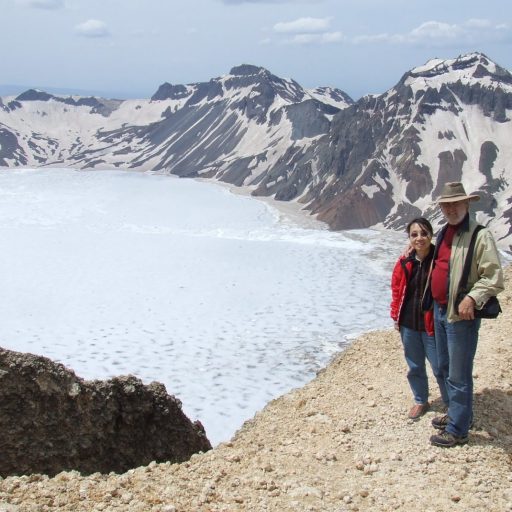
No, we did NOT see that! December in Guilin was chilly but not cold enough for snow.  So what we got were barren fields and closed restaurants when we went to Longsheng Rice Terrace, and it took a great deal of imagination to picture the possible beauty of the place. We started out from Yangshuo, so the over 3-hour drive was even longer than what it would have been had we started from Guilin.

It was easy to imagine how crazy this place could be in tourist season. One must drive through narrow streets up the mountain trying not to hit other cars and people. In my opinion, the rice terrace area of Longsheng attracts way more tourists than they can possibly accommodate and has lost its magic. The private car and guide cost us about $200. Was it worth it? I am not eager to say.

By the time we got dropped off at our Airbnb room (turned out to be a small inn) in the center of Guilin, it was getting dark and started raining. Just a few steps from our lodging, we came across a wonderful Chinese and Western(hamburgers and such) restaurant with modern decor attracting the younger crowd. I know it sounds iffy, but the food was great.

When I told people we were planning to go to Guilin, they seemed to imagine Chinese hero movies with martial arts and swords – with the karst peaks in the background. The next morning we walked along Lijiang riverbank and came across the closest thing to that we ever saw in this town: modern ballroom dancing.


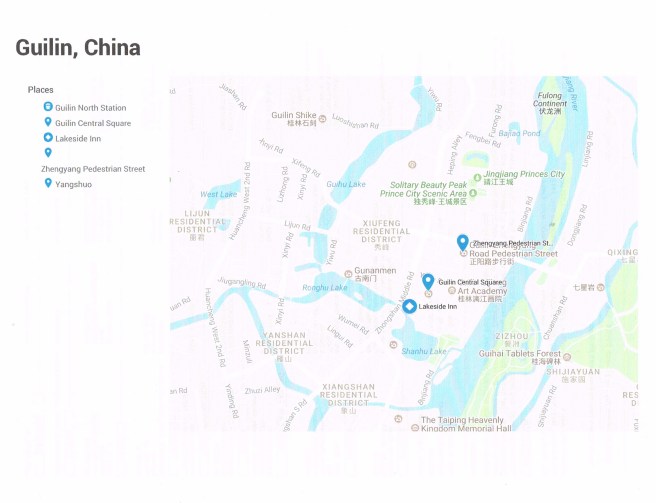
Our inn was right next to the Central Square and Shanhu Lake & practically on Zhongshan Middle Road, the Broadway of Guilin,  even though the entrance was on a side street. We slowly discovered how convenient this was to see, eat and shop. Right behind(north) the Central Square was Zhengyang pedestrian street full of restaurants, cafes, and stores of all kinds – full of locals. Between the southern end of that street and the lake sat a night market that had tons more shops geared toward tourists.


Our simple lunch of noodles and pretty buns at a department store food court was about $5. A cafe on the pedestrian street. No sword fight on these streets. Two pagodas on Shanhu Lake. Yes, it was as delicious as it looked!(dinner for two was about $20 with beer)  And, Santa came to town!

Guilin North Station was about 20 minutes north and a $4 cab ride. We took 10:30 AM bullet train to Shenzhen from here & said goodbye to the karst peaks. We were glad we went to Yangshuo first and saw enough of the scenery so we did not have to expect a lot from Guilin. With 1.3 million population, Guilin is not the old idyllic, beautiful river town any longer. It was a nice enough modern town, though.
map-guilin

map-guilin(long)

Yangshuo(China): 2N/3D

December 2017 (by YK)    Itinerary Link


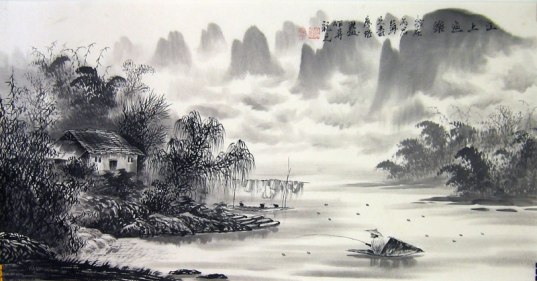
yangshuo-brushPaint

This is the image I had for Yangshuo & Guilin.

Well, it didn’t quite turn out to be. To start off, a bullet train was involved. This train covered 400 Km in 2 hours, from Guangzhou South to Yangshuo. The station in Yangshuo was not quite as big or modern like Guangzhou South, but it was not a sleepy small hut, either. In fact, it was a rather unattractive brick building with a big parking lot in front.

There were cab or van drivers touting for customers as soon as you got out of the building. Somehow, our non-English speaking driver, who was sent by our host, found us & drove us close to an hour to deliver us to the Airbnb studio. We could see from the train some karst peaks as seen in the brush painting above, but we saw more and more as we got closer. The town itself looked like an improvised tourist resort with full of low rise hotels and hostels.

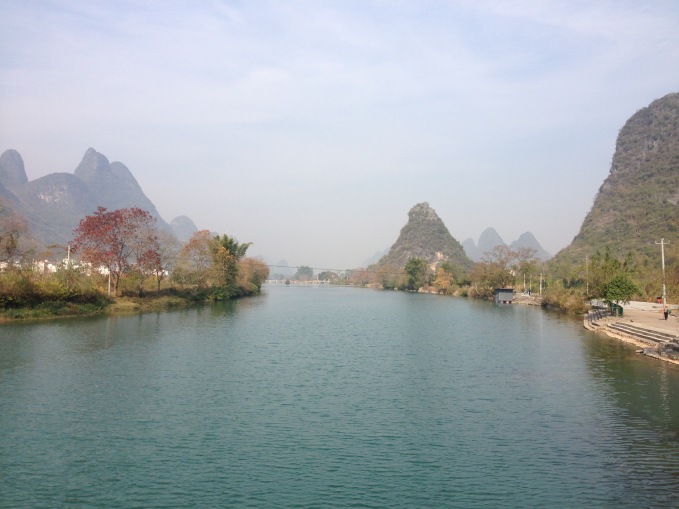
Guilin-day guilinriver

Our host called his operation, “Fun Sam’s B&B“, and he had enlisted his whole family: his father, a retired government worker, drove the van as needed, and his mom cooked wonderful meals as requested by the guests. His girlfriend, Li, was our tour guide. All very warm, nice people. The room was spacious, but it was more like a high end hostel than a hotel.

We walked down to the main road to have a late lunch, and we decided to see the light show that evening produced by Zhang Yimou, the film director who directed the spectacles of the Beijing Olympic opening and closing ceremonies. There was a rather elaborate production going on with seeing this show. First, the organizers picked us up from the B&B and eventually filled the van with other show-goers at various stops. Then we were told to come back to the exact spot where we got dropped off right after the show is over. We followed the others and walked for 5 minutes or so to reach the theatre front yard. “Go find #99” was the instruction we got from our host, and there were tons of people with pickets showing different numbers in the jam-packed yard. We spoke the magic word, “from Sam” to the lady with #99. She gave us a scrap of paper, and with that, we went to another person to get our tickets. Then we walked for another 5-10 minutes within the theatre complex to reach the seating area. Our tickets seemed to say VIP ticket of some kind, and we were guessing they were not the most expensive ones but not too shabby either. We paid about $35pp.

The show was spectacular, a Zhang Yimou kind of show for sure, with more than 600 performers depicting the life and culture of the area using the river and the karst peaks as natural theatre backdrop. But it got so cold at night that we could not enjoy the show as much as we should have. We should have brought a thick blanket or two.

Our room had a wall-mounted heater which worked reasonably well, but the lobby and the kitchen were not heated. Next morning, our breakfast was in the kitchen, and the hot broth of the noodle soup was spot on and delicious.

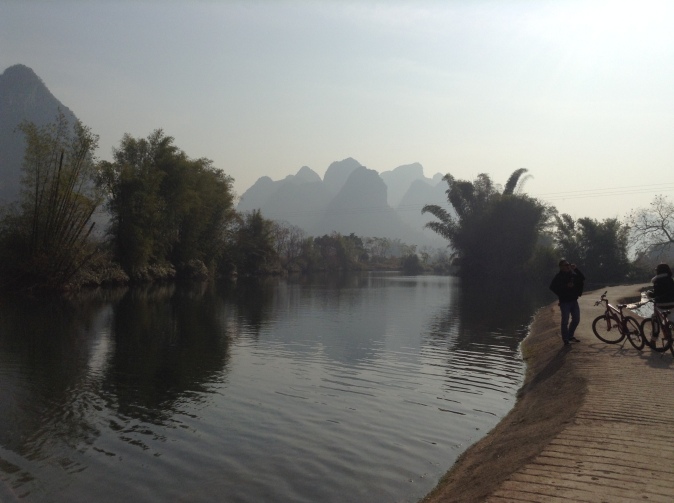
We picked our bikes & followed our leader, Li, to the Yulong River. It was off-season, and, we did not see too many other tourists around where we were. Some of the old villages were modernizing in their own ways, and that did not necessarily help the scenery. Still, the life seemed mellow and was unfolding at its own pace, and it was relaxing for us to be part of that even when we were trying to pedal around big, dusty construction trucks.

Looking for lunch, we went to West Street, the old part of town where tourists go shopping and eat. I saw some plump dried persimmons and wanted one. When I showed one finger thinking the posted price was for one piece, she got a plastic bag & put a whole bunch in. No, it was $1.50 for one bag! Delicious.

After taking a break back in our room, we went down to the river bank to experience what they called, ‘bamboo rafts.’ There seemed to be more than one kind of boat used for this, and one we had was a 50-minute ride on this small boat, which did not really look like it was made of bamboo. The driver could not tell us much since he spoke no English, but the scenery did not require much explanation. “Where did these karst peaks come from?,” I had asked Li, and she said this part of China was under the ocean millions of years ago. What we see now is, in other words, the underwater scenery that is exposed.

Cormorant fishing is another thing this area is famous for, but the tour was canceled that day due to not enough people interested in seeing it. Catching fish using trained cormorant bird would have been something interesting to watch, but we did not get the chance. Sam’s mom made a wonderful seafood hot pot dinner, and Sam’s father poured some bai-ju(Chinese white liquor) for us. Being part of a Chinese family for the evening was a nice way to end the day.

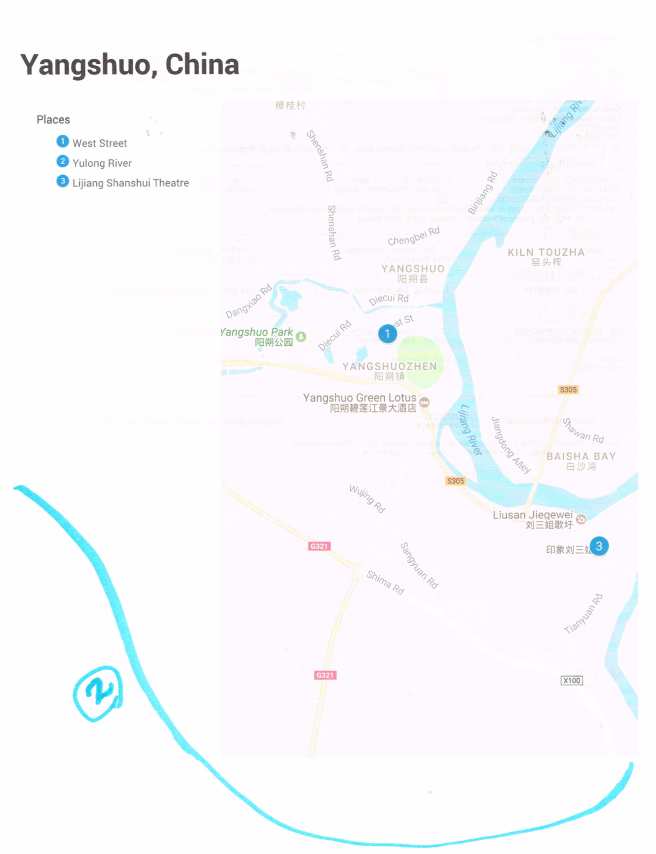
map-yangshuo
from (1) to (3) is about 2.7Km(1.7 miles)


Guangzhou(China): 1N/2D

December 2017 (by YK)     Itinerary Link

Our train from Hong Kong’s Hunghom Station arrived at Guangzhou East Station in about 2 hours. After a brief entering-China formality, we quickly found a cab outside and got to our Airbnb studio($57) near the People’s Park in 15 minutes. The serviced apartment building was connected to Gongyuanqian Station underground, which was one of the reasons I picked this studio. We never got to use the metro in the end, but it was good to have it there.

Guangdong(Canton) province is known for its cuisine, and Guangzhou is the capital. This is where dim sum was originated. Our first meal in town had to be dim sum. Within 10-minute walking distance was Diandude, one of the best known dim sum heavens n Guangzhou. We were not disappointed! No English was spoken there, but they had a menu with photos. I pointed at some of them, and the lady taking our order seemed to ask what kind of tea we wanted. I said puer just because that was the first thing came to my mind as a kind of tea.

changzhou-dimsum

Tableside tea service set-up was new to country bumpkins like us. Our server looked at these helpless foreigners who just couldn’t figure out what to do. She came over & showed us how we could prepare our own tea. It was not some tea bag we got. Excellent loose tea wrapped in golden foil with the restaurant logo printed on top.

Each dim sum plate was beautifully presented & all delicious. We wished we could order more, but we were too full. Traveling as a twosome in China has this problem: you can’t order too many different dishes!  The bill came to be around $15.

We were planning to stop at Chen Clan Academy on the metro to admire old architecture before heading to Shangxiajiu Pedestrian Street. Instead, we went back to the room and rested a little, then got a cab(12 Yuan) to get to Shangxiaju. It looked like everything was on sale all the time on that street. Fashionable shirts, pants, coats, shoes, bags – under 100 Yuan!


Guangzhou-fruits
all the fruits you can fit in a container: 6 Yuan


We were supposed to turn south at Dishifu Road & go to Shamian Island, a quiet old colonial neighborhood. But we just kept walking west thinking it would end somewhere and we could get a cab there. It did kind of end, but the shopping street was going north from that point. Kept walking. Kept popping into various stores. The stores thinned out, finally, but no empty cab in sight. We had no way of telling where we were, and it was pitch dark.

30 minutes later we gave up on getting a cab & hopped on a bus: we will, at least, get out of that area. Luckily, the bus got close enough to our lodging & we were relieved to hop off and walk back to our home for the night. After Shamian, we were planning to check out Haizhu Market area, but we had enough of stores for the day!

Dinner was at a restaurant on the third floor of rather strangely named hotel: Guangzhou Zhuhai Special Economic Zone Hotel. No idea what that meant. The restaurant was a bustling, real local Chinese place. Good food & quite reasonable.

The next morning, we went back to the same restaurant to have breakfast to take advantage of their special deal: everything was 40% off before 13:00. A gentleman was sitting next to us & slowly made his own tea, starting from boiling water right on the table. Yes, people take tea totally seriously in Guangzhou!

Guangzhou South Station was a good 30-40 minute cab ride. We barely got there in time to pick up our train tickets. We shall be back for more dim sum!