Lübeck(Germany)

May 2014

P1010119
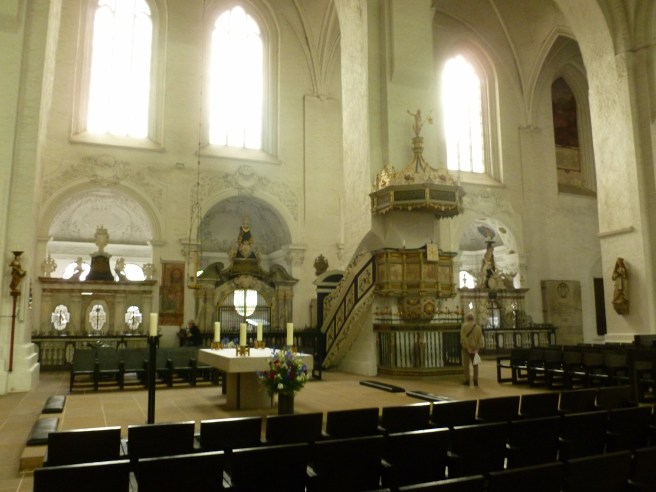
Lübeck Cathedral Marienkirche

We drove 50 munites NE from Hamburg to visit Lübeck. Once we were on the right road, A1, it was a breeze. However, we had a hard time finding that road from where we were in Hamburg. The sign for A1 was very small, but the locals thought we were crazy to think that!

It was a cute little town with lots of history. Unfortunately, not many of the photos we took survived. In fact, just the one above! It is on the UNESCO World Heritage list,

This is how Google describes the city: Lübeck is a northern German city distinguished by Brick Gothic architecture, which dates to its time as the medieval capital of the Hanseatic League, a powerful trading confederation. Its symbol is the Holstentor, a red-brick city gate that defended the river-bounded Altstadt (old town). Rebuilt following WW II, the Marienkirche is a 13th–14th-century landmark that widely influenced Northern European church design.

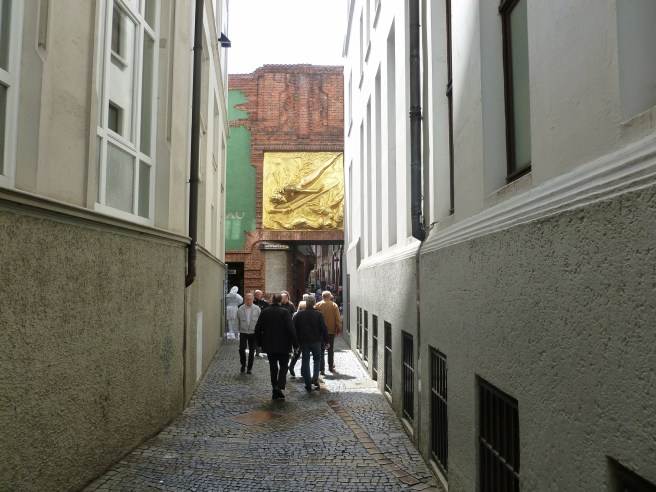
The old part of Lübeck is on an island enclosed by the Trave River, and we parked a car on the street and just walked around. My favorite writer Thomas Mann was from here.

Apparently, you arrive at Lubeck Airport when you fly on Ryan Air to go to Hamburg. So some people discover this town quite accidentally. But you can spend 36 hours there and have a good time, according to this article in the Telegraph.

More travel info: click!
Hamburg(Germany)

May 2014

hamburg-sq

Yes, the hamburgers are named after the second largest city in Germany, Hamburg(population: 1.8 million). To be technical, what was invented in Hamburg was the hamburger patties, and the current sandwich form was started in the U.S. So it will be safe to say a hamburger is as American as an apple pie or baseball.

We were in Hamburg on three different occasions mainly to visit my cousin and his family. Each time, we spent a couple of days in the city. Hamburg is a major port, but this city does not sit by an ocean. Elbe River runs through the city, and it connects the North Sea to Hamburg. The river and the lakes and the canals make the city look more attractive, and it retains the old charm even though most of the city was rebuilt after the WWII.

hamburg-
St. Michael’s Church, the most famous church in Hamburg

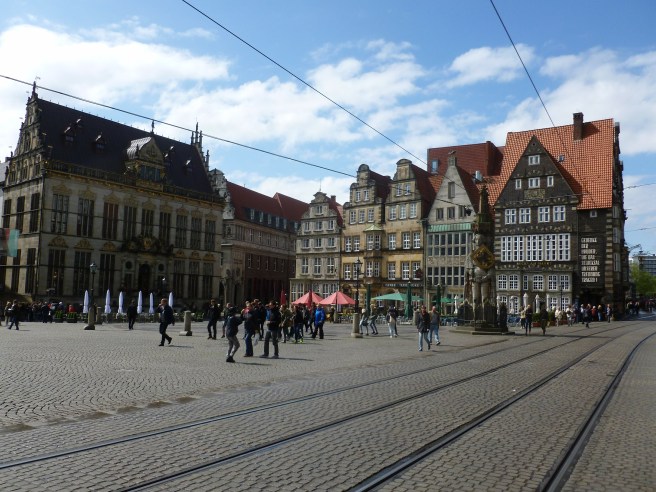
My cousin’s house is in the wooded residential area Southwest of downtown, and, we used the train(S-Bahn) to get to the center. From the main train station, the City Hall is an under 1km walk. Around the City Hall and the lake, it is very pleasant to walk around and see charming buildings and streets, like the one below.

From here, the UNESCO World Heritage site Speicherstadt is another 1km south. This waterside old warehouse district is next to the ultra-modern Hafen-City, and the whole area has lots of cafes, restaurants, and shops.

hamburg-alley

On another day, we took the ferry from the southwest bank of Elbe River and went across the river to reach the area a bit west of the downtown. There were lots of seafood restaurants in this area, and St. Michael’s Church was close by.

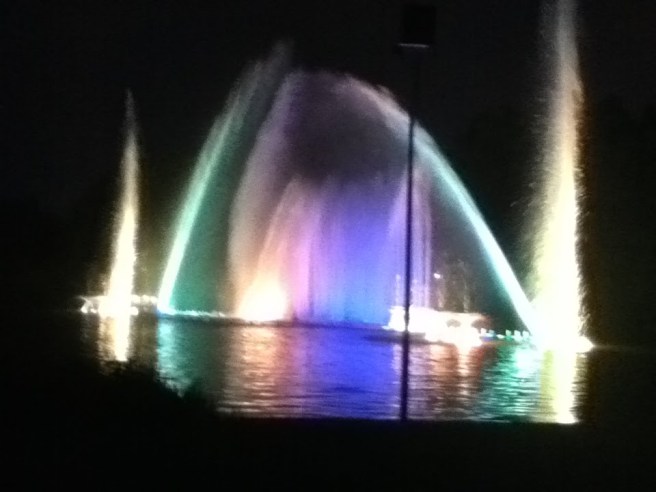
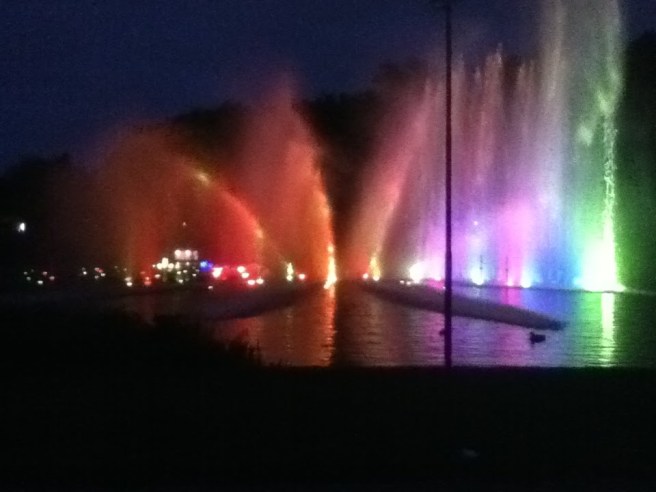
During the summer months, a water garden concert is performed daily at Planten un Blomen Park. We were lucky to catch this one summer.

hamburg-watershow1hamnurg-water2

The Beatles honed their skills at nightclubs in Hamburg between 1960 and 1962, and there is a monument to that in Reeperbahn Night Life District. We visited this area one morning, and nothing was open. We could see very clearly, though, what might have happened the night before: there were plenty of remnants of a big street party.

hamburg-beer

One nice surprise was that the best Korean restaurant in Europe, in our opinion, was in Hamburg: Hanmi Restaurant.

More to do & eat: click!   another click!

Eisenach(Germany) & Martin Luther

May 2014

erfurt-luther5

Eisenach(population:42,000) has other things, but our focus when my cousin drove us there was Wartburg Castle where Martin Luther translated the New Testament of the Bible into German. This castle is on the UNESCO World Heritage list.

erfurt-luther1

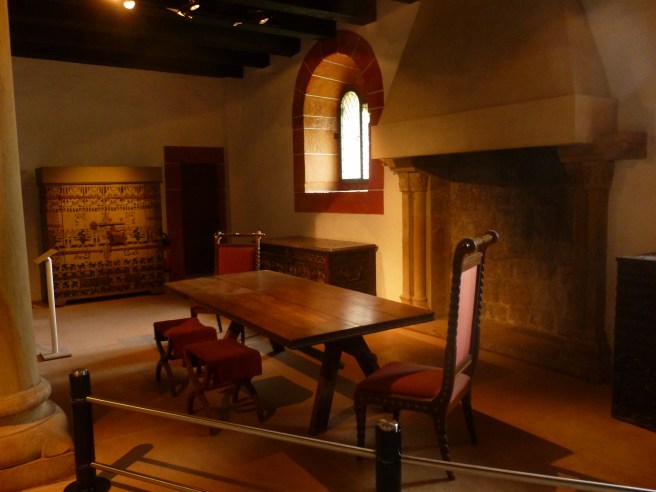
Wartburg was built in the second half of the 12th century, and there are many impressive artistic details throughout the architectures. We paid 4 euros each more to do the guided tour, which, we thought, was worthwhile. To see the interior of the Palas, the main building, one has to take this tour.

erfurt-luther2

The 14th-century Castle Chapel features three Romantic-era fresco cycles by Mortiz von Schwind illustrating the life of St. Elisabeth and the history of the castle.

erfurt-luther3

Martin Luther was hiding here after he was condemned to death by the emperor. He translated the New Testament from ancient Greek into German during his stay.

erfurt-luther4

More information: click!