Siberia: Baikal Lake

September 2016

A big, beautiful lake far, far away. That was all I knew about Lake Baikal before we visited there in September 2016. Now I know it holds 23% of the world’s fresh surface water. It is the 7th largest lake in the world, but, it is the deepest(as deep as 1,642 meters), thus, it holds the biggest volume of water of any lake. It also is the oldest at 25-30 million years. The water is so clear and clean that you can just scoop up and drink it. It is a UNESCO World Heritage site.  It has 2,100 km(1,300 miles) of shoreline.

But it was not too far. You can get there in 3 hours flying from Beijing or 4 hours from Seoul. That’s closer than going to Hong Kong from these cities. It is true, though, not many people live on the shores of this lake, and that is helping the health of the lake.

Our first introduction to Lake Baikal was a visit to a shoreline settlement called Listvyanka. On the way there from Irkutsk – the biggest city in eastern Siberia – we stopped at Taltsy Museum of Traditional Culture, pictured above. One can see some interesting architecture, and there is a small gift shop selling reasonably priced craft items.

baikalfish

Nerpa is the star of the Baikal Museum. Also known as Lake Baikal Seal, these earless seals are seen only in Lake Baikal. This museum tries to tell about the Lake as much in detail as possible mostly in Russian. Still, you can learn enough about the Lake Baikal to appreciate and respect it a bit more.

Listvyanka is the launching pad for all the activities on the lake, and there are a few resort style hotels right on the water in the general area. We had to have the fish endemic to the Lake called omul, and the grilled version of it was our lunch.

P1030049

Anyone looking at the map of Lake Baikal would notice a big island in the center closer to the western shore, and this is Olkhon Island(population: 1,500),71 km long and 20 km wide. To get there from Irkutsk, you first have to get to the ferry launching point 250 km northeast. Then you do the 15-minute ferry ride.

Our friends in Irkutsk arranged a group van which started from the Central Market in Irkutsk, and it was a 6-hour drive with a lunch stop. As you can see in the picture, it was rather cozy in the van.
P1030056

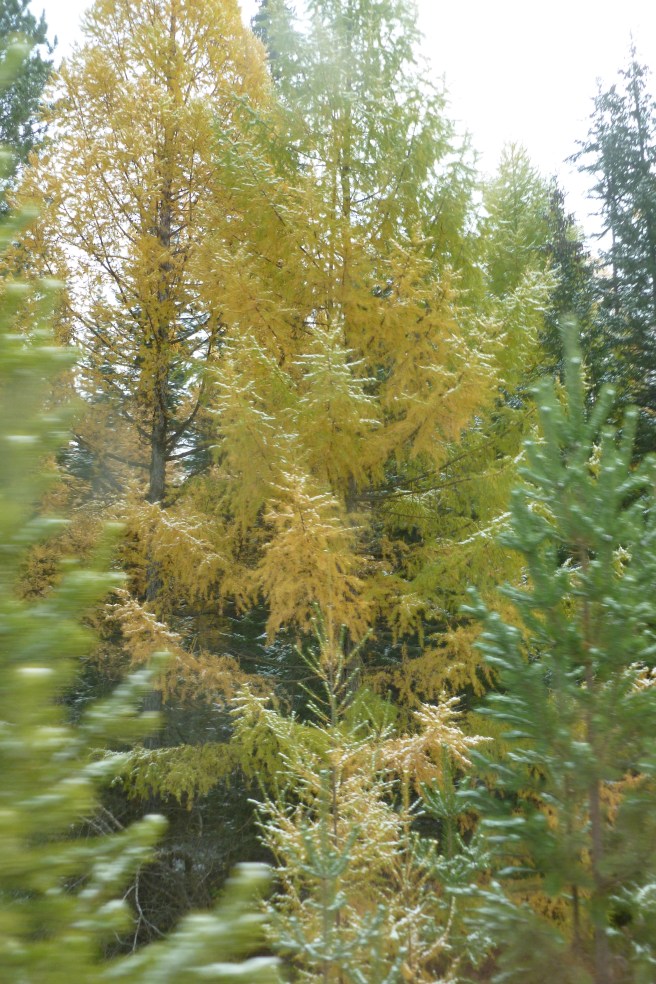
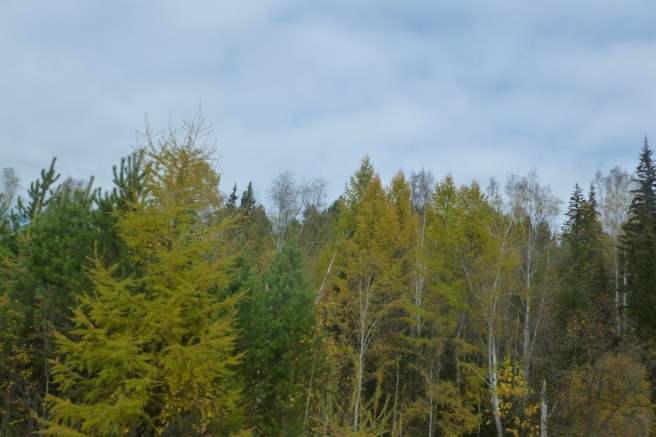
Yellow pine trees. Yes, I meant yellow. Pine trees never change color, and that’s how I learned in school. I even sang a song about evergreen pine trees growing up in Korea. Not in Siberia. Pine trees change color, and they are beautiful in yellow. Sorry that this is not a good picture. Here is a better picture. We saw a lot of these during the 6-hour trip.
P1030030

The ferry service runs fromMay to October. the rest of the year, Baikal is frozen over. You can walk to Olkhon if you are so inclined! Here’s a great description of Olkhon and how to get there etc.

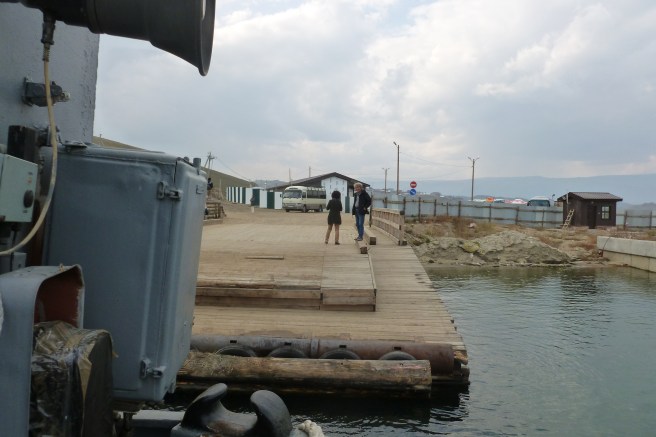
Our ferry captain had a sense of humor, and he left the dock right before our unsuspecting friends got onboard after a smoke break. The stranded friends in the picture above joined us about 20 minutes later. We waited for them on the other side at a cafe by the dock.

Now we are talking far, far away from it all. If you want to forget about everything and just chill, you come here. When we were there, there were no paved roads on the island. Running water was a luxury in our lodging, Nikita. Don’t get me wrong. Nikita was rustic, yes. Charming, yes. Attractive in its own way, yes. Even artsy. Our room was spacious and comfortable as long as you didn’t expect five-star amenities.

You can’t talk about Olkhon without mentioning shamanism. We were picked up by a converted military jeep at the dock and driven to the northern tip of the island, Khoboy Cape. Apparently, this was the most luxurious way to get around. Bumpy. Bumpier, Bumpy. Bumpier. An hour or two each way of this erased much of the memory of the scenery. Maybe that was what deleted the photos from this portion of the trip, I am thinking. I can’t find them! But I do remember shamanistic totem polls and delightfully colorful ribbon covered trees all over the place.

After a Russian style vodka drinking at Nikita’s cafe that lasted well past midnight, we were awakened early next morning and led to the Shaman Cave at the beachside of Khuzhir village, the main town where most of the lodgings were located including ours. Shamans believe this cave holds supernatural power, and we could see a lot more ribbon covered trees around there. Some even believe the elusive Genghis Kahn’s grave is hiding underneath this cave.

This was when and where our friend/host stipped down to his bathing suit and jumped into the water, and he was yelling at us to join him. The water was warm at 5 to 10 degrees Celcius, he claimed. No thanks.

Before heading back, we were supposed to visit other sites on the island, but we decided not to go through that bumpy ride again. This is the kind of place you come for at least 3-4 days and do nothing. Maybe next time – if it manages to stay that way. We were told they were already getting a lot more tourists than they could handle during the summer months, and the waiting time for the ferries could be several hours.

June 2017

Another thing most visitors do in this area is the Circum-Baikal Railway trip, and we did this when we came back to Irkutsk in June of 2017. We are glad we did it so that we can talk about it now. But, when we did it, we were not really all that happy.

First of all, it was raining on the day of our trip. This made it almost impossible to enjoy the scenery that is supposed to be spectacular. Second of all, our train car was filled with very loud tourists who never stopped talking, which made our head hurting like mad.

From what I gather, the train cost almost nothing if you booked on your own. But this historical railway originally built as a part of Trans-Siberian Railway is now almost entirely a tourist train. This means local tour companies are involved, and they gobble up the tickets. We had to buy a package from a local agency for $150 per person including a very humble lunch packet. The upside to this arrangement was that we could get the tickets last minute, like the day before. And, during the summer tourist season, the trains ran more than once every day.

The whole trip was to take 10 hours including the ferry ride at the end. The train started from Irkutsk Station and ended at the Baikal Station with a transfer in Slyudyanka, and it made several stops. They did have a recorded tour guide announcement going at each stop, but this was in Russian. Most people on the train had no idea what was being said. The $150 tour package did not come with any guide – in person or in a written form.

When we were finally relieved of all that noise by getting off the train at Baikal Station, a boat big enough to take only about 30-40 passengers was waiting to ferry the whole trainload of passengers to Listvyanka, from where we were to be bused back to Irkutsk. To make the matter worse, big tour groups were taken on the boat first. We looked around town to see whether we could have some snacks, but it was a sleepy fishing village that was not quite ready for foreign tourists. Just a few uninviting seafood restaurants were sitting there empty.

Then we spotted an open ferry boat that was about to leave the dock. We asked, “Listvyanka?” The answer was yes, and it was a ferry service for the locals. We hopped on happily quite willing to pay for the ride. No ticket takers or sellers.

At the dock in Lisyvyanka, we realized we were not far from the Baikal Museum, and that there was a bus stop in front of it. We hopped on the next minibus and were back in Irkutsk within 60 minutes.

Would we do it again? We do not feel the need. We’ve seen the scenery of the Lake from many different viewpoints, and we think we have a pretty good idea. If you want to do it, I’d say shop around and find the cheapest package available. They are all the same in essence.
IMG_0410

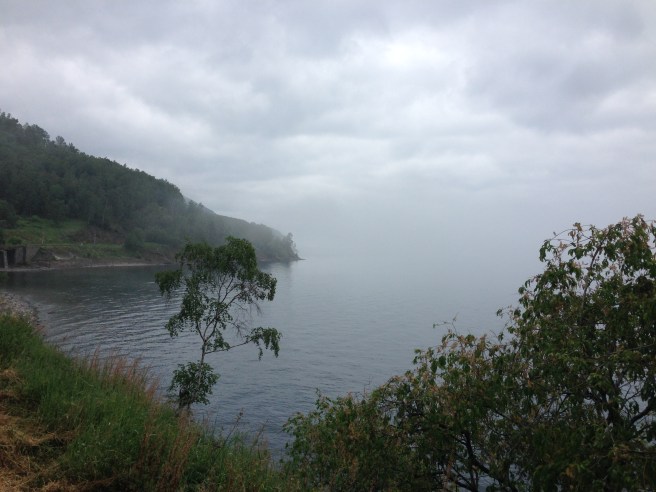
The best view we managed to capture was this one.
Siberia: Tunkinski(Tunka) National Park

October 2016

P1030058

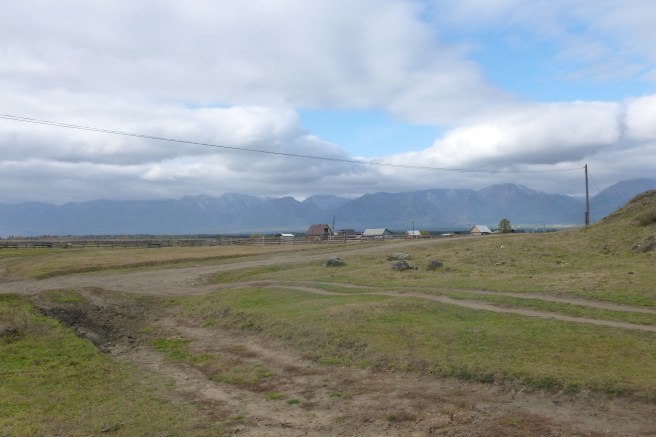
3 million acres of planes and mountains with only about 23,000 people in it, Tunkinski National Park looked like the picture above for the most part in early October, the beginning of winter. The mysterious Sayan Mountain peaks often hide behind clouds, and some people believe they choose to come out to greet the people they welcome.

We drove 200 km southwest from Irkutsk to get to this park that is in Tunkinski Raion(district) of the Buryatia Republic, which was part of Mongolia for most of her over 2,000-year-old history. Buryatia is an autonomous republic within the Russian Federation nowadays, and only one-third of the 1 million population are Buryats and the rest are Russians. However, Tunkinski area, which is located right north of Mongolia, is mostly populated by Buryat people. Buryats have their own language, Buryat, and nomadic culture similar to the Mongolian one. The famed actor Yul Brynner is part Buryat.
P_20161002_120419_1_p

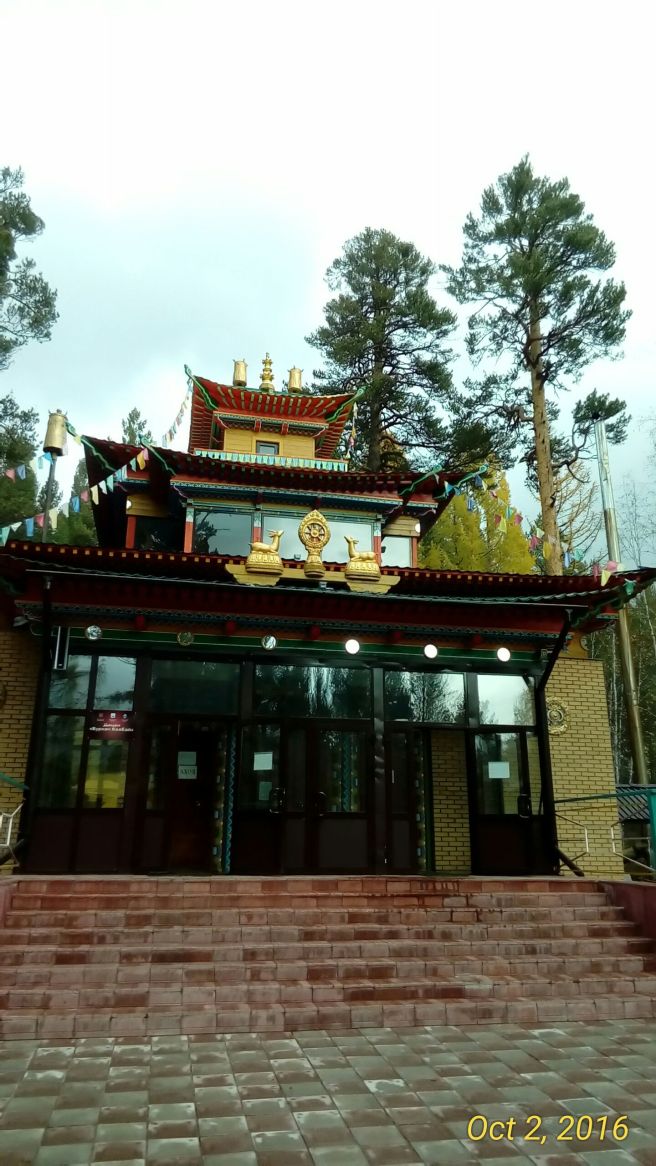
Traditionally, Buryats believed in shamanism, but, Buddhism replaced it by the mid-17th century. This transition is witnessed in temples like this one that displays symbols of shamanism and Buddhism together.

P1030060

We saw the peak of Sardyk Mountain, the highest of the Sayan mountain Range(3,491 meters), but could not capture it on camera. It was not a clear day, but we were welcomed properly by the Mountains. No, this picture is not even close. It was above and beyond this picture.

P1030078

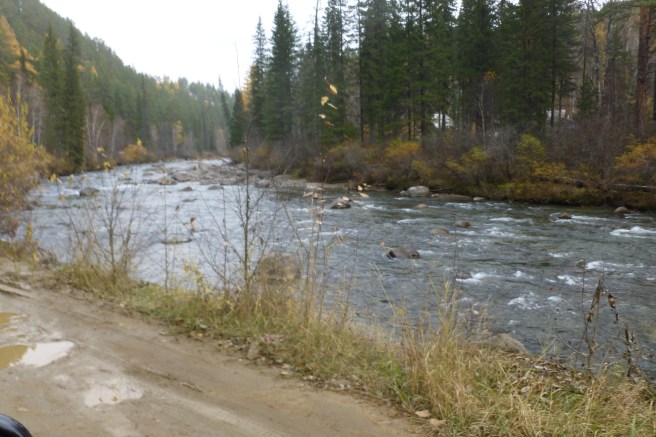
Irkut River runs through the Park, east to west or vice versa.

P1030080

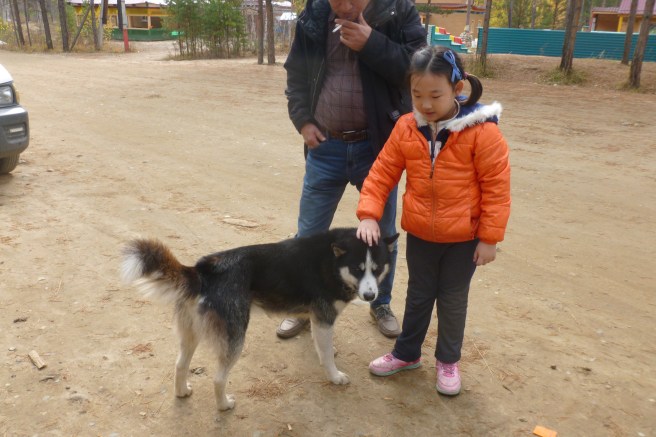
This Siberian Husky was very friendly. It looked smaller than the Alaskan Huskies some of our friends owned in the U.S.

P1030072

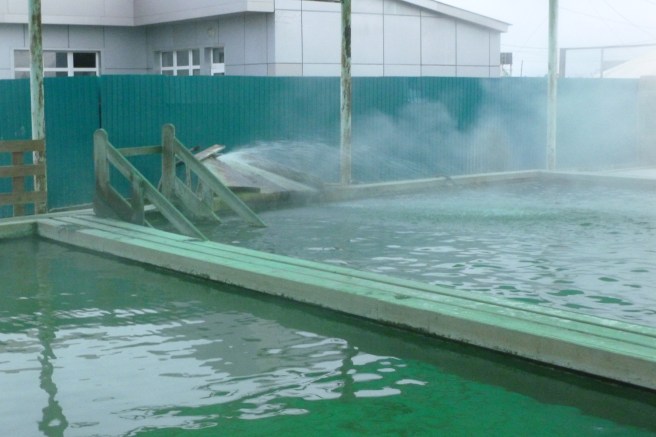
Hot springs are a major part of natural attractions of Tunkinsky Park. This one is at a little village of Zhumchug right off the main east-west road in the park. The facilities were minimal(very public changing room for each gender, toilets, hanging hooks in place of lockers) but the water was just magical. Very warm and totally relaxing.

P1030077

We encountered color changing pine trees for the first time in Siberia. These Siberian Larch trees turned yellow in autumn.


P1030066

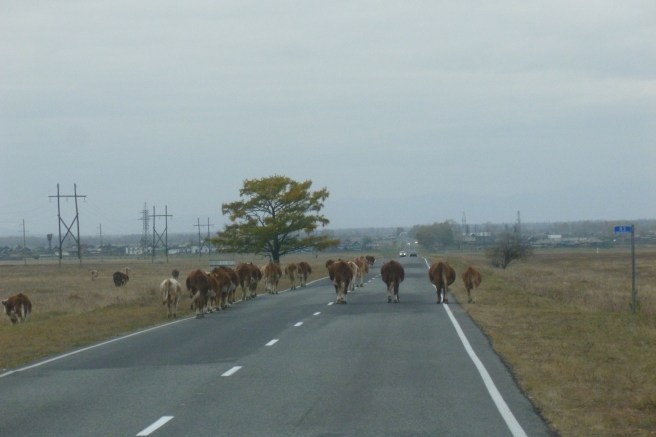
These cows and horses wake up in the morning and go out to find food and do their thing. At dusk, they come home on their own. The ranchers in this area do not have much to do. The road shown in the picture above is the main highway-like road in the park, but these animals took it over for a while.


June 2017

The next summer we went back to Tunkinsky, and there they were! You have to share the road with cows and horses in this national park.

This slideshow requires JavaScript.

A summer festival was in full bloom in Kyren, the main town in Tunkinsky District. It was their version of Olympics in which all the villages competing with one another in sports such as wrestling and volleyball.

This natural spring water was supposed to be good for one’s health, thus, tourists were eager to fill their bottles with it.

This slideshow requires JavaScript.

We were back at the temple where Shamanism exists in perfect harmony with Buddhism.

Yes, we saw the Sardym Mountain peak again. The weather was nice and warm, but the peak showed up only briefly. No, we could not capture it.

IMG_0379

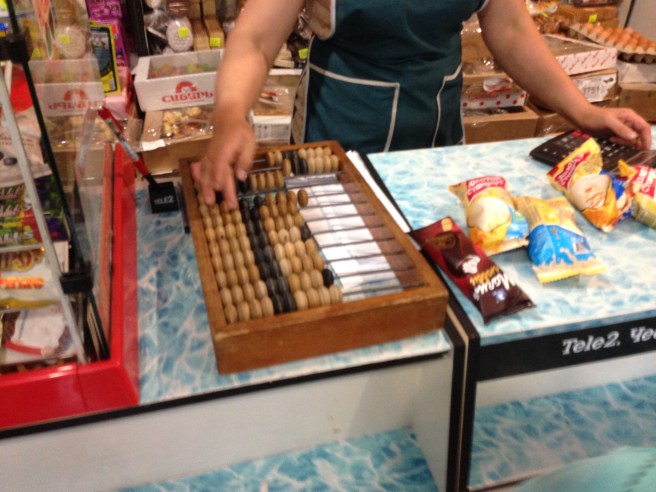
We walked into their version of a convenience store, and this was the cashier there. Her fingers moved fast, and the numbers seemed to be right.

Why rush? The water of the Irkut River was cool, and no one else was around.

BY this time, there were more hotels in Zhemchug, and the hot spring was more crowded. But, still, the water was piping hot and so relaxing. Time moves very slowly in Tunkinsky.

Siberia: Irkutsk

September 2016

P_20160927_013105_1_p
the symbol of Irkutsk: a tiger with a sable in his mouse signifying the importance of the fur trade in the development of this city

Our friends, a writer/painter couple living in Seoul, kept telling us we had to join them in Siberia and drink vodka made from the water of Lake Baikal with them. We were intrigued, but Siberia sounded so remote.

In the summer of 2016, they brought it up again, and, this time, they had specific dates. I started looking into flight possibilities, and, surprisingly, it was not too far or too expensive to go to Irkutsk(population: 600,000), the biggest city in the Baikal Lake region. There were direct flights from Seoul or Beijing, and the flight time was only 4 or 3 hours.

We found a $600 LAX-PEK-LAX flight on Air China. From Beijing to Irkutsk, we found a $200 R/T ticket on a Russian airline with a transfer in Khabarovsk.  Our friends could not get seats on the Korean Air direct flight out of Seoul on the day they wanted to travel, and they ended up flying into Khabarovsk to be on the same flight with us to Irkutsk.

Khabarovsk was another adventure, mainly due to the language barrier and other misunderstandings, but we managed to hook up with our friends, have a meal, walk around town a little, then we got on the right plane. Our friends knew a local Korean family who had been living in Russia for over 20 years, and they were hosting us in Irkutsk. An easy sail from there on.
P_20160928_102853_1_p
Irkutsk is on the Angara River

Siberia was full of surprises. Big, remote, cold, desolate were some of the not very friendly adjectives I had in mind for describing Siberia before being there. Big, yes! But it was not all that remote, cold, or desolate at least in the part of Siberia we visited around Lake Baikal.
Wait. Exiles. Wasn’t Siberia where all the intellectuals and anti-government types were sent for hard labor? Turned out, Irkutsk thrived culturally because of the exiles: artists, intellectuals, officers, and nobles brought culture and education with them starting from the early 19th century and stayed. They were far away from the central government, and many of them chose to remain in the area after they served their sentences. Apparently, many of the nobles and high officers were not treated badly when they arrived.

Alaska was part of Irkutsk province till 1867 when it was sold to the U.S. The Trans-Siberian Railway was built in early 1900’s, and Irkutsk has been a major stopping point on this railway.

Under communists, Irkutsk was developed as an industrial center in aviation & aluminum smelting, and a major science research center.

P_20160929_172528_1_p

Our host told us there were two words we had to know in Siberia: vodka and sauna. He provided plenty of both right at his home. They had a five-bedroom townhouse in a very nice residential area, and we all stayed there. It had all the modern amenities and the view shown in the picture above. He converted the garage into a sauna and a cold pool so that you could go back and forth between the two.

P_20161002_103955_1_p

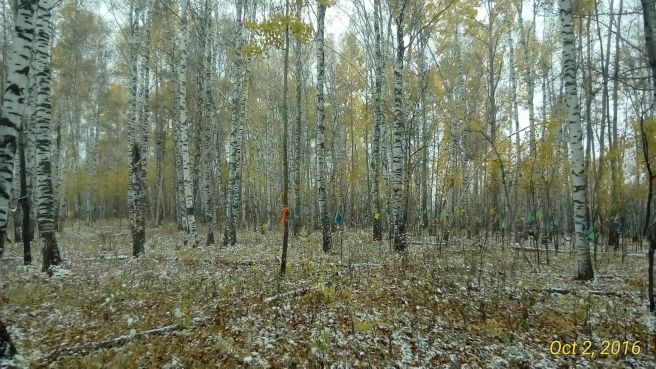
Birch trees were everywhere around Irkutsk.

irkusk-ch

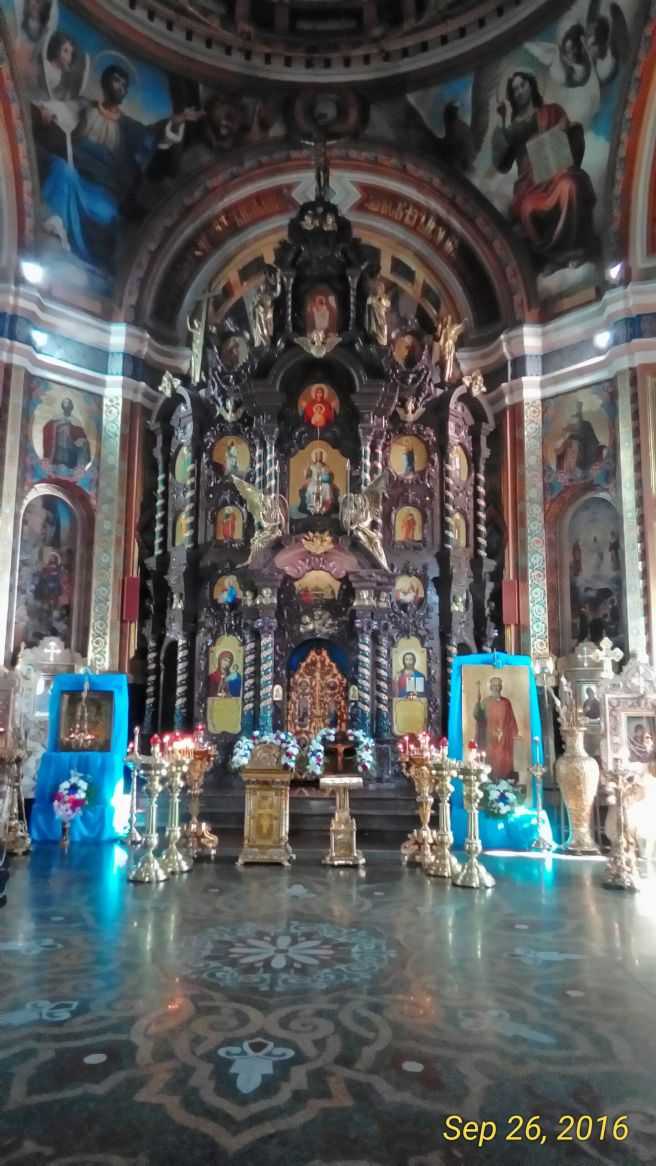
Our Lady of Kazan Church was simply beautiful outside and inside.

P1030011P1030012

We had 7 nights/8 days in Irkutsk, but we spent 2 days going to/from Olkhon Island and another 2 days going to/from the Tunkinsky National Park.  This left us with only 3 full days to explore Irkutsk.

The central area could be easily walked on foot. There are other churches such as Epiphany Cathedral that deserve to be visited. We learned a bit more about the exiles at Irkutsk Museum of Decembrists (House-Museum Volkonskiis despite the fact that the displays were mostly labeled in Russian only, which was the case in other museums in the area. 

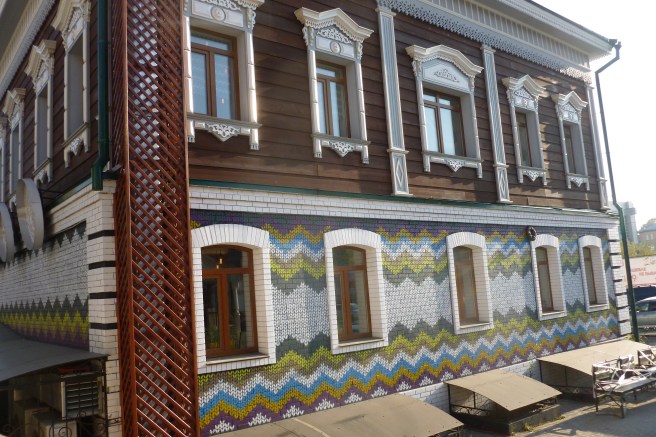
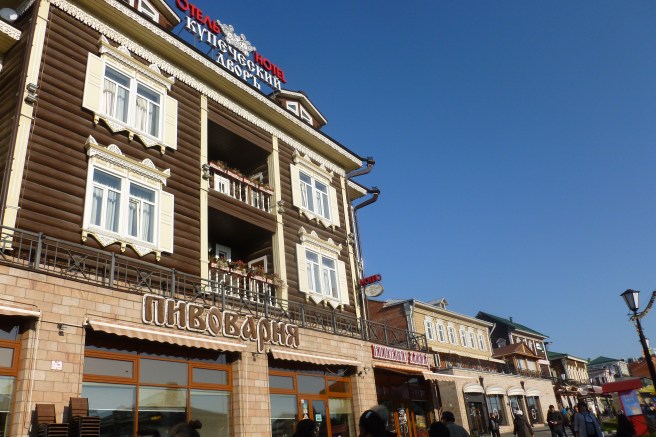
We liked the pedestrian-only shopping and eating zone called 130 Kvartal where some of the old timber buildings were brought in to create a unique Irkutsk experience. They were trying a bit too hard, maybe, but we liked it anyway. Two pictures above show some of these buildings.

The Central Market gives a glimpse into local life. It is actually fairly big with many different buildings and outdoor stalls. It is where but right in the center of town.

There were some nice places to eat and drink in 130 Kvartal area. Two places we liked: Rassolnik for Russian food, Mamai for dumplings and Asian influenced food. You could eat well by paying $5 – $10 per person. Our splurge was at Vkus Neba, which sat on a hill near our lodging. Great view, decent food, not overly expensive in U.S. standard. There were many outlets of Harat’s Irish Pub throughout the city, and they were dependable for quick bites and decent beer.

The weather during our stay from the last week of September to the first week of October was crisp and a bit chilly but never cold. The first snow fell on the day we left.

More travel Info: click

IMG_0252
some of the older wooden houses

We returned to Irkutsk in June of 2018. This time our intention was to play locals for 10 days without running around too much as tourists. We wanted to taste what it’s like to live in a place like Irkutsk. We figured out the bus route, and we tried to use the bus as much as we could. Our friends wanted us to go with their driver, but we preferred to manage on our own.

IMG_0255

Surprisingly, it was hot in June in Irkutsk. Apparently, this part of Siberia gets lots of direct sunlight during the summertime, and, without any pollutants in the air, people feel the heat. The temperature went up as high as 30 degrees Celsius(86 F) while we were there.

People seemed to enjoy beach days by Angara River, which was so clear that you could see the bottom of the river. We rented some beach recliners and idled away while the 7-year-old daughter of our hosts preferred to stay in the water. When we got hungry, this man grilled lamb and beef skewers for us.

IMG_0267

We went back to 130 Kvartal area many times. At the top end of the street, there is a high-end shopping center with a nice supermarket where we stocked up on gifts to take back, bottles of vodka and Siberian chocolates.

One day our host took us to a mineralogical museum, a state museum located in Irkutsk. It had a nice collection of minerals found in this part of the world. It looked like they were not expecting many visitors, and, when we arrived, they had to turn all the lights on in the display rooms. An older lady with a name tag showing Dr. somebody came out from her office and was happy to answer our questions apologizing for not speaking enough English. She even brought out a case of jewerly made by local artists using the minerals, and they were quite beautiful and reasonably priced.  We bought some as gifts to take back home.

IMG_0284

Catch your own fish & grill. That was the idea behind this restaurant on one of the islands in the middle of the Angara River. You scoop up a fish or two with a fish net, pay for the fish, go find an empty hut to sit, bring your fish to the grill man, and he will grill for you. They have other food and beer, too.

This slideshow requires JavaScript.

We got to know the Central Market well, too. Here’s the butcher section in the market.

IMG_0308

One of our friends in L.A. was interested in joining us in Irkutsk, but her partner discouraged her saying, ” why go to a hinterland when you can go to Europe?” Well, modern-day Irkutsk is an urban center with highrise apartments by the river. It certainly doesn’t feel like hinterland.

IMG_0304

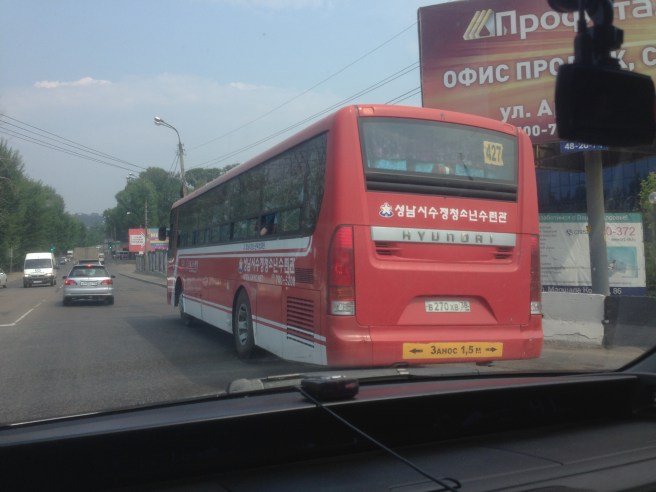
We were surprised to see this bus that seemed to belong to a youth center in Korea. Did they drive that bus all the way here? Then we noticed on the rear window of the bus a piece of yellow paper with the number 427 written in big block letters. Our host explained that Russians import used vehicles from Japan and Korea, and they don’t bother repainting or reconfiguring the cars. Thus, the cars from Japan have the driver seat on the right-hand side while running on the left side of the road. This bus from Korea was put into use as a city bus.

IMG_0396

Another nice surprise was a visit to a clock museum in Anragsk, a town 50 km northwest of Irkutsk. It had an eclectic collection of clocks from all around the world, and people working there were very eager to help. Our hosts’ driver took us there. We had lunch at a cafe across the street from the museum, and the bakery items and sandwiches were quite good.

IMG_0415

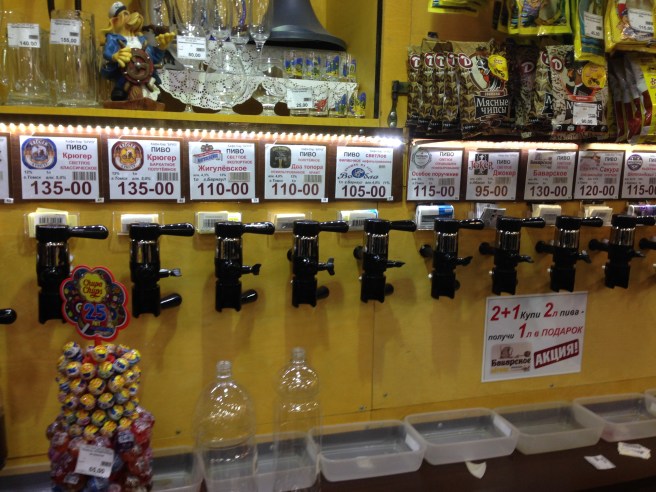
Bring your own bottle and fill it with beer of your choice! Pat was in heaven, but it was our last night in Irkutsk after dinner and had no bottle on hand,  and we did not have time to come back here to try it. I know this will be one of the first stops we will make next time we are in this town!

IMG_0421IMG_0426

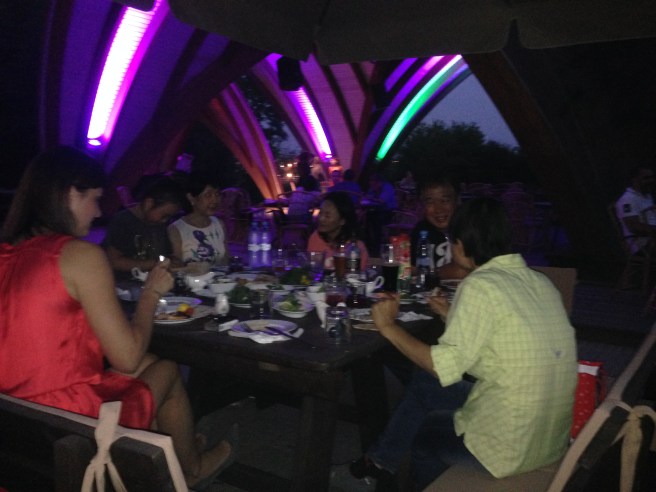
Our last night was at an outdoor disco. Boogie!