Cordoba(Spain)

March 2017     Itinerary Link
P1030365

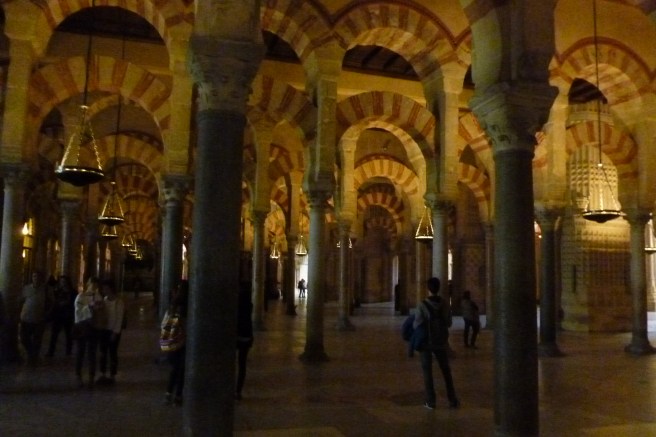
Moors. You see the Moorish influence all over Spain, but I had a strong urge to learn more about Moors for the first time when we visited Cordoba(population: 330,000). According to Wikipedia, Moors “refers primarily to the Muslim inhabitants of the Maghreb, the Iberian PeninsulaSicilySardiniaCorsica, and Malta during the Middle Ages. The Moors initially were the indigenous Maghrebine Berbers. The name was later also applied to Arabs.”

Cordoba, a UNESCO World Heritage Site, was settled by Romans in 206 BC, then colonized by Moors in the 8th Century, then captured by the Catholic Kingdom of Castille in 1236. This historical process is well manifested in the major attraction of this city, Mezquita de Córdoba pictured above and below.

There are other things to see in Cordoba, but, after the visit to this Mosque-Cathedral, we were exhausted. All our senses were overwhelmed by the juxtaposition of both religions in grandest scale.
P1030380P1030379P1030377

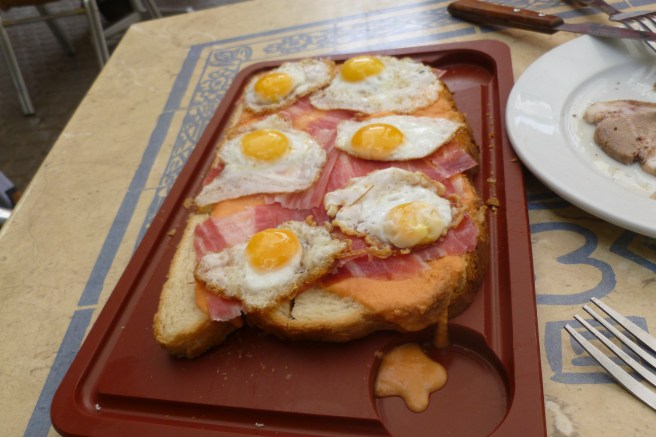
Our Airbnb apartment was located west of the Old Town, and we could park our car on the streets among other apartment dwellers’ vehicles. We walked around finding snacks and unusual items. If you get tired, you can hop on the bus in Cordoba.

Where to Eat: Click!

Consuega(Spain)

March 2017     Itinerary Link

P_20170329_110152_1_p

Consuegra (population: 11,000) is where you find the windmills made famous by  Cervantes‘s Don Quixote. You can see the windmills from the highway CM42 that connects Toledo to points south, but it is worthwhile to take time and get off the freeway and drive into the town of Consuegra to have the up-close view. Some guidebooks suggest spending a few days here, but we were not tempted.

P_20170329_110948_1_pP1030361P1030364

Toledo(Spain)

March 2017     Itinerary Link

Madrid to Toledo was an easy 50-minute drive on a major highway(A-42). Toledo(population: 84,000) is a hilltop town, and the walled old quarter is best explored on foot. Our Airbnb host saved a free street parking spot for us, and this was extremely helpful.

Toledo is not really a big city in today’s standard, but, its Cathedral is huge. It once was the capital of the Spanish empire, and Christians, Muslims, and Jews all influenced the cultural landscape of this UNESCO World Heritage site.

Churches and more churches – that’s what you see. Then you see many of these sword shops. Toledo Steel is known for the strength, and the swords from Toledo have been desired by the warriors of the European continent for centuries.

We had a wonderful dinner at Kumera Restaurant right next to the Jesuit Church. Some other suggestions: Click!