Suzhou(China)

February 2017


Our short tour of Suzhou started at the not-very-humble garden of the Humble Administrator’s Garden (Zhuo Zheng Yuan). Known for exceptional classical gardens, silk, and embroidery, one can’t claim to have been to Suzhou without visiting some of these gardens. We got to see the largest & one of the most beautiful one, we were assured. 

The bonsai tree collection at one end of the garden was quite impressive. If these were in any other city, there would’ve been a stand-alone attraction housing the collection.

Since this trip was a stop during a packaged tour, we did not have much control over what to see and how long we could stay. Some people took a boat tour around the canals, but we just walked through the alleys along the canals. Then we visited a silk factory, which was interesting enough even though there were heavy sales talks peppered in the program.

If we are to come back, we’d spend at least one or two nights and visit at least another garden just to compare and have some idea on the spectrum of the classical Chinese gardens.

for more information:  WikiTravel Link

[update: October 2019]

We did return to Suzhou in two and a half years again as a part of a packaged tour. This time they drove us in from Shanghai, spent the night, and had a tour the next morning.

The sun rising over the modern development. After all, more than 10 million people live in this city, and the old houses can’t handle that kind of crowd.

Embroidery is another specialty of Suzhou. They claim this place as a museum, but it is more of a showroom than an embroidery art museum. Still, the pieces on display were impressive. The one above is one example. The black cat and the yellow cat are on the same panel: you flip the panel to see the other side.

Klimt? Van Gogh? You name it, and they can recreate it one stitch at a time. It may take over a year, but the skilled artisans of Suzhou can do it.

We did get to visit another garden: the Master of Nets Garden. Much smaller than the Humble garden we saw last time, but it was equally beautiful.

Once again, some people got on the canal boats, and we just walked around the area.

There were lots of local people strolling in the area. Some fruit shops had exceptionally beautiful displays, but, they did not allow us to take pictures. (Luckily, the internet can show you some examples.)

There were some fancy houses along the canals. We had fun being part of “Old Suzhou” for a couple of hours.

Beijing(China)

February 2017

We had joined a package tour to China in February 2017 mainly because it was so cheap(like, $550pp for 8 nights) and it included Huangshan, considered to be one of the most beautiful places in China. It started in Beijing, and we decided to go with the group and see what the tourists would see. The Forbidden City was packed mostly with domestic tourists. It used to be quite empty with only a handful of foreign tourists when we started going to Beijing around 2002. 15 years later, Chinese people were financially much better off & traveling more within the country. Buying tickets in advance online is recommended.

This slideshow requires JavaScript.

The situation was pretty much the same at the Summer Palace. It was actually nice to see that people could enjoy life more. Anyone traveling internationally know Chinese tourists dominate the world travel market these days. Those who may not be able to afford that could, at least, see more of their own country which has a lot to offer.

Huangshan(China)

February 2017

huangshan

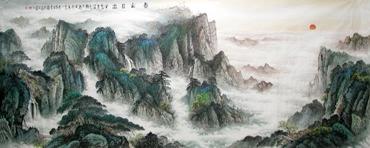
Huangshan(Yellow Mountain) is known in China as the most beautiful mountain. If you have seen the brush paintings depicting these kinds of mountain peaks and pine trees & ever wondered they really existed, yes, they do — in Huangshan.

Huangshan is also a UNESCO World Heritage site.

This was part of a packaged tour we took, and we were bused in from Hangzhou. It was a 3-hour drive covering 212 kilometers passing by many small villages filled with white houses that are famous in the southern Anhui Province.

Huangshan City, which is still known as its old name Tunxi, has a pedestrian street which retains a bit of old charm with lots of contemporary tourist nagging going on. But the pace is slow, and you can find reasonably priced restaurants along with various shops selling teas, brushes and ink blocks, candies, and local products. Our favorite was the “10 Yuan($1.50) Store” that had a rather eclectic collection of items that you never knew you needed. There seemed to be no shortage of massage places to stay. Our room at the Huangshan International Hotel, a 15-20 minute walk from the Old Street, was comfortable enough.

The next morning, Thomas, our local tour guide, showed up on time at the hotel lobby. We found him on Tripadvisor & he was just terrific. He used to be a school teacher, but he said he could support his family better as a tour guide. He used to make about $500/month as a teacher. He drove us to the mountain in his car.

He grew up in the area, and he was eager to show us as much as possible. Considering our ages, he tried not to push us too hard, but, still, we saw a lot more than those from our tour group that went on a group tour sponsored by the tour company. He charged us only about $65 for his full day service. Pat received the senior discount & got into the park for free. I paid 75 Yuan(about $12). The cable car and the shuttle bus rides were 198 yuan/pp.

Thomas helped us with getting the tickets – not much English was spoken at the ticket office – and, overall, we were very happy that he was with us to show us where to go. These days any decent tourist attraction in China is overcrowded by Chinese tourists, and Huangshan was no exception. Thomas knew how to dodge big tour groups & we did manage to take some pictures without any strange faces in them.

Wikipedia article mentions: “The hotels, restaurants, and other facilities at the top of the mountain are serviced and kept stocked by porters who carry resources up the mountain on foot, hanging their cargo from long poles balanced over their shoulders or backs.”

As we ascended the mountain, we certainly witnessed enough of this in action.

Our lunch was at a restaurant on top of the mountain. Thomas helped us with ordering, and he discouraged us from ordering expensive items. “You can have better food for less in town,” he explained.

People stay in a hotel near the top of the mountain to witness the sunset and sunrise, we were told. But we had only a day to spare, and, we felt we had seen enough. With lots of people competing for the best view of the sun setting or rising, we might not have gotten what we had bargained for even if we had stayed overnight. Maybe in the winter time, you will be able to experience peace and quiet.