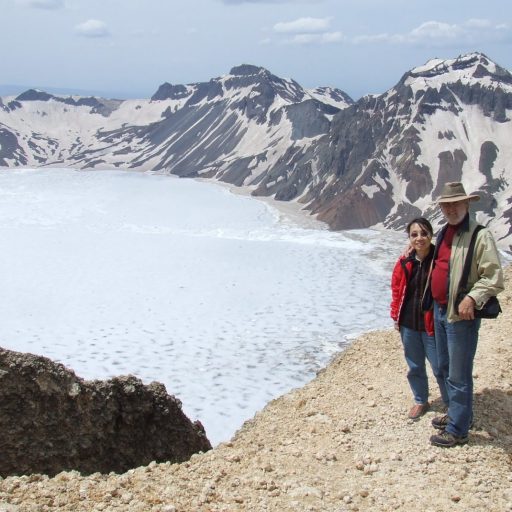
Inner Mongolia(China)

November 2006

Once again, yk has brought me somewhere I would never, in my wildest dreams have expected to visit – Inner Mongolia.

We are traveling with a group of Korean businesswomen who are interested in buying a building and setting up several retail businesses, including an English academy. That’s where we come in.

We flew out of Beijing on Wednesday night (11/21) arriving at the brand new airport (opened in August) in Hohhot at about 11PM. We were met by a bus, the local district manager and a bilingual (Korean, Chinese) guide. The government guy gave us an introduction to the city as we rode to our hotel.

Hohhot and environs comprise 2.5 million people and is growing rapidly. In fact, we were told it’s the fastest growing region in China which could well make it the fastest growing region in the world.

We are staying in a 1000 room (that’s right, 1000 room) luxury hotel that is as fine as any hotel I’ve stayed in in the U.S. and better than most. It’s the only hotel I’ve ever been in which features a “pillow menu.” The only reminders that we’re not in a luxury hotel in the U.S. is the admonition not to drink the tap water and the ubiquity of matches and ashtrays.

Wednesday we were shown around the city by our guide and numerous local officials in full sales mode, concentrating on marketing area and areas in development. Late afternoon we met with several government officials, including the chairman of the local communist party, for two hours. They offered to negotiate with owners for us.

The chairman then hosted a traditional Mongolian dinner for the group. If this guy were an American, he’d be a Republican. He explained that the job of government is to support the business person.

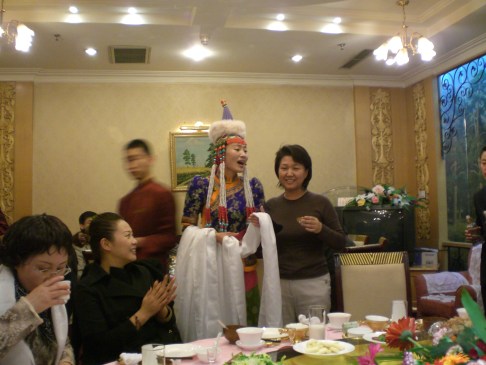
The dinner featured an interesting drinking ritual. A young woman and young man in traditional Mongolian dress entered the room. While the man played a stringed instrument, the woman sang and approached someone at the table and presented him or her with a tea cup full of strong Mongolian whiskey. Being the only westerner, I was one of the first approached. Yk had told me that I had to down it all at once, so, of course, I did. The young lady, still singing, had the cup refilled and gave it back to me, so I had to down another. I was subsequently told that if you empty the cup before she finishes the song you must drink another.
CIMG0361

At the end of the song, she would drape a white silk scarf around the neck of the drinker.

I subsequently learned, after watching some local people, that there was more to the ritual.

Apparently one should dip one’s finger in the drink, then toss three drops over the right shoulder, then anoint the forehead. Then you finish the drink and turn the cup upside down over your head, presumably to demonstrate that it is empty.

On Friday we drove about two and a half hours to Baotou City, an older city in a region of heavy industry. Hotel and meal were decidedly less spectacular than in Hohhot.

Inner Mongolia is an autonomous ethnic region of China, similar to Yanbian. As such, signs must be bilingual with the ethnic language first. I don’t recall ever seeing Mongolian script before this road trip. The characters appear to be vertical bars with various curlicues coming out of them. We were told that virtually no one reads or speaks Mongolian.

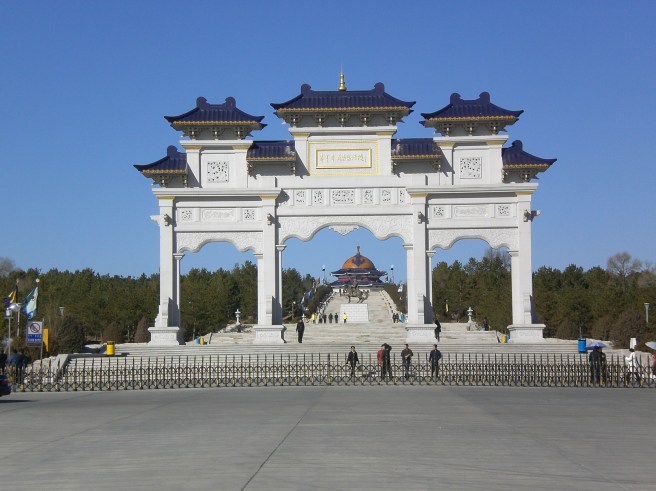
We took the long way back on Saturday, stopping at the Genghis Khan mausoleum. Oddly enough, it does not contain his remains, the location of his grave is unknown, but some of his clothes and weapons were found here and the site is considered to contain his spirit. There were about ten older men bowing and singing at the shrine inside. I was told that they were the 39th generation of Genghis Khan’s first general and were praying for a family member, a recent suicide.
CIMG0368CIMG0369

Stopped in another booming city, Erdos City, for lunch, then returned to Hohhot for dinner, at which yk and I met with the dean of a local university and his English interpreter. He is interested in our program and invited us to visit him at the university on our next visit to Mongolia. We’ll see what happens.

We flew back to Beijing on Sunday morning. That morning, in the hotel, I saw the first, and only, western face I saw during the 4 days in Inner Mongolia.
Munich(Germany): Silvester

December 2007

munich-tree

SILVESTER

In Germany, each day of the year is associated with the name of a saint. For December 31, it is Silvester, a 4th-century pope. This is now the name of the New Year’s Eve celebration.

As soon as we arrived at the Silvester gathering at Leopold’s aunt’s house, Leopold, and his cousin Gregor, started unloading the fireworks, an arsenal of rockets and explosives large enough to overthrow the government of a small country. I commented to Lydia that in most cities in the US they would be illegal. She looked at me, puzzled, and said, “what do you do on Silvester?”

An elderly woman, Leopold’s grandmother, arrived and helped herself to a beer. Her late husband, I learned, was a spoon collector and she gave us his photo book of his spoon collection.

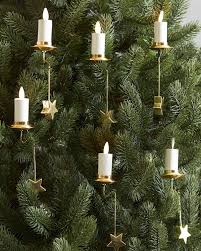
During dinner I noticed that the Christmas tree had about two dozen unburned candles on it. I asked Gregor’s mother if she ever lit them. In response, she got up and lit them. I had never before seen a Christmas tree with burning candles. It was lovely.

As the evening wore on, the boys worked more on their fireworks planning. At one point they taped together several rockets and explosives to create a kind of bunker buster. For some reason, Lydia asked me to perform a safety check?

As midnight approached, the boys set up their launching pad and the adults came outside with Champaign. As the rockets went off, a neighbor came out with his own bottle and wished us all a Gutes Neue. The bunker buster fizzled.

Mokpo(Korea)

December 2011

Mokpo

A few days before we left for Mokpo, yk received an itinerary put together by our Mokpo host. When she translated it for me, I said, “Who’s he kidding? No way we’re doing all of that in one day.” But he pulled it off.

Our train left at 1:20 on Saturday, arriving in Mokpo about 4:40. We were met by our host, D.H., who is in charge of sports activities for the city. After giving us a brief tour of the city, he took us to dinner at a small restaurant. We had local crab prepared three different ways.

More tour followed, including a stop at the wholesale fish market. The fish, yellow croaker in this case, were being sorted by size and boxed for delivery to area restaurants. Some of the fish we saw we found ourselves eating the next day.

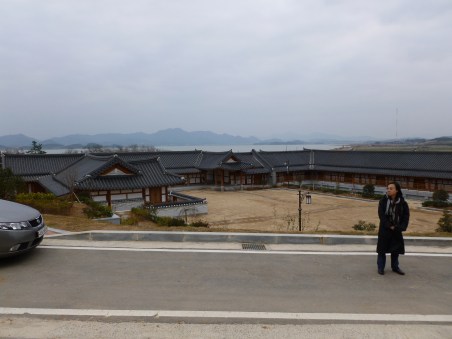
Part of our hotel complex

We were joined at the hotel, a “traditional” Korean hotel, by one of D.H.’s friends and gifts were exchanged. We had brought a bottle of tequila, which has a growing following in Korea but is difficult to find. I received two gifts. One was a display case containing 8 refrigerator magnets featuring the eight wonders of Mokpo. I was told it was from the mayor’s office to a distinguished visitor from America. The other was a box set of a Korean whiskey made from 100-year-old ginseng along with two shot glasses and a small sample bottle. The shot glasses and the small bottle will make it back to the US if anyone wants a taste.

Yong Soon decided she wanted to play Oh, Hell, so we taught the game to our Korean friends. They added an extra twist. Whenever you fail to make your bid, you have to drink.

Sunday morning we were taken to another restaurant where breakfast was already on the table. It featured, among myriad other things, yellow croaker.

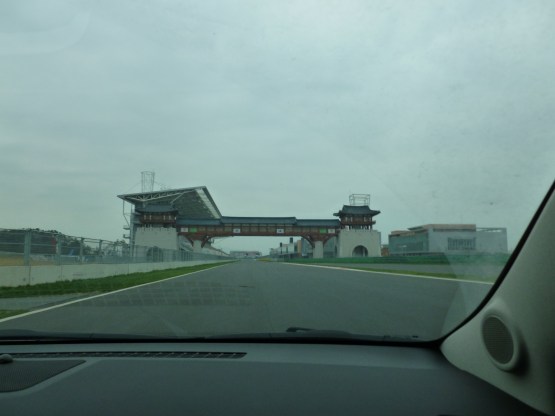
The next stop was at Korea’s only Formula One racetrack. The first Korean Grand Prix was held in Mokpo in Oct., 2010. There are currently no Grand Prix races in the US, though it appears there may be one in 2012.

It was Sunday morning, but D.H. had used his connections to get us in. We got a tour of the VIP suite ($5,000 apiece for tickets,) a model of the eventual F1complex which is to include a marina and a small city located inside the track, F1 simulators, pictures of all the drivers, model cars, and indoor seating near the starting line. We then went out on the course and took a couple of laps (a lap is 5.8K) around the track. There is something about driving on a Grand Prix course that turns a driver into a maniac and Dae Hun seemed intent on showing us how fast his car could take the tight turns.

comin up on the end of a lap

Next, D.H. had arranged for guided tours of the Natural History Museum and the National Maritime Museum. The Natural History Museum had a fairly extensive collection of the usual mammals, insects, amphibians, and full-sized dinosaur skeleton reconstructions. The Maritime Museum consisted largely of the findings from a 14th-century shipwreck found off the coast. The ship was apparently bound from China to Japan when it foundered and many interesting artifacts have been recovered, shedding light on the trade of that era.

Lunch was BBQ – pork, clams, mushroom, onions, and garlic. The restaurant owner sent over two bottles of the ubiquitous Korean raspberry liqueur.

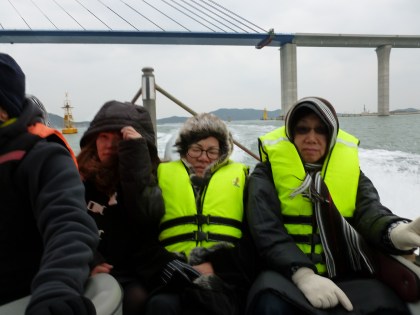
We were joined at the restaurant by the president of the Mokpo Water Skiing Assoc. DH had imposed on him to provide transportation to one of the literally hundreds of islands off shore. We proceeded to a small shack at the end of a short pier where we were outfitted with life jackets. I wondered why we needed them for a short trip to an island. Within minutes, I understood.

Asea

The boat was a small speedboat, obviously used for water skiing. It was not designed to carry 6 passengers plus the owner. It ran low in the water and the owner seemed to think he was on an F1 track. He got the boat up over 45 kph, which is very fast when you’re right on top of the water. He also hit some big chops, two of which slammed me onto the top of the windshield leaving me with a nasty bruise on my arm and a sore back that escaped a bruise only because I was wearing the life jacket. He also enjoyed hairpin turns that had the boat sideways to the water.


We eventually made it to Love Island, a resort island closed for the winter. We walked around most of the island, which was virtually deserted. We did come across a restaurant owner and DH asked if he would serve us some sashimi. He replied that to do that he’d have to go out to his abalone farm and get it, pointing to the area in the water. We passed.

On return, DH said we had to climb Mt. Yudal, a228-meter high rock in the back of Mokpo. Meeok demurred, but yk, Yong Soon and I set off with DH up the steps that had been carved in the rock. It seemed that every time I thought we had reached the top, the trail turned and more steps appeared, but we finally made it. A lovely view of Mokpo, the bay and the islands beyond.

Dinner was raw beef and octopus along with the usual yellow croaker. Afterwards talk turned to Moe’s Bar.

When I had earlier done a bit of research on Mokpo, I saw that there was a Moe’s Bar on Rose Street and had mentioned it in an email to, among others, Meeok. She mentioned it to DH and he said he’d never heard of it, but we should look for it.

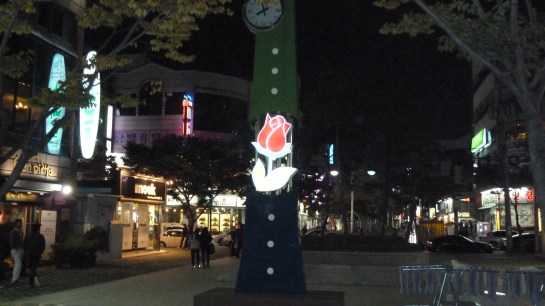
Mokpo-roseStreet

The Street is actually called Street of Roses and is a walk street through trellises that, we were told, are covered with roses in the summer. Moe’s is a second story place somewhat off the street. When we entered, DH remarked, “My god, it’s like walking into a foreign country. I’ve got to bring my boss here.”

The place was full of young kids, overwhelmingly women, from various English speaking countries. Apparently they had come to Mokpo right out of college to teach English. The only Korean in the place when we entered was one barmaid.

There was no place to sit and I suggested going someplace else, but the guys had talked to the Korean barmaid and she somehow found a place. Then we encountered another problem. The place didn’t serve food and Koreans can’t drink without some kind of food, called anju. We were about to leave again and again the Korean barmaid came to the rescue with several bowls of popcorn, which everyone agreed would do.

It was apparently trivia night at Moe’s, conducted of course in English. In this case, a Christmas themed trivia. I knew the answer to the first question, Isaac Newton, born Christmas day. At that point, DH decided we needed to get a piece of paper and play, even though most of the group, including him, couldn’t understand the questions.

Sadly, I only got only one other answer – Dean Martin.

The second round, however, consisted of a list of Korean words, each followed by a hint to its meaning. You had to give the English meaning. YK nailed every one, even before the hint.

Before the game ended, however, we had to head to our train. We were on the last train out at 10:20, arriving in Seoul at about 1:30, after the buses and subways had stopped for the night. I was tired enough that I probably would have wanted to take a cab anyway.