Petropavlovsk(Russia): a Day Trip

May 2018

img_1507
the Cathedral

Kamchatka was one of the places I always noticed on the globe and thought I might never have a chance to go there. It is a huge mass of land somewhere between Asia and Alaska, but it seems to be close to nowhere. When we saw Petropavlovsk(population: 180,000), the largest city on Kamchatka Peninsula, as a stop on the itinerary of the trans-Pacific cruise from Japan to Vancouver, Pat and I said,”why not?”
img_1045

img_1028

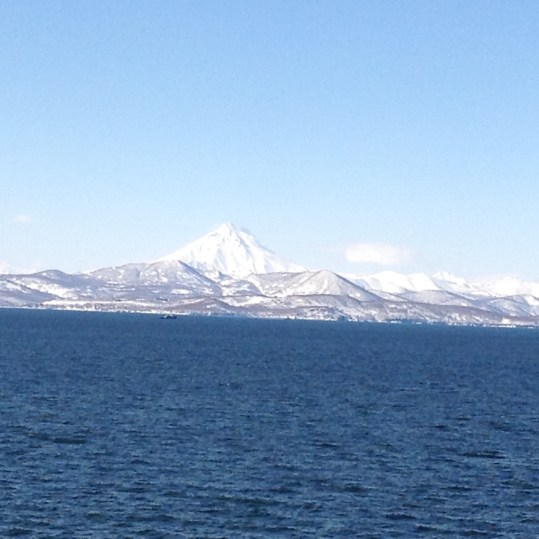
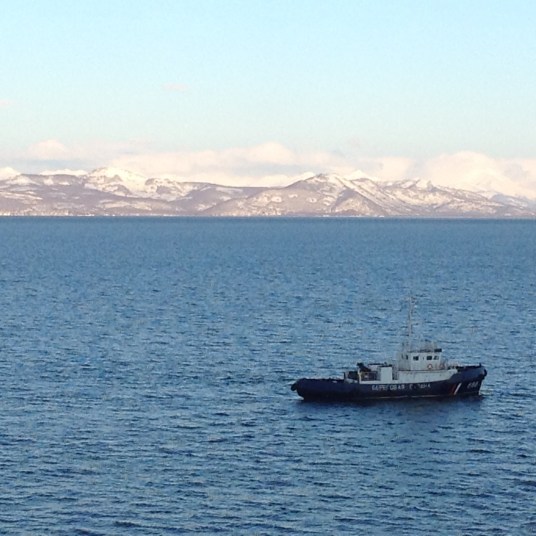
We arrived in Petropavlovsk harbor 2 days after leaving the northern island of Japan, Hokkaido. We started seeing snow capped mountains as we approached Kamchatka, and there were more and more of them as we got closer. There is no road connecting this peninsular to the rest of the world: you either fly in or sail in.

The cruise ship(Celebrity Millennium) had to be tendered, and life boats from the ship brought us to the shore. It was supposed to be a 5 minute ride, but extremely strong wind made it hard for the life boats align right to be able to park at the dock. Exiting the port, you could either turn left and walk up the hill to the cathedral area or turn right to walk straight into their downtown area. (map)

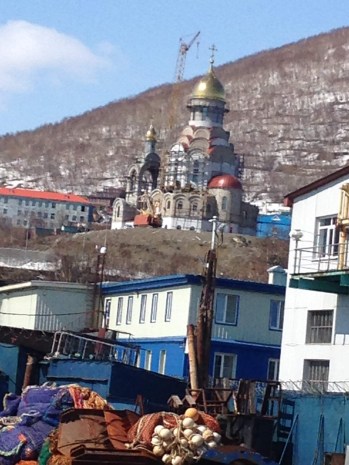
We first chose to turn left and made to the Cathedral. Unfortunately, it was under renovation and we could not get in. There was not much else going on in that area, thus, we walked down the hill and found a big Wifi sign at a beer joint pretty close to the port entrance. The place did not look very promising from outside, but, once inside, it was quite nice and cozy and served decent food. The bartender was friendly and spoke enough English to chat with us a bit.
img_1505

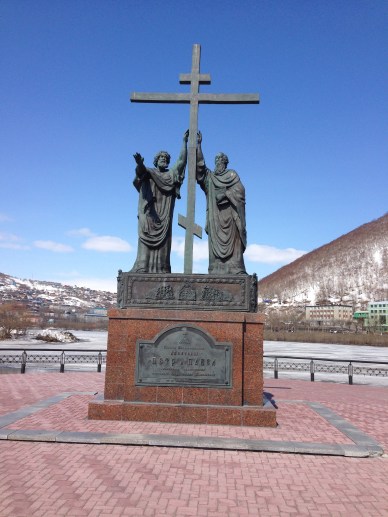
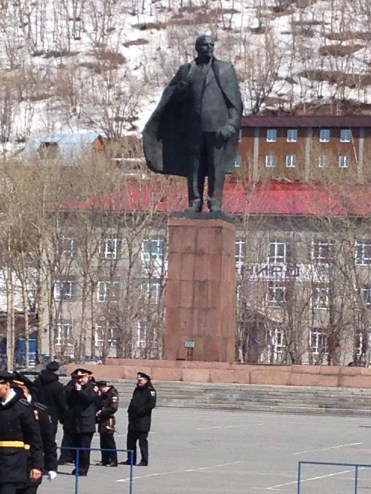
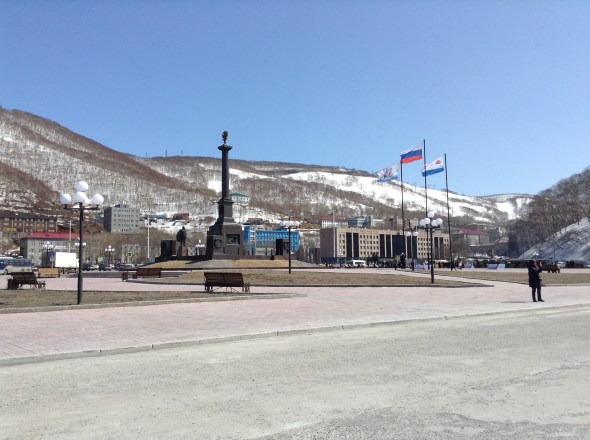
We decided we had to see the downtown even though there didn’t seem to be much of anything there when we looked down from the hill top. As we got closer, we noticed the statue of Peter and Paul: Petropavlovsk meant Peter and Paul, the names of two ships Vitus Bering(yes, the guy whom Bering Sea is named after) arrived on in 1740, the St. Peter & the St. Paul. Soon we could see a big square with a big statue in the middle: who else but Lenin’s. Behind that were several buildings that looked like government offices.
img_1496

img_1047

There were some restaurants and shops scattered around in the center of town. Nothing charming or attractive caught our eye. Then busloads of soldiers started arriving. They all walked over to Lenin Sqaure and seemed to be getting ready for a parade of a sort. Maybe we will get to see a Russian military parade, we hoped. More and more soldiers arrived, but nothing was happening. It was windy and cold. after 20-25 minutes of waiting, we had to give up.

Returning to the ship was a long process due to even stronger wind. The cruise staff arrived with a big pot of soup & served it to waiting passengers, and that really helped. Well, now we can say we’ve been to Kamchatka.


Yokohama(Japan): a Day Trip

April 2018

Image result for yokohama

We had been to Yokohama about 15-20 years ago, and the most unforgettable thing was that not a single restaurant we walked into took credit cards and there was no bank or money changer open on a Sunday. There was no ATM machine that handled international transactions among the ones we checked. This meant we had to go back to Tokyo to have lunch while we were starving! It felt like that city was just a Tokyo wanna-be but was not quite there yet.

Yokohama(population: 3.7 million) today is a vibrant city in its own right as the second most populous city in Japan, and I have no doubt it is ready to get paid by any means. We arrived from Osaka on the bullet train(a little over 3 hours, about $120) and the local metro cost was included in the ticket. It was a quick ride to Sakuragicho Station from the bullet train stop, Shin-Yokohama, then it was not hard to find the Red Bus(Akai Kutsu) right outside of the station. “C Line(China Town)” cost us about $2 each & took us right by the cruise terminal(“Osanbashi-kyakusen Terminal” stop) where we were to start our trans Pacific journey.

After checking in and eating lunch on the ship, we walked out and got back on the Red Bus to explore the city. We vaguely remembered visiting Ramen Museum and Curry Museum the first time we were there, but now there was a separate museum for cup noodle version of ramen, and the curry one was gone. We did not feel the need to go inside on a nice lazy sunny day, and we decided to go around the loop on the bust to see what it’s like.

It seemed most things were happening within walking distance from the cruise terminal except for a park, Sankeien Garden, at one end of the “C” Line. We did get off the bus there to walk around the park. After a while, we got back on the bus and got off near the cruise terminal.

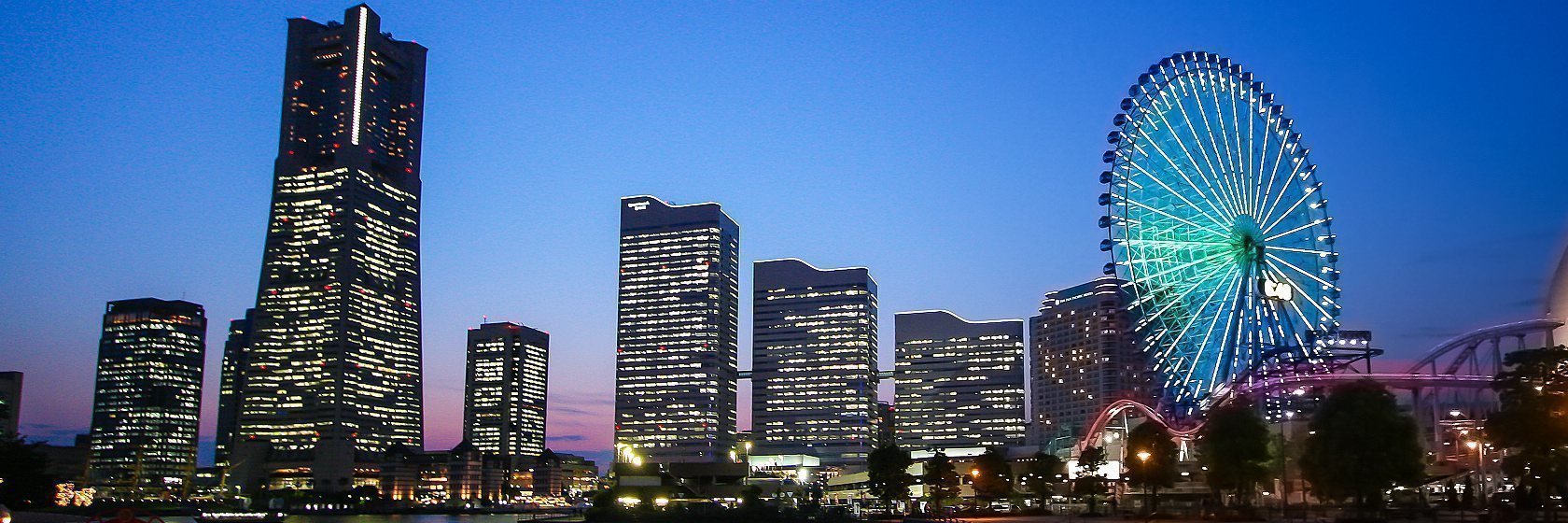
The biggest China Town in Japan happens to be in Yokohama, and it is just a 10-15 minute walk from the terminal. We walked around the area for a while and tried to decide what to do next. There were many shopping malls and eateries in this general area, and we could have easily killed hours. For us, the problem with visiting a big modern city filled with high-rise buildings is that they all look the same. Yokohama was like Singapore or Seoul but with not as much character. We were tired from all the walking we did in Osaka the previous day any way. So we went back to our comfortable room on the ship.

Don’t get me wrong. Anyone who is not as jaded as me would find plenty of things to do (look at the areas number 1 & 2 on the map) in Yokohama to fill a day or two. It could be a relaxing holiday in a big city relatively close to a major international airport and a seaport.

[Update: November 2019]

our neighborhood

We were back in Yokohama as part of an organized 10 day tour of China and Japan that we had signed up for. We arrived in the evening & spent the night at a high rise hotel by Yokohama Bay. All we could do was eat dinner at a restaurant nearby and sleep. We did get a glimpse of their sophisticated urban modernized traditional dining scene, though. Sorry for that wordy sentence. A case in point: we ate at this place which was basically a casual dining/drinking spot that seemed to be filled with “salarymen” and women. Their food was pretty much traditional Japanese, but presentation was more modern.


Osaka(Japan): 1N/1D

May 2018

img_1437

We were to arrive at Osaka’s Kansai Airport(KIX) at 8:30 PM, and we decided to spend the night at a hotel nearby rather than trying to go into the city late at night. Going just 2 stops on the train(Nankai Line) from the airport, we arrived at Izumisano Station and chekced into a small hotel right by the station. The next morning, we had a decent breakfast that was included in the hotel fee.

The train to Osaka Station took about 40 minutes. As expected, it was a huge station, and we had no idea how best to get out of there to get to our Airbnb studio. After stopping and asking around multiple times, we finally found our studio. In front of the apartment building, Yusuke, Pat’s roommate from graduate school days, was waiting for us. He’s a retired math professor at Osaka University, but he lived way outside of the city limit. He confessed that he didn’t really know the city really well, but he would do his best to show us around.

img_1432
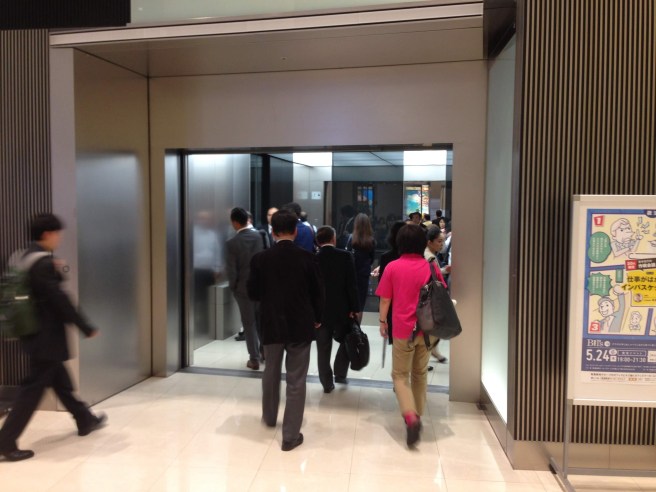
a car fits in nicely in this elevator

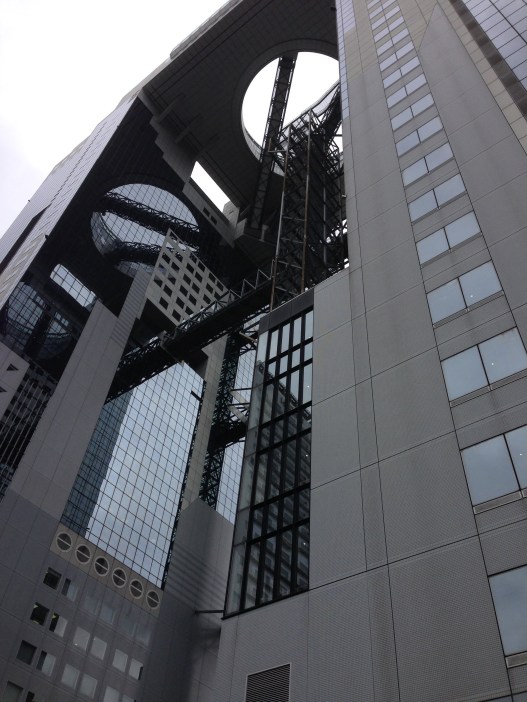
He first wanted to show us some interesting buildings in the area. The 3rd most populated city in Japan(2.7 million in city proper vs. 8.9 million in Tokyo and 3.6 million in Yokohama), Osaka sits in the middle of a metropolitan area where 19 million people live, and it is well known for modern architectures. Many of these were in the vicinity of Osaka Station. One building had elevators big enough to carry a car each. Another had escalators continuing one way up or down so people do not need to make turns to move to the next floor. We had lunch in one of the buildings we visited. We did get to Umeda Sky Building, one of the most famous buildings in the world, but we never tried the world’s highest escalator in that building. After all, there’s only so much pleasure one can get out of riding elevators and escalators!

img_20180424_220754

img_1434

Negotiating through underground pathways filled with shops and restaurants was another tricky skill we had to develop quickly. It was hard to tell which direction we were going, and Yusuke was not much better than us. But he, at least, could ask for help in Japanese. After all these adventures below and above the ground, we got tired and thirsty. We had to take a break at a cafe near the Sky building.

We took the subway to embark on another whirlwind walking tour of the city. This time it was about eating and shopping: well, watching other people shop and eat would be actually more accurate.

img_1436

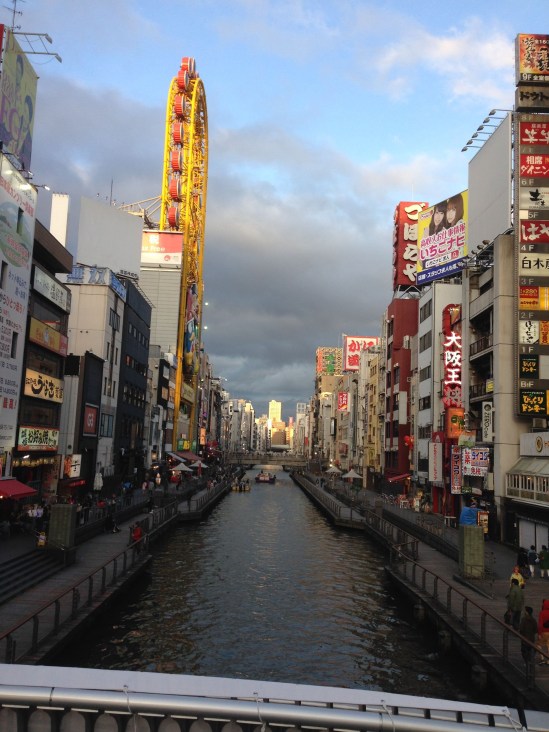
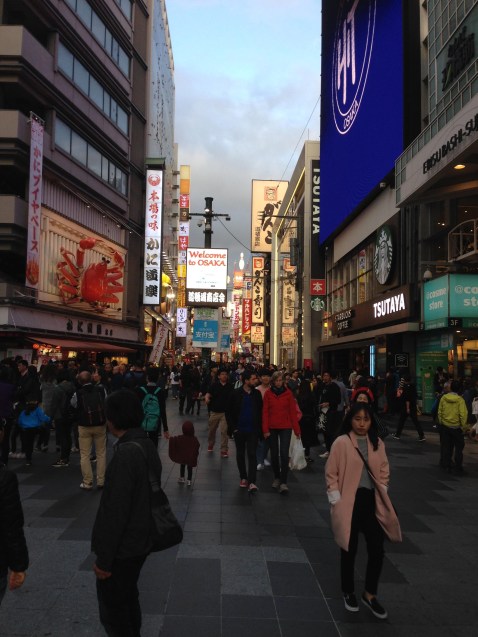
We got off at Namba station and immediately noticed throngs of people everywhere. Yusuke led us first to Ebisubashi Bridge where famous Glico running man billboard has been residing for over 80 years. Glico is a candy company based in Osaka, and somehow their company symbol has become a cultural icon. By this time, some of the neon signs started coming on, and the whole area of Ebisubashisuji Shopping District became very colorful. There was no shortage of shops and restaurants in this and neighboring Dotonbori area.

img_1435

South of this area had more traditional markets, and there Yasuke found a restaurant that he liked that sold all the signature dishes of Osaka, such as takoyaki, okonomiyaki, kushitaksu and so on. Washing it all down with a mug of cold beer was the nice to way to end a long day.

A friend of mine went to Osaka a few months later, and she tried a bike tour of the city, and she really liked it. Maybe next time we will stay a bit longer and try that. Osaka seemed much more manageable and relaxed than Tokyo. We liked it.

The next morning we went to Shin(New) Osaka Station to catch a bullet train to Yokohama. Thinking of the nice breakfast we had at the hotel previous morning, I thought we should get to the station early and find a nice Japanese breakfast there. Well, the only breakfast offered at the huge station was at McDonald’s. We should have eaten at Osaka Station. Now we know.