South African Safari: Sebatana Private Reserve

May 2022

What? $1,699 for two people for a week of safari? Where? At a luxury lodge in South Africa called Sebatana.. We could not believe the Travelzoo email telling us about this deal. An African safari typically cost more like $5,000 per person from what we had seen up to that point, and that was beyond our price point. (We did not have a bucket list, and, we knew there were so many wonder-filled places to visit around the globe without paying a lot of money). Let’s grab it & see what happens. This was February of 2021, and, tons of super deals came out around this time for hopeful post-pandemic travels. Thanks to this cautious/desperate optimism in the travel sector, we got to go to some of the “bucket list” hot destinations such as this one, Galapagos, and Antarctica.

lodging: A Dutch couple bought an old farmland and started turning that into a private reserve over 20 years ago. There were 4 lodges on Sebatana ground, each with 12 to 14 rooms, a dining room, and a swimming pool. We were in the Elephant Lodge which was almost full at the time with 24 guests. Rooms were spacious, comfortable, and nicely decorated in more rugged glamorous camp vibe than a typical city luxury hotel style. Is it a 5 star operation as they claim? I’d say yes if the highest rating is 7. I’d give it a 4 star rating out of 5. Don’t get me wrong. We were totally happy there. It’s just that it was more like a nice friendly family style operation with a big mama chef rather than an uber-luxury hospitality unit that some high-end lodges offer.

location: 230 Km (143 miles) north of Johannesburg. It took 2.5 hours to get there from the airport in Johannesburg. The drive was pleasant with a snack stop at a farm restaurant. This location is in a malaria free zone.

Lots of open space in the area so that you could spot animals easily as seen below.

Safari: Oxford dictionary defines a safari as “an expedition to observe or hunt animals in their natural habitat, especially in East Africa.” A modern day safari basically consists of riding in a 12 passenger 4×4 vehicle with a canvas top and open sides & looking for/at animals minding their own business. The rule #1: NEVER get out of your car.

The highlight of any safari trip is to see the Big 5 animals: lion, leopard, black rhinoceros, African bush elephant, and African buffalo. Have we? Yes, we have. Sebatana Private Reserve had plenty of animals, but, spotting the big ones was harder here. For that, we had to sign up for the optional tours to a neighboring Welgevonden Game Reserve or Pilanesberg National Park, 3 hours away.

As soon as we drove into the Sebatana ground, these guys greeted us without bothering to look our way. Within the 40,000 hectare landmass of the property (New York’s Central Park: 340 hectare), more than 75 different mammals, over 300 different species of birds, 270 flowers and more than 100 different trees live peacefully according to their claim.

Big 5:

African buffalo: These guys were grazing when we entered Welgevonden one morning. Welgevonden was about the same size as Sebatana, but it was set up more like a park where anyone paying a fee could enter. Sebatana was for their own lodge guests only & most of it was meant to be preserved without human access.

rhino: They were easy to spot at Welgevonden and Pilanesberg (55,000 hectares) & seemed to travel in family groups.

elephant: They were slowly walking around Pilanesberg when we saw them.

lion: Our guide was in constant communication with other guides over a walkie talkie and cell phone to share the information of lion sighting, and, we had seen a glimpse of one or two at Welgevonden. Then, we all saw them right in front of our eyes at Pilanesberg. Two adult females – one pregnant – and a few kids were walking along not paying any attention to us. In fact, they decided to cross the path our vehicle was on, and, the whole gang stepped in front of our car as if we did not exist. I have to admit this was the highlight of the safari experience for me!

leopard: Most illusive of the big 5 is the leopard, we were told. But our guide found one on top of a tree showing off his catch, a kudu, maybe, at Pilanesberg. Even though we couldn’t see it up close (do I really want to?), we could feel the pride and strength of this nimble prince.

others: Along with giraffes, zebras were in abundance at Sebatana. Whenever I looked at the animals on the ground at close range, I was struck by the beauty of these animals: colors, shapes, movements. That was something I could not feel as deeply by looking at photos or videos. You think this zebra photo is beautiful? Wait till you go see in person. Hope you can see a bit of what I mean in following photos.

kudu? What’s that, you may ask. Kudus were the most common game meat served almost every day. Eland was another common animal similar to kudu but bigger. Their meat was tenderer.

impala: I only knew of impala as a automobile brand. Very attractive animal with graceful movements is my biased opinion.

daily program: Each day started early around 6:30 AM for a game drive. There usually was some down time after lunch. 5 optional tours were offered: 2 to Welgevonden, 1 to Pilanesberg, a night safari, and a tribal evening. When the whole package was offered for 250 Euros/person, most people bought it. We thought all the game drives were worthwhile. The night safari was better as an idea than as a reality since we could not see much of anything in the dark with a flashlight held by the guide. (More lights would have defeated the purpose.) The tribal night was much better than expected with a great local style meal and spirited performers. Day time temperatures were around 70 – 80 degrees Fahrenheit in late May, but it got cold in the evenings and early mornings.

There was supposed to be a tour of Johannesburg on our way to the airport on the last day, but the Apartheid Museum, the most popular place to visit in town, was closed that day. So we stopped at a monument in Pretoria and got dropped off at our lodging since we were not leaving that day.

A Tribal Evening: all bundled up & having fun

food & drink: We had a great chef who was well versed in the local cuisine and the popular western style foods. Breakfast and lunch were served buffet style while the dinners were brought to the table. Alcoholic drinks and soft drinks were not included and were available for purchase. Happy Hours were popular at the bar.

staff & tipping: There were 3 safari vehicles for our lodge, and the one you stepped in the first day became “My Car” and the driver/guide was yours for the rest of my time there. These guides did so much every day for taking us around, settings things up, making sure everyone was safe and happy. They were very knowledgeable about the animals, geography, trees and plants, local culture, and having fun. We tipped our guide $100 ($10/person/day) for the two of us & we didn’t think it was too much since the safari guides depended mostly on tips. (An average monthly salary in South Africa is about $2,000 according to Google.)

Three kitchen staff and 6 cleaning/wait staff were tipped as separate groups in 2 envelops. We put in $40 to each envelop. They were all very kind and worked hard.

our friend, Myung Rye, made this video of our trip – no, she was not there with us

getting there: Sebatana was to pick us up from the airport in Johannesburg. The problem was there were so many other safari groups that it was hard to find our group. What made it harder was the guy who was holding the Sebatana sign walked off with the sign to talk to somebody, thus, I had to ask people with other signs about Sebatana. As you might be able to tell, you have to be a little patient and retain a sense of humor in South Africa in general. Nothing will work perfectly, but, things will work in the end.

Getting to Johannesburg from the U.S. was our responsibility with this travel deal. Most of the people in our group of 14 flew from Los Angeles to London (10 hours), then, onto Johannesburg (11 hours). Three people got on the direct flight from Newark Airport (NYC) to Johannesburg (14 hours). On the average, the round trip fare was around $1,100 – 1,200.

Voortrekker Monument in pretoria

total cost: $850 (tour cost) + $250 (optional tours) + $90 (tips) + $1,200 (flights) = $2,390 was per person cost in the end. I would encourage people to go even if the basic tour cost is twice as much as we paid.

extended itinerary: We were all the way to South Africa, and, we might as well see more while there, right? I wanted to include Namibia on this trip, but, the tourism was not back in full swing after the Covid pandemic in this part of the world, thus, it was hard to find a reasonable way to do so. We went to Victoria Falls in Zimbabwe for 3 days after the safari, then, we went to Cape Town for 5 days. This itinerary extension added about $1,000/person to our total budget.

Johannesburg -> Sebatana Private Reserve -> Victoria Falls -> Cape Town

Tena (Ecuador) & Amazon Rainforest

September 2022

sunset on Napo River

Rain. Jungle. These were the only words that popped into my mind when I heard the term Amazon rainforest. I kind of knew that the Amazon River did not run though Ecuador, and, I was curious how we could get to the Amazon Rainforest during our packaged tour of Ecuador. The tour did offer two choices out of Quito: one to the hot springs town of Banos and the other to Tena to experience the Amazon Rainforest. I picked Tena to fulfill my curiosity. (Banos has a more interesting town scene, I believe.)

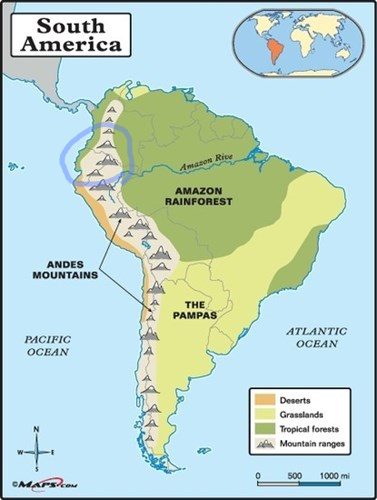
The first step in getting to the Amazon Rainforest was climbing up (as high as 14,000+ feet) and down the Andes Mountain Range. The road was winding but in fair condition It was a rather tedious drive, though. It took about 5-6 hours to cover the 119 miles with a lunch stop.

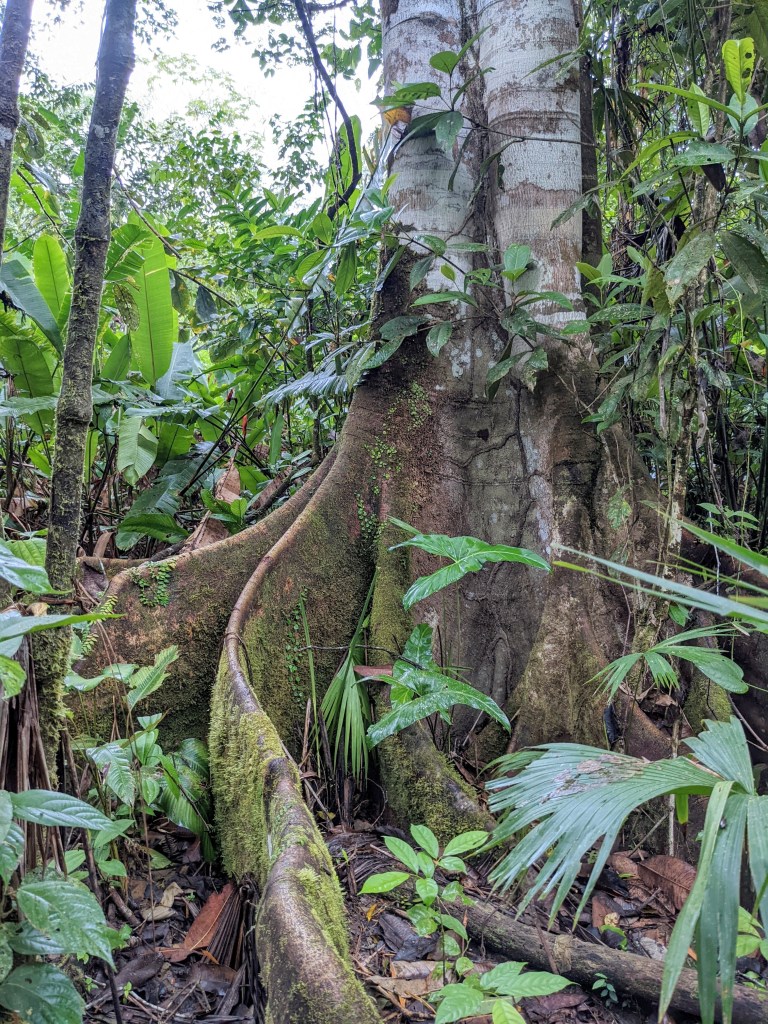
As we descended the mountains, our guide introduced to us to the concept of cloud forest, a type of rain forest in higher altitudes. Clouds were hanging over us and light showers came down at times. The forest in this area did not seem as luscious as I had imagined a jungle to be.

Tena (population: 60,000) is the biggest city in the Ecuadorian Amazon Rainforest. The city itself didn’t seem special (Lonely Planet says otherwise, but, we did not see that), however, it is the launching pad for all the would-be Amazon explorers who come to Ecuador. We just drove through it and went directly to the boat dock on the Napo River where the adventure began.

The Napo River is a tributary of the Amazon River, and our hotel was built on a bank of the river reachable only by boats such as these. There had not been enough rain in the area for some time and the water level had become so low that the motorized boats had to be pushed along by a stick whenever they got stuck. The 20 minute boat ride was very pleasant, though. We were told that the optional tour of visiting a native village would have to be canceled because the boats couldn’t reach it due to the low water level.

Itamandi Ecolodge was one of the all inclusive lodgings in the area. There was no restaurant or market along the river, thus, these lodgings had to be all inclusive. They were all discretely positioned on either side of the river that we could not see them well as our boat passed by.

Our room was quite spacious, nicely decorated, and comfortable. We were supposed to go for an evening jungle walk after dinner, but, the rain started pouring down. Ah, the rain forest! We fell asleep listening to the loud music created by torrential rain.

Luckily, the rain stopped by the next morning. Someone from our tour group asked the guide, “isn’t the water level high enough now after that much rain so that we can to go to the villages?” The guide chuckled and said, “not even a millimeter higher.” We all got fitted with rain boots and a walking stick and were ready for a jungle walk.

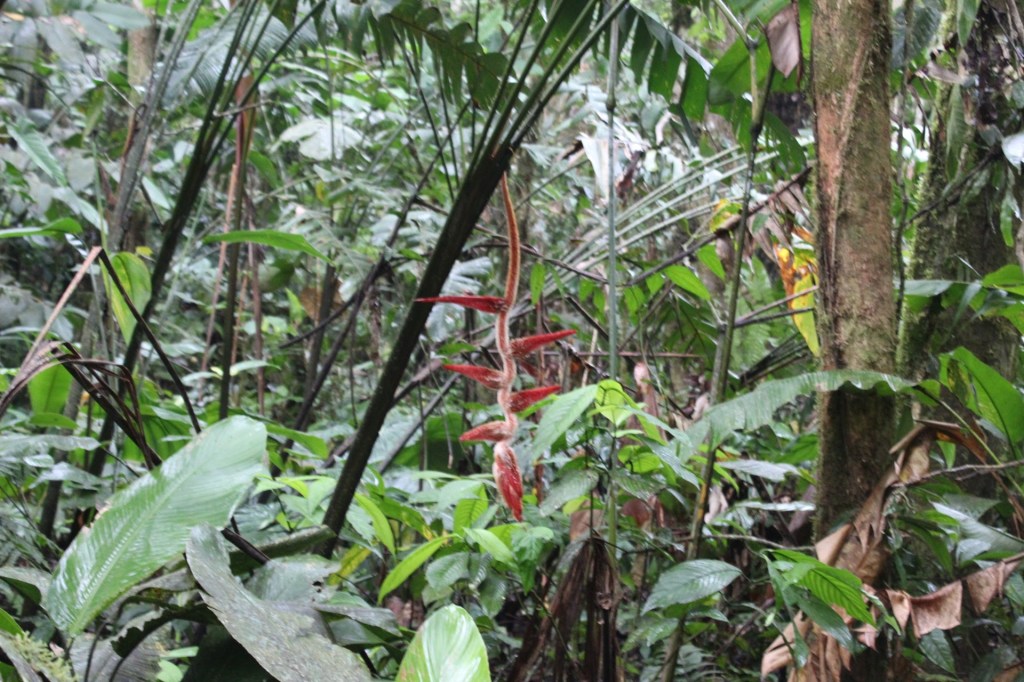
After a short boat ride, we walked into the jungle. The ground was mostly level but muddy. Yes, the rain boots were a good call & so was the walking stick.

The local guide tried to show us the way of life in the jungle: what they used to build a house, what they ate or wore, etc. Of course I don’t remember any of the names of the plants. Most of the natives don’t live like that any more, but, there are some who still live deep in the jungle somewhere.

After returning from the 2 hour program, we finally got some rest from two days of non stop traveling. Some people did go swimming in the river. Many swam in the hotel swimming pool. I chose a hammock and parked myself there for hours.

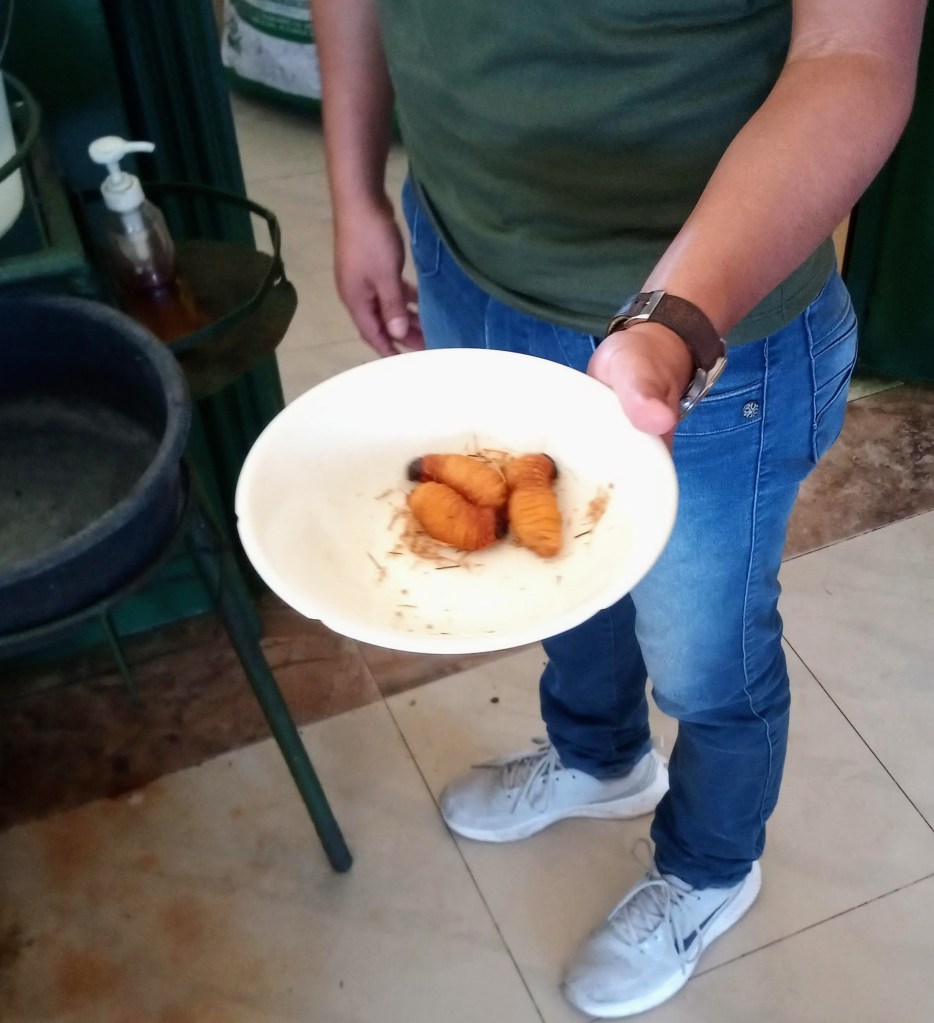
Our guide arranged a stop in a local market in Tena on the way back to Quito. He said we had to try a local delicacy: grilled larva. He was sensible enough to order just one portion for everyone to have a taste. I didn’t find it super delicious but it was quite okay to eat. Well, try it yourself and tell me what you think!

So do I now have more words to describe the Amazon Rainforest other than rain and jungle? Survival. Resilience. And a deeper realization that what happens in a remote jungle does matter to everyone around the globe or vice versa.

I don’t think I can claim that I’ve been to “the Amazon” even though technically I have. I now have a remote idea what it could be like to be in the real Amazon jungle.

Itinarary: Quito -> Tena -> Quito -> San Cristobal (Galapagos) -> Guayaquil

Quito (Ecuador): 2 Days

September 2022

Quito, a UNESCO World Heritage site since 1978, was a stop on our Ecuador tour package. Founded in 1534, it is the oldest of all South American capitals. We did have 3 nights there, but, the first night, we did not get to the hotel till after midnight. Next morning we went to the Old Town area starting from the National Basilica shown in the picture above and number 3 on the map below. We did not go inside, but, our guide said the small entrance fee would be money well spent on our free day. He said we could walk up to the tower to see a great view of the city.

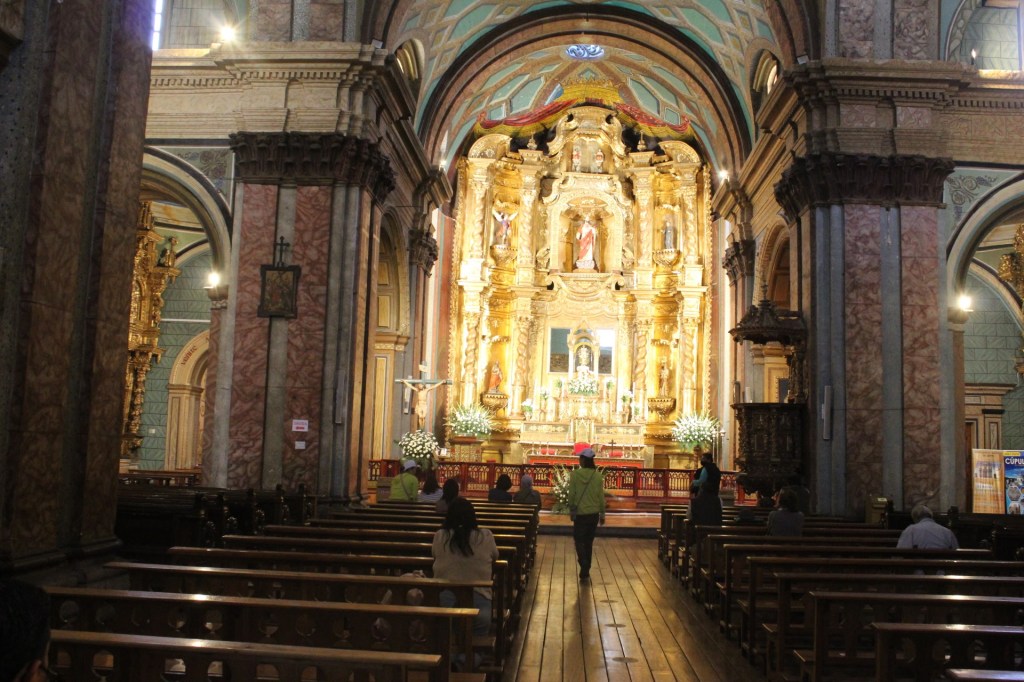
As seen on this map, most tourist attractions are concentrated in the Old Town. There are 4-5 churches within 2-3 blocks around the center square, Plaza Independencia (sometimes called Plaza Grande). All the churches used lots of gold decoration in the buildings in order to attract indigenous people to Catholic churches: gold meant the sun in indigenous culture. Garcia Moreno street is famous for the 7 stone crosses (churches) lining up on it.

the Jesuit Church really shows what you do with gold (#9 on the map above)

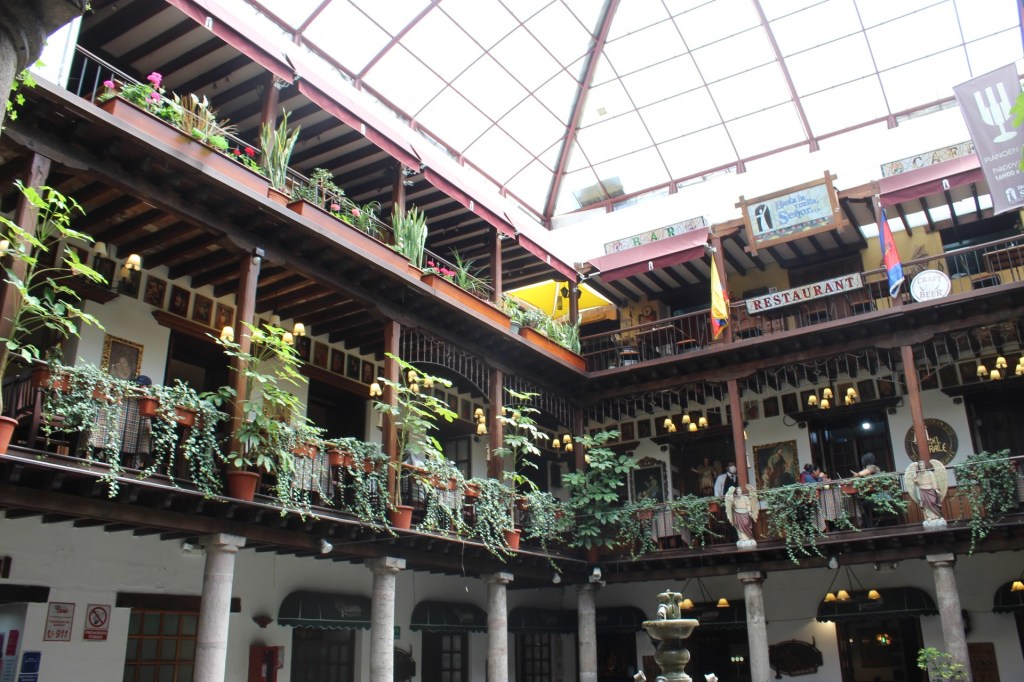
Oh, I have to mention that.right before we stepped in the main square, the guide took us to a small chocolate shop in a boutique hotel. Ecuador had been a major exporter of high grade cacao beans since 1800’s, but, they never made chocolates until recently. Dikaty Chocolate shop had 100% true dark chocolate that was quite delicious.

#5 on the map, El Panecillo hill, is seen from the main square area in the photo below

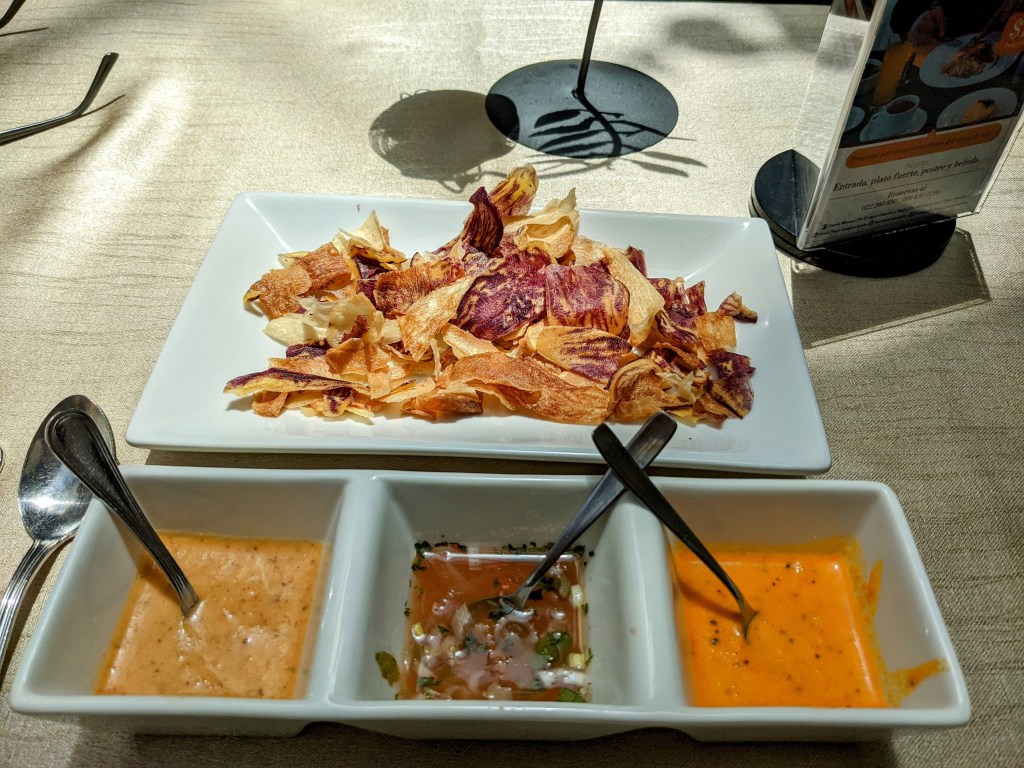
Our tour took us to the Amazon Rain Forest after visiting the old town. However, we picked up right where we left when we came back from that detour. While we were at the Dikaty chocolate shop, we noticed a business lunch special at the hotel: a 3 course lunch for $12.50! We had to try it & liked it very much. (Ecuador uses US$ as their currency.)

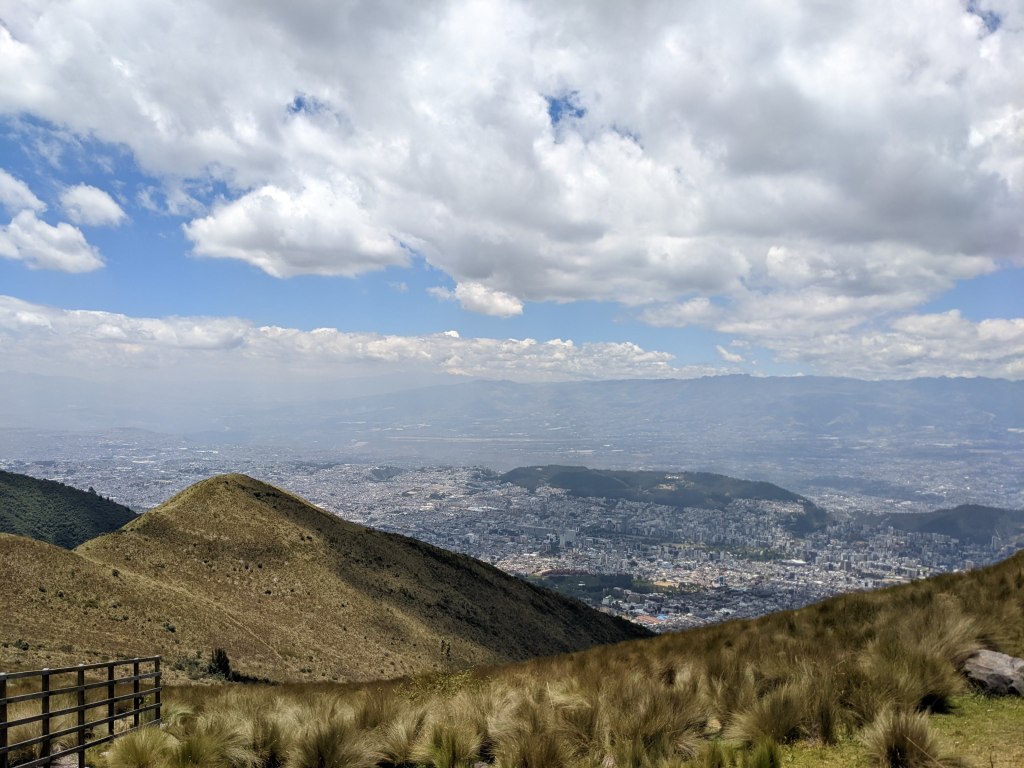
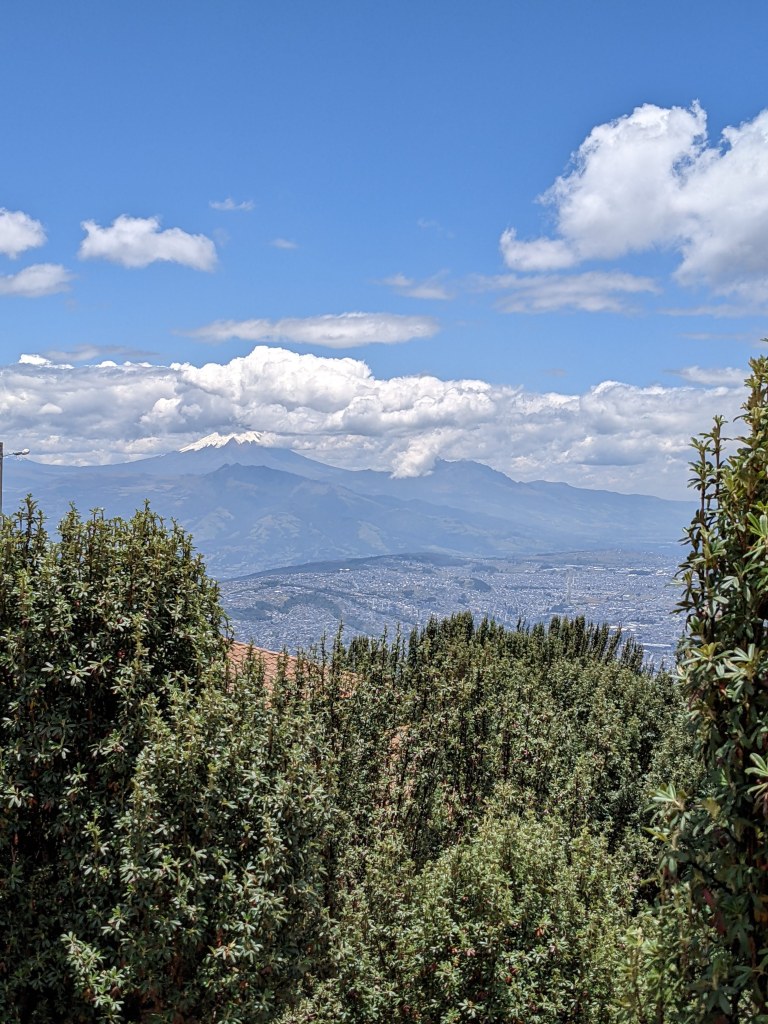
After lunch, we took a cab to the Quito Cable Car, #2 on the map above, and climbed up to 12,600 feet above the sea level to have the whole city under our feet. A few snow-capped volcanoes were peaking out over the clouds. Quito is located in a valley on the eastern slopes of Pichincha, an active volcano in the Andes, at an elevation of 2,850 m (9,350 ft), making it the second-highest capital city in the world after the Bolivian capital of La Paz (3,869 m/12,693 ft). Luckily, the altitude didn’t seem to bother us much here even though it had hit me hard in Lake Titicaca, Peru (12,507 ft).

Another major attraction in Quito area is Middle of the World City, a monument to mark latitude 0. Ecuador means equator in Spanish. The equator passes through 13 countries, but, there is only one country actually named as such, and Ecuador is banking on that as much as possible. So much so that there are several of these monuments competing for tourists according to our guide. Being on the equator means the sun rises around 6 AM and sets around 6 PM every day.

This monument is supposed to be the #1 attraction in Ecuador. There seemed to be lots of Ecuadorians visiting this complex when we were there. The yellow line is the equator in the photo above. There is a museum (free) inside the structure. An elevator takes you up to the observation deck on top which was quite crowded. Many shopping , dining, and performing venues were on the ground as well as a church sitting on the equator line where a couple can get married standing in different hemispheres. A cacao museum there was informative.

Notice the short shadows? There is no shadow at all at noon on equinoxes of spring and autumn.

There are 47 volcanoes in Ecuador. A view of one from the parking lot of the Middle of the World City.

I had been a bit disappointed when the tour itinerary showed only 2 full days in Quito because I thought there would be a lot to see and do in Quito. But 2 full days felt about right in the end. Tourists stay in downtown, but, the majority of the locals live in suburbs as the city grew from a small city center to a city of 2 million. This physical division made the city not as charming in our opinion because we din’t feel we really saw the local life.

If I had planned the trip on my own, I would have enjoyed visiting Cuenca, an old colonial city in the south of Ecuador.

Where we stayed: The hotel included in the tour package was Mercure Alameda, a decent hotel about 3 Km northeast of the old town. Our room was spacious and comfortable. The only problem was there was no heating and it felt a bit chilly at night in September.

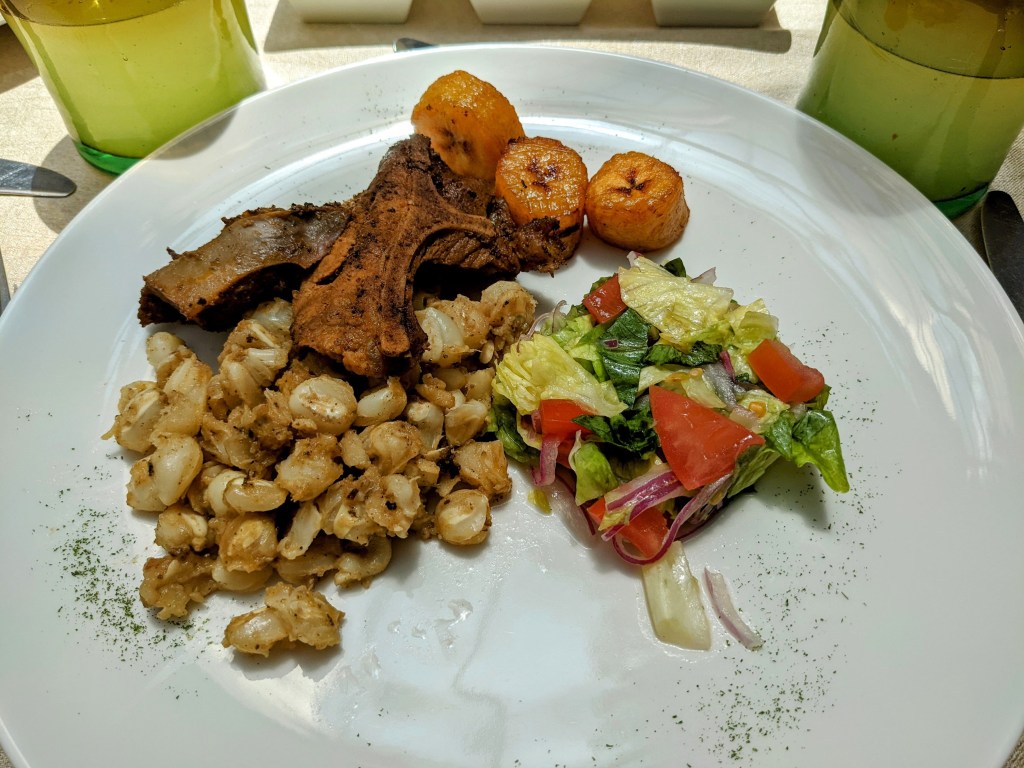
Where we ate: Quito is actually known for good food, but, we never had a chance to enjoy it. Breakfast buffet was provided for free at the hotel. There were some restaurants near the hotel, but, most of them were closed on Sundays, and, that’s when we were there. We did have a decent meal at a restaurant in the MIddle of the World City complex pictured above & got to taste the grilled guinea pig (not cheap at around $25 but tasty enough) that someone else ordered.

Trip Itinerary: Quito -> Tena & Amazon Rain Forest -> San Cristobal (Galapagos) -> Guayaquil