May 2025
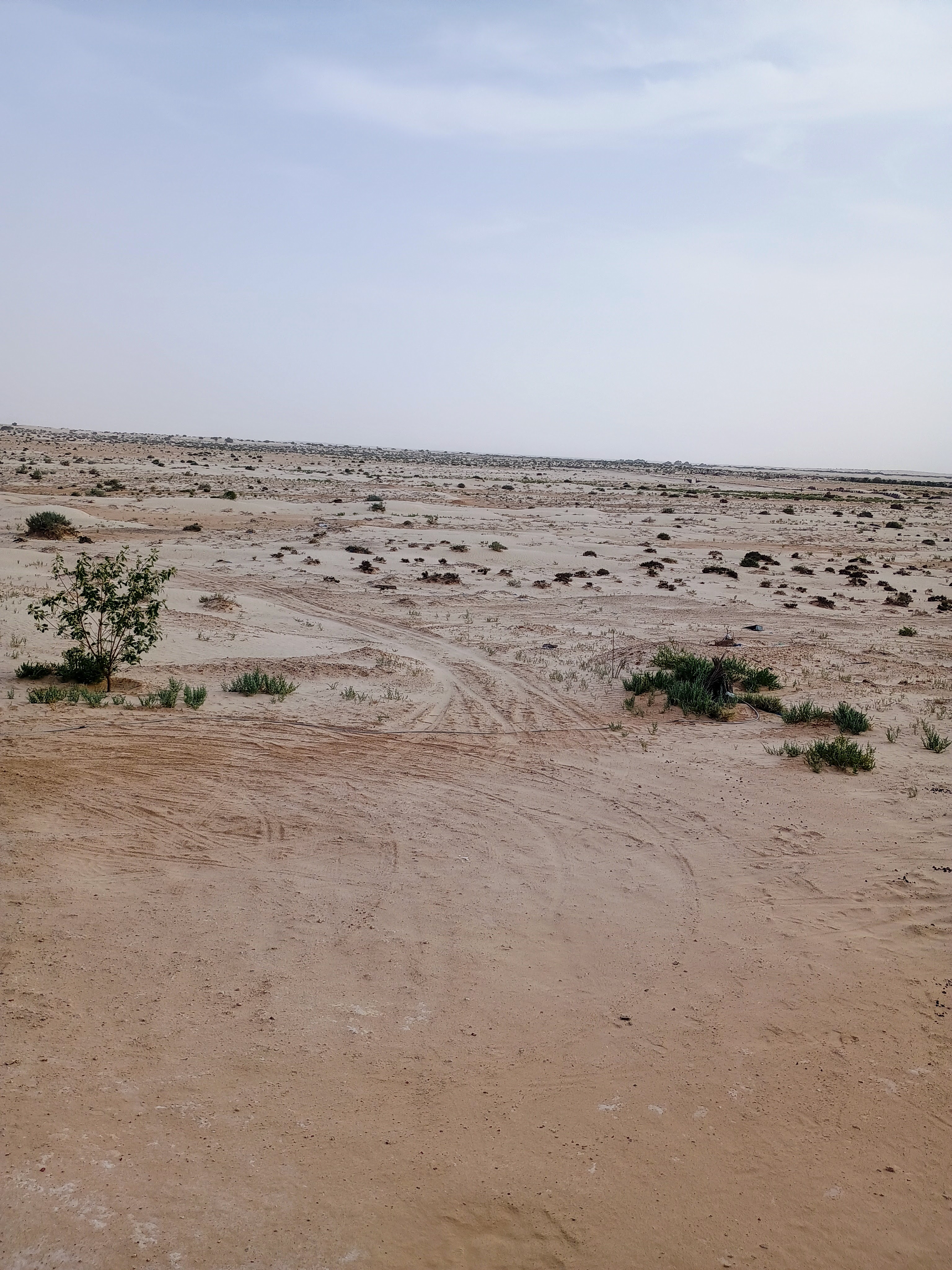
On our third day in Tunisia, we rented a car from a local agency and drove 580 Km south to explore the desert scene. The rental agent carefully filled out the rental form by hand. The whole process was not rushed – incidentally, the name of the agency was “Camelcar” which could have been a preview. Doubt crossed my high-tech conditioned mind, but, in the end, an actual automobile, with automatic transmission no less, was handed over to us.
The A1 freeway was in good condition and not crowded. We will stop for lunch somewhere half way down, we thought
Well, the urban scenery switched to endless dark green fields of olive trees, then, after we passed the half way mark, the road was pretty much empty and there was nothing along or near the freeway but desolate land. More than half of the 12 million population of Tunisia live in the capital region, and the second biggest city, Sfax, has a population of 300,000. Most towns in southern Tunisia are more like villages than cities.
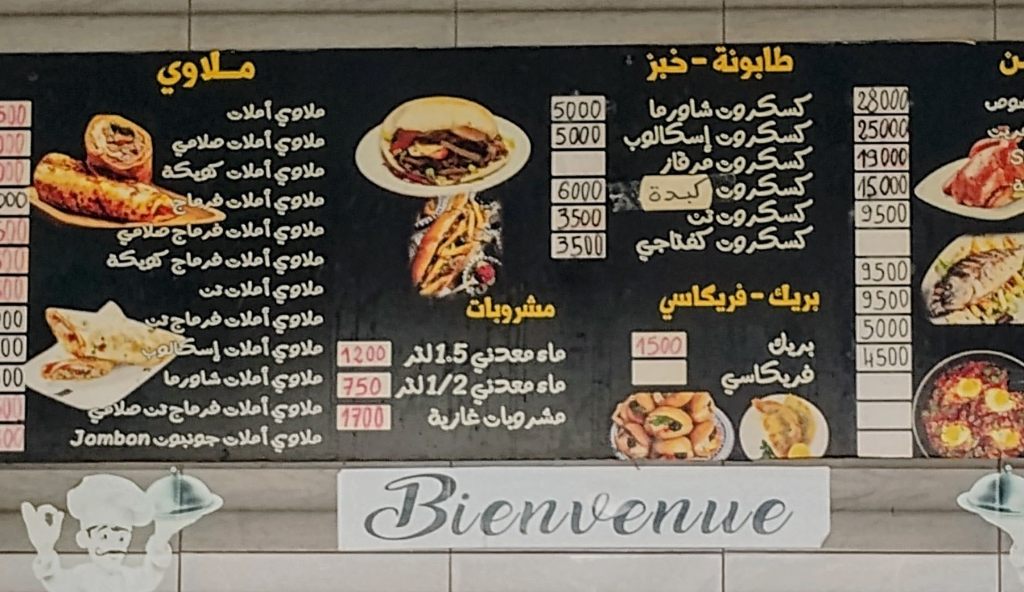
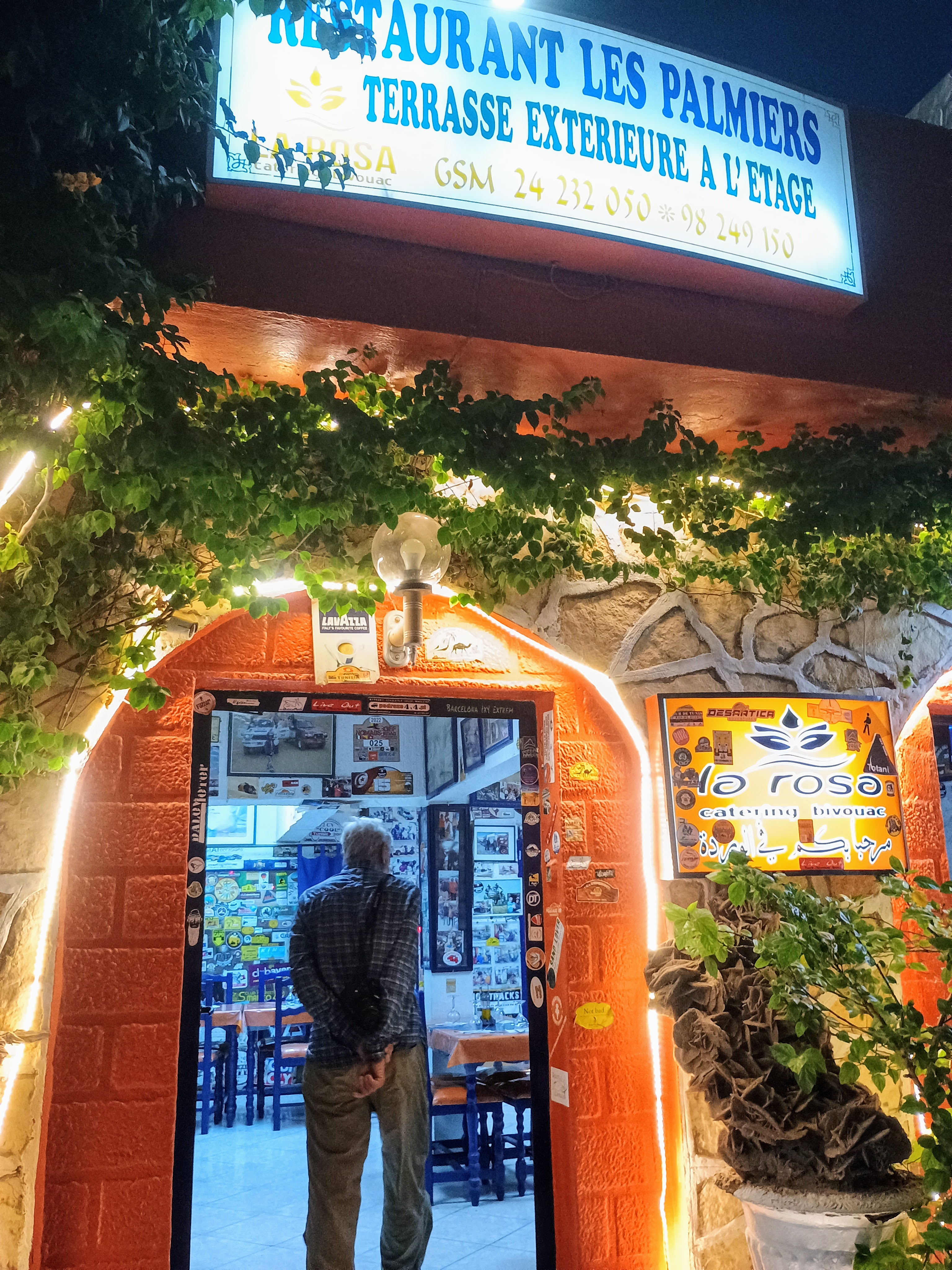
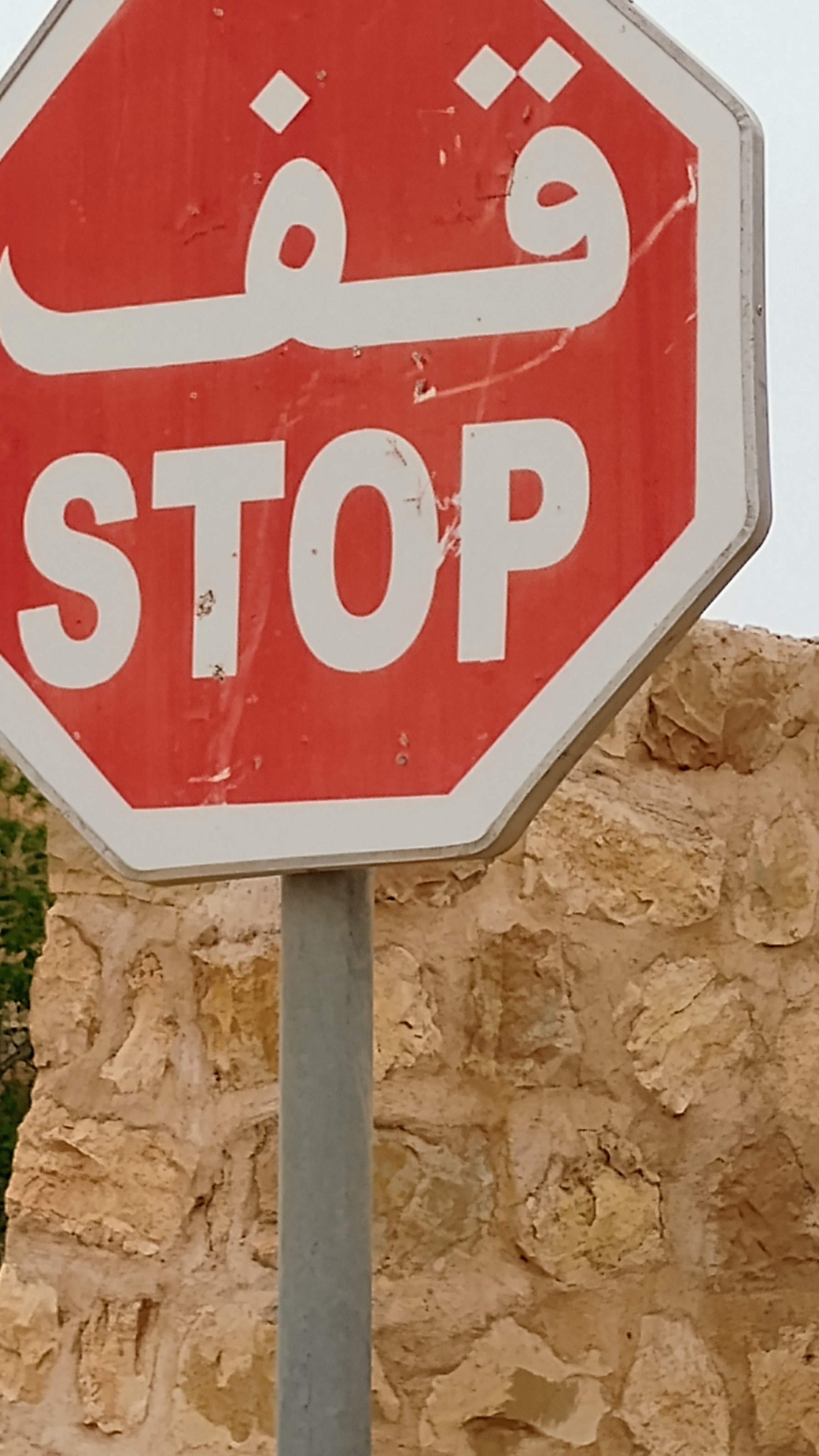
We were hungry and were looking for any sign of food. After getting off the highway and turning onto a paved local road that led to our destination, Douz, we saw a place where people were sitting around tables. Stop here, we all agreed. Sorry, we only serve coffee.. Where can we eat? Keep going a bit. We were so happy to see a food stand with the sign in the picture above hanging on the wall.
We ordered by pointing, combined with a few words of French. We were confused by the prices, though. Roughly, 3 Tunisian dinar was about one USD, but the menu showed too many zeros. It turns out that 1 dinar is divided into thousandths, not hundreds as in most currencies.
The food was delicious! Probably over 4 hours of unintended diet helped, too.
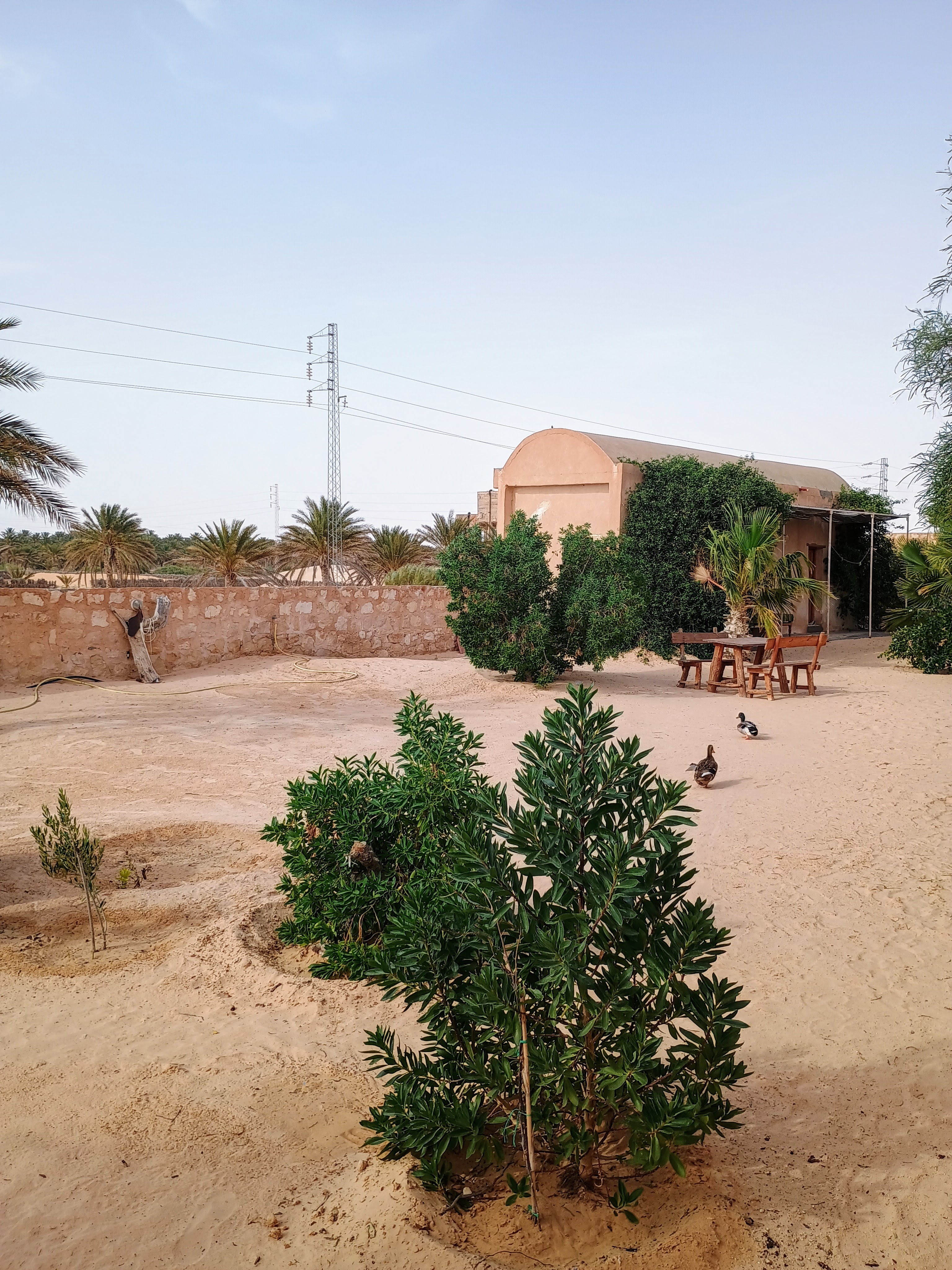
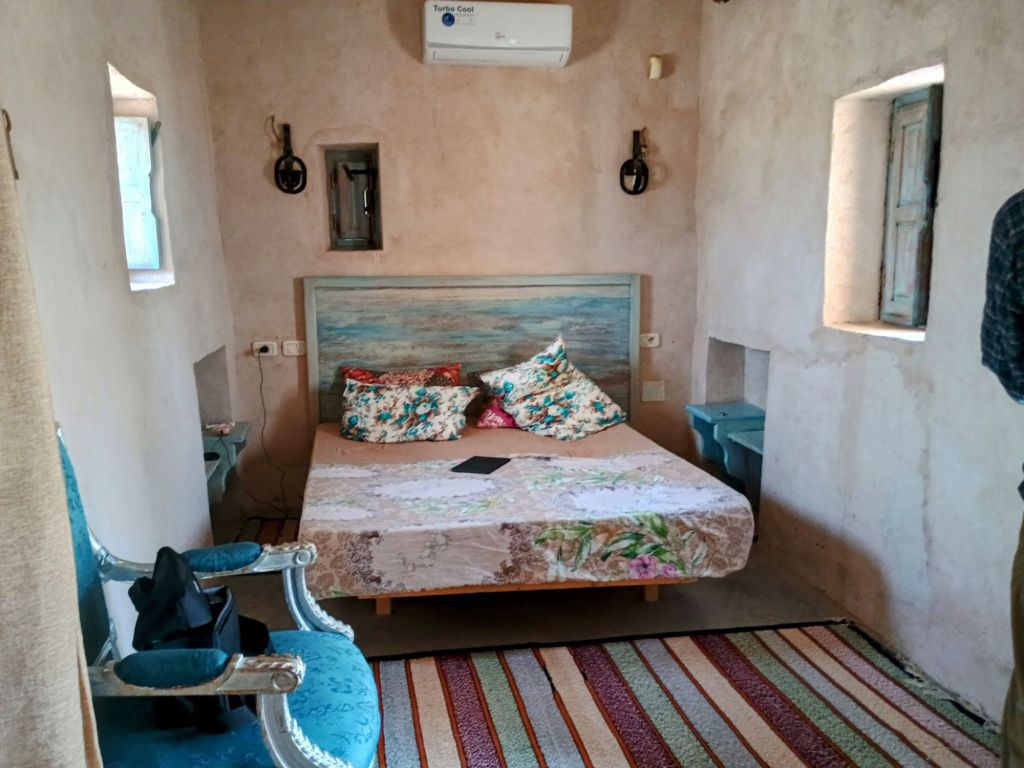
One of the best travel memories of all time, for us, was the night sky filled with billions of stars in the Moroccan Sahara. I was hoping to have that experience again in the Tunisian Sahara, thus, I chose a lodging right next to the desert.


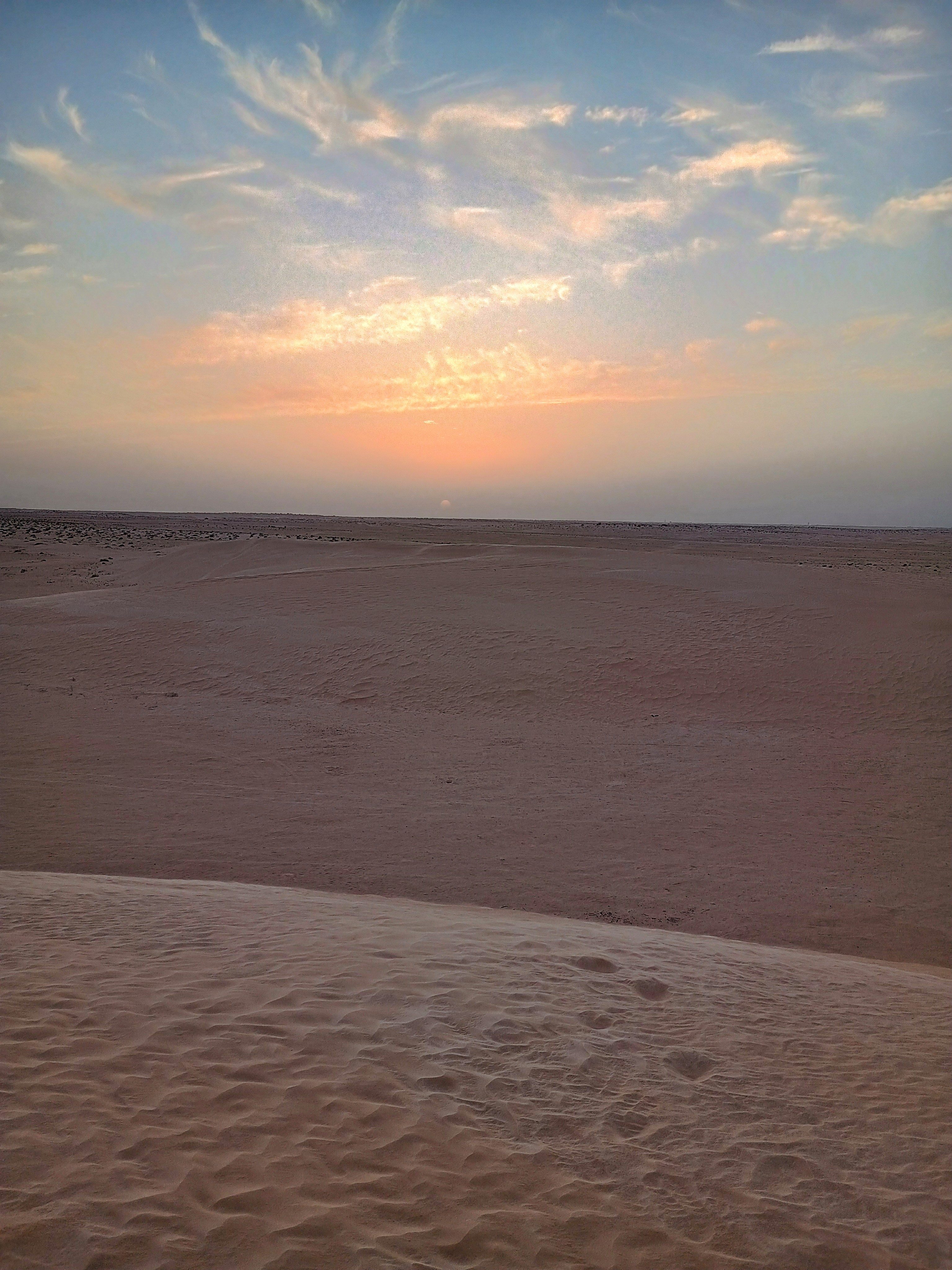
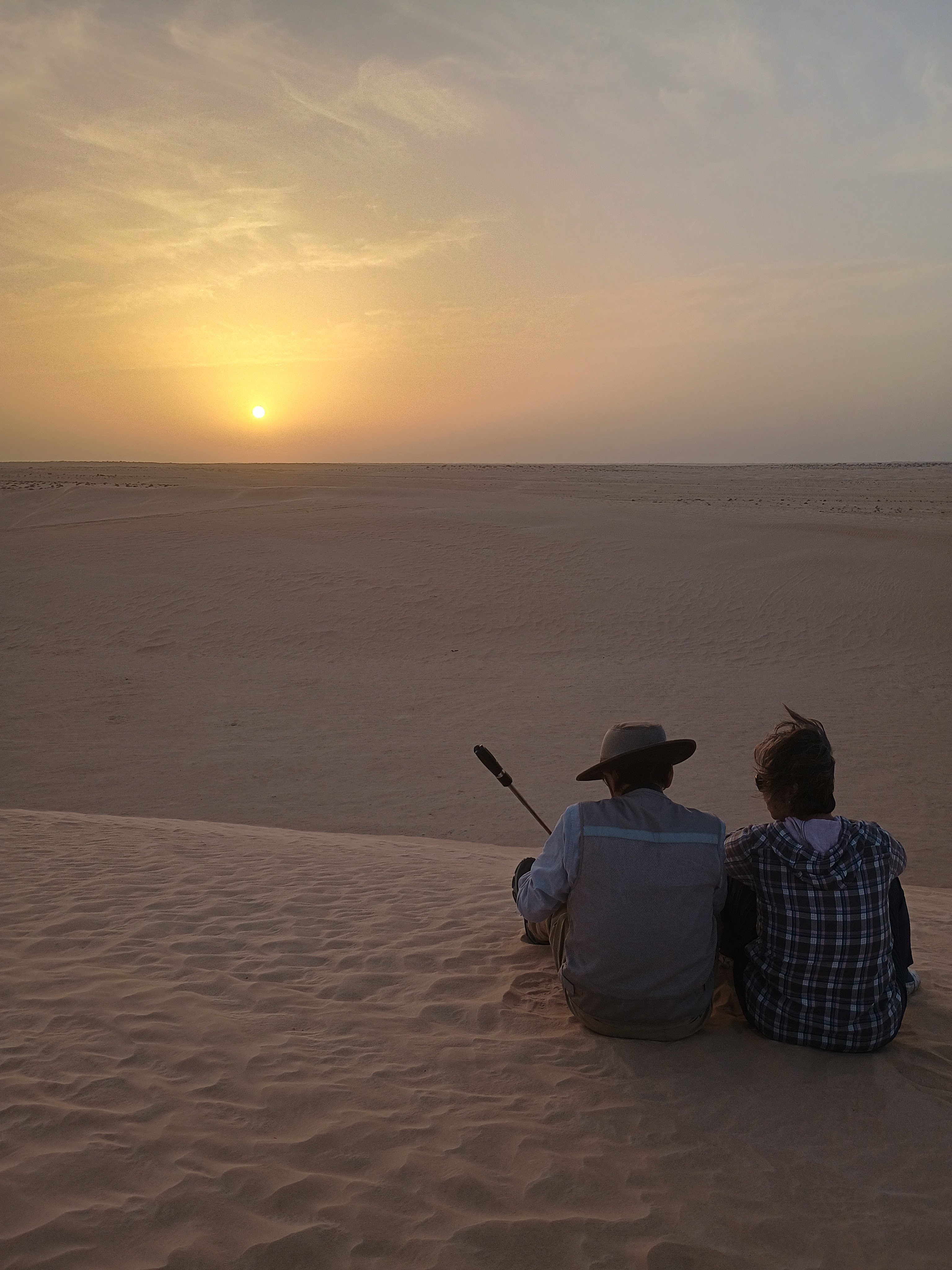
We were picked up by the driver/guide for a two hour sunset 4×4 desert experience (about 5 euros per person) arranged through the B&B.


Douz, population 30,000, is known as the gateway to the Sahara desert. Not really a scenic town, there was quite a bit of commercial activity going on in the center that brought occasional chaotic traffic.

We didn’t see any stars the first night because it was cloudy.
The second day we drove across Djerid Lake and visited Tozeur. This will be reported in a separate blog post.
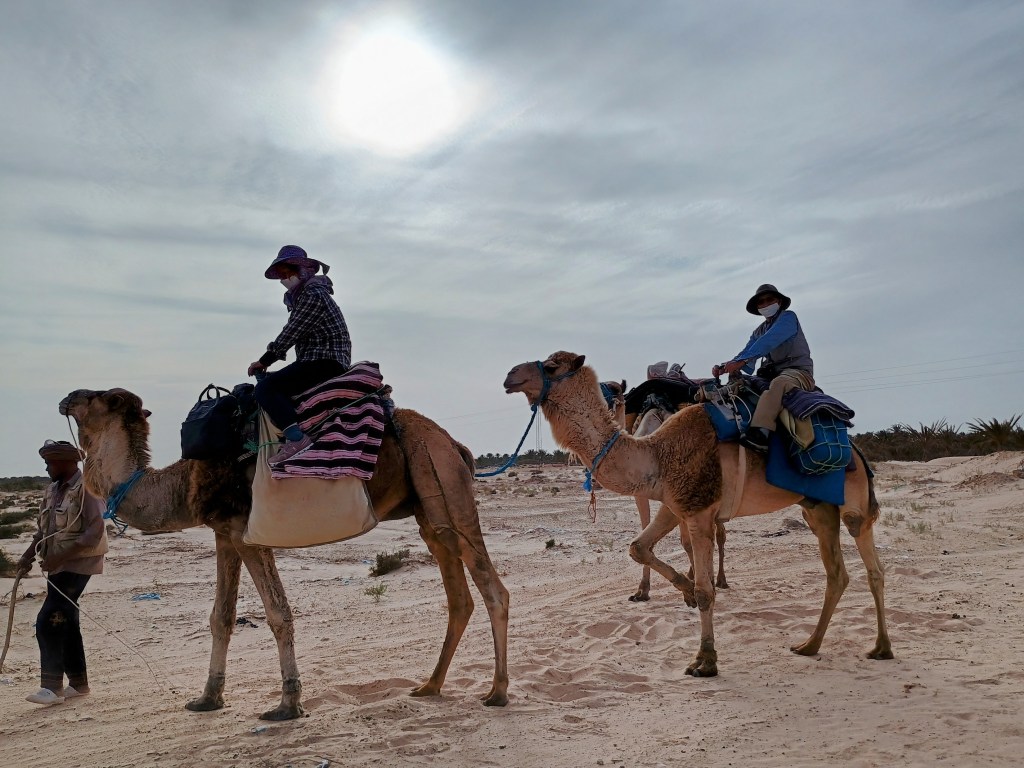
That evening, our friends were picked up by a guide and led into the desert on camelback for an overnight camping experience. (about $60/person).
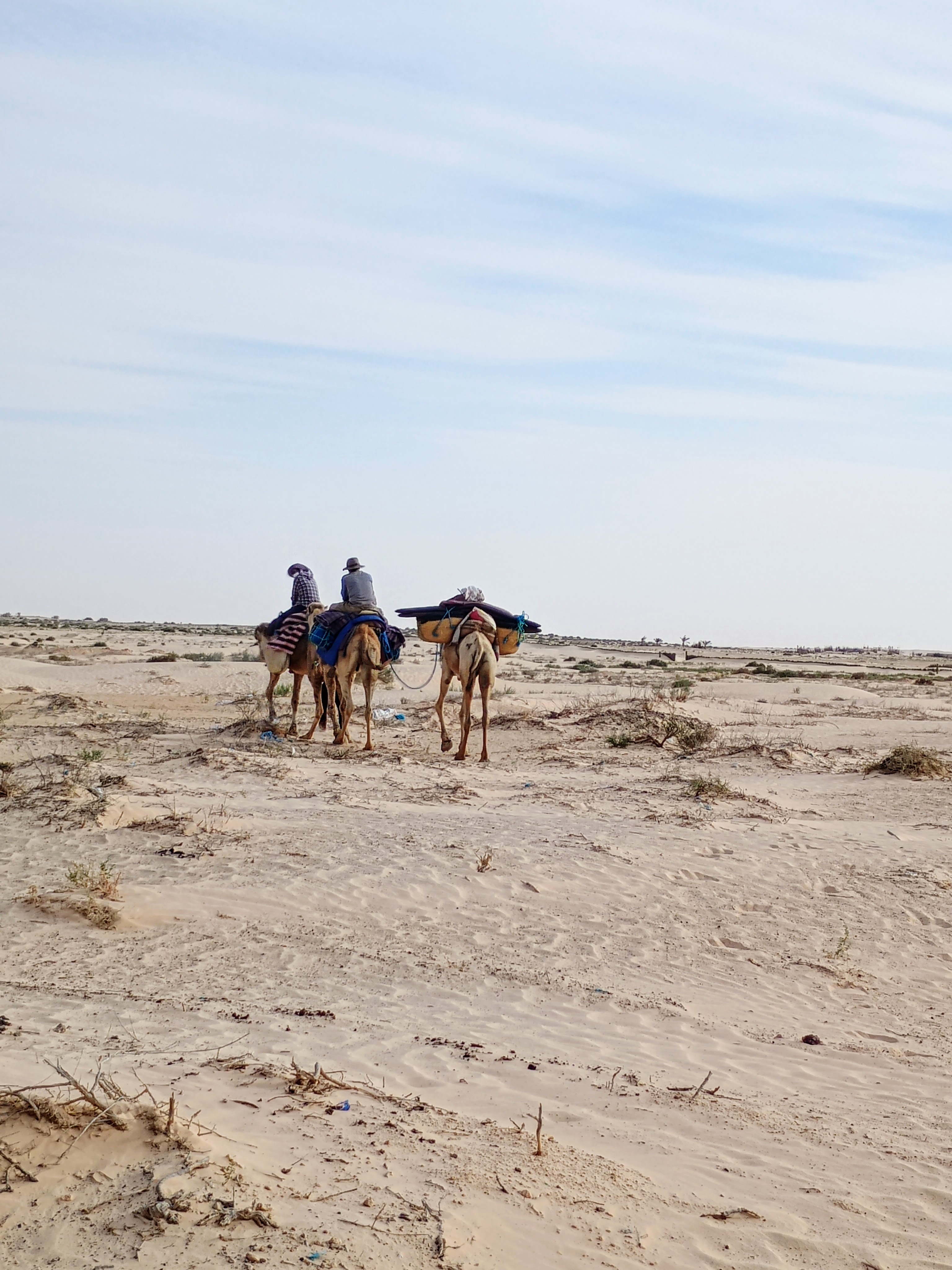

Their report: The guide cooked a delicious meal, and the beds were comfortable enough. But the sound of strong wind kept them awake.
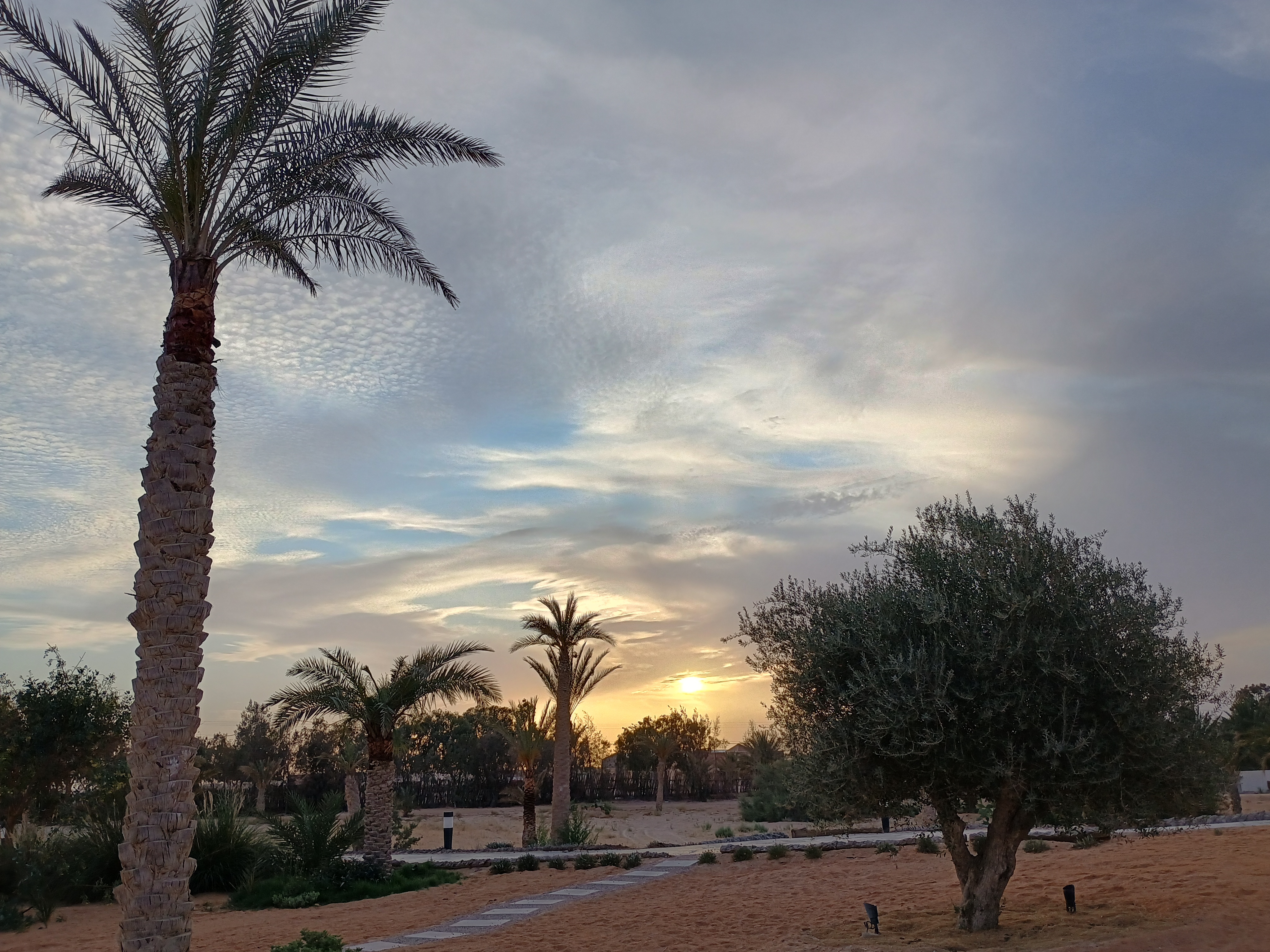

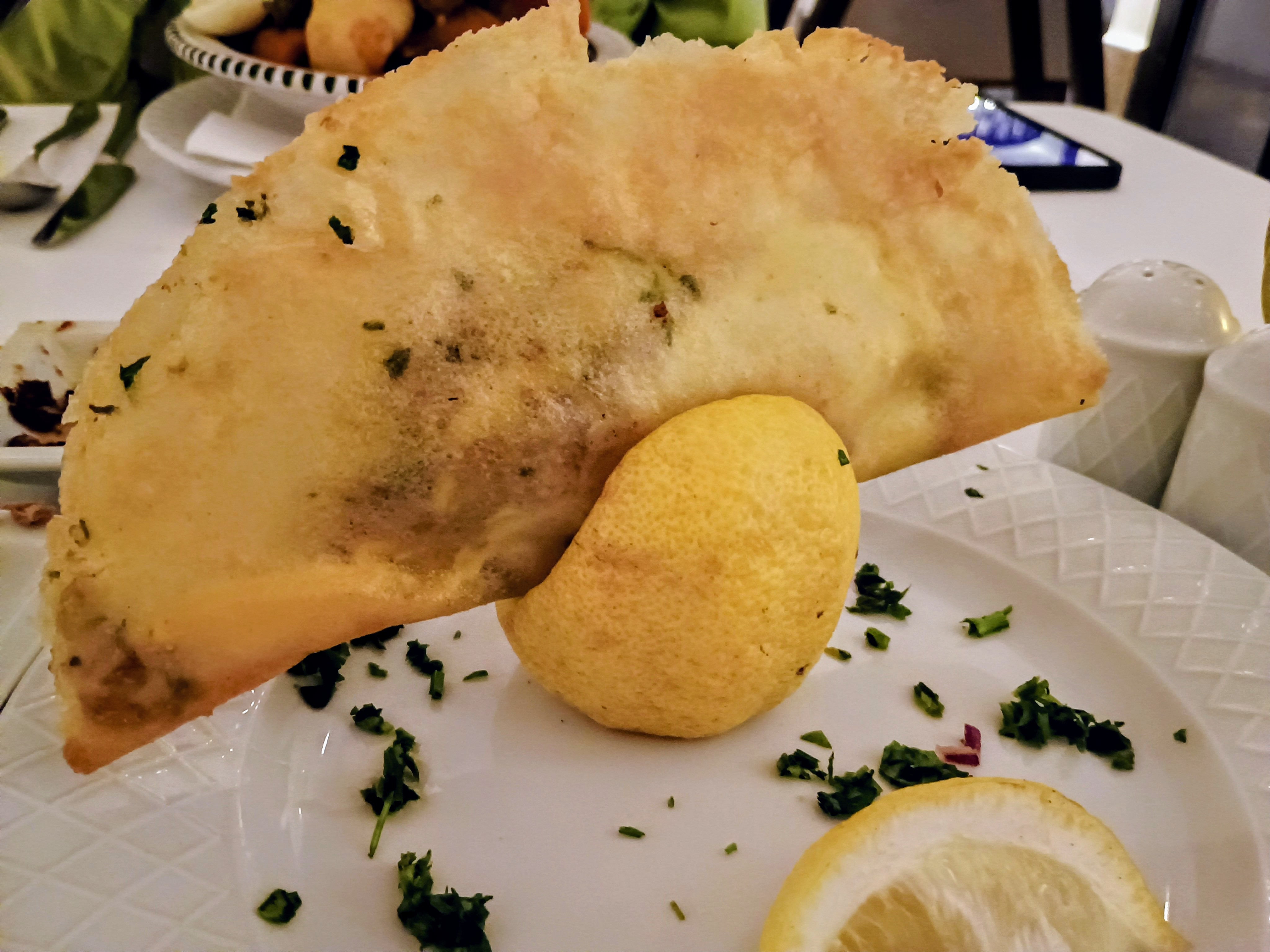
We ended up here because… we had no money. We ran out of dinars and didn’t know where to get more. So we had to go to some place that surely will take a credit card. The Residence Douz welcomed us (our cards) with open arms.
By the way, did you notice clouds in the sunset picture above? That meant no star gazing. I was crushed!

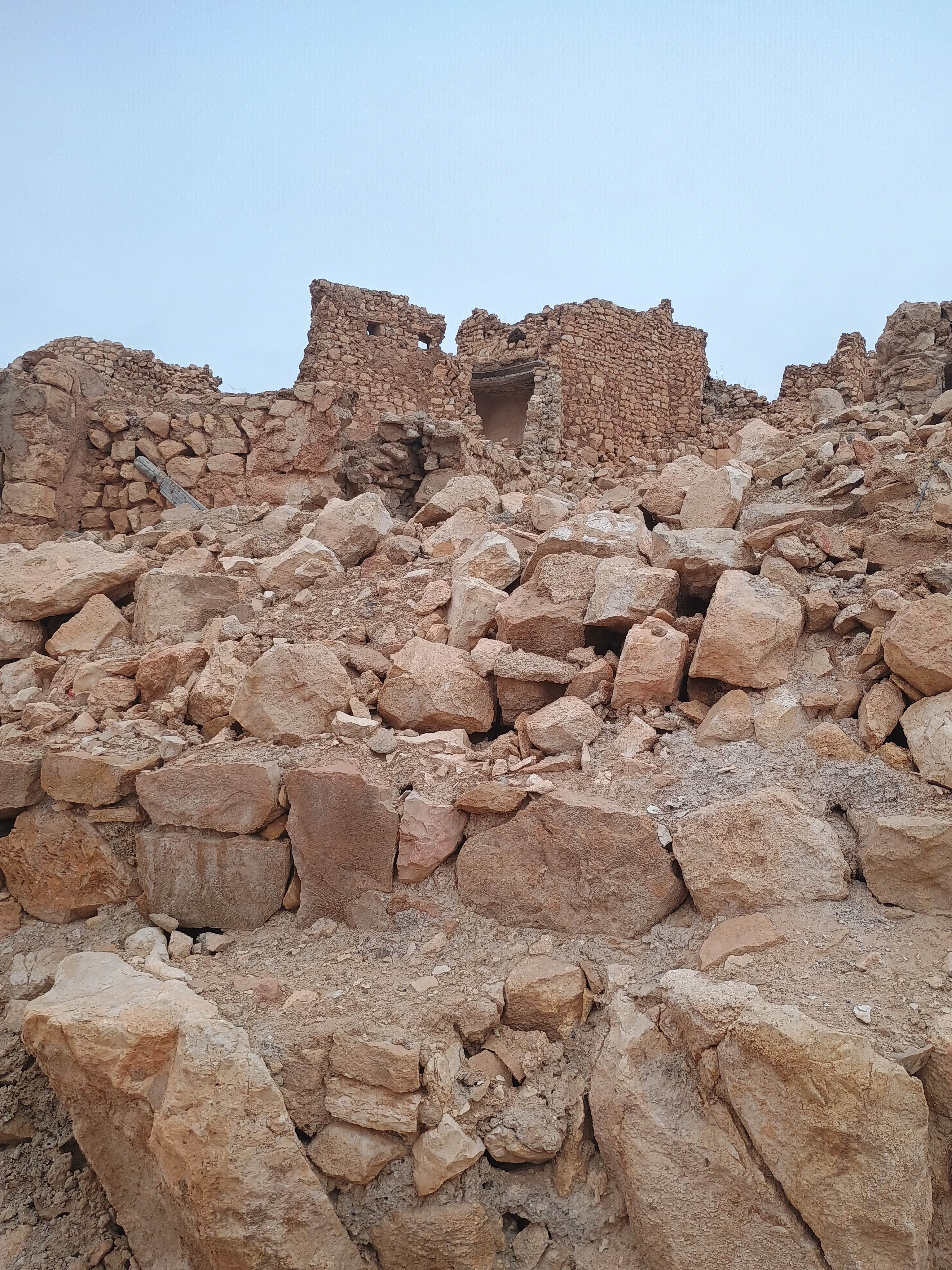
We stopped at the Museum of the Berber Culture on the way back to Tunis the next day as we were passing through the cave & underground dwellings areas in Temezret and Matmata.
Berbers are the indigenous people who have been living in northern Africa for thousands of years – they were there before the Arabs or Romans.


The cave or the underground homes were developed to protect people from extreme elements. Rather surprisingly, some of the homes are well equipped and decorated with modern comforts nowadays. Come to think of it, why would that be a surprise? We all want to be more comfortable if at all possible!
We stopped in El Jem for lunch and visited the biggest Roman amphitheater outside of Italy. This will be another blog post.
Tunisia itinerary link
 Small Wide World