September 2022

Guayaquil (population: 2 million) was a nice surprise. We went there because it was included in the tour package we bought for Ecuador and had no expectation of any kind. We had no idea it was the biggest city in Ecuador (population: 18 million) because we just assumed the capital city of Quito would be the biggest.


Can’t really talk about Guayaquil without talking about Guayas River.
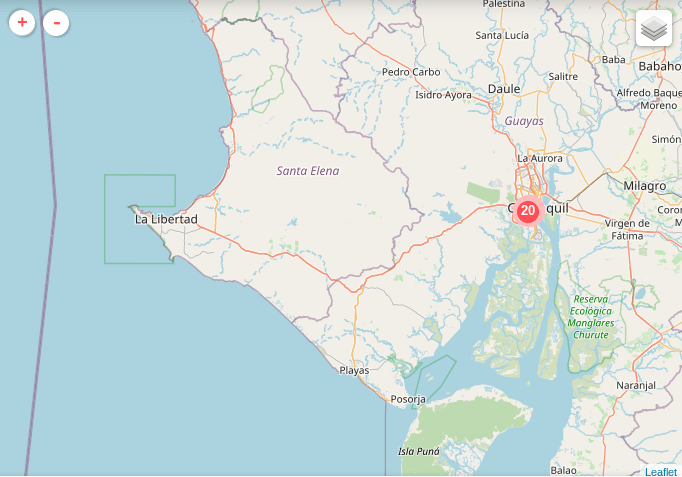
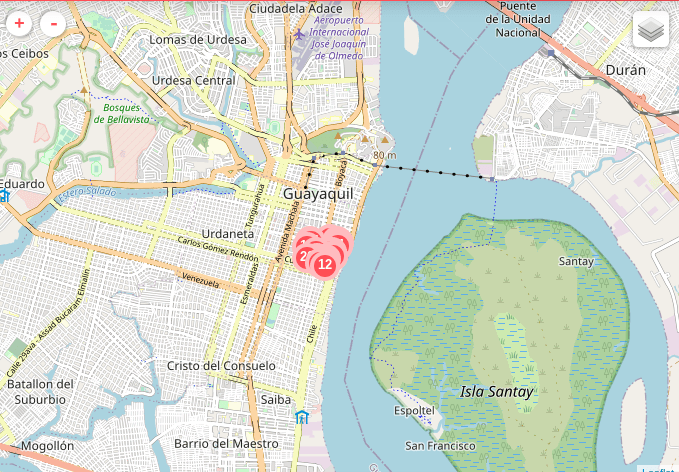
By the time we arrived from Galapagos and checked into the River Garden Hotel right across from one of the entrances to the 2.5 Km long riverside boardwalk called Malecon 2000, it was late in the afternoon. We got a walking tour of the city so that the next day we would be able to navigate our way while we were on our own on a free day. As you can see on the maps above, most of the attractions are concentrated in downtown and within 5-15 minute walking distance from our hotel.
Guayaquil’s port handles 90% of Ecuador’s imports and 50% of exports. Bananas, coffee, cacao beans go out to the world from here, and the remnants of the old warehouses can be seen in the city even though the modern port is 6 miles downstream. Earthquakes and fires destroyed most of the original colonial structures built by the Spaniards in 1500’s.

The highlight of the evening was the park where hundreds of land iguanas lived right in front of the Cathedral. These iguanas sleep on tree branches at night. From this park, the city hall was just a few blocks away. We walked over to the Malecon 2000 and walked north toward the hotel. Our guide explained Guayaquil had gone through a very successful urban renewal, and, this promenade was one of the outcomes.
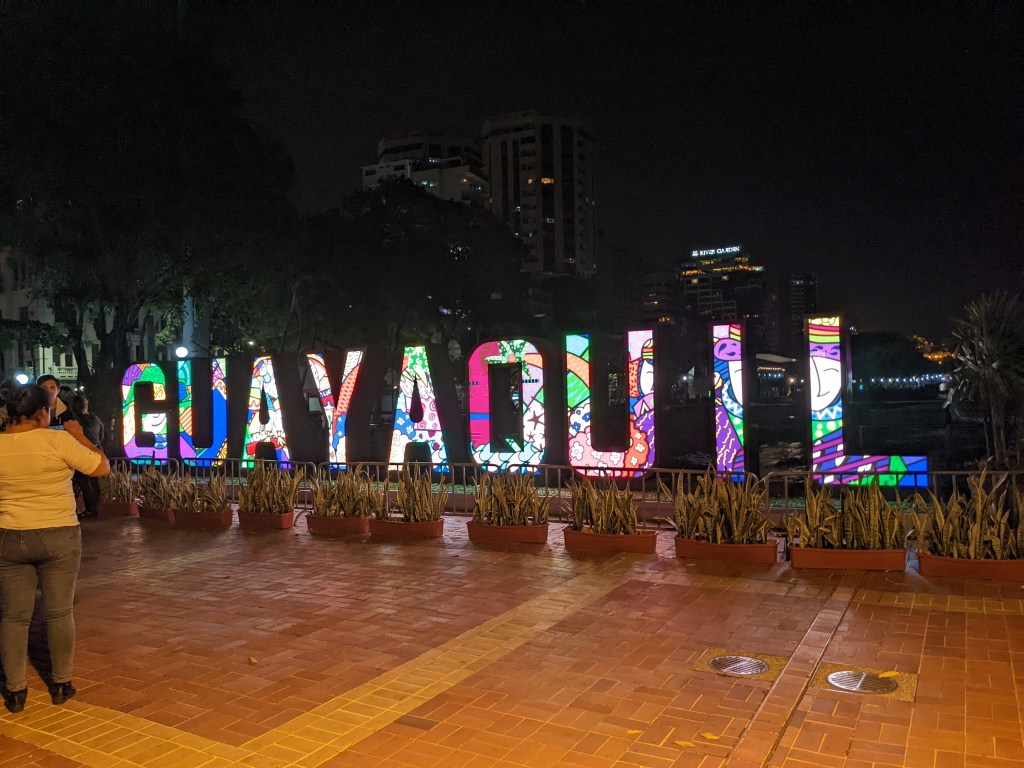

After a satisfying breakfast provided at the hotel the next morning, we went a few blocks north and got on the cable car toward Duran, a town across the river from downtown Guayaquil as you can see on map B above. This cable car was part of the public transportation system, thus, it cost only 70 cents per ride (35 cents for children and seniors). and, you get the best view of the river and the city. There was not much else to see at Duran Station after witnessing the panoramic river view, so, we got back on the cable car and went opposite direction all the way to the end at Parque del Centenario Station. The cable car route in downtown was making an interesting turn over the cityscape once we crossed the river.
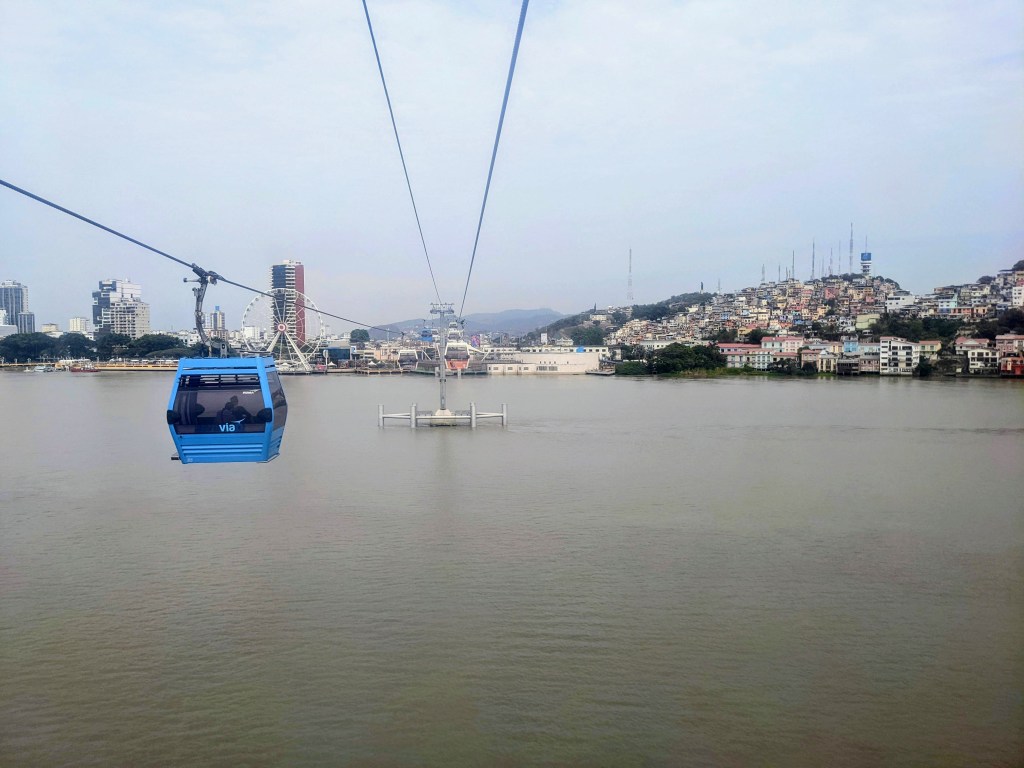
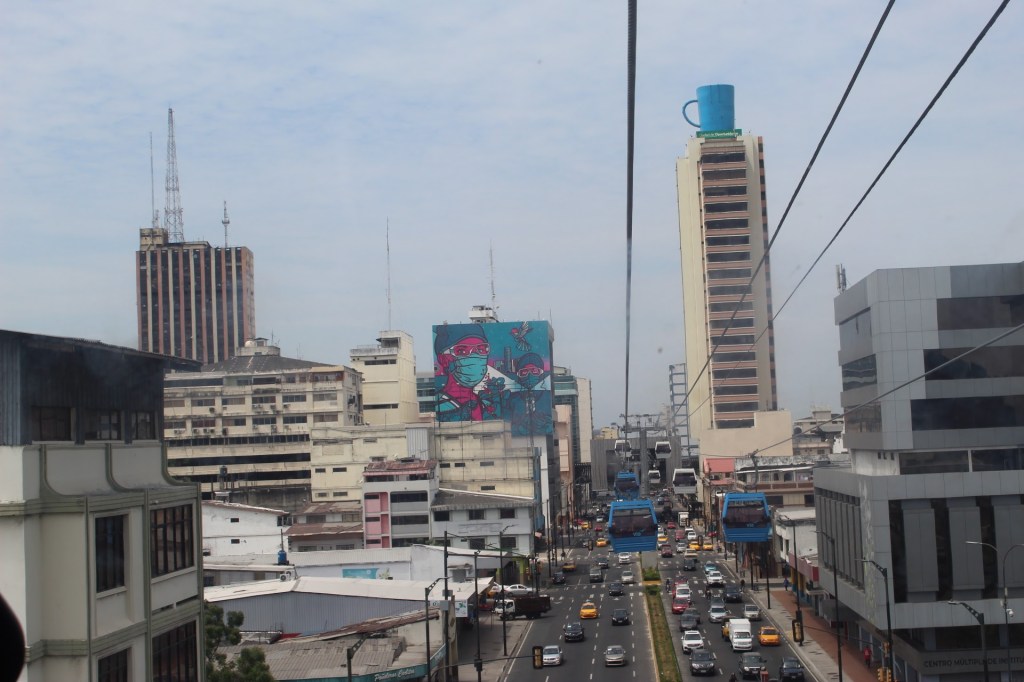
The Cetenario Station was right next to Centenario Park where an independence monument is standing. (map) Exiting the park through the eastern gate, we came to 9 de Octubre Street, one of the major shopping streets of the city. We kept walking 4-5 blocks & turned right onto Chimborazo Street, and, in 4-5 blocks, we found the Seminario Park, also known as the Iguana Park that we visited the night before. The park ground was full of iguanas. Unlike in Galapagos, kids were touching or running after these animals.

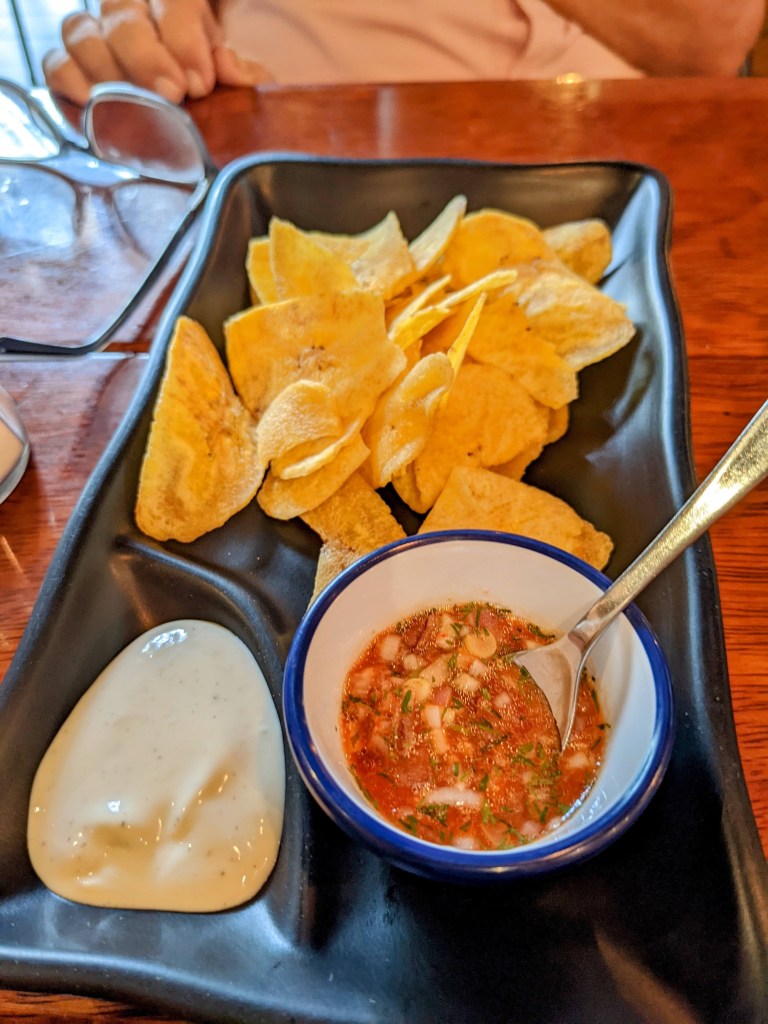
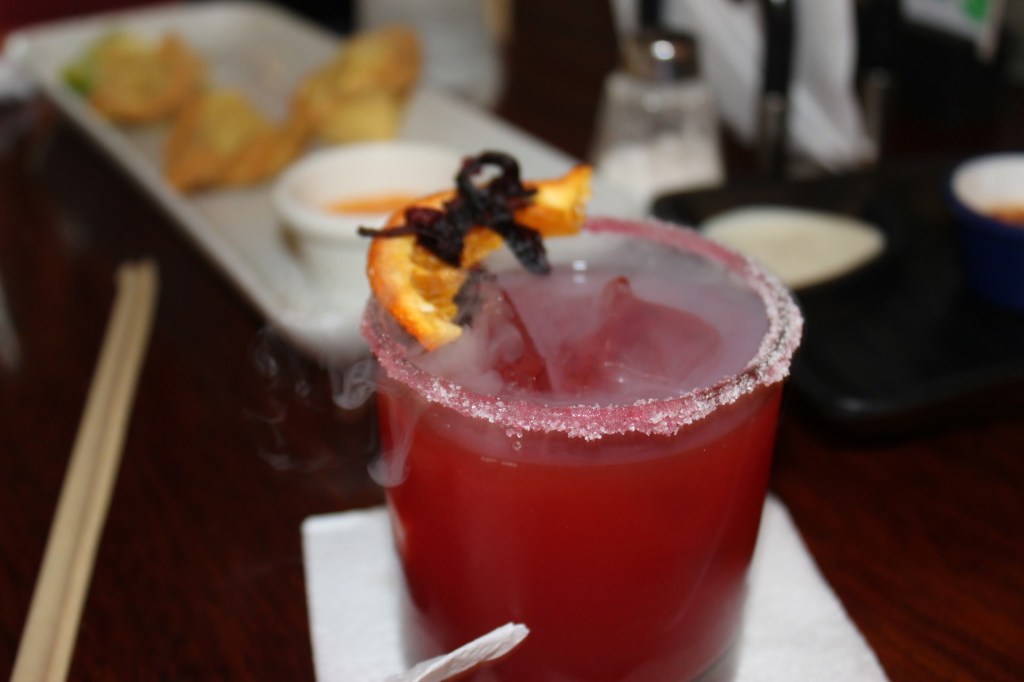
We stuck our heads in the Cathedral for a few minutes, then we headed to our lunch spot, La Pata Gorda, a sea food restaurant specializing in crabs which had been recommended by our guide the night before. This was apparently a very popular restaurant with many different branches around town, and, the one we visited was right next to the iguana park. We got a feast with crabs ($11.50 for 3 crabs), an appetizer, and cocktails (daily special 2 for 1) for way under $20 per person.
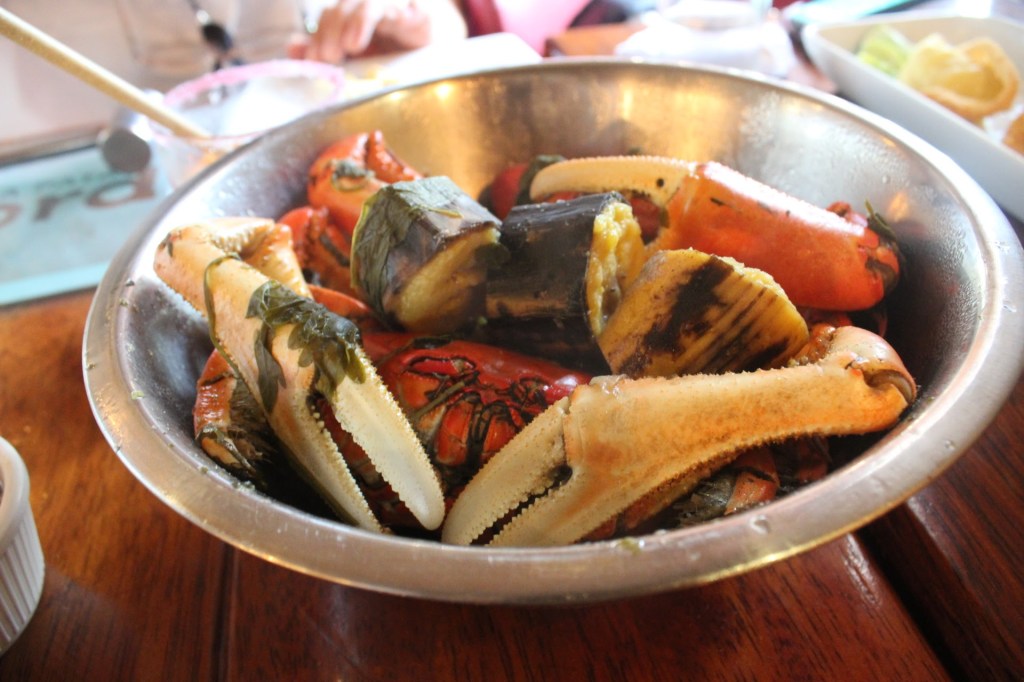
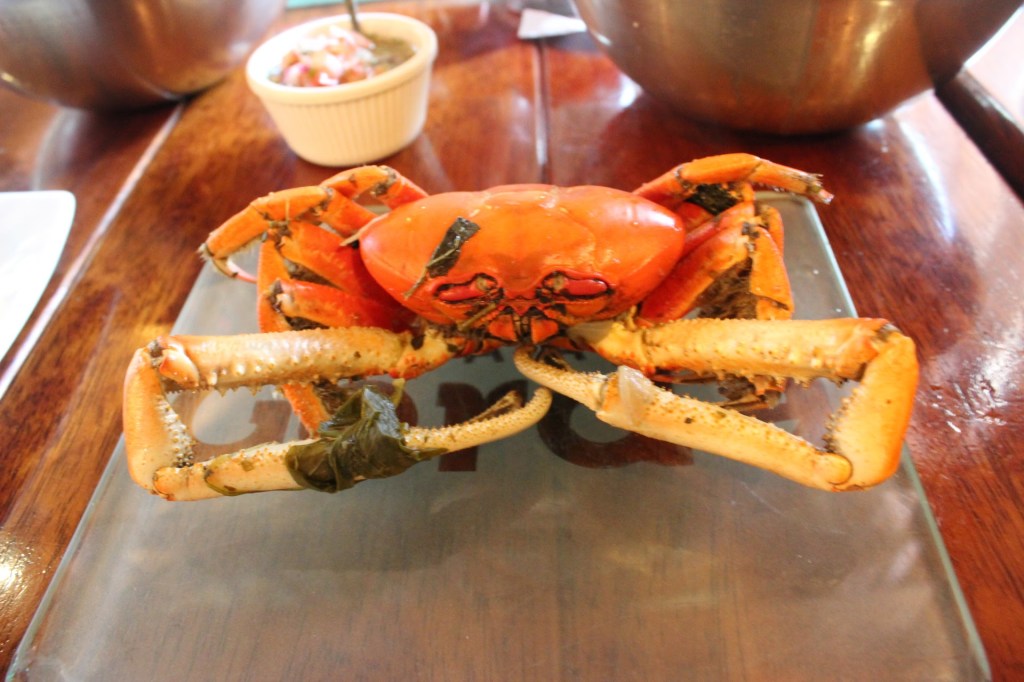
We continued our walk to the city hall area and to Malecon 2000, then walked south. There was an air-conditioned indoor shopping center along the way and it was a nice retreat from the heat of the day outside. At the southern end of this boardwalk was an old market building designed by a team supervised by Gustave Eiffel of Eiffel Tower fame, Crystal Palace, which is now a convention center pictured below.
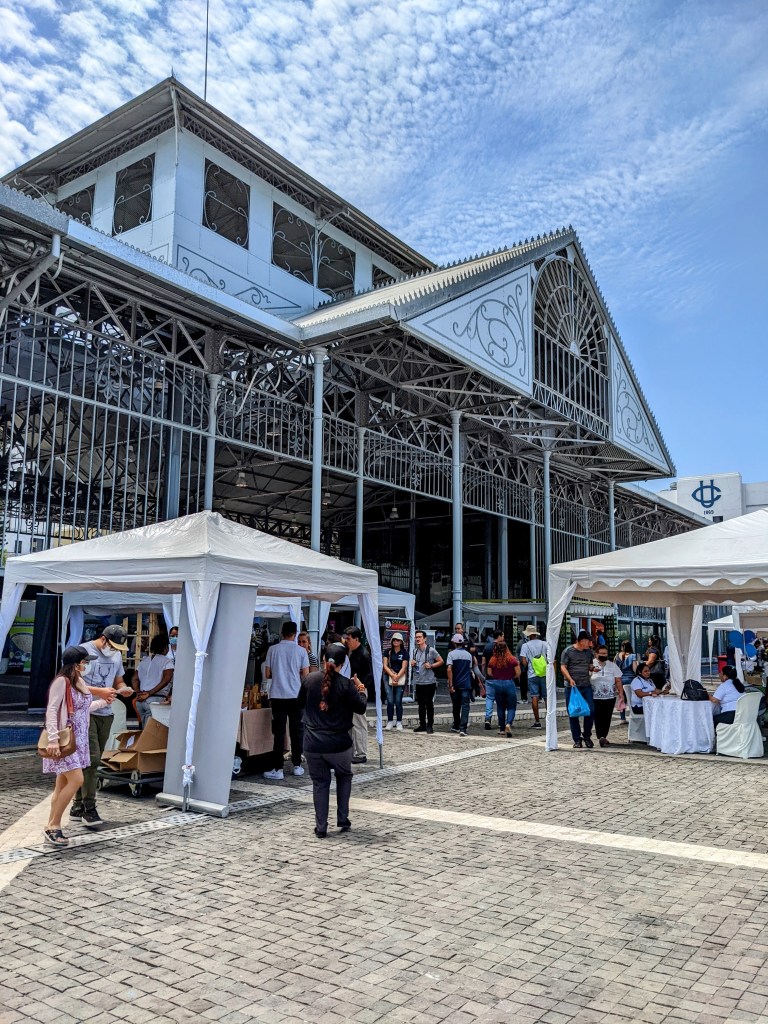
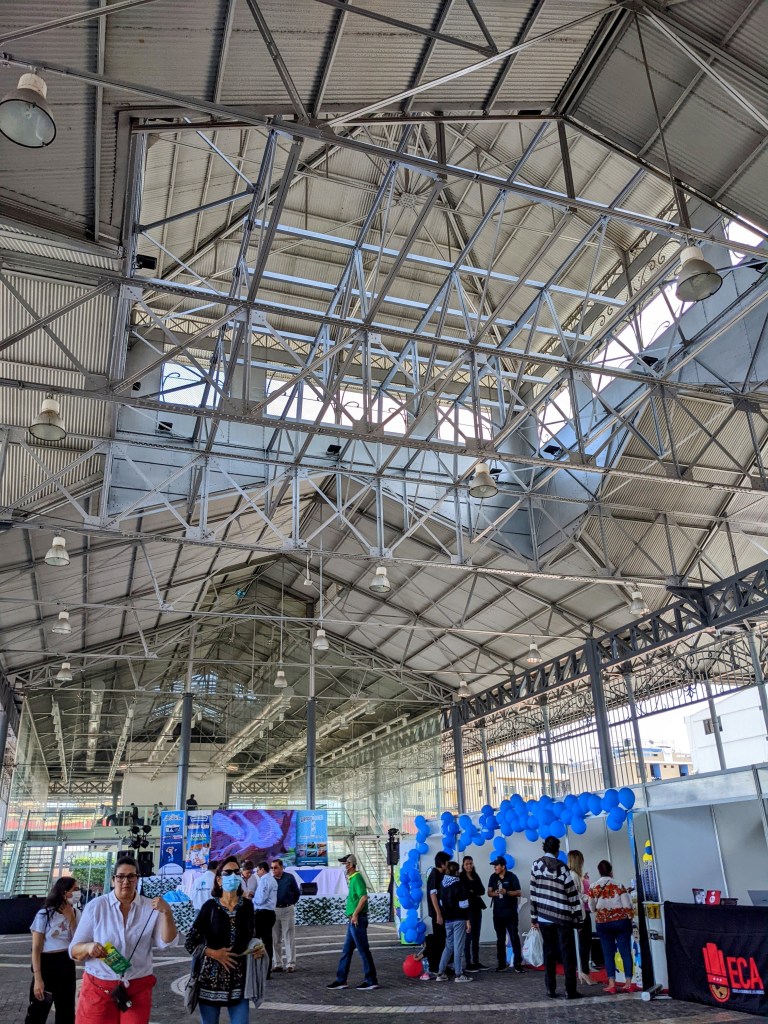
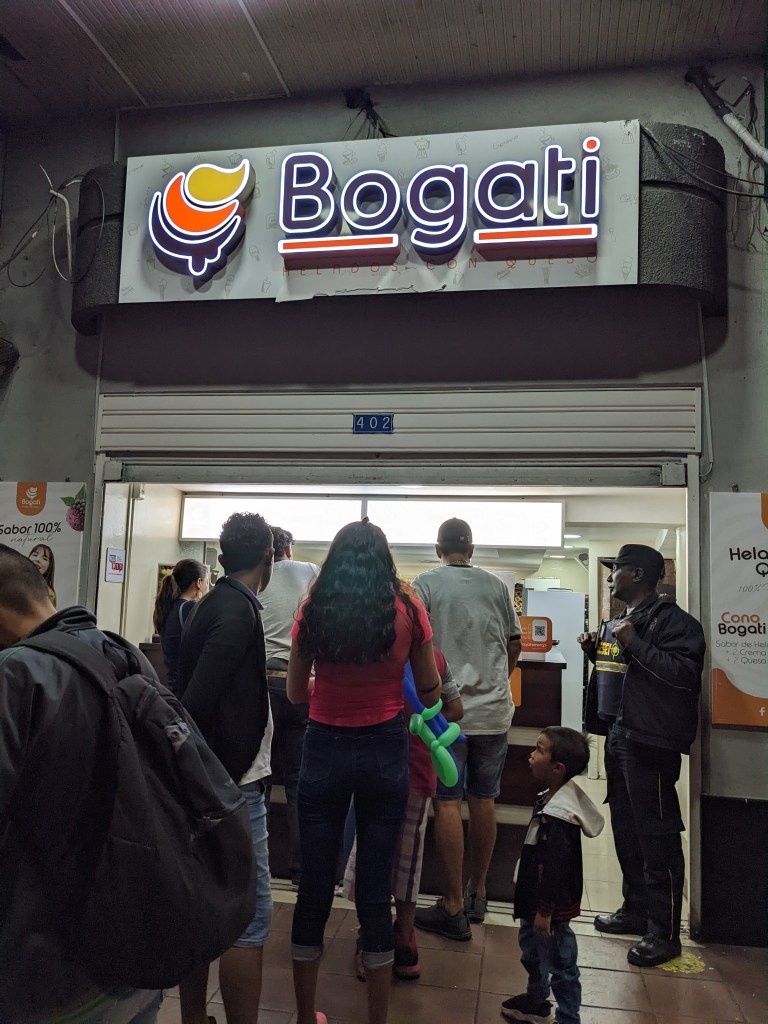
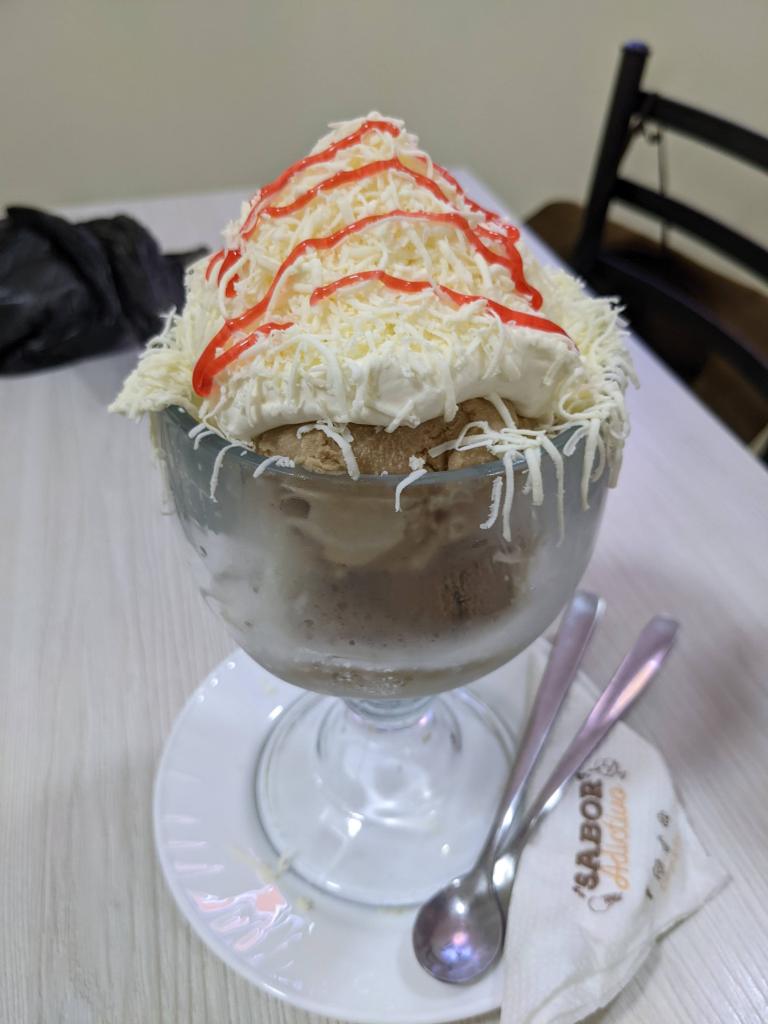
We were too tired to walk back, thus, we splurged and got on a taxi for a $2 ride back to our hotel. Our local guide had mentioned beef steak as another food item we had to try in Guayaquil, thus, we went to a steak place near the hotel but were not impressed. (However, some people in our tour group had gone to a steak house and found it great.) One place we had become interested in during the walking tour previous night was an ice creme shop that sold shaved cheese ice creme. There was a long line the first night and there still was a long line when we went back there to try. The idea was interesting, but, we were not convinced the cheese topping improved the taste of ice creme. Locals seemed to love it, though.
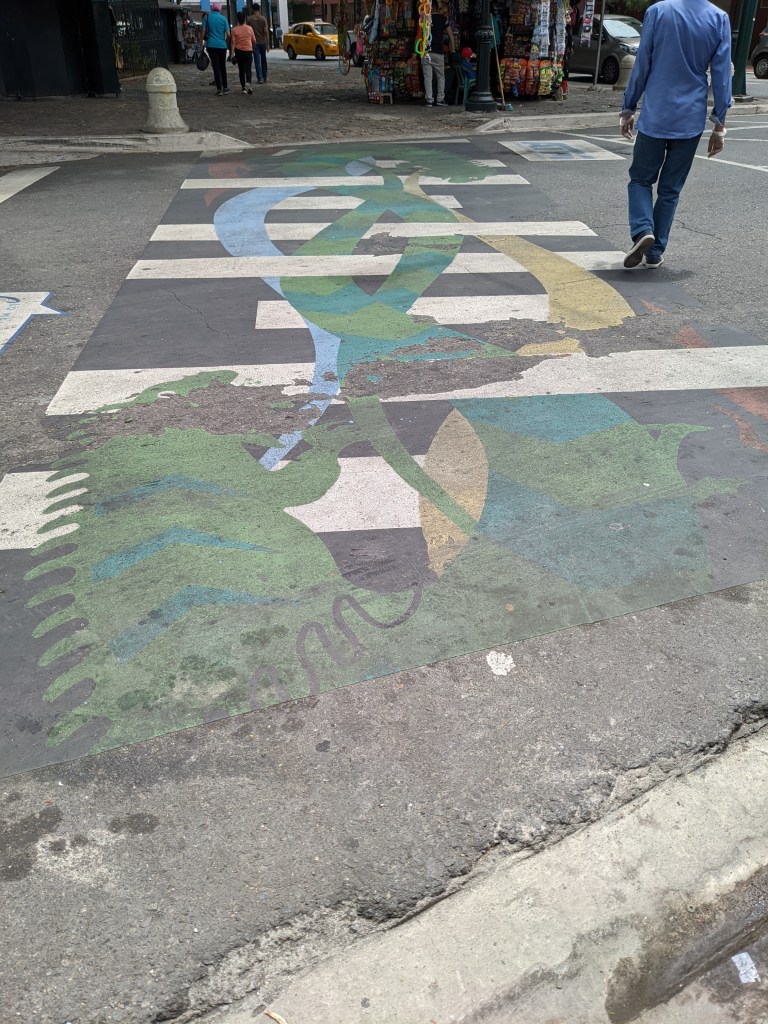
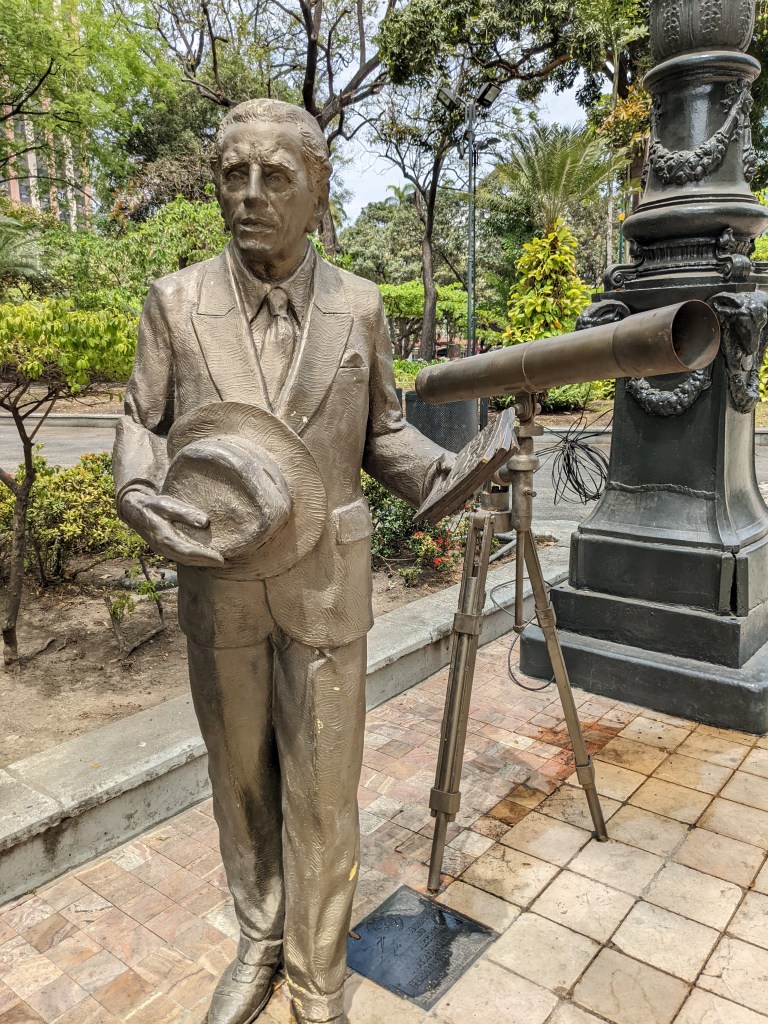
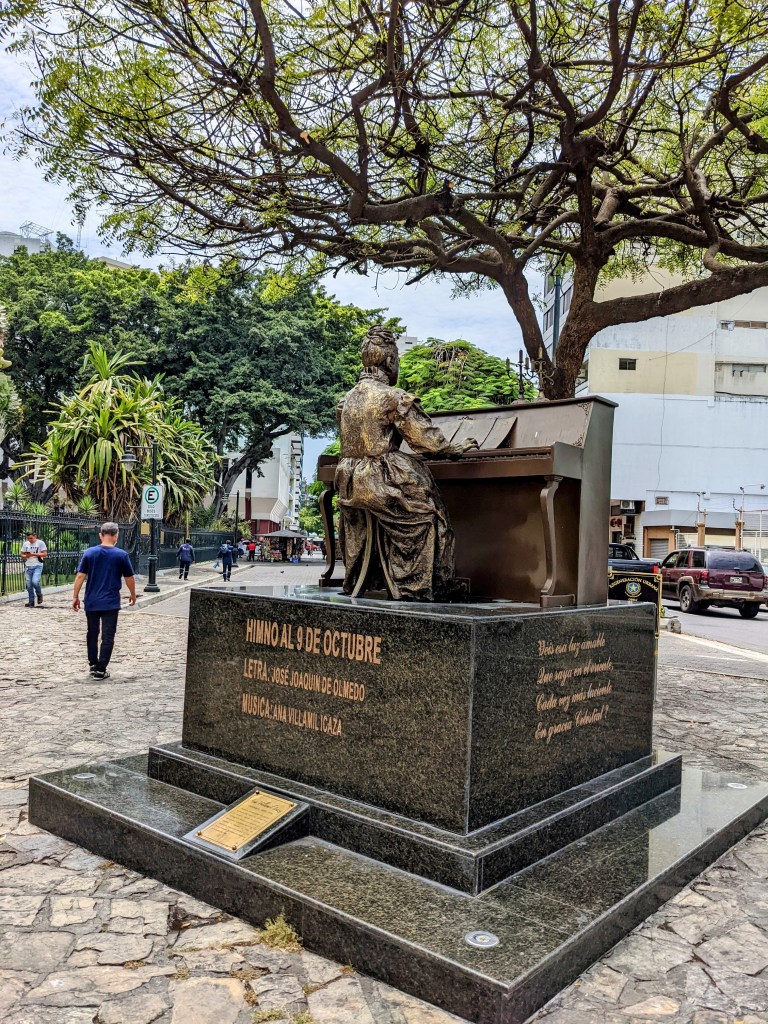
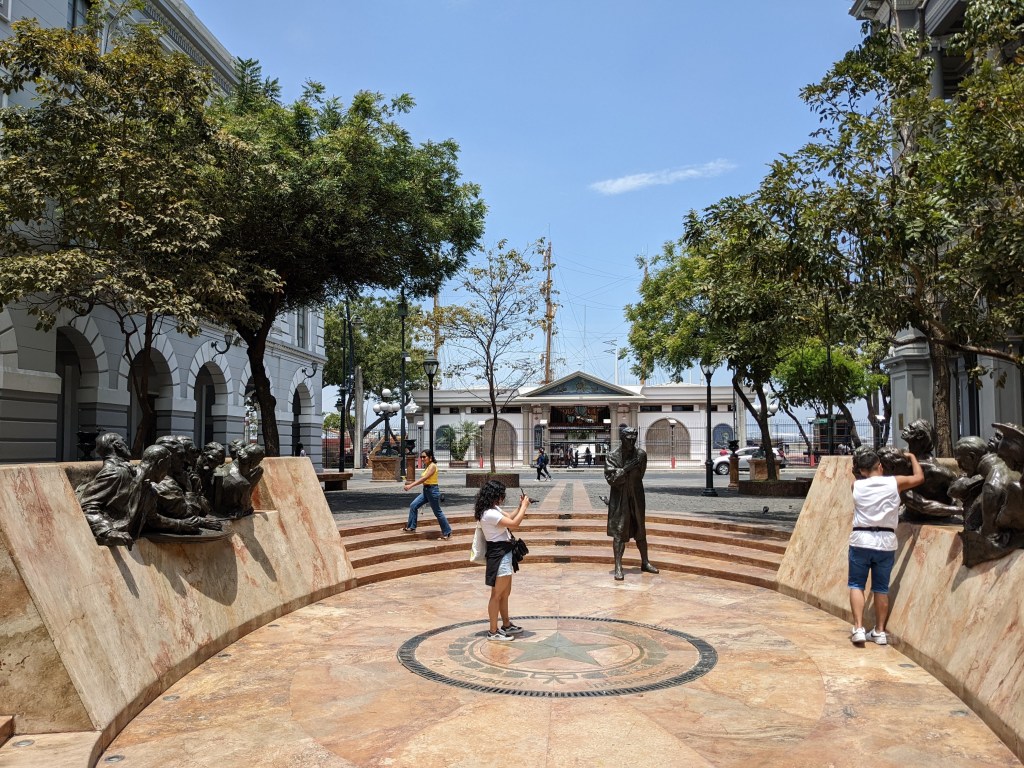
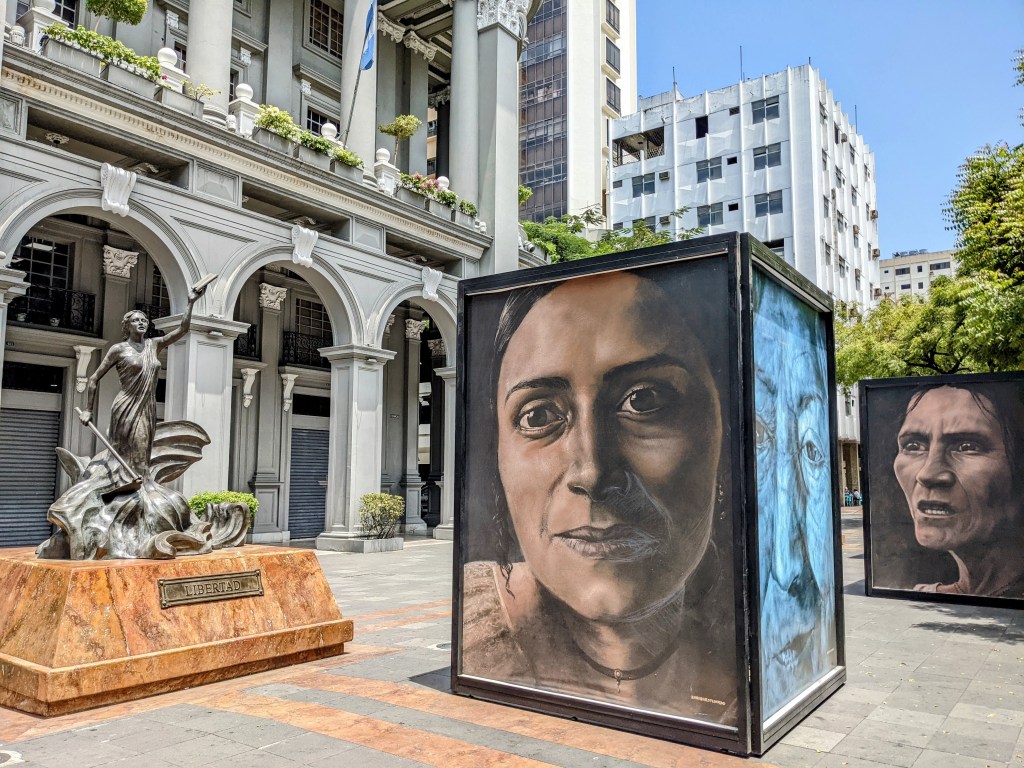
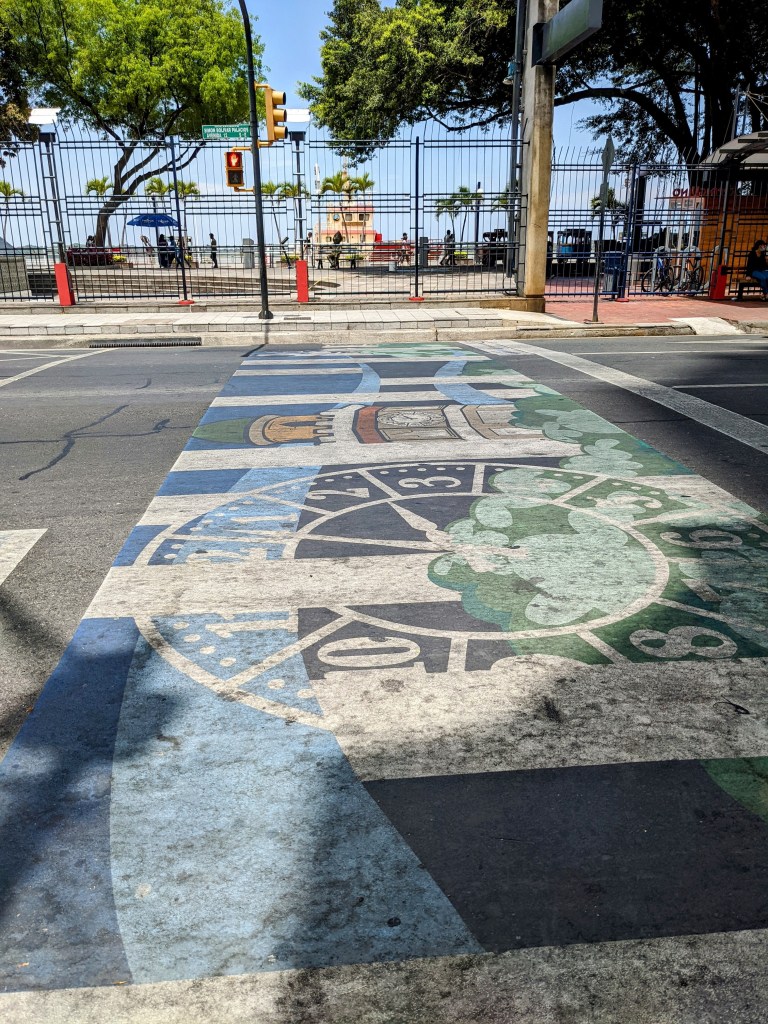
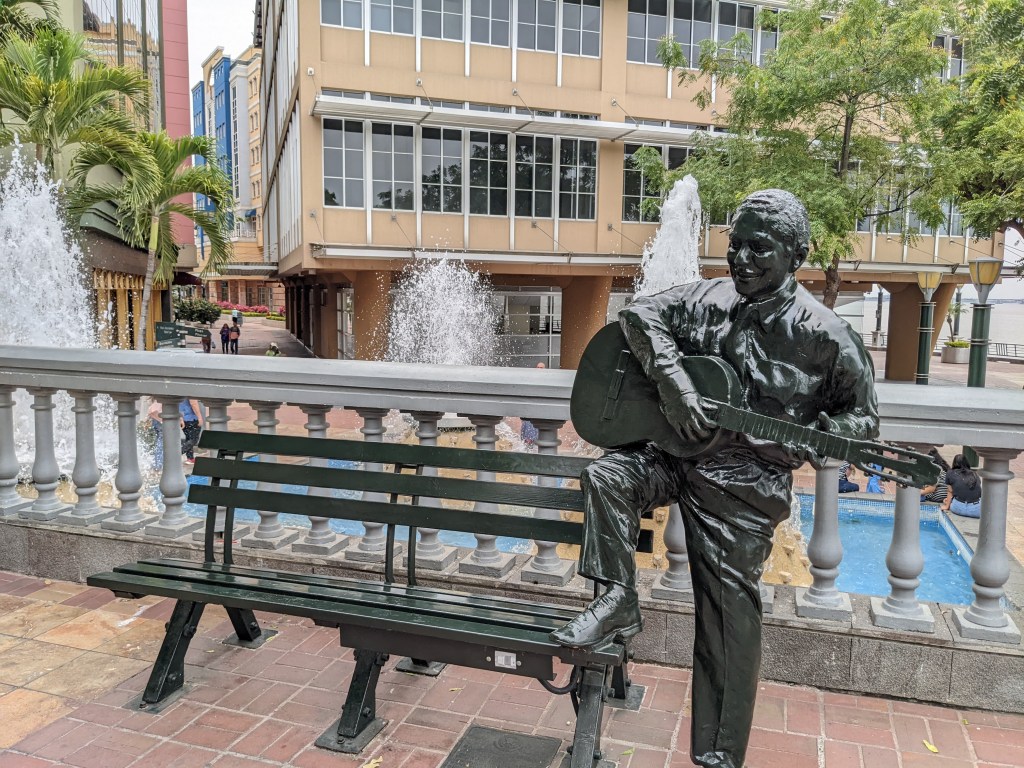
During our walk, one thing really struck us was the amount of art work all over the city. Some of the crosswalks were painted with images, important landmarks were painted on the pavement, lots of murals, and sculptures depicting all walks of life were strewn around the streets in downtown.

As you can see below, there were definitely some great meal deals around. Too bad we didn’t have time to try it.

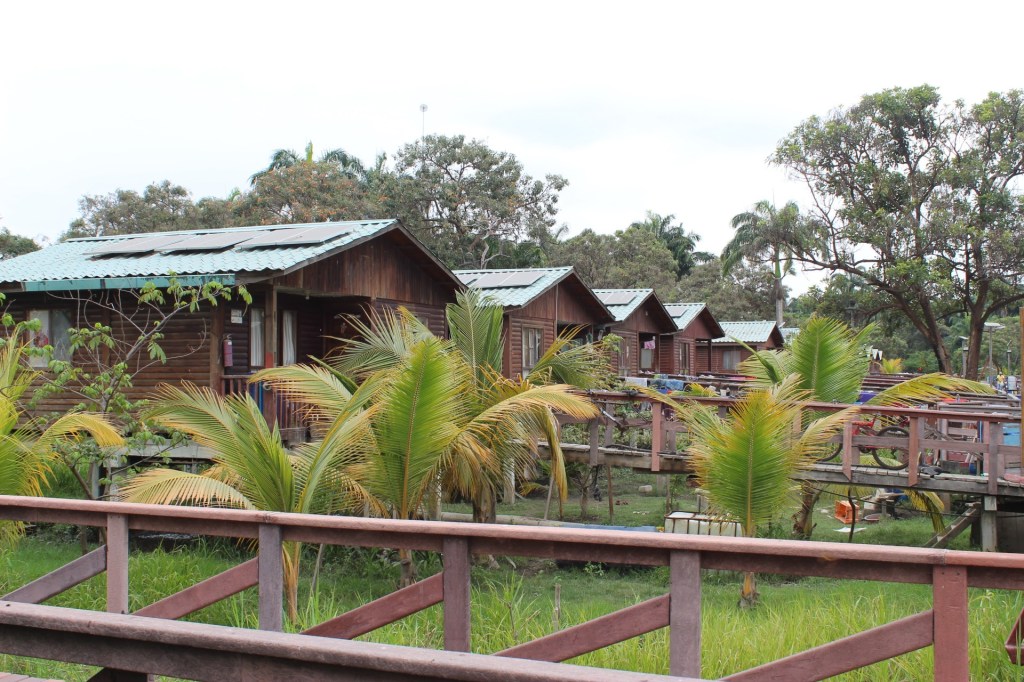
The next morning we decided to take a boat trip to Santay Island, a big island in the middle of the river (look at map B). One of the headaches they faced during the urban renewal was the dilapidated dwellings along the riverbank occupied by the indigenous people. The city successfully negotiated with them to move them to Santay and create an eco village with modern facilities on the city’s dime. Now a boat tour company has a contract with the village to bring tourists there at designated times. In September 2022, the boat left the pier right south of the ferris wheel on Malecon 2000 at 11 am and 3:30 pm on weekends.
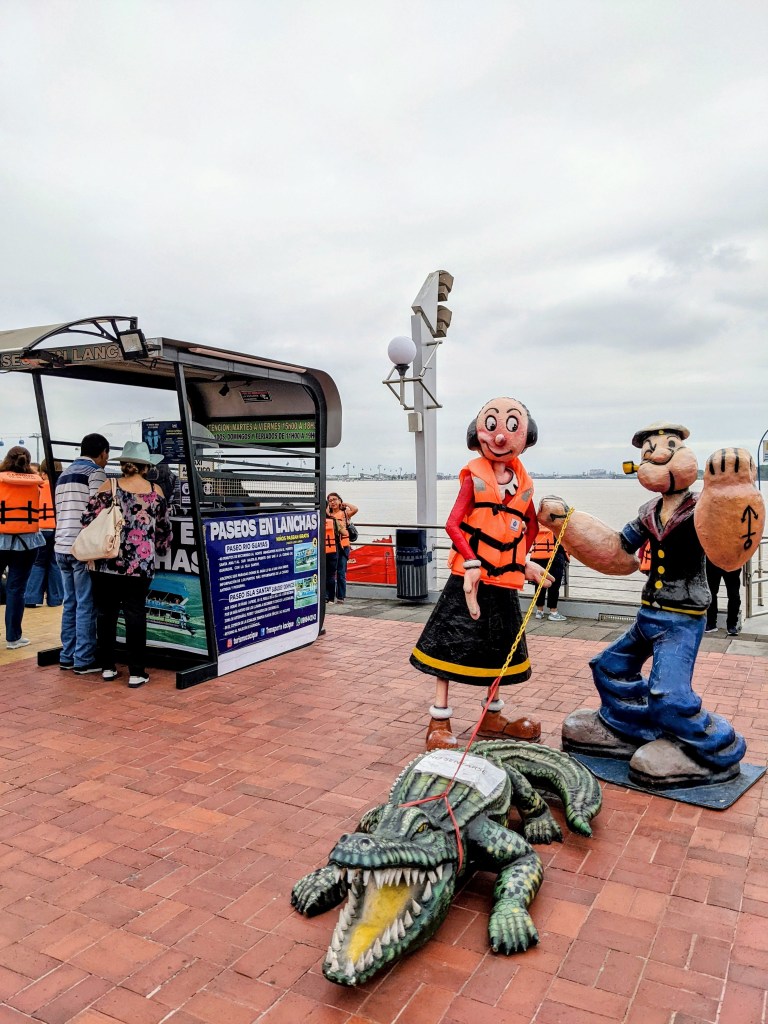

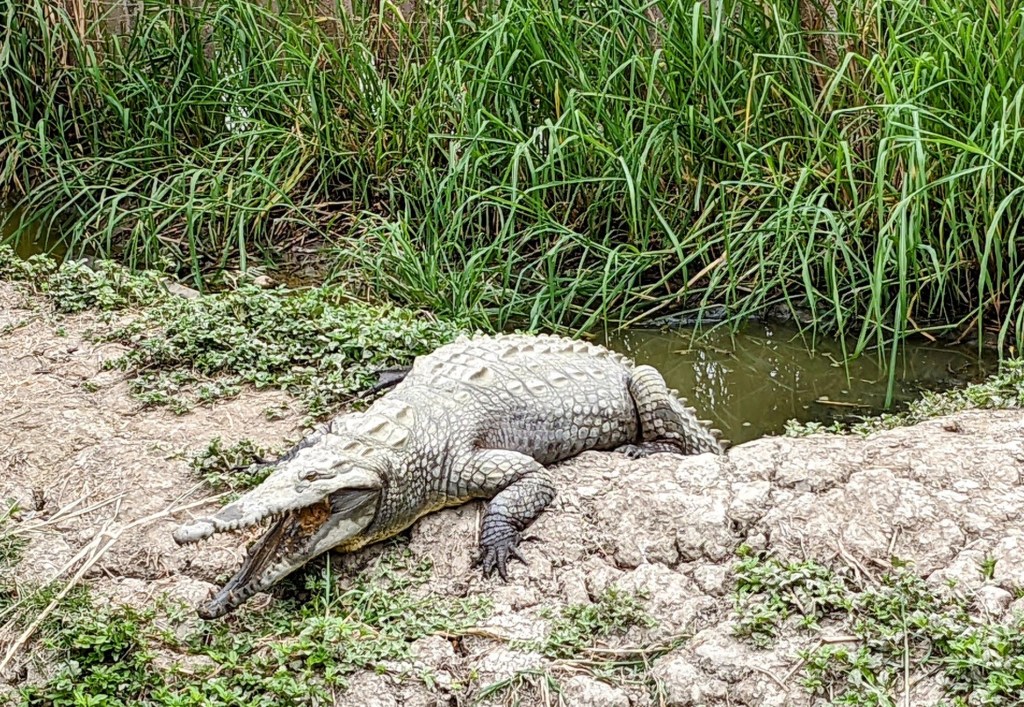
This $6 tour lasted for about 2 hours. The boat ride was about 15-20 minutes each way. When we arrived at Santay, local guides took us around. There was a crocodile farm, a cafeteria, and a small food court and a few small gift shops.
The northern end of the boardwalk connects to Santa Ana Hill, the birth place of the city. We kept walking north when we returned to the pier, and there was a sign clearly marking the beginning of 444 steps that will take us to the top of the hill.

Just to assure you you were on the right track, each step is numbered.The ascent was not that bad and there were benches and cafes along the way. We went to a restaurant around step 300 or so for lunch. Decent food, not too expensive.
So, what’s on the top?
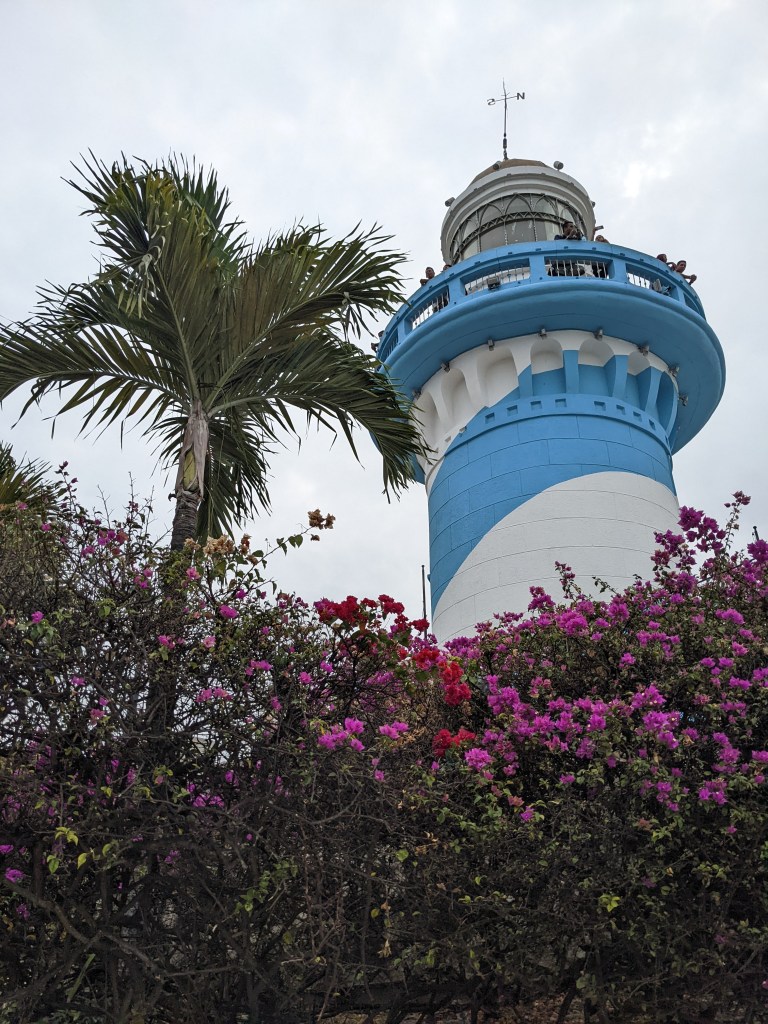
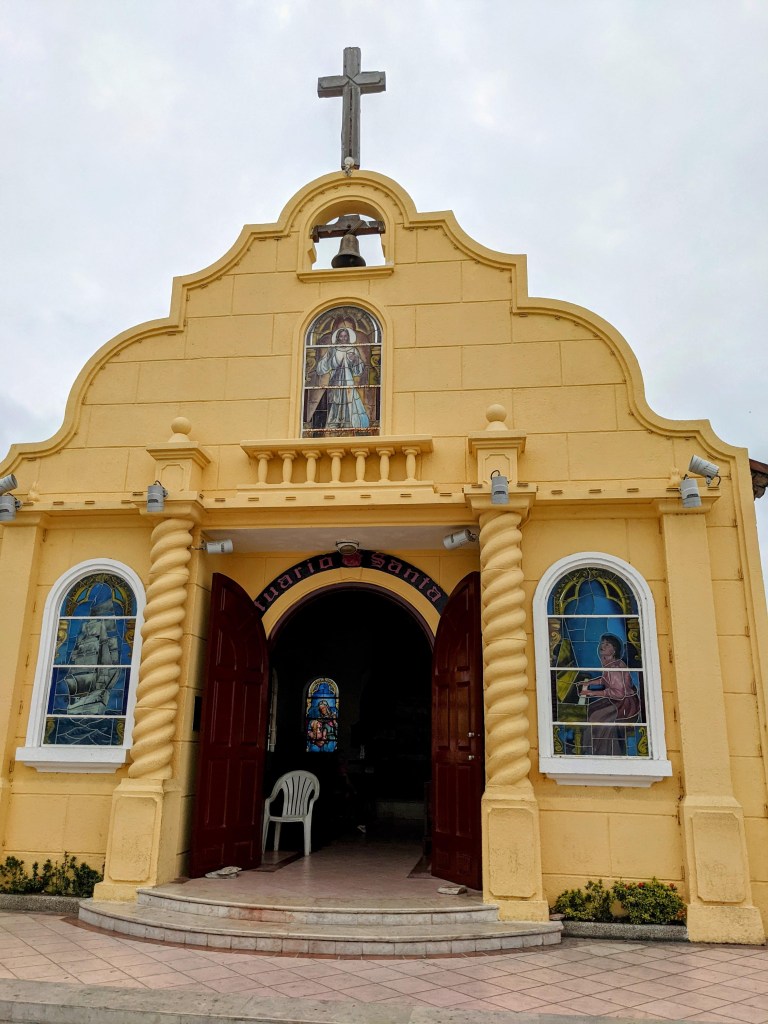
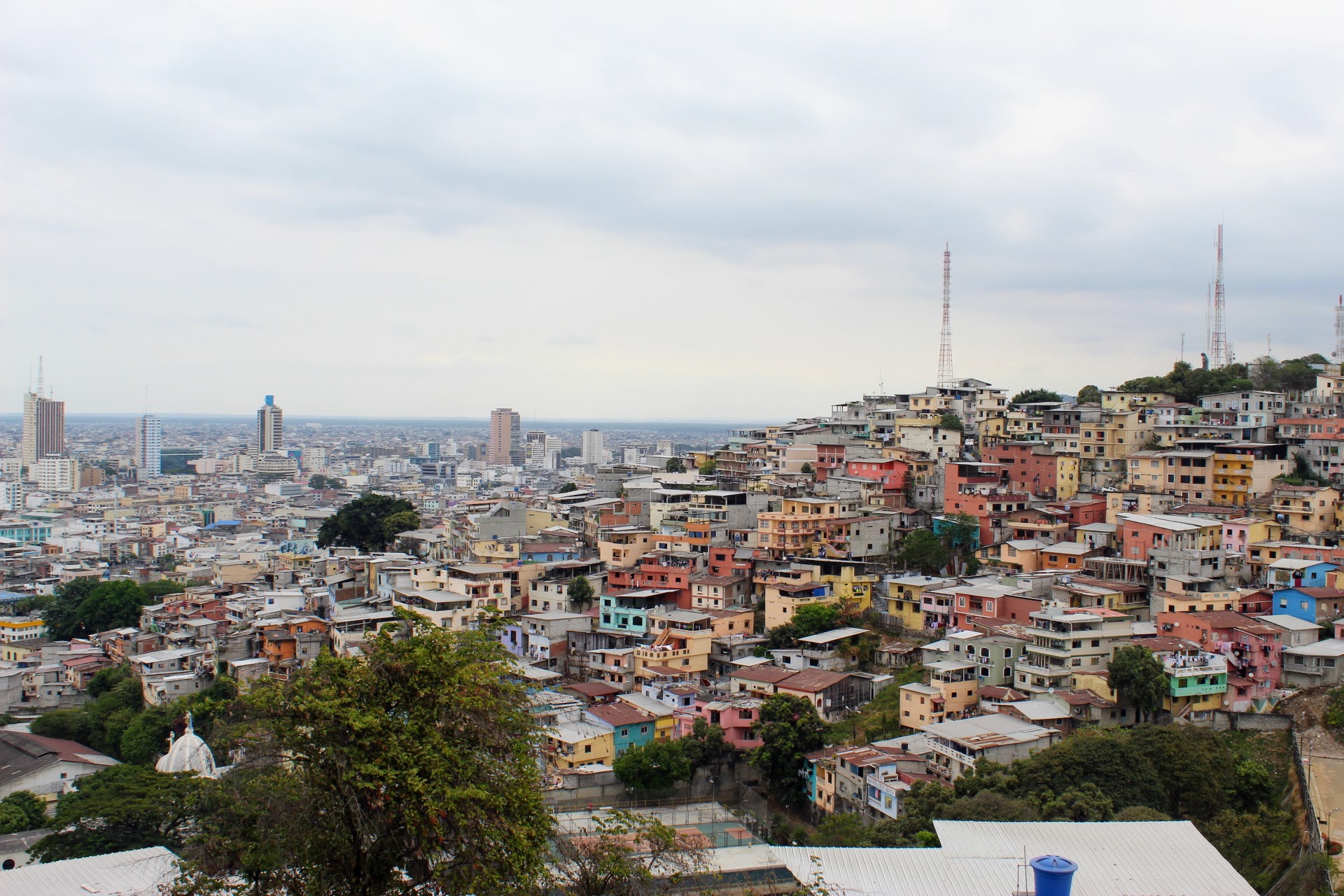
An old light house. The first church of the city – still in service. The view.

As we were coming down, we took a detour around step 220 and went down a different stairway to reach Numa Pompilio Llona, the famed cobblestoned road which was lined with galleries and beautiful wooden houses. All around the Santa Ana Hill, you will see murals and sculptures.
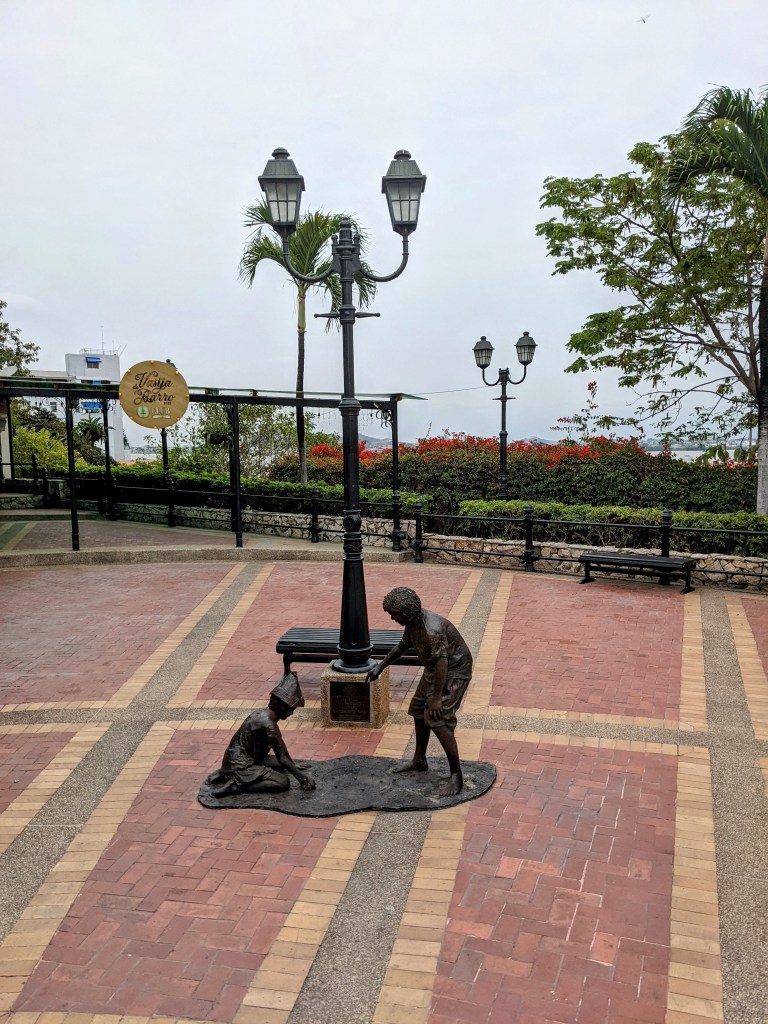
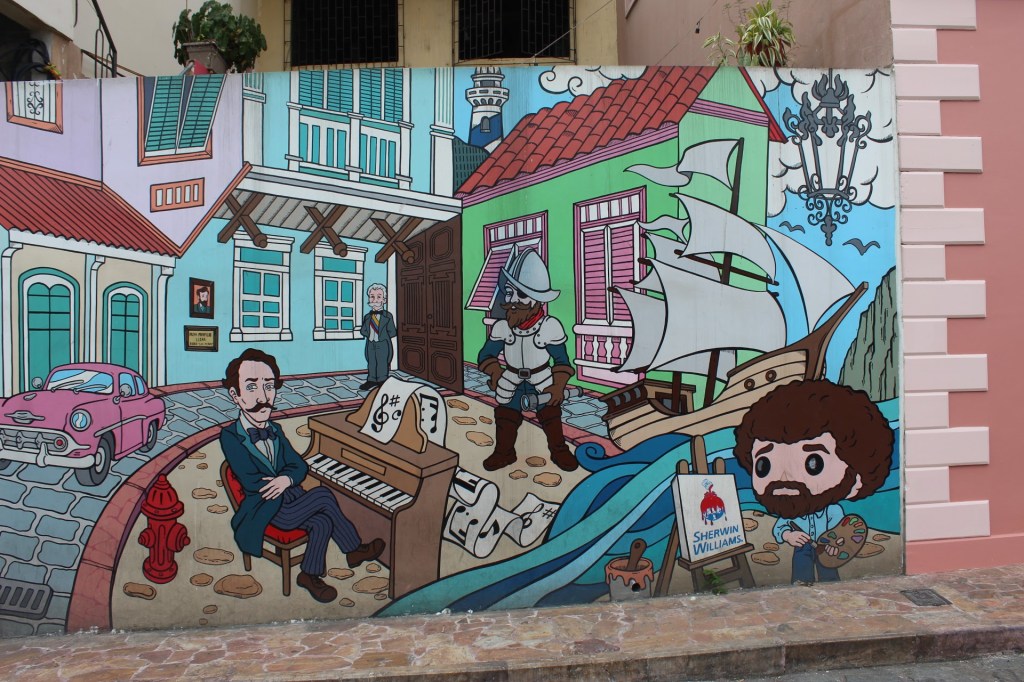
We stopped at the Museum of Anthropology and Contemporary Art (free admission) at the northern edge of Malecon 2000. Many exhibits were still not open as we were still slowly coming out of the pandemic, though.
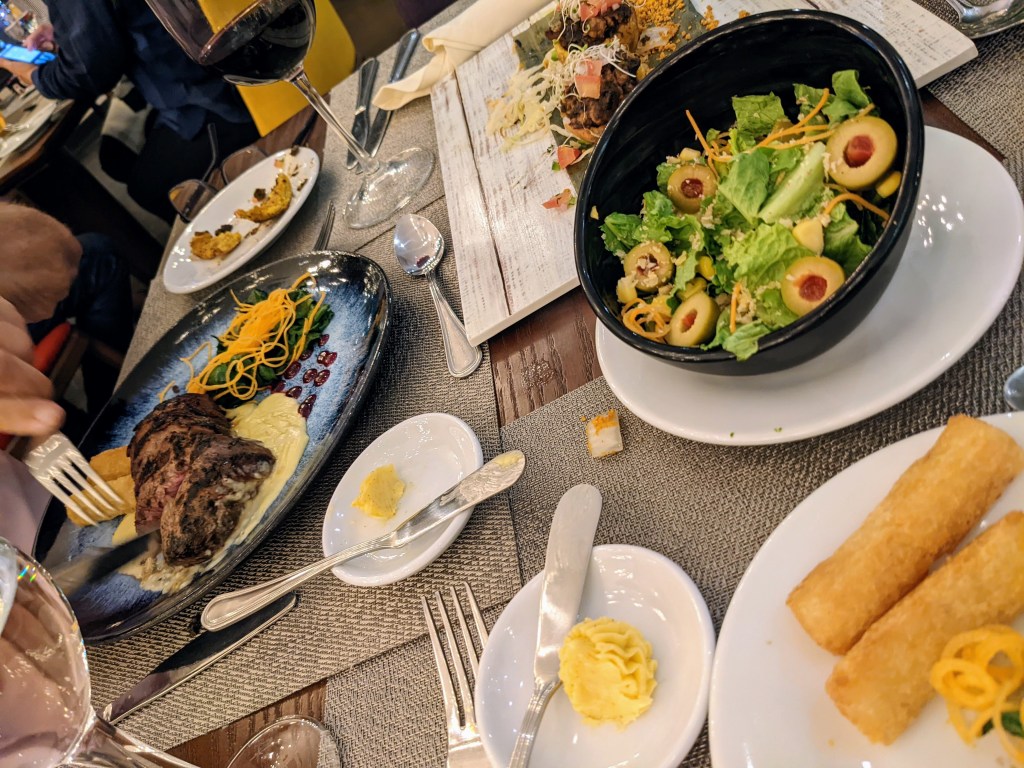
Blissfully tired, we headed to the restaurant on the top floor of our hotel instead of venturing out. Surprisingly great food at reasonable prices!
Our flight back to LAX was through Bogota, Colombia, with a 7 hour layover. It was to be early in the morning, thus, I booked a room in a small hotel near the airport. When Pat saw the bill as we checked in, he seemed visibly uncomfortable: 80,000 Pesos! He relaxed when he learned it was US$17 and went to bed in peace.
Itinerary: Quito – Tena & Amazon Rain forest – San Cristobal (Galapagos) – Guayaquil
 Small Wide World
3 thoughts on “Guayaquil (Ecuador): 2 Full Days”
Comments are closed.