December 2019 itinerary link

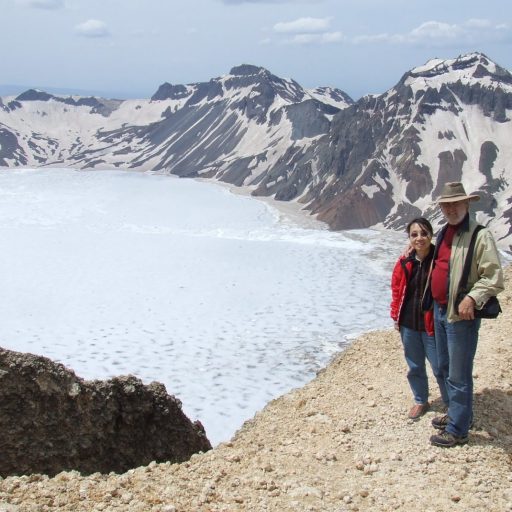
Our bus from Colonia del Sacramento made many quick stops, like 30 seconds each, along the way during the two hour drive to Montevideo, the capital of 1.4 million people. The scenery was not particularly exceptional, but it was not bad, either, as shown in the picture below. It rained on and off the whole day.

I had been curious about Montevideo because it attracted many retired Americans. What would draw people to this far away city to spend the rest of their lives?
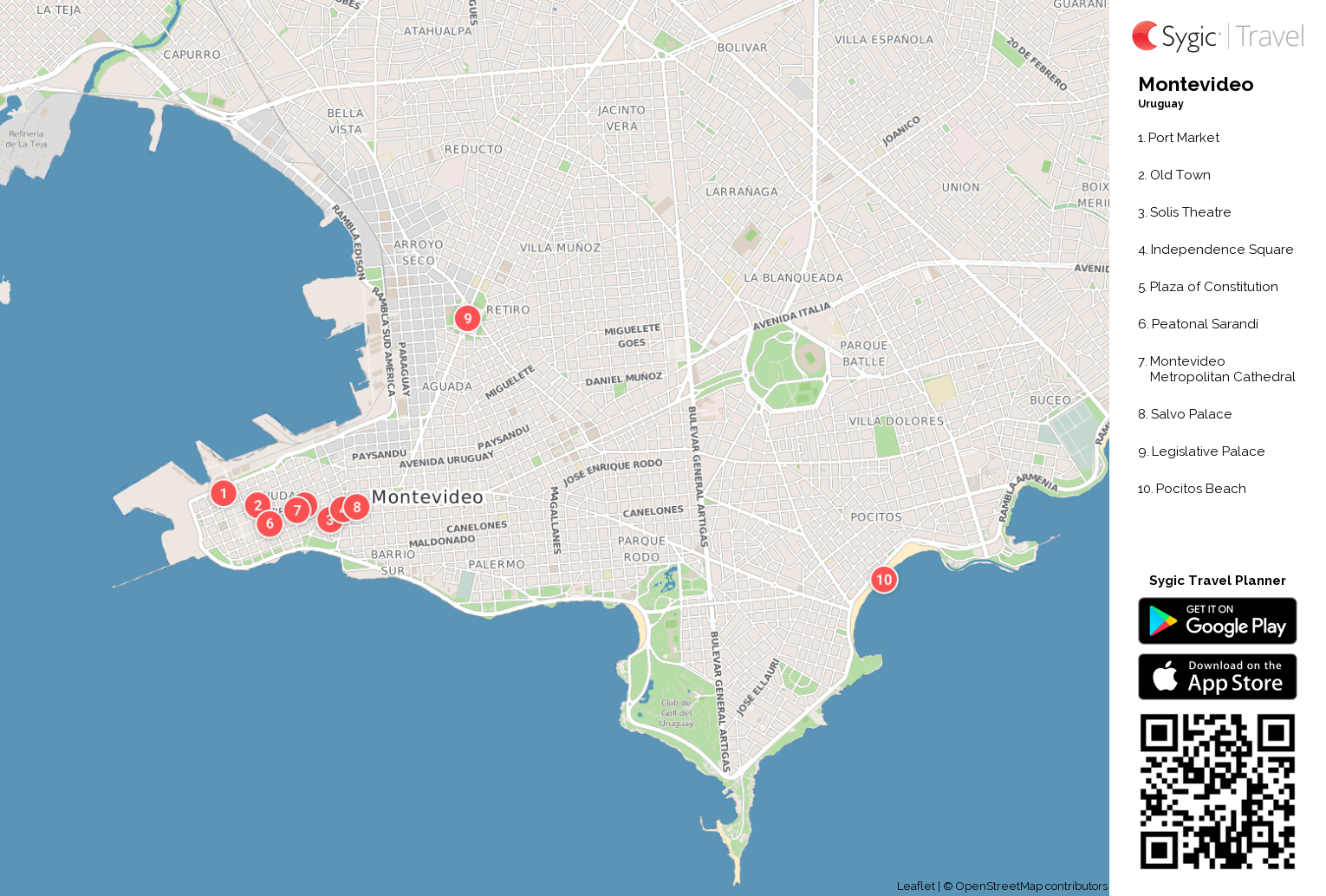
As shown on this map, most tourists visit the old town area to the left on the map and the beaches along the coast. We stayed at an Airbnb apartment in the area a bit south of the red dot marked number 10. The apartment was very comfortable and nicely decorated. From our place to the Old Town was about 15-20 minute drive.

We were hungry when we arrived, thus, we first went to an Italian restaurant recommended by our host a few blocks north of our apartment. The food was quite good, but, what shocked us was the price. It was almost like in the U.S., and we had been conditioned to expect much less by traveling in Chile and Argentina. What we didn’t realize was that visitors automatically got the 22% VAT tax refunded by paying with a foreign credit/debit card. This program was started in order to attract tourists from neighboring Argentina, I heard. We probably got the same discount in Colonia, but we didn’t look at the receipts carefully.

We just relaxed the rest of the day and walked around the neighborhood when the rain stopped. The beach was a half a block away, and it looked like a nice beach when the sun was shining. There were several markets and enough of a variety of restaurants to choose from in the area.

We ended up going to a modern Mediterranean restaurant called Bruta for dinner. Excellent food and cocktails. Not too expensive for the quality you get. Our server was very friendly and spoke English.


We started the next day at the Sunday street market Feria de Tristan Narvaja. We called an Uber, and he got us as close to the street as possible. People. The street was jam packed.

Items they sold were quite a mixture.


Mate drinking figured huge: everyone carrying the mate cup, every other vendor was selling something to do with the custom of mate drinking etc.

Dried yerba mate leaves on display as well as the cups and the straws(bombilla) and thermos


We were to join a free walking tour at 2 PM, thus, we had to have lunch before that. The meeting point was at the Plaza Independencia, and we looked for a lunch spot around there.

Surprise! A Korean restaurant! We had to try. The food was actually better than expected. Our waitress was definitely not Korean, but she pronounced names of the food in perfect Korean.


Plaza Independencia is the central plaza that separates the Old Town (Ciudad Vieja) and the rest of downtown. In this photo, the father of independence, Jose Artigas statue (his mausoleum is underneath) is on the left, iconic Palacio Salvo building in the middle, and the presidential office building on the right.
The walking tour started from here and passed through the original city gate and veered left to reach Theatro Solis, the most important performing arts center in Uruguay. (I looked at their website to catch a concert or something, but the timing didn’t work for us.)


Libreria Puro Verso, a famous book store in a beautiful building. We did not have time to go inside, though. We walked toward it to get on Sarandi Street (Peatonal Sarandi), the pedestrian only street that connects the Independent Plaza and the coastal walkway, Rambla.

There was an artisan market going on in this plaza, and we thought we would come back to check it out later. (Well, one of us did & found some unique gift items.)

Parroquia San Francisco de Asís is an ornate church built in neo Romaneque style.

Plaza Zabala. This statue of Bruno Mauricio Zabala, the founder of the city, stands in the middle of the plaza.

There were numerous cafes with interesting decorations and murals in the area. We considered checking out teatime (called merienda in Spanish) at the oldest coffee shop in town, Café Brasilero, but it was too early for that.

Over all, the old town area didn’t look too old – the city was founded in 1726, and that is relatively new compared to many European cities. But it was an interesting area to walk around. The streets were not terribly crowded since we were there on a Sunday, and many shops were closed. Most tourists were from the cruise ships docked at the port right in the old town.
The tour ended at the old port market, Mercado del Puerto, in operation since 1826. Nowadays it’s more of a touristy food court than a local market. We found the restaurants there more expensive, but we had to try some local grilled sausages. So we stopped at a place for a quick snack shown in the photo below.

Later in the evening, we took a walk along the coastal road by the beach. Sunset was beautiful. I thought about going to a cafe and concert-style space called La Trastienda, but we were tired. Maybe tomorrow night.

The second full day in the city started out as planned in Barrio Reus, also known as the neighborhood of Jews. The buildings here are painted in bright colors and attractive murals. This area is about 9-10 blocks NE of the red dot marked as #9 on Map 1 above.


We walked 5-6 blocks SW to get to Mercado Agricola, an old agriculture market converted to a modernized market and food court.

I ended up having a pasta dish while Pat had a hamburger and some beer. Good food. Not necessarily cheap.


Walking south toward the #9 spot, we noticed this unusual building. Not sure what it is.

#9 turned out to be the National Congress building. Again, tour groups from cruises were there to take pictures.

I asked a passerby, “who is he?” “He’s a famous writer,” he said. Someone else thought it’s the popular ex-president, Jose Mujica. Maybe I misunderstood their English.

Don’t ask me what it says. We had to wait a while to find a taxi, but we eventually were able to go to the old town area.

Now it’s Monday, and the streets were much more crowded.
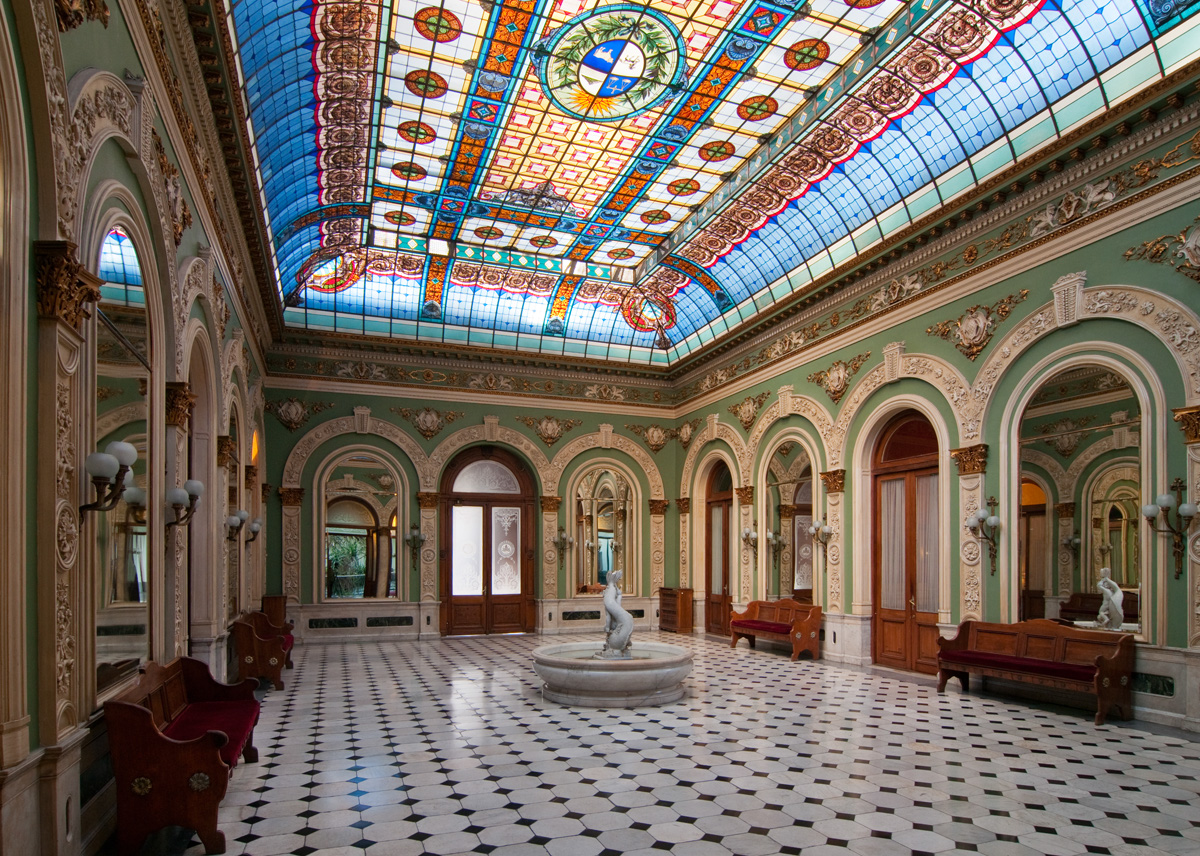
I had a mission this day: to figure out where this place is & go there. I found a photo similar to this one in a magazine article that was not about this place, and I was drawn to it. All I knew was it was in Montevideo. I had shown the photo to several different people, but nobody knew.


I walked into this museum, a decorative art museum, in Old Town thinking a curator may recognize the photo. Sure enough, two nice museum employees put their two brains together & found it: Palacio Santos! They looked up the address online & carefully wrote it down on a piece paper for me. Muchas gracias! (If you click this link, you’d understand how illusive this place was!)
Well, we walked to the address, and there was no such street number on the 18th of July Street, their main street in downtown. I searched Google, and, sure enough! The address the ladies gave me was the one that Google had. Don’t get me wrong. I love using Google, and thank them a lot. But, when it is wrong, it is wrong.
I finally found someone who knew where Palacio Santos was: 3 blocks up the road in a Ministry of Foreign Relations complex. Yes, he was right! But it was closed for the day.
I also wanted to visit the home of the architect Julio Vilamajó, but it was too late.

We came back exhausted. Let’s eat in and stay in tonight. We all agreed. Nice sunset, though.
On our last day in Montevideo, we rented a car and drove out to Punta del Este. This would be a separate blog.

The last night in Montevideo was supposed to be our big night out. I picked a wonderful BBQ restaurant everybody told us to go, La Otra, as our dinner spot, then, maybe, some music… It was Christmas eve, and nothing was open. We walked around a while to find any place we could eat at and failed. We came home and raided the almost-empty fridge: old pizza slices, some veggies, eggs. Merry Christmas! There were serious fireworks going off all night to make sure we could stay awake and celebrate.

If we had another day, we would have gone to Bodega Bouza winery 20 minute drive north of town to taste Uruguayan wine and have lunch there. On the way back, we would have stopped at the botanical garden and an art museum nearby, Blanes Museum, to check out art works by local artists. I would also try to find a way to experience candombe, the unique Uruguayan music and dance involving a big group of drummers.

So would I be willing to retire in Montevideo? It’s a nice place with no visible slums, good living condition, friendly people, easy to get around, cheaper living cost than in the U.S., nice beach & interesting enough Old Town. If one has no strong desire to visit the U.S. too often, maybe this is not a bad place. It could even be a perfect place if one doesn’t want too many visitors from back home. But, personally, I’d choose Hawaii or Mexico or many other places before considering this place. Oh, well.
Our journey: Puelo -> Puerto Varas -> Puerto Natales -> Torres del Paine National Park –> El Calafate –> Perito Moreno Glacier –> Ushuaia –> the Beagle Channel –> Buenos Aires –>Iguazu Falls –> Colonia del Sacramento –> Montevideo –> Punta del Este
 Small Wide World
3 thoughts on “Montevideo(Uruguay): 4N/4D”
Comments are closed.