April 2019
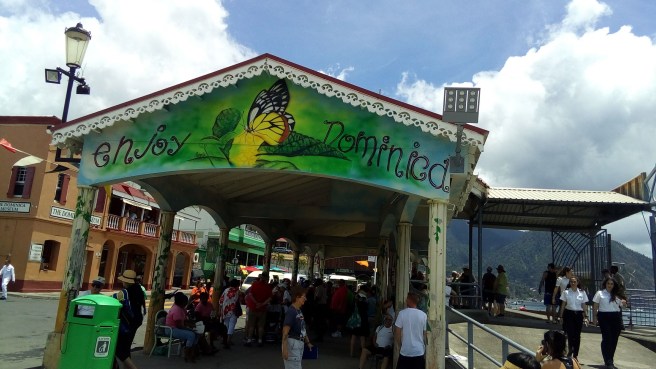
Dominica is an independent country with 72,000 people, of which 15,000 live in Roseau, the capital. Our cruise dock was right in downtown, and the tourist information office was across the street as we exited. (There seemed to be another cruise dock a bit west of downtown to which $2 cab rides were offered by the drivers.)
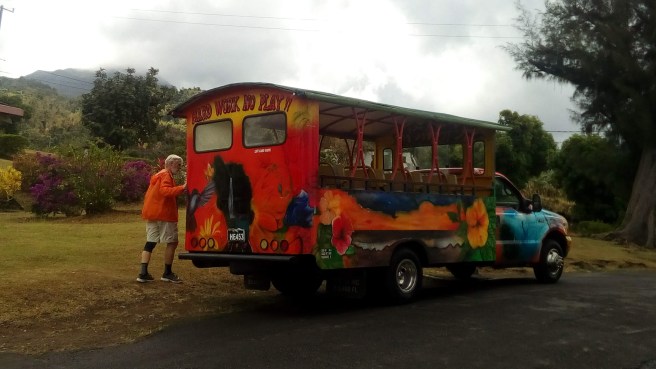
Dominica is known for the rain forests,thus, we decided to venture outside of the capital city a little to see the natural landscape. Local tours were priced the same no matter whom you talked to: $25 per person for the tour of the Morne Bruce Garrison and the botanical garden, Trafalgar Falls, and an outdoor hot springs. We were led to a colorfully painted open air bus and had to sit and wait till they filled it up with willing tourists.
Our guide, who was working for tips, was trying to give us as much information as possible about the animals, plants, geography, politics, economy, and history of the island while we were driving from a spot to a spot.
Here is what I remember: 100+ bird species, volcanic, the wetness of the rain forest helps calm the volcanic movements. The prime minister is elected, and the president is appointed by the parliament, tourism is the predominant industry, an average annual income is about $5000, French got to the island first, Brits took over in 1763, gained independence in 1976.
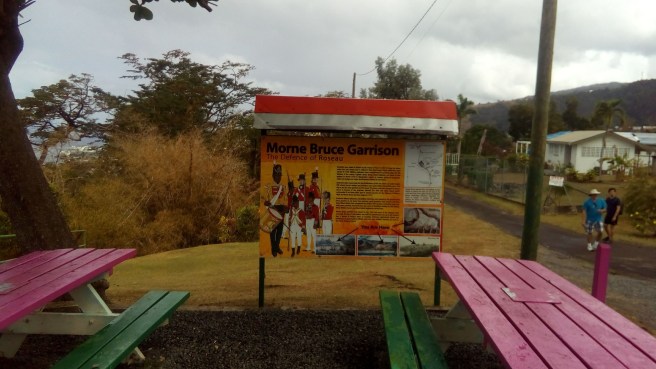
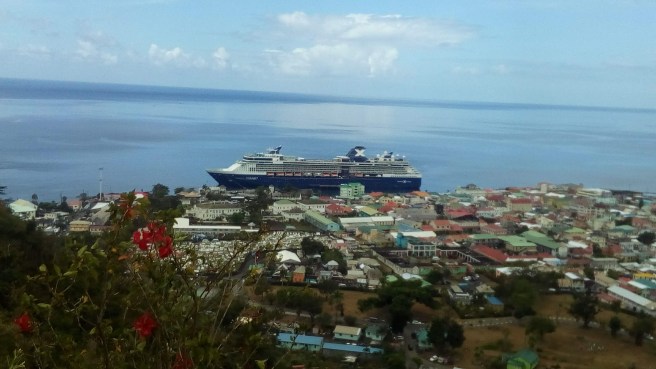
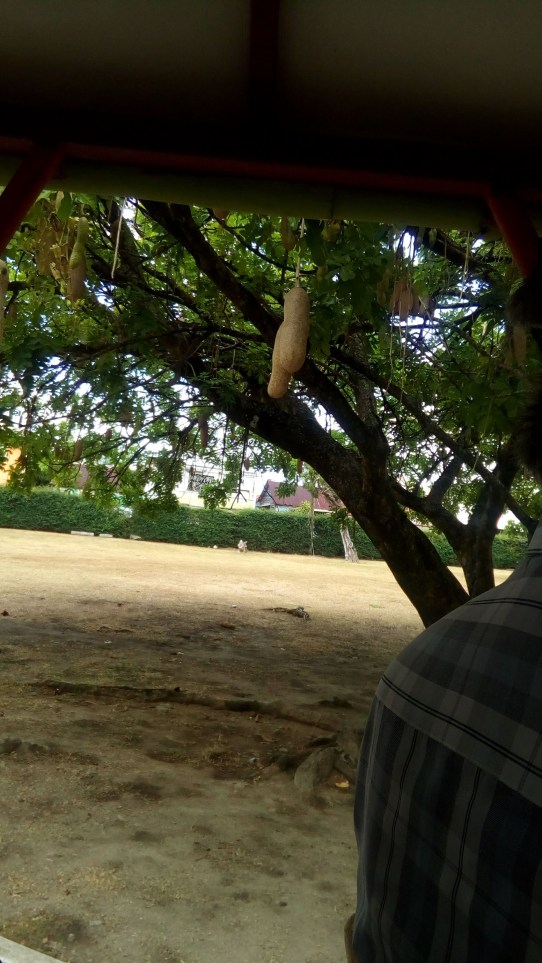
The first stop was Morne Bruce Garrison on top of a hill, from where you got the best view of the bay, the city, and our ship. Then we drove through the Botanical Garden very slowly. It was raining, thus, stopping was not desirable. It was not very big and had mostly trees and plants rather than flowers.
From there we drove up and up to reach the viewing point for the Trafalgar Falls. I had to ask where they got the name. The answer: “the Square in London. Remember? We were a British colony.” It was more like getting a glimpse of the falls. Your phone’s camera may not be able to capture them.
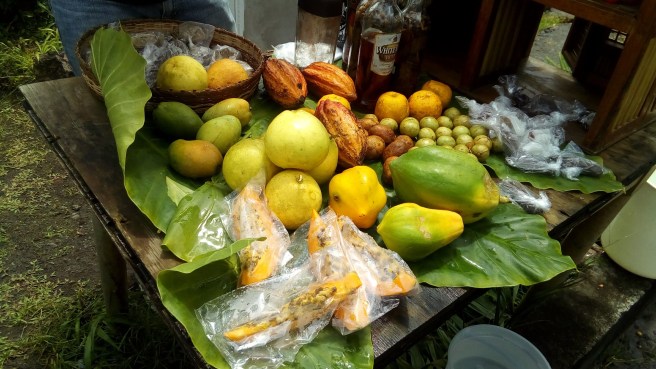
The roads were rather narrow and jammed with tour Vans and buses, Among this chaos, vendors set up their little tables. We tasted local papaya and mangoes. $2 for a half of a papaya was rather stiff but it was delicious. 3 small mangoes for $2 was a bargain in comparison and even more delicious. It was sad to hear that 90% of mango trees were uprooted by Hurricanes Irma & Maria.
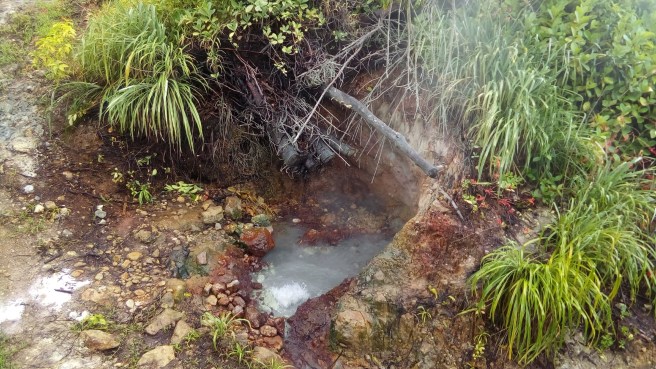
The last stop was described as the outdoor hot springs with 130 degree boiling water. Well, the whole thing was just a small pool of water. Having seen similar things in other parts of the world, we thought this looked like a little baby of the full grown adults else where, especially in Iceland.
It rained off and on during the tour that lasted 2.5 hours or so, but that did not deter us much. We were glad we did it even though not a single place was really impressive or memorable. Most locals we ran into were good-natured and welcoming but never too pushy even though most of them were vendors.


The tourist season runs from December to April. Every working person on the island is connected to tourism either directly or indirectly, our guide told us. When the tourists are gone, people have to find ways to supplement their income. He works for his uncle who is a farmer during off season, he said.
There was a pretty strong WiFi signal available through out downtown, and you could sign up for a pass good for 24 hours for about $5.

 Small Wide World