April 2018
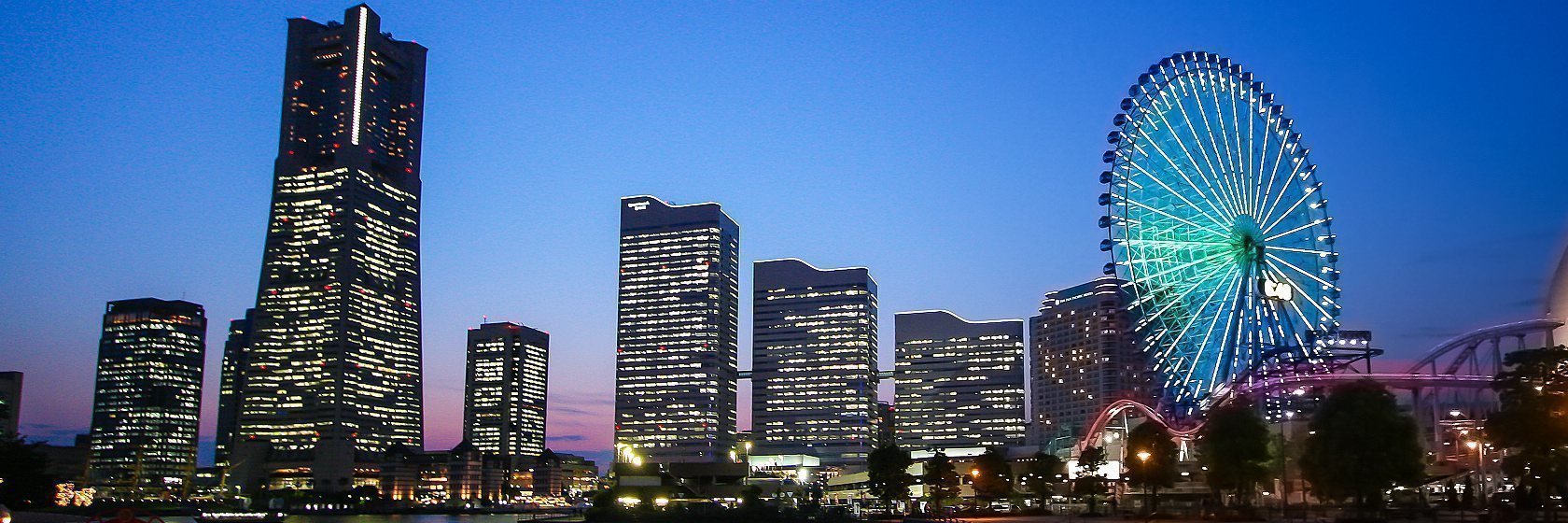
We had been to Yokohama about 15-20 years ago, and the most unforgettable thing was that not a single restaurant we walked into took credit cards and there was no bank or money changer open on a Sunday. There was no ATM machine that handled international transactions among the ones we checked. This meant we had to go back to Tokyo to have lunch while we were starving! It felt like that city was just a Tokyo wanna-be but was not quite there yet.
Yokohama(population: 3.7 million) today is a vibrant city in its own right as the second most populous city in Japan, and I have no doubt it is ready to get paid by any means. We arrived from Osaka on the bullet train(a little over 3 hours, about $120) and the local metro cost was included in the ticket. It was a quick ride to Sakuragicho Station from the bullet train stop, Shin-Yokohama, then it was not hard to find the Red Bus(Akai Kutsu) right outside of the station. “C Line(China Town)” cost us about $2 each & took us right by the cruise terminal(“Osanbashi-kyakusen Terminal” stop) where we were to start our trans Pacific journey.

After checking in and eating lunch on the ship, we walked out and got back on the Red Bus to explore the city. We vaguely remembered visiting Ramen Museum and Curry Museum the first time we were there, but now there was a separate museum for cup noodle version of ramen, and the curry one was gone. We did not feel the need to go inside on a nice lazy sunny day, and we decided to go around the loop on the bust to see what it’s like.
It seemed most things were happening within walking distance from the cruise terminal except for a park, Sankeien Garden, at one end of the “C” Line. We did get off the bus there to walk around the park. After a while, we got back on the bus and got off near the cruise terminal.
The biggest China Town in Japan happens to be in Yokohama, and it is just a 10-15 minute walk from the terminal. We walked around the area for a while and tried to decide what to do next. There were many shopping malls and eateries in this general area, and we could have easily killed hours. For us, the problem with visiting a big modern city filled with high-rise buildings is that they all look the same. Yokohama was like Singapore or Seoul but with not as much character. We were tired from all the walking we did in Osaka the previous day any way. So we went back to our comfortable room on the ship.
Don’t get me wrong. Anyone who is not as jaded as me would find plenty of things to do (look at the areas number 1 & 2 on the map) in Yokohama to fill a day or two. It could be a relaxing holiday in a big city relatively close to a major international airport and a seaport.
[Update: November 2019]

We were back in Yokohama as part of an organized 10 day tour of China and Japan that we had signed up for. We arrived in the evening & spent the night at a high rise hotel by Yokohama Bay. All we could do was eat dinner at a restaurant nearby and sleep. We did get a glimpse of their sophisticated urban modernized traditional dining scene, though. Sorry for that wordy sentence. A case in point: we ate at this place which was basically a casual dining/drinking spot that seemed to be filled with “salarymen” and women. Their food was pretty much traditional Japanese, but presentation was more modern.

 Small Wide World
3 thoughts on “Yokohama(Japan): a Day Trip”
Comments are closed.