October 2016
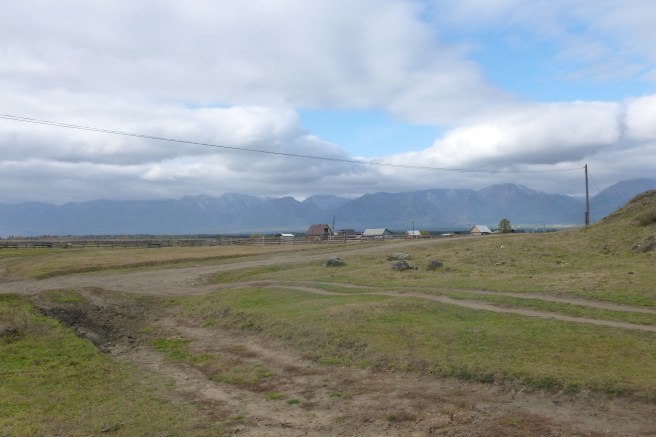
3 million acres of planes and mountains with only about 23,000 people in it, Tunkinski National Park looked like the picture above for the most part in early October, the beginning of winter. The mysterious Sayan Mountain peaks often hide behind clouds, and some people believe they choose to come out to greet the people they welcome.
We drove 200 km southwest from Irkutsk to get to this park that is in Tunkinski Raion(district) of the Buryatia Republic, which was part of Mongolia for most of her over 2,000-year-old history. Buryatia is an autonomous republic within the Russian Federation nowadays, and only one-third of the 1 million population are Buryats and the rest are Russians. However, Tunkinski area, which is located right north of Mongolia, is mostly populated by Buryat people. Buryats have their own language, Buryat, and nomadic culture similar to the Mongolian one. The famed actor Yul Brynner is part Buryat.
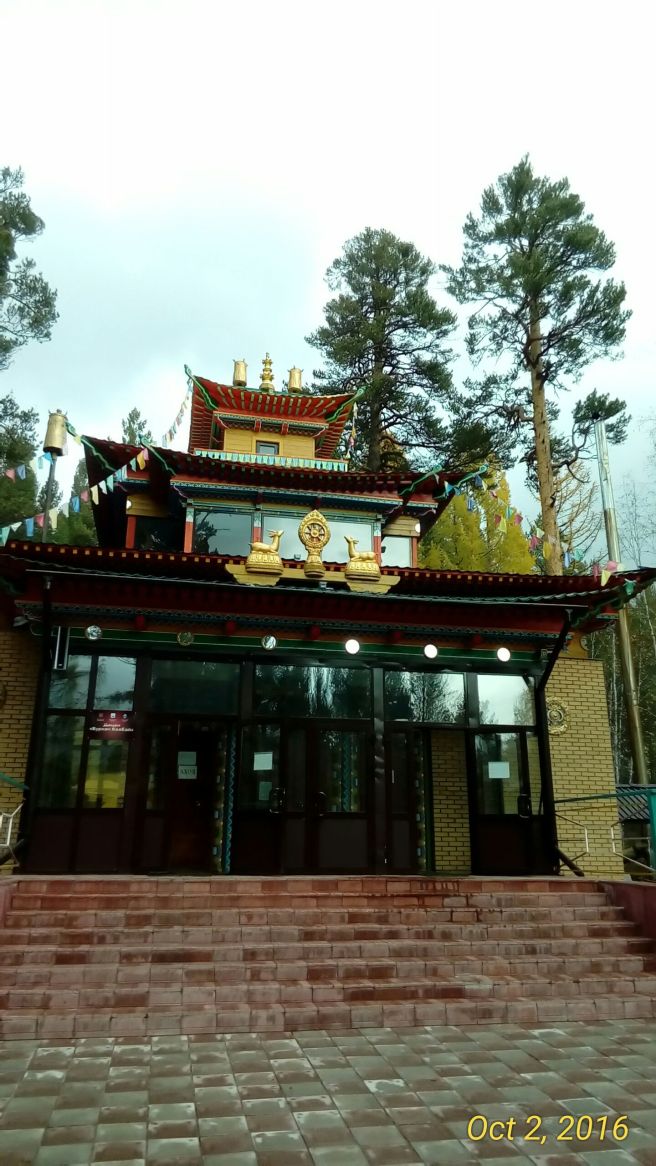
Traditionally, Buryats believed in shamanism, but, Buddhism replaced it by the mid-17th century. This transition is witnessed in temples like this one that displays symbols of shamanism and Buddhism together.

We saw the peak of Sardyk Mountain, the highest of the Sayan mountain Range(3,491 meters), but could not capture it on camera. It was not a clear day, but we were welcomed properly by the Mountains. No, this picture is not even close. It was above and beyond this picture.
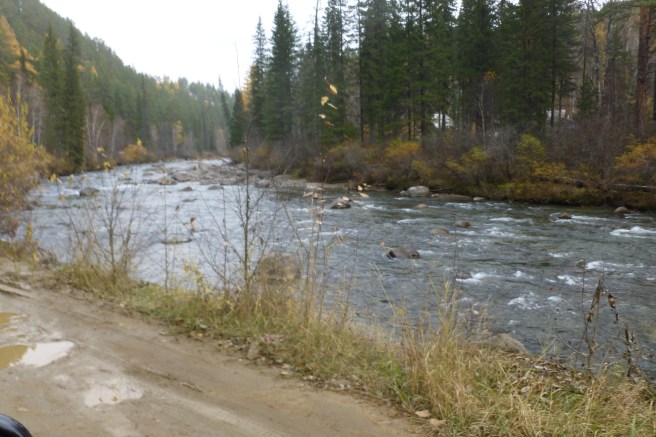
Irkut River runs through the Park, east to west or vice versa.
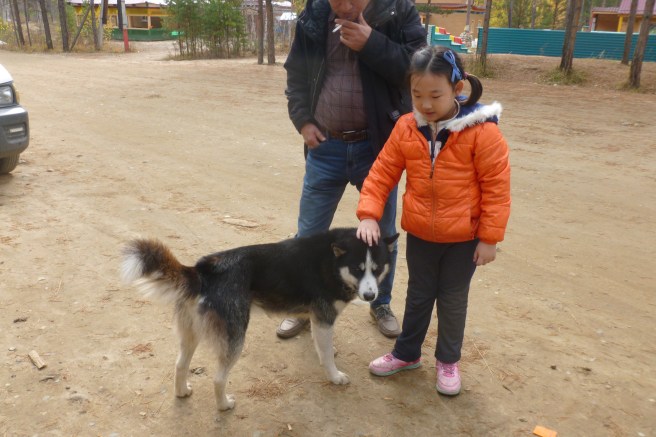
This Siberian Husky was very friendly. It looked smaller than the Alaskan Huskies some of our friends owned in the U.S.
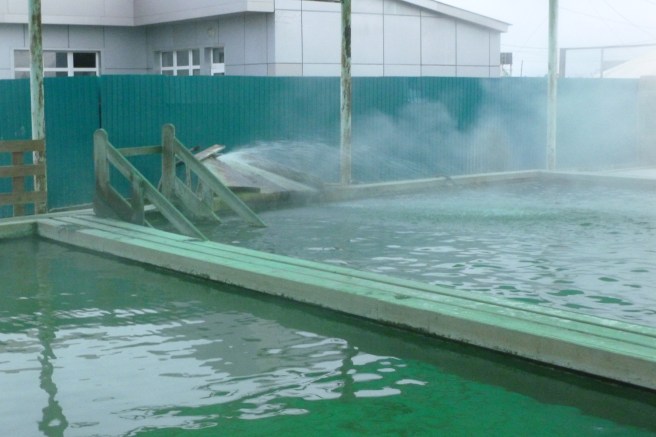
Hot springs are a major part of natural attractions of Tunkinsky Park. This one is at a little village of Zhumchug right off the main east-west road in the park. The facilities were minimal(very public changing room for each gender, toilets, hanging hooks in place of lockers) but the water was just magical. Very warm and totally relaxing.
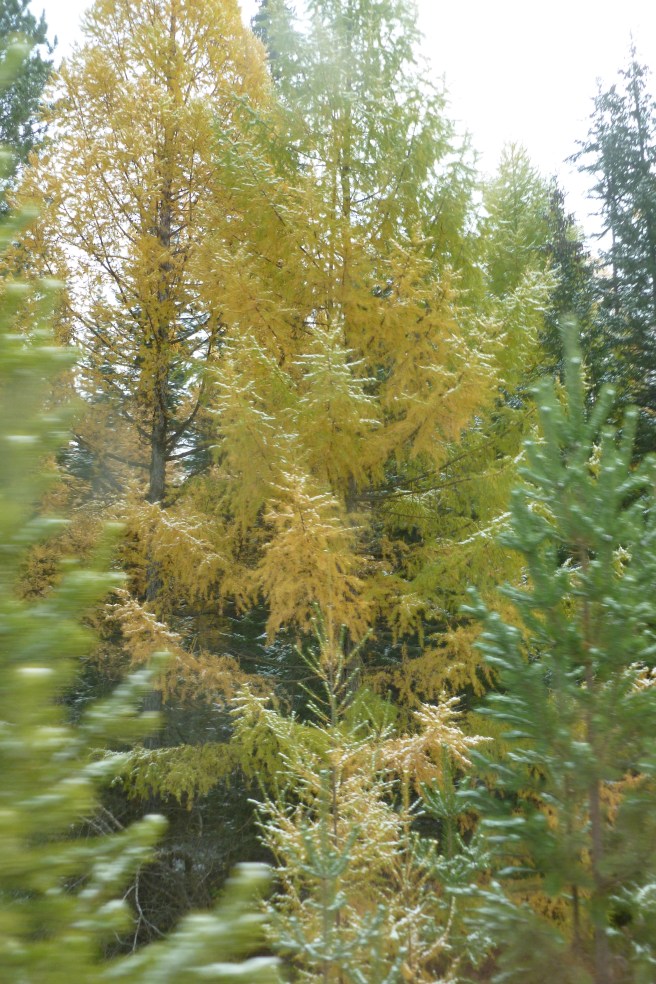
We encountered color changing pine trees for the first time in Siberia. These Siberian Larch trees turned yellow in autumn.
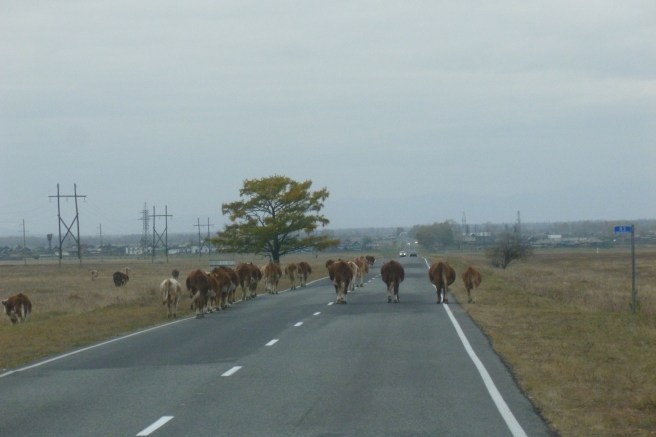
These cows and horses wake up in the morning and go out to find food and do their thing. At dusk, they come home on their own. The ranchers in this area do not have much to do. The road shown in the picture above is the main highway-like road in the park, but these animals took it over for a while.
June 2017


The next summer we went back to Tunkinsky, and there they were! You have to share the road with cows and horses in this national park.
A summer festival was in full bloom in Kyren, the main town in Tunkinsky District. It was their version of Olympics in which all the villages competing with one another in sports such as wrestling and volleyball.

This natural spring water was supposed to be good for one’s health, thus, tourists were eager to fill their bottles with it.
We were back at the temple where Shamanism exists in perfect harmony with Buddhism.

Yes, we saw the Sardym Mountain peak again. The weather was nice and warm, but the peak showed up only briefly. No, we could not capture it.
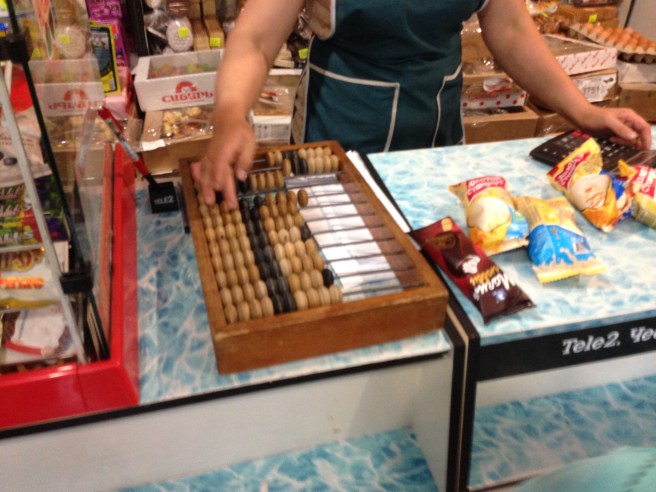
We walked into their version of a convenience store, and this was the cashier there. Her fingers moved fast, and the numbers seemed to be right.

Why rush? The water of the Irkut River was cool, and no one else was around.
BY this time, there were more hotels in Zhemchug, and the hot spring was more crowded. But, still, the water was piping hot and so relaxing. Time moves very slowly in Tunkinsky.
 Small Wide World
One thought on “Siberia: Tunkinski(Tunka) National Park”
Comments are closed.