
June 2014 (by Pat) Itinerary Link
CURRENCY
Before I get to that, though, and because I don’t know who, if anyone, will read this, I thought I’d give a little background information.
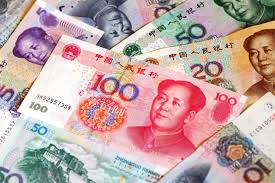
The unit of the Chinese currency is the yuan, also known as RMB or by the measure word kuai. It was worth a little over 16 cents at the exchange rate I was getting. All bills of 1Y and up have a portrait of a young Mao.
While most countries have replaced small denomination bills with coins, China has not. There are one yuan and one jiao (a jiao is a tenth of a yuan) coins, but they are not common (there is also a one jiao note.) Commerce is conducted in bills. As a result, the small denomination bills, one, five, and ten, are exchanged a lot and tend to be crumpled and dirty. They’re also small. When I get them in change, I tend to shove them into my pocket and treat them as small scraps of paper. They’re spent without thought and disappear quickly.
The largest bill in general circulation is the 100Y note. It is big and pink and, generally, clean. That, plus the big 100 that they display, makes them feel like big money. If I spend two at once, I feel like a spendthrift, never mind the fact that they’re each worth just a bit over $16 each.
China tightly controls its money exchange. As a consequence, there is little variation in exchange rates from place to place as you can find, for example, in Europe. The actual act of exchanging money, however, appears to have become more complicated than I remembered.
In Xi’an, I was getting low on cash and the ATM, where I usually get local currency, was not cooperating, so I needed to exchange actual dollars. I first went to a hotel with a money exchange sign outside. They told me to go to the Bank of China and pointed me in a direction. I came to a different bank, went in there, and they said Bank of China. I then came to one of the major banks and went in there and they took my dollars and passport and told me to sit down, it would be about 20 minutes. This seemed silly, so I took my money and passport back and continued on to the Bank of China.
At the Bank of China, I was told I needed to fill out a money exchange form, get a number, and wait for a teller. When I got to the teller, I handed him the form, five $20 bills and my passport, which I knew would be necessary. He asked me how much I wanted to exchange and I said $100. He said that I didn’t need the form and handed it back to me. He then proceeded to examine each of the $20 bills minutely, front and back, tilting each one up to look for the watermark. Next, he paged through my passport two times and made a copy of the front page. He then pulled out one of those four part tissue paper forms that are ubiquitous in China, handed it to me and asked me to fill in my name, nationality and passport number and hotel information. Next,he tore the form into its constituent parts, filed three and put one aside for me. He then told me the exchange rate. I said fine. He then removed 6 100Y notes from the till and ran them twice through the counting machine, then proceeded to count them twice. He then told me how much money I was going to get, which, coincidently, was exactly 100 times the rate he had already quoted. I again said fine. He then pulled out some additional small bills, wrapped the whole bunch up in the tissue paper receipt and handed the package to me, saying that according to form I should get an additional fen (a fen is one-tenth of a jaio) but he didn’t have any. I said ok. Total elapsed time – about 15 minutes.
Nothing is ever simple in China.
 Small Wide World